Queso chicken enchiladas land on the table with that kind of bubbling, edge-crisped comfort that gets people to the oven before you’ve even called them. The tortillas soften under a thick queso blanket, the chicken stays juicy, and the Rotel gives the sauce just enough sharp tomato heat to keep every bite moving. It’s rich, yes, but not heavy in a one-note way; there’s a little lift from the green chiles and a clean finish from the toppings.
What makes this version work is the balance in the sauce. Whole milk and Velveeta give you a smooth base that stays creamy in the oven, while a little chicken broth loosens it just enough to pour without turning soupy. The filling is kept simple on purpose, because once the enchiladas go under that queso, the sauce becomes the main event and the chicken just needs to be seasoned and tucked in well.
Below, you’ll find the part that keeps the sauce silky instead of grainy, plus a few smart swaps if you want to change the heat, lighten the dish, or make it ahead.
The queso turned out smooth and pourable, and it baked into that perfect bubbly layer without drying out the chicken. My husband kept saying the tortillas stayed soft but didn’t fall apart.
Queso chicken enchiladas with that thick, bubbly Rotel sauce are worth keeping for the nights when you want dinner to feel extra comforting without a lot of fuss.
The Sauce Needs Gentle Heat, Not a Hard Boil
The biggest mistake with queso enchiladas is rushing the sauce once the cheese goes in. If the milk boils hard, the sauce can turn grainy or separate before it ever reaches the baking dish. Keep the heat at a gentle simmer and stir steadily so the Velveeta melts into a smooth, glossy sauce instead of clumping.
Rotel brings acidity and texture, which is exactly why this sauce tastes layered instead of flat. The tradeoff is that too much heat can make the tomatoes break down into a thinner, slightly rough sauce. Slow and steady keeps the body of the queso intact, and that matters because the sauce has to coat the enchiladas and still stay thick enough to bake into that casserole-style finish.
What Each Ingredient Is Actually Doing in This Dish
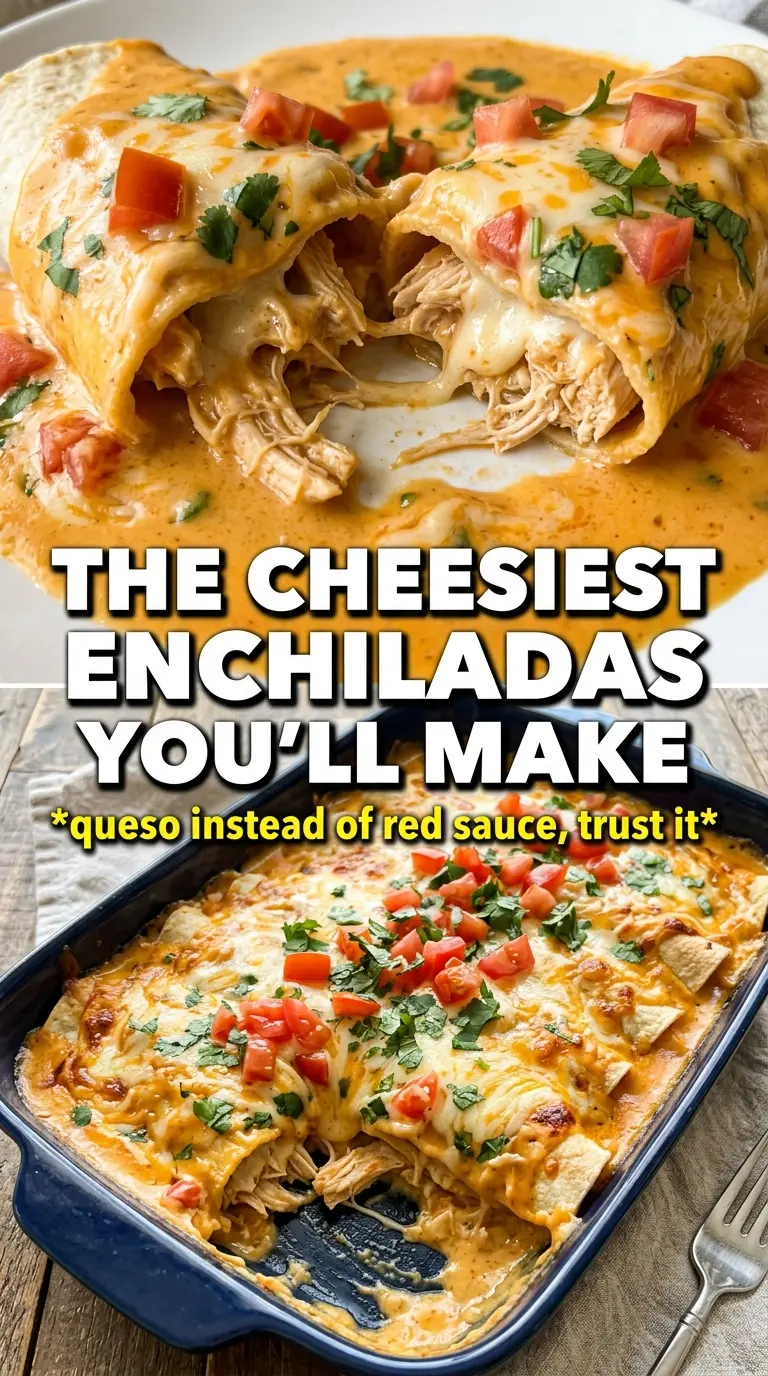
- Cooked shredded chicken — Rotisserie chicken works well here because the sauce is the star and you want the filling ready fast. If you cook the chicken yourself, season it lightly before shredding so the filling doesn’t taste bland once the queso goes on.
- Flour tortillas — These stay soft and roll easily under the sauce. Corn tortillas can work if you prefer them, but they need to be warmed first or they’ll crack when you roll them.
- Green chiles — They add gentle heat and a little brightness without making the dish spicy. Don’t skip them unless you need a milder casserole; they cut through the richness in a way the cheese alone can’t.
- Velveeta — This is what gives the queso its smooth, stable texture. A block-style melting cheese won’t behave the same way in the oven, and that’s where most broken queso sauces start.
- Rotel — The tomatoes and chiles add the tang and color that keep the sauce from tasting one-dimensional. Drain only if the can looks unusually watery; otherwise use it as-is for the right consistency.
- Monterey jack — It melts into the top layer and gives the finished dish a softer, stretchy cheese pull. Pepper jack works too if you want a little more heat.
Rolling, Saucing, and Baking Without Letting the Enchiladas Fall Apart
Build the filling first
Mix the chicken, green chiles, and a little cheese before anything else touches the tortillas. That small bit of cheese helps the filling cling together, so the enchiladas don’t unravel when you move them to the dish. Keep the filling compact and don’t overstuff the tortillas, or the seams will burst once the queso starts bubbling around them.
Roll them seam-side down
Spoon the filling down the center of each tortilla, roll it snugly, and set it seam-side down in the baking dish. That placement matters because the sauce will soften the tortillas as they bake, and the seam is what keeps the shape intact. If the tortillas seem stiff, warm them briefly so they roll without tearing.
Cook the queso until it coats a spoon
Melt the butter and garlic first, then add the milk and bring it just to a gentle simmer before the cheese goes in. Stir until the queso looks smooth and slightly thick, enough to cling to a spoon but still pour easily. If it seems too thick, add a splash of broth; if it looks thin, give it another minute over low heat before pouring.
Bake until the edges bubble
Pour the sauce over the enchiladas, add the remaining cheese, and bake until the center is hot and the edges are actively bubbling. The top should look melted and a little golden in spots, not dried out. Pull it from the oven as soon as it hits that point, because overbaking is what turns a creamy enchilada bake into a heavy one.
How to Adapt These Enchiladas for Different Heat Levels and Shortcuts
Make Them Spicier with Pepper Jack and Extra Chiles
Swap some or all of the Monterey jack for pepper jack and use hot Rotel if you want a stronger kick. The sauce stays creamy, but the heat becomes more forward and lingers longer on the finish.
Dairy-Light Version with a Different Texture
You can use a lower-fat milk and a lighter melting cheese, but the sauce won’t be as plush or as stable. If you go this route, keep the heat low and expect a thinner finish that clings less heavily to the tortillas.
Corn Tortilla Swap for a More Traditional Bite
Corn tortillas work if you want a more classic enchilada flavor, but warm them first so they stay flexible. They’ll give you a deeper corn flavor and a slightly firmer texture under the sauce.
Make-Ahead Assembly for Busy Nights
Assemble the casserole a few hours ahead, cover it, and hold the sauce separately until baking time if you want the tortillas to stay less soft. Once the queso goes on, bake as written; that keeps the texture from turning mushy.
Storage and Reheating
- Refrigerator: Store leftovers covered for up to 4 days. The sauce firms up in the fridge, but the flavor stays rich.
- Freezer: It freezes okay, though the queso can separate a little after thawing. Wrap portions tightly and freeze for up to 2 months for best texture.
- Reheating: Reheat covered in the oven at 325°F with a splash of milk over the top to loosen the sauce. The common mistake is microwaving it uncovered, which dries out the tortillas and makes the cheese layer greasy.
Answers to the Questions Worth Asking
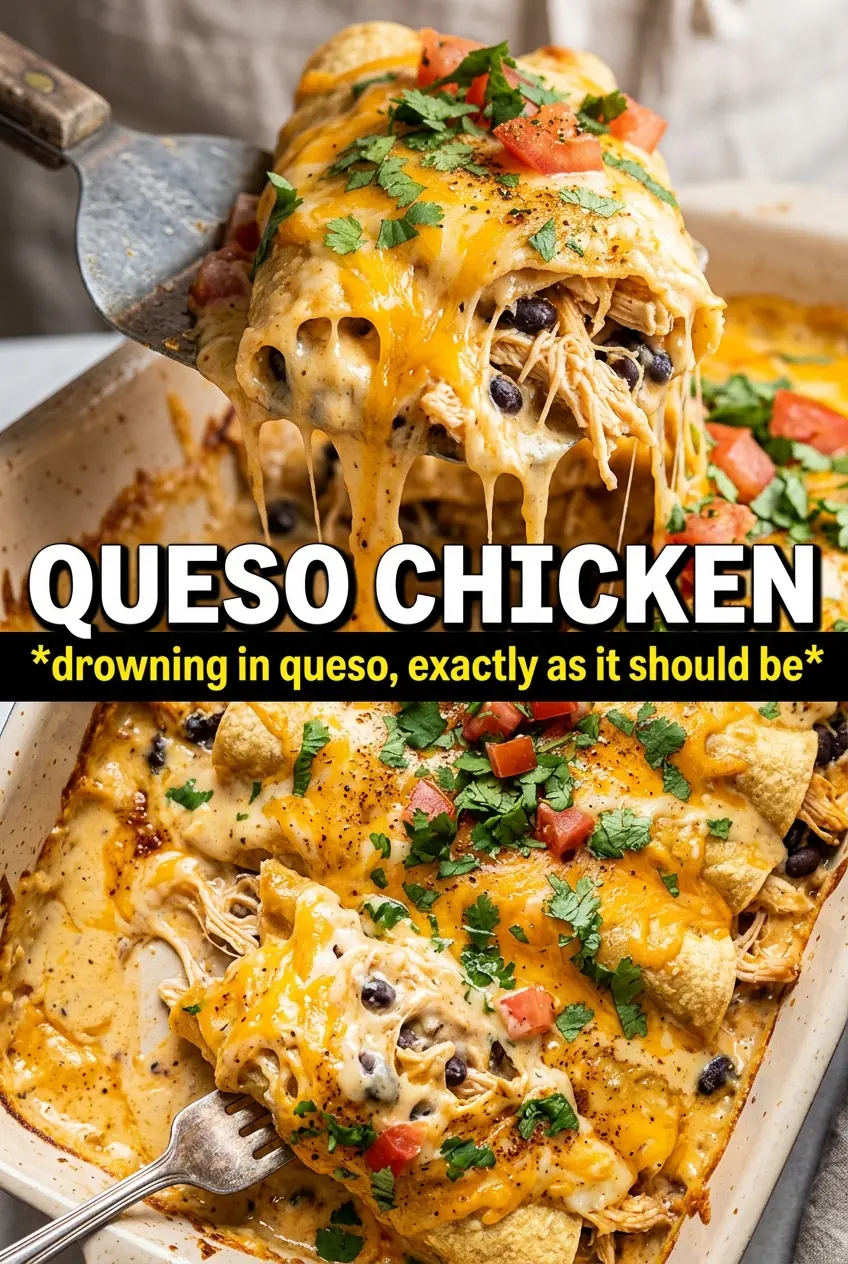
Queso Chicken Enchiladas
Ingredients
Equipment
Method
- Preheat the oven to 375°F and grease a 9x13 baking dish.
- Mix shredded chicken with diced green chiles and 1/2 cup of the Monterey jack cheese, then fill and roll the tortillas tightly.
- Place the rolled enchiladas seam-side down in the greased baking dish.
- Melt the butter in a saucepan over medium heat.
- Add the minced garlic and cook for 1 minute.
- Pour in the whole milk and bring it to a gentle simmer.
- Stir in the cubed Velveeta, Rotel tomatoes with green chiles, and chicken broth, stirring until fully smooth and creamy.
- Pour the queso sauce over the enchiladas and sprinkle the remaining Monterey jack cheese on top.
- Bake for 20–25 minutes at 375°F until the casserole is bubbling and golden at the edges.
- Top with sour cream, cilantro, and jalapeños, then serve immediately.