Layers of tender potatoes, savory Italian sausage, and wilted kale baked in a creamy broth make this casserole land somewhere between hearty soup and a proper baked dinner. The parmesan on top turns deeply golden, while the potatoes underneath soak up the cream and broth until every bite tastes rich without feeling heavy. It’s the kind of pan that comes out of the oven bubbling at the edges and draws people to the kitchen before you’ve even set it on the table.
What makes this version work is the order of the layers and the way the liquid goes in before baking. The sausage gets browned first so it brings flavor, then the onions and garlic are cooked in the same pan to pick up the good bits left behind. Thin potato slices matter here because they cook through in the time it takes the top to brown, and the kale softens just enough without disappearing into the casserole.
Below, you’ll find the little details that keep the sauce creamy, the potatoes tender, and the top crisp instead of soggy. I’ve also included a few smart swaps for when you want to lighten it up or change the sausage.
The potatoes turned out tender all the way through, and the parmesan top stayed crisp even after serving. I used spicy sausage and the little kick with the creamy sauce was perfect.
Save this Italian Zuppa Toscana Casserole for a creamy sausage-and-potato bake with a crisp parmesan top.
The Trick to Keeping the Potatoes Tender Under a Creamy Top
The failure point in a casserole like this is usually the potatoes. Cut them too thick and they stay firm while the top overbrowns; cut them unevenly and some slices collapse while others need more time. Thin, even slices let the potatoes cook through in the same window that the sauce bubbles and the parmesan turns golden.
The other thing that matters is coverage. Once the cream mixture goes in, press the layers down gently so the liquid reaches between the potatoes instead of sitting only around the edges. That’s what keeps the center from drying out and turns the bottom layer silky instead of chalky.
- Thin russet potatoes — Russets break down just enough to drink in the cream and broth. They’re better here than waxy potatoes, which hold their shape but don’t give you that soft, casserole-style bite.
- Italian sausage — Use mild or hot depending on how much heat you want. The sausage should be browned hard enough to leave browned bits in the pan; that’s the savory base of the whole dish.
- Kale — Chop it into bite-size pieces and strip out the tough stems. It softens in the oven but still brings structure, which keeps the casserole from turning into a pure potato-and-cream pan.
- Heavy cream — This is what gives the sauce body. Half-and-half works in a pinch, but the casserole won’t bake up quite as rich or as stable.
What Each Ingredient Is Doing in the Pan
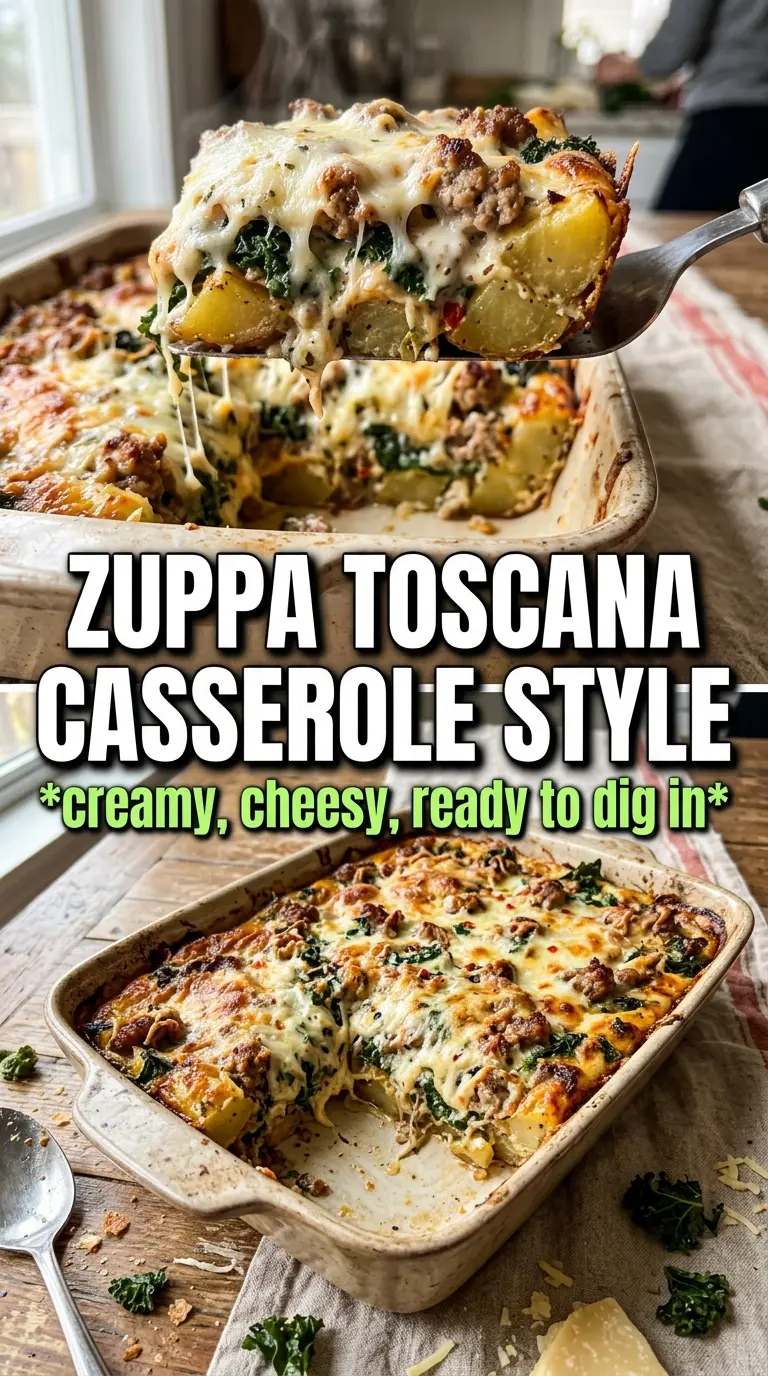
The parmesan matters more than people think. Grated parmesan melts into the top layer and also helps the surface brown into a crisp crust instead of staying pale and soft. Use the real grated stuff, not the shelf-stable powder, if you want that clean salty finish.
Chicken broth keeps the cream from feeling too thick before baking and gives the sauce a little lift. If you only have vegetable broth, it’ll work, but the casserole tastes a touch less savory. The onion and garlic need just a short cook in the sausage drippings; if they go in raw, they can taste sharp against the cream.
- Parmesan cheese — Freshly grated parmesan melts better and browns more evenly. It’s the key to the crust, so don’t swap in pre-shredded cheese if you can avoid it.
- Chicken broth — This loosens the cream just enough to seep through the layers. Water will thin it out, but it won’t add the same depth.
- Red pepper flakes — They don’t make the casserole spicy, just warmer. If you’re using hot sausage, cut the flakes in half so the heat doesn’t take over.
- Onion and garlic — These build the savory backbone after the sausage browns. Cooking them briefly in the same pan pulls up all the flavor stuck to the bottom.
Building the Bake So Nothing Turns Watery
Brown the Sausage First
Cook the sausage over medium-high heat until it’s deeply browned and no pink remains, breaking it into crumbles as it cooks. If you rush this stage, the casserole loses the savory base that makes every layer taste seasoned. Drain off the excess fat after browning, but leave the browned bits in the pan.
Cook the Onion and Garlic in the Same Skillet
Add the onion to the same pan and cook it for about 3 minutes, just until it starts to soften and pick up color. Stir in the garlic for one minute, no longer, or it can turn bitter once it bakes. Then pour in the cream, broth, and red pepper flakes and scrape the pan well so nothing good gets left behind.
Layer, Pour, and Press
Build the casserole in two even layers of potatoes, sausage, and kale so the filling distributes through the whole dish. Pour the cream mixture over the top, then press down gently with a spoon so the liquid settles between the slices. If the potatoes are sticking up dry, they’ll bake hard instead of tender.
Bake Covered, Then Uncover for the Crust
Cover the dish with foil for the first 25 minutes so the potatoes steam and soften without the top drying out. Remove the foil for the last 15 minutes and watch for a bubbling edge and a golden parmesan crust. If the top browns before the potatoes are done, lay the foil loosely back over the dish and finish baking.
How to Adjust This Casserole Without Losing the Texture
Make It Lighter With Half-and-Half
Half-and-half works if you want a lighter casserole, but the sauce will be a little less plush and the finish less rich. To keep it from tasting flat, use full-flavored sausage and don’t skip the parmesan on top.
Use Turkey Sausage for a Leaner Version
Turkey sausage works, but it won’t leave as much fat in the pan, so the base tastes a little leaner. Add a tablespoon of olive oil when you cook the onion so the skillet still carries enough flavor into the sauce.
Make It Gluten-Free Without Changing the Method
This casserole is naturally gluten-free as long as your sausage and broth are certified gluten-free. The texture doesn’t need any other changes, which is one reason it’s such an easy dinner to hand to a mixed crowd.
Swap Kale for Spinach
Spinach gives you a softer, less rustic finish and disappears more into the cream. Add it in the same amount, but know that it wilts down much faster, so the casserole will look less speckled and green.
Storage and Reheating
- Refrigerator: Store covered for up to 4 days. The potatoes soften a bit more as it sits, but the flavor gets even better by day two.
- Freezer: It freezes well in portions, though the cream can separate slightly after thawing. Cool it completely, wrap tightly, and freeze for up to 2 months.
- Reheating: Reheat covered in a 325°F oven until hot through, or warm single servings in the microwave at medium power. High heat can make the cream look broken and the potatoes dry at the edges.
Answers to the Questions Worth Asking
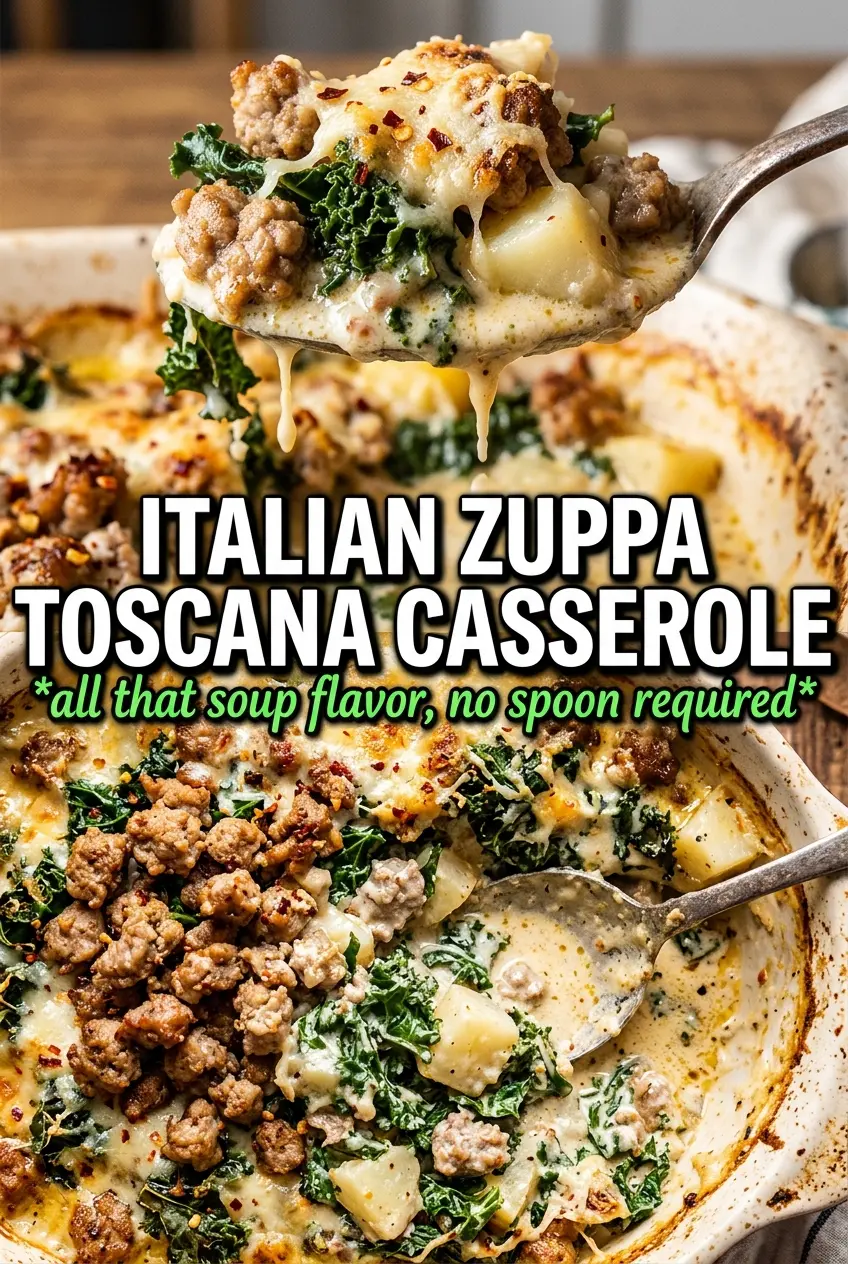
Italian Zuppa Toscana Casserole
Ingredients
Equipment
Method
- Preheat the oven to 375°F and grease a 9x13 dish with a thin, even coating so the casserole releases easily.
- Brown Italian sausage in a skillet over medium-high heat, breaking apart, until cooked through, then drain excess fat and remove.
- Sauté onion in the same pan for 3 minutes, until softened, then add garlic and cook 1 minute until fragrant.
- Pour in heavy cream, then add chicken broth and red pepper flakes and stir to combine.
- Layer half the potato slices in the greased dish and spread into an even layer.
- Scatter half the sausage and half the kale over the potatoes, distributing them in a thin, even layer.
- Repeat the layers with the remaining potato slices, then top with the remaining sausage and kale.
- Pour the cream mixture evenly over everything, pressing down gently so the potatoes make contact with the liquid.
- Top with parmesan cheese, cover with foil, and bake for 25 minutes at 375°F so the potatoes start to soften.
- Remove the foil and bake for 15 more minutes at 375°F, until potatoes are tender and the top is golden.