Pillowy cheese tortellini make carbonara feel bigger, richer, and a lot more forgiving than the usual pasta version. The filling adds extra body, the ridged edges catch the sauce, and the whole bowl gets that silky, peppery coating people expect from carbonara without turning into a heavy cream sauce.
The key is using the hot pasta water and the residual heat from the pan to build the sauce slowly. The eggs and parmesan need just enough warmth to emulsify into something glossy; too much heat and they scramble, too little and they stay loose. Pancetta or bacon brings the salt and fat, while garlic goes in only briefly so it perfumes the dish instead of browning and turning bitter.
Below, I’ve laid out the exact cues I watch for when the sauce is ready, plus a few swaps that keep the dish balanced if you need to change the protein or the tortellini you buy.
The sauce turned silky instead of eggy, and the pasta water brought everything together in about a minute. My husband kept stealing bites straight from the pan.
Love the silky sauce and crispy bacon in this tortellini carbonara? Save it to Pinterest for the nights when you want a fast, peppery pasta with almost no cleanup.
The Sauce Needs Off-Heat Control, Not More Stirring
Carbonara goes wrong when the eggs hit a skillet that is still actively cooking. With tortellini, that risk is even higher because the pasta carries more surface moisture and heat than plain noodles. The fix is simple: pull the pan off the burner before the egg mixture goes in, then keep tossing while you add pasta water a little at a time. The sauce should thicken into a glossy coating, not sit at the bottom of the pan as scrambled bits or soupy liquid.
Another thing that matters here is the pasta shape itself. Cheese tortellini already has a soft, rich center, so the sauce doesn’t need to be aggressively heavy. You want just enough parmesan and pasta water to build a clingy emulsion around the tortellini, not a thick paste that buries the filling.
What Each Ingredient Is Actually Doing In This Dish
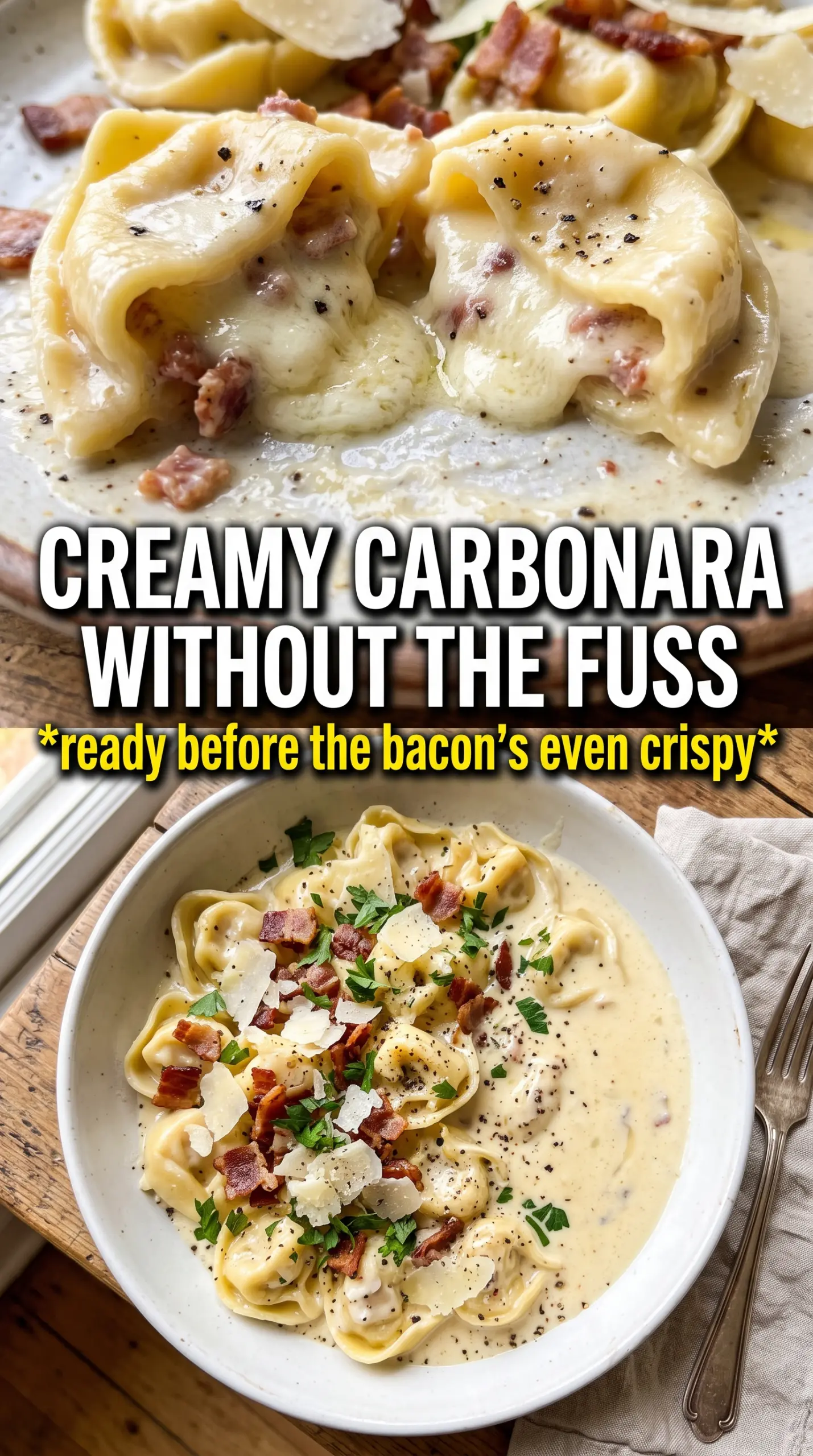
- Refrigerated cheese tortellini — This is what makes the dish feel substantial and gives you a built-in cheesy center. Fresh refrigerated tortellini cooks quickly and stays tender; dried tortellini tends to need more time and can get less delicate, which makes the sauce harder to time. If you use frozen tortellini, cook it just to al dente and expect to use a touch more pasta water at the end.
- Pancetta or thick-cut bacon — This is your salt, fat, and crisp texture all in one. Pancetta tastes a little cleaner and more classic, while bacon brings smokiness. Use what you like, but keep the dice small so it scatters evenly instead of clumping in one bite.
- Eggs plus one yolk — The extra yolk gives the sauce a deeper, silkier texture and helps it stay glossy when it hits the hot pasta. A whole-egg-only sauce can work, but it’s thinner and easier to break. Whisk until completely smooth before it ever touches the pan.
- Finely grated parmesan — Finely grated cheese melts into the sauce much better than coarse shreds. Pre-grated parmesan often has anti-caking agents that make the sauce grainier, so grate it fresh if you can. That one step makes a noticeable difference here.
- Cracked black pepper — Carbonara needs pepper, not just salt. Use more than you think, because the cheese and pork both mute it. Freshly cracked pepper gives the sauce its backbone and keeps the dish from tasting flat.
Getting the Tortellini Coated Before the Eggs Set
Cooking the Pasta and Saving the Water
Boil the tortellini in well-salted water until just al dente, then scoop out a cup of pasta water before draining. That starchy water is what helps the egg and parmesan turn into a sauce instead of a pile of coated pasta. If you forget to save it, the dish gets tight and dry fast, and there’s no good substitute that works the same way.
Rendering the Bacon and Waking Up the Garlic
Cook the pancetta or bacon over medium heat until it’s crisp and the fat has rendered into the pan. Pull the pieces out with a slotted spoon so they stay crunchy; if they sit in the skillet too long, they soften in their own steam. Add the garlic to the hot fat off the heat and stir for just 30 seconds. It should smell fragrant, not browned, because burnt garlic takes over the whole bowl.
Making the Sauce in the Bowl, Not the Pan
Whisk the eggs, yolk, parmesan, and plenty of black pepper in a bowl until it looks thick and uniform. This is the moment that sets up the texture, so don’t rush it. Add the hot tortellini to the skillet with the bacon fat while the pan is off the burner, then pour the egg mixture over immediately and toss hard. If the pan is still too hot, the eggs seize; if it’s too cool, the sauce stays loose. A splash of pasta water at a time brings it all together.
The Final Emulsion
Keep tossing until the sauce turns glossy and clings to every fold of tortellini. You’ll know it’s there when the pasta looks coated rather than wet. Add more pasta water only as needed, because too much will thin the sauce back out. Finish with the crispy bacon, extra parmesan, and parsley, then serve right away while the texture is still silky.
How to Adapt This Bowl for a Different Pantry
Make It Gluten-Free Without Losing the Sauce
Use gluten-free refrigerated tortellini if you can find it, or another gluten-free stuffed pasta that cooks in a similar time window. The sauce itself is naturally gluten-free, but the pasta shape still needs enough structure to hold up during tossing. Watch the boiling time closely, because gluten-free pasta can go from tender to fragile fast.
Dairy-Free Version With a Different Finish
This one takes a bigger change, because parmesan is doing more than seasoning the sauce. Use a dairy-free stuffed pasta, a plant-based parmesan-style crumble, and add an extra tablespoon or two of pasta water to help the sauce cling. The result will be lighter and less rich, but you’ll still get the peppery, salty carbonara feel.
Swap the Bacon for Mushrooms
If you want a vegetarian version, sauté sliced mushrooms in olive oil until they give up their moisture and take on color. You lose the smoky pork flavor, so add a little more black pepper and a pinch of smoked paprika if you want a deeper finish. The sauce still works well because the pasta water and parmesan carry the texture.
Storage and Reheating
- Refrigerator: Store leftovers for up to 3 days. The sauce will tighten as it chills, and the tortellini will absorb some of it.
- Freezer: Not a great freezer dish. Egg-based sauces and stuffed pasta both suffer in texture after freezing and thawing.
- Reheating: Warm gently in a skillet over low heat with a splash of water or milk, stirring constantly. High heat is the quickest way to make the eggs grainy or cause the sauce to separate.
Answers to the Questions Worth Asking
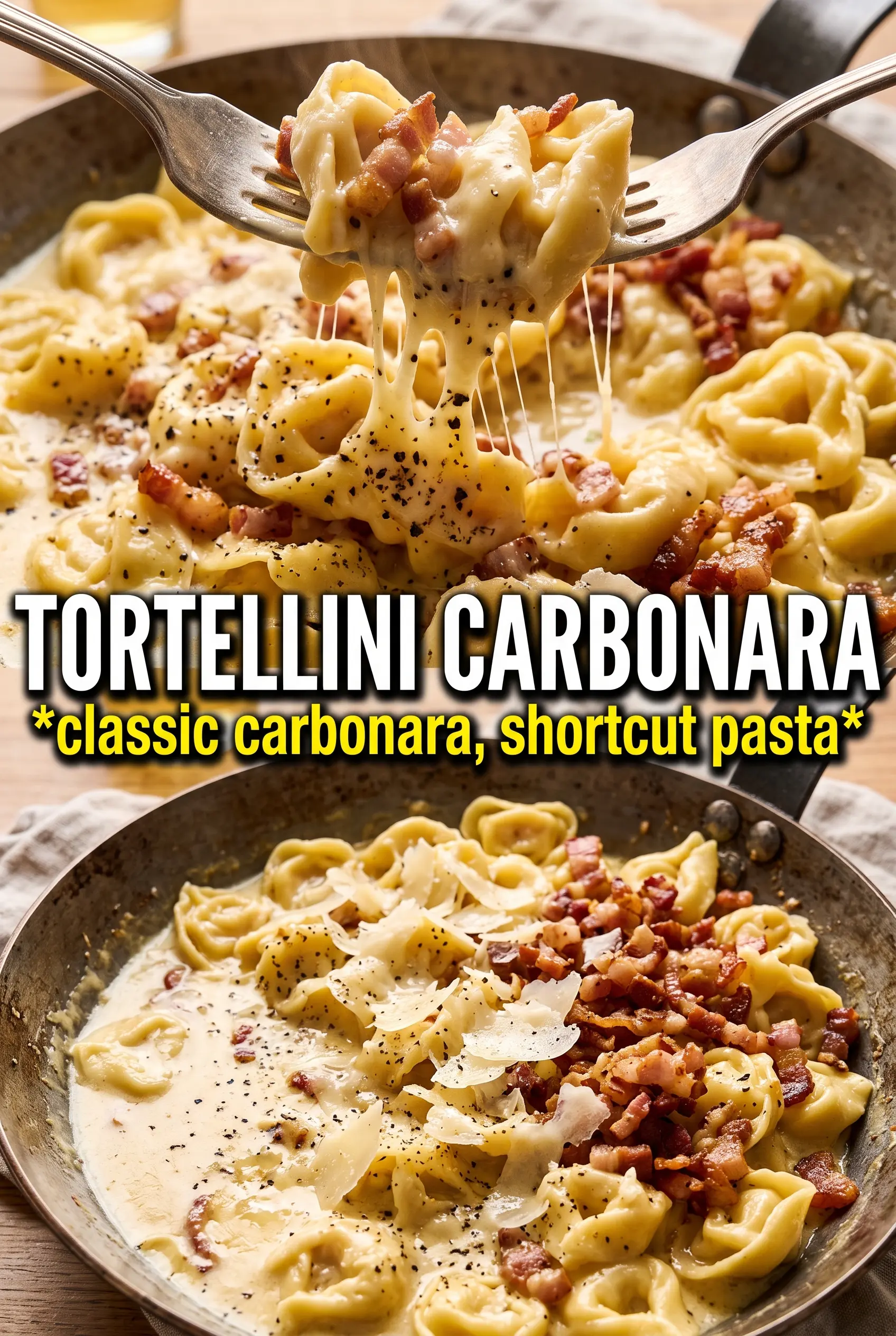
Tortellini Carbonara
Ingredients
Equipment
Method
- Bring a pot of salted water to a boil, then cook the tortellini until just al dente. Visual cue: the centers should be tender but still hold their shape; reserve 1 cup pasta water, then drain.
- Cook the pancetta or thick-cut bacon in a large skillet over medium heat until crispy, then remove with a slotted spoon, leaving the fat in the pan. Visual cue: edges should look browned and crisp.
- Add the minced garlic to the skillet fat and cook for 30 seconds off heat while the pan is still warm. Visual cue: garlic should smell fragrant without browning.
- Whisk the eggs, egg yolk, and finely grated parmesan together with plenty of cracked black pepper in a bowl. Visual cue: mixture should look thick and pale yellow.
- Add the hot tortellini to the skillet off the heat, pour the egg mixture over, and toss quickly. Visual cue: sauce starts to coat immediately rather than scrambling.
- Add the reserved pasta water a splash at a time while tossing constantly until the sauce is silky and clings to every tortellini. Visual cue: the coating should look glossy, not watery or separated.
- Top with the crispy pancetta, extra parmesan, and fresh parsley, then serve immediately. Visual cue: cracked black pepper should be visible across the top.