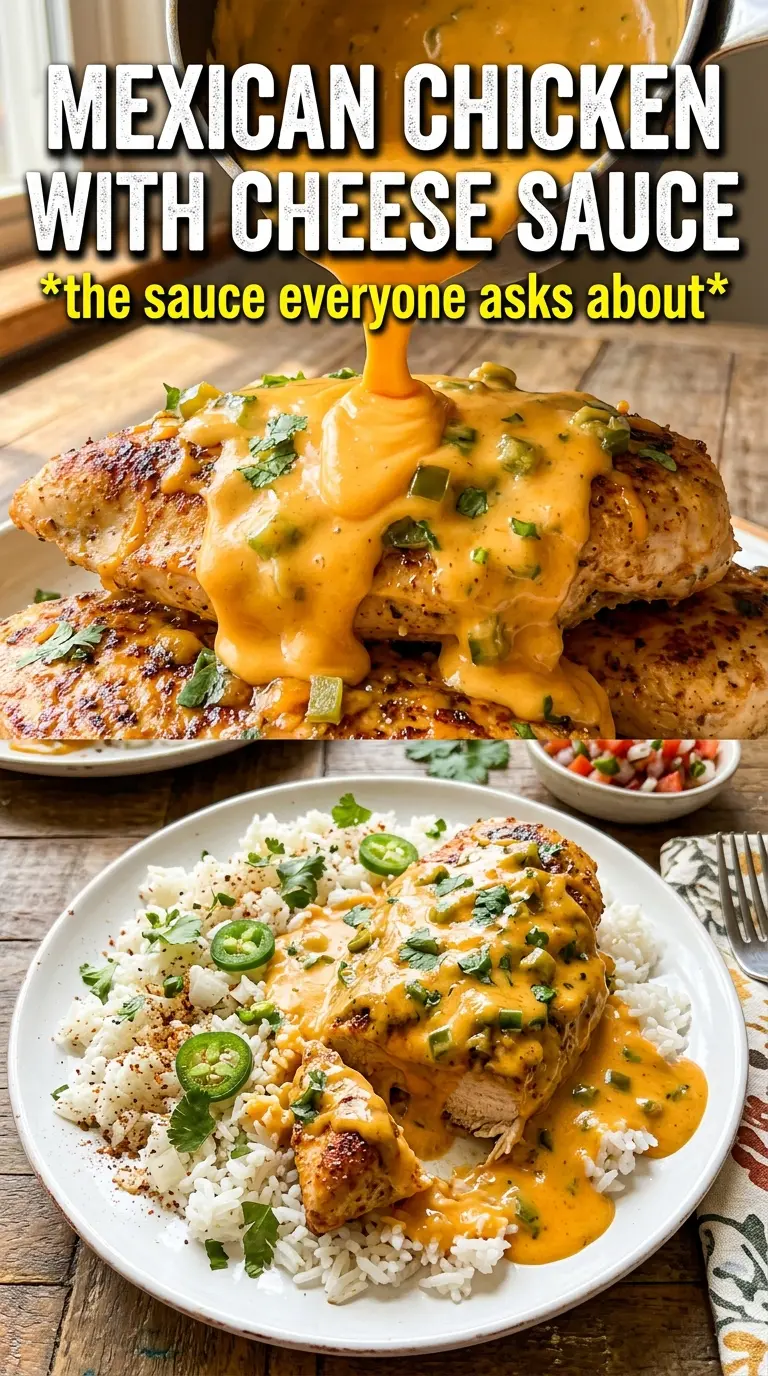
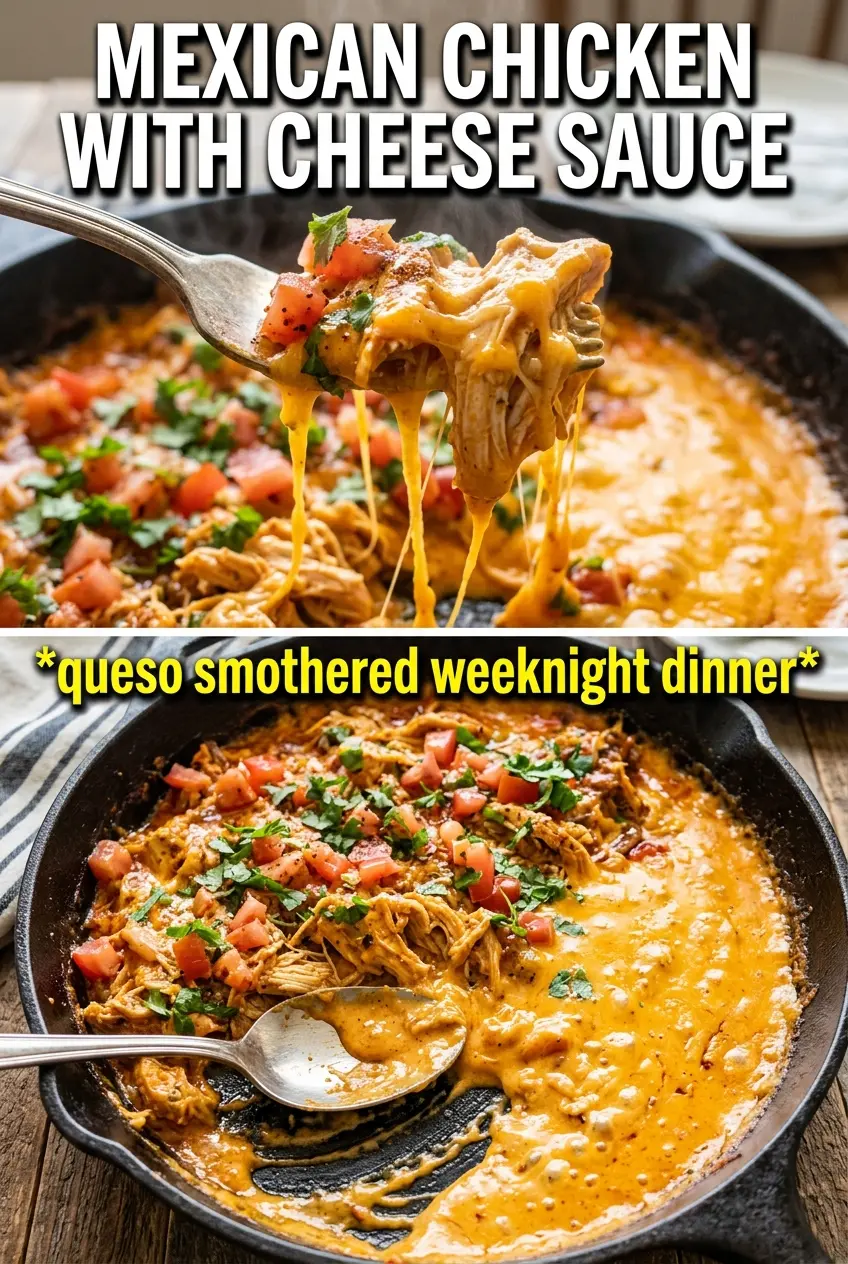
Pan-seared Mexican chicken with cheese sauce is the kind of skillet dinner that disappears fast because the chicken stays juicy and the queso sauce clings in all the right places. You get a seasoned, golden crust on the chicken first, then a smooth, glossy cheese sauce with just enough heat from Rotel and cayenne to keep each bite interesting.
The key is treating the chicken and sauce as two separate jobs. Sear the chicken until it has real color, then pull it out before you start the sauce so the pan stays hot without overcooking the meat. For the queso, the milk and Velveeta need gentle heat, not a hard boil. That’s what keeps the sauce silky instead of grainy.
Below, I’ll show you the timing that keeps the chicken tender, the small ingredient choices that make the sauce behave, and a few smart ways to adapt the dish if you want it spicier, lighter, or easier to serve on a busy night.
The chicken browned beautifully and the cheese sauce stayed smooth all the way through dinner. I loved that the Rotel gave it a little zip without making it too spicy, and my husband asked for it again the next night.
Save this Mexican Chicken with Cheese Sauce for the nights when you want golden skillet chicken smothered in smooth Rotel queso with almost no cleanup.
The Seared Chicken Is What Keeps the Cheese Sauce from Feeling Heavy
The biggest mistake with a dish like this is rushing straight to the sauce and ending up with pale chicken under a blanket of melted cheese. That makes the whole thing taste flat. The quick sear builds color, brings out the spices, and gives the chicken enough structure to stand up to the sauce without turning soggy.
Another thing worth knowing: don’t cook the chicken all the way through in the skillet if the breasts are thick. Pull them once they’re deeply golden and almost done, then let the sauce finish the job with the chicken resting under it. That keeps the meat tender and gives you a better chance at a juicy center instead of dry edges.
What Each Ingredient Is Actually Doing in the Queso
- Chicken breasts — Boneless, skinless breasts give you a lean base that cooks quickly and slices cleanly under the sauce. If yours are very thick, pound them to even thickness so they finish at the same time instead of drying out at the edges.
- Cumin, chili powder, and smoked paprika — This is the seasoning blend that makes the chicken taste like it belongs in the dish before the queso goes on top. The smoked paprika adds a little depth; don’t skip it unless you want the whole skillet to taste flatter.
- Velveeta — This is the ingredient that gives you a smooth, pourable cheese sauce instead of a broken one. Real shredded cheese can work in other recipes, but here it’s much more likely to turn oily or grainy when combined with milk and tomatoes.
- Rotel — The tomatoes and green chiles cut through the richness and keep the sauce from tasting one-note. Drain it lightly if it looks especially juicy, but don’t rinse it or you’ll lose the flavor that makes the queso taste alive.
- Whole milk — The fat in whole milk helps the sauce stay glossy and stable. Lower-fat milk can work in a pinch, but it won’t give the same lush texture and it’s more likely to feel thin.
- Pico de gallo, cilantro, and jalapeños — These aren’t just garnish. They add freshness and crunch right at the end, which is what keeps the finished plate from feeling like only melted cheese.
Building the Sauce Before It Breaks
Seasoning and Searing the Chicken
Coat the chicken evenly with the cumin, chili powder, paprika, salt, and pepper before it ever hits the pan. That seasoning needs direct contact with the hot oil to bloom into the meat, not sit on top of the sauce later. When the chicken goes into the skillet, leave it alone until it releases easily and has a deep golden crust; if it sticks, it’s not ready to flip yet.
Starting the Queso Gently
Melt the butter and cook the garlic just until fragrant. If the garlic browns, it turns bitter and that harsh note carries straight into the sauce. Add the milk next and bring it to a gentle simmer, not a boil. High heat can make the dairy tighten up and separate before the cheese even melts.
Melting the Cheese Smoothly
Stir in the Velveeta, Rotel, and cayenne over low heat until the sauce looks fully smooth and glossy. If the sauce seems too thick, add a splash more milk and stir until it loosens. If it looks grainy, the heat was too aggressive; pull it off the burner for a minute and whisk it back together over low heat. Once the sauce is ready, pour it over the chicken right away so it stays silky.
Ways to Adjust the Heat, the Richness, or the Whole Meal
Make it spicier without changing the texture
Use the full can of Rotel, add a little extra cayenne, and top the finished dish with fresh jalapeños. That gives you more heat at the finish instead of making the cheese sauce itself harsh.
Make it milder for kids or heat-shy eaters
Use mild Rotel or a plain diced tomato with green chiles, then leave out the cayenne. You’ll still get the tomato flavor and a little tang, but the sauce will land softer and less sharp.
Make it gluten-free and keep the sauce stable
This recipe is naturally gluten-free as written, as long as your Rotel and seasonings are certified gluten-free. The texture stays the same, so you don’t need any special flour or starch to hold the sauce together.
Swap the chicken breasts for thighs
Boneless chicken thighs work well if you want a juicier, richer bite. They need a few extra minutes in the skillet, but they’re more forgiving if you’re worried about overcooking.
Storage and Reheating
- Refrigerator: Store leftovers in an airtight container for up to 3 days. The sauce will thicken as it chills, but it reheats well.
- Freezer: The chicken freezes fine, but the cheese sauce can turn slightly grainy after thawing. If you must freeze it, store it for up to 2 months and expect to whisk in a little milk when reheating.
- Reheating: Warm it slowly in a covered skillet over low heat with a splash of milk. The most common mistake is blasting it in the microwave or over high heat, which can make the sauce separate and dry out the chicken.
Answers to the Questions Worth Asking
Mexican Chicken with Cheese Sauce
Ingredients
Equipment
Method
- Season the boneless skinless chicken breasts with cumin, chili powder, smoked paprika, salt, and black pepper. Make sure both sides are evenly coated.
- Heat olive oil in a skillet over medium-high heat and sear the chicken for 5–6 minutes per side until golden and cooked through. The visual cue is browned edges and no pink in the center; then set the chicken aside.
- In a small saucepan, melt butter over medium heat and cook the minced garlic for 1 minute. You should smell garlic and see it lightly sizzle.
- Add whole milk and bring it to a gentle simmer, then stir in Velveeta, Rotel tomatoes with green chiles, and cayenne. Keep stirring until completely smooth and glossy.
- Pour the queso cheese sauce generously over the cooked chicken and serve immediately. The sauce should fully coat the chicken with a thick, pourable layer.
- Top with pico de gallo, fresh cilantro, and jalapeño slices. The visual cue is fresh green and red toppings sitting on top of the golden queso.