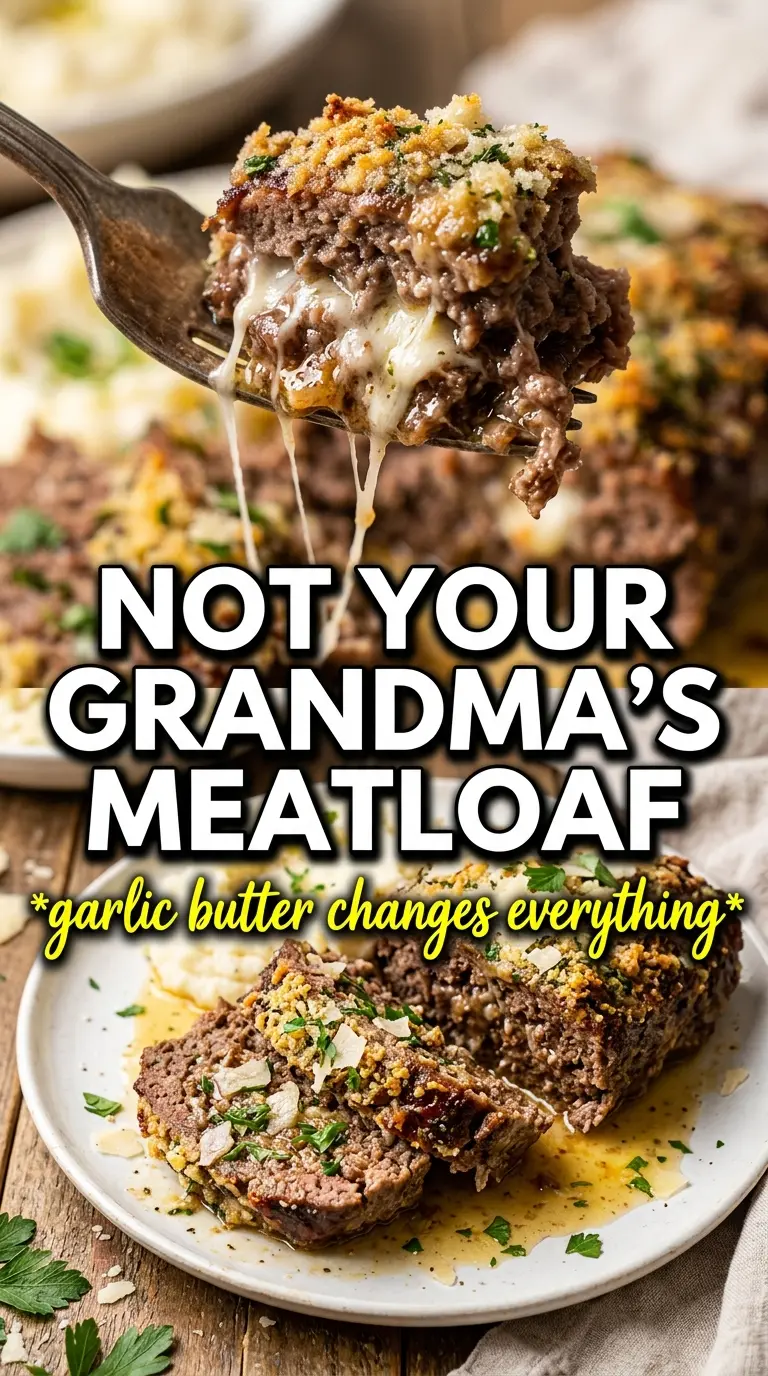
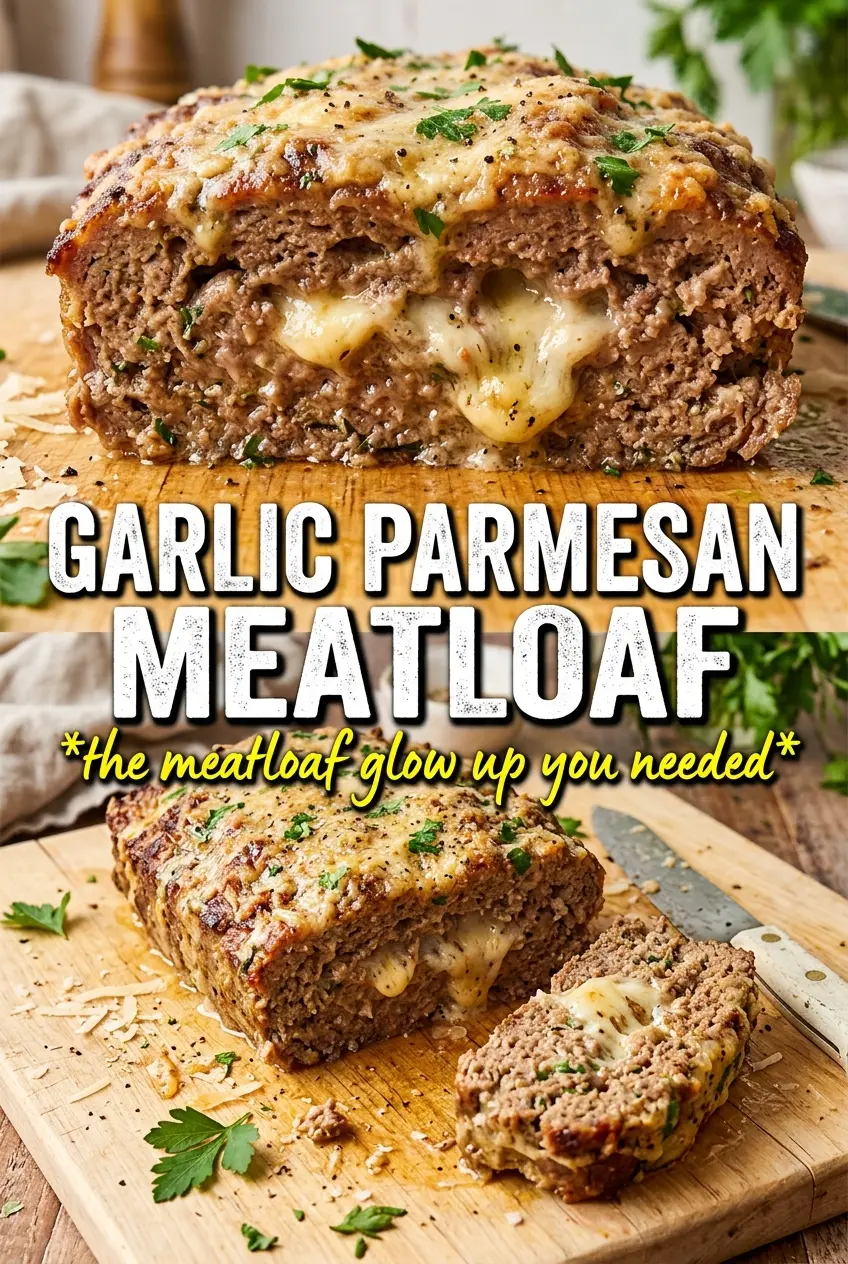
Garlic Parmesan Meatloaf comes out with a crisp, crackled top and a juicy center that slices cleanly instead of crumbling apart. The parmesan on top bakes into a savory crust, while the garlic butter soaks into the surface and keeps every bite tasting rich, not dry. It’s the kind of meatloaf that earns repeat requests because it feels familiar but lands with more flavor than the standard version.
The trick is in the balance. Milk and eggs keep the loaf tender, but the mixture still needs enough structure from breadcrumbs and parmesan to hold its shape. The other detail that matters is mixing just until the ingredients come together. Overworking ground beef turns the texture dense, and this recipe is at its best when the loaf stays soft and sliceable.
Below, I’ve included the small things that make a real difference here: how to get that parmesan topping to brown instead of burn, which ingredient you can swap if you’re out of breadcrumbs, and how to reheat leftovers without drying out the edges.
The top got this crisp, garlicky parmesan crust and the middle stayed juicy all the way through. I baked it on a sheet pan and it still held together perfectly when I sliced it.
Save this Garlic Parmesan Meatloaf for a dinner with a crisp parmesan crust and a juicy, herb-speckled center.
The Reason This Meatloaf Stays Juicy Instead of Turning Dense
Most dry meatloaf problems start long before the oven. The beef gets packed too tightly, the pan is too deep, or the mixture is loaded with so much filler that it bakes up bready instead of tender. This version works because it keeps enough fat in the beef for flavor, enough milk for moisture, and enough parmesan to add structure without swallowing the meat texture.
The other thing that matters is the pan choice. A loaf pan gives you a classic shape, but a parchment-lined sheet pan lets more of the surface brown and keeps the sides from steaming in their own juices. If the loaf looks wet before baking, that’s normal. It should hold together when shaped, not feel stiff like a paste.
What the Garlic, Parmesan, and Breadcrumbs Are Each Doing Here
- Ground beef (80/20) — This fat level keeps the loaf moist and flavorful. Leaner beef will work, but the texture gets firmer and less forgiving, especially after reheating.
- Parmesan — Parmesan brings salt, nuttiness, and that browned crust on top. Grated parmesan melts and toasts better than a finely powdered version, which can go past golden into dry and sandy.
- Italian breadcrumbs — These hold moisture and help the loaf slice cleanly. If you only have plain breadcrumbs, add a pinch more Italian seasoning and a little extra salt because the seasoned version carries more flavor on its own.
- Whole milk — Milk softens the breadcrumbs and helps the meat stay tender. Low-fat milk works in a pinch, but whole milk gives a slightly richer finish.
- Garlic and onion — Fresh garlic gives the loaf its backbone, and the onion keeps the interior from tasting flat. Dice the onion finely so it softens fully while baking; large pieces can leave the loaf loose and uneven.
- Butter topping — The melted butter helps the garlic and parmesan form that browned, crackly top. Don’t skip it if you want the crust to taste like more than just cheese on meat.
Building the Loaf So the Top Browns and the Middle Stays Tender
Mixing the Base Without Overworking It
Combine the beef, half the parmesan, breadcrumbs, milk, eggs, garlic, onion, seasoning, garlic powder, salt, and pepper in a large bowl. Use your hands or a fork and stop as soon as everything looks evenly distributed. If you keep mixing after that point, the beef tightens up and the finished loaf turns springy instead of tender.
Shaping for Even Baking
Form the mixture into a loaf on a parchment-lined sheet pan or into a loaf pan if that’s what you have. A sheet pan gives you more browned edges, while a loaf pan keeps the shape neater and slightly taller. Smooth the top so the butter topping can spread evenly; rough peaks can burn before the center reaches temperature.
Garlic Butter and Parmesan on Top
Stir the melted butter with the remaining garlic, then brush it over the loaf. Pat the rest of the parmesan over the surface so it sticks instead of sliding off. That top layer should look generous, but not so thick that it forms a solid white blanket; you want spots of cheese that can brown into a crust.
Knowing When It’s Done
Bake until the internal temperature reaches 160°F and the top is deep golden with crisped edges. If the top is browning too fast before the center is ready, loosely tent it with foil for the last part of baking. Letting it rest for 10 minutes matters here, because the juices settle and the slices hold together instead of falling apart on the cutting board.
How to Adapt This Meatloaf Without Losing the Texture
Gluten-Free Version
Swap the Italian breadcrumbs for a gluten-free breadcrumb blend or crushed gluten-free crackers. You still need that dry binder to hold the loaf together, so don’t leave it out entirely or the meat will bake up loose and crumbly.
Dairy-Free Option
Use unsweetened plain dairy-free milk and swap the butter for olive oil on top. You’ll lose a little of the rich, savory finish from the butter, but the loaf still browns well and stays moist if you keep the beef at 80/20.
Using Ground Turkey Instead
Ground turkey can work, but it needs the extra moisture from the milk and butter topping even more than beef does. Expect a lighter texture and a milder flavor, and pull it from the oven as soon as it reaches temperature so it doesn’t dry out.
Storage and Reheating
- Refrigerator: Store slices in an airtight container for up to 4 days. The crust softens a little, but the flavor stays strong.
- Freezer: Wrap individual slices tightly and freeze for up to 2 months. Thaw overnight in the refrigerator for the best texture.
- Reheating: Warm slices covered in a 300°F oven with a splash of broth or water in the pan. The common mistake is blasting it in the microwave until the edges turn tough.
Questions I Get Asked About This Recipe
Garlic Parmesan Meatloaf
Ingredients
Equipment
Method
- Preheat oven to 375°F and line a loaf pan or sheet pan with parchment, so the meatloaf releases cleanly after baking.
- In a large bowl, mix ground beef, 1/2 cup parmesan, breadcrumbs, milk, eggs, 3 minced garlic cloves, onion, Italian seasoning, garlic powder, salt, and pepper just until combined, using a light hand to avoid a dense loaf. Stop mixing once no dry breadcrumb pockets remain.
- Shape the mixture into a loaf on the prepared pan and smooth the top, creating an even surface for the crust to cling to.
- Mix melted butter with the remaining minced garlic and brush it over the loaf, so the surface turns glossy before baking. Cover the entire top and edges.
- Pat the remaining parmesan over the entire surface, aiming for an even layer so it bakes into a crackled crust. Press lightly to help it adhere.
- Bake at 375°F for 55–65 minutes until the internal temperature reaches 160°F and the top is deeply golden, with a firm, browned crust. Check near the end so the center stays juicy.
- Let the meatloaf rest 10 minutes before slicing, so the juices set and the slices hold together. The loaf should look slightly tightened on the outside.
- Garnish with fresh parsley and slice to serve, revealing a juicy, herb-flecked interior under the crackled garlic-parmesan crust.