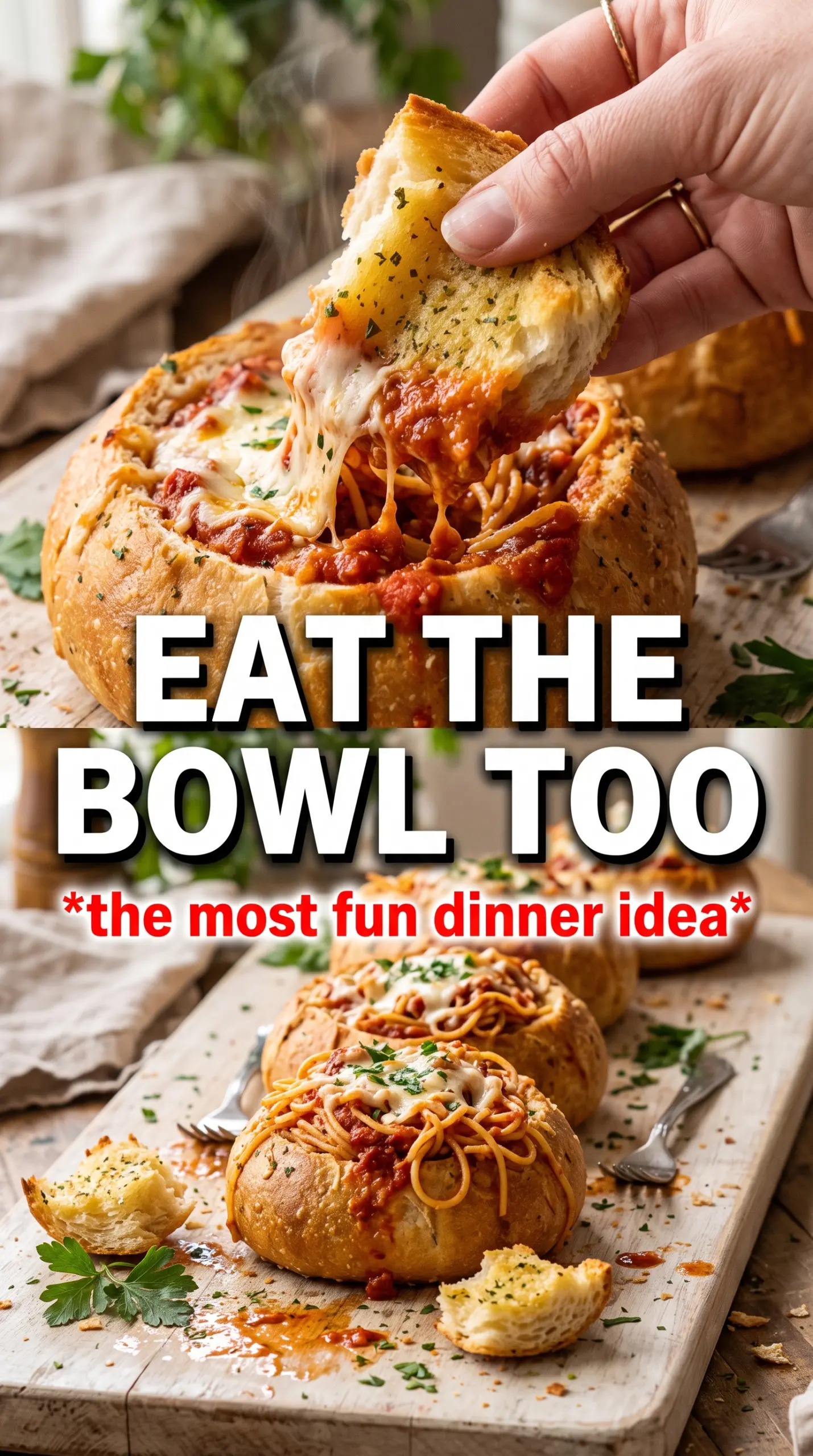
Spaghetti tucked into a crisp garlic bread bowl is the kind of dinner that gets everyone to the table fast. The bread holds its shape, the edges turn deeply golden, and the garlic butter soaks into the inside just enough to make every bite taste richer without turning soggy. Once the mozzarella melts over the top, you get the best parts of spaghetti night and garlic bread in one handheld meal.
What makes this version work is the order. The bread bowls get a quick bake before the filling goes in, which keeps the crust sturdy enough for the sauce. The spaghetti is tossed with the meat sauce before it’s loaded into the bread, so the pasta stays coated and doesn’t dry out in the oven. A little red pepper flake adds a gentle back note, but the real payoff is the contrast between crisp bread, saucy pasta, and that soft blanket of cheese.
Below, I’ll walk through the small details that keep the bowls from collapsing and the filling from becoming heavy. There’s also a practical note on making them ahead, plus a few swaps if you need a meatless version or want to use what’s already in your kitchen.
The bread bowls stayed crisp on the outside and held up under the spaghetti without getting mushy. I loved that the garlic butter baked into the edges first — it made the whole thing taste like a restaurant dinner.
Save these spaghetti garlic bread bowls for the night you want a crisp bread bowl, saucy spaghetti, and melted mozzarella all in one pan-friendly dinner.
The Part That Keeps the Bread Bowls from Going Soggy
The biggest mistake with bread bowl pasta is filling the bread before the shell has a chance to dry out and crisp up. That garlic butter bake at the beginning is doing real work here. It creates a thin barrier inside the bread, gives the crust flavor, and helps the bowl stay sturdy when the sauce goes in.
Another thing that matters is how much bread you leave behind. A thick enough wall keeps the bowl intact, but if you leave too much interior bread, the filling feels cramped and the center stays doughy. Aim for about a 1-inch border and pull out enough soft bread to make room without weakening the sides.
- Sourdough bread bowls — Round sourdough has enough structure to hold hot spaghetti without collapsing. If you use softer bread, the bottom can go limp before dinner hits the table.
- Garlic butter — Brushing it inside and outside the bowls gives you flavor and a crisp finish. Melted butter works here because it soaks into the crust more evenly than softened butter.
- Mozzarella — Low-moisture shredded mozzarella melts cleanly and browns lightly without making the top greasy. Fresh mozzarella holds more water, so it’s not the best swap if you want the top to stay neat.
What Each Ingredient Is Actually Doing in This Dish
- Ground beef — This gives the filling enough body to feel like a meal, not just pasta in bread. If you want a leaner result, use 90/10 beef and drain it well so the sauce doesn’t pool at the bottom of the bowls.
- Marinara sauce — A jarred sauce is fine here because the bread bowl brings plenty of extra flavor and texture. Pick one with a straightforward tomato taste, since overly sweet sauces can fight the garlic butter.
- Italian seasoning and red pepper flakes — These round out the marinara and keep the filling from tasting flat. The pepper flakes don’t make it spicy; they just sharpen the sauce a little so it stands up to the bread.
- Parmesan — Save this for the finish. It adds a salty, nutty bite that cuts through the richness of the mozzarella and butter.
Building the Bowls in the Right Order
Hollowing and Brushing the Bread
Cut the tops off the bread bowls and pull out the soft center, but leave enough bread on the bottom and sides to support the filling. Brush the inside and outside with the garlic-parsley butter until every exposed surface looks glossy. Bake them until the edges feel dry and lightly crisp when tapped; if they still feel soft, they’ll absorb sauce too quickly later.
Making the Meat Sauce
Brown the beef in a skillet until the pink color is gone and the bits at the bottom start to darken a little. Drain off excess fat before adding the marinara, seasoning, and pepper flakes, then let it simmer until the sauce looks thick enough to cling to a spoon. If it stays loose, the pasta will slide and the bread will get heavy fast.
Filling and Finishing in the Oven
Toss the cooked spaghetti with the meat sauce before it goes into the bread bowls. That keeps the pasta coated and stops it from drying out in the oven. Pack the filling in generously, top with mozzarella, and bake just until the cheese melts and starts to bubble. If you leave it in too long, the bread bottom can overbrown before the cheese has a chance to get properly gooey.
How to Adapt These Bread Bowls Without Losing the Best Part
Make it meatless with lentils or mushrooms
Swap the ground beef for cooked brown lentils or finely chopped mushrooms sautéed until their moisture cooks off. Lentils give you a hearty, saucy filling, while mushrooms bring a deeper, savory edge. Either way, cook the sauce a little longer so it thickens enough to sit inside the bread.
Use gluten-free pasta and serve in toasted bowls or ramekins
If you need the pasta itself to be gluten-free, that part is an easy switch. The bread bowl won’t work for a gluten-free diner unless you use a certified GF bread bowl, which can be harder to find and usually softer, so a toasted ramekin or oven-safe bowl is the safer route.
Swap in Italian sausage for a richer filling
Use bulk Italian sausage instead of the beef if you want a bolder, more seasoned sauce with almost no extra work. It brings more fat and spice, so drain only if the pan looks greasy, and go lighter on the red pepper flakes unless you want extra heat.
Storage and Reheating
- Refrigerator: Store the pasta filling separately for up to 4 days. The bread bowls are best baked fresh, since they soften as they sit.
- Freezer: The meat sauce freezes well for up to 3 months. Don’t freeze assembled bread bowls; the bread turns spongy once thawed.
- Reheating: Reheat the sauce on the stove or in the microwave until hot, then warm the bread bowls in the oven before assembling. If you reheat everything together too long, the bread loses its crisp edge and the top overcooks before the center heats through.
Questions I Get Asked About This Recipe
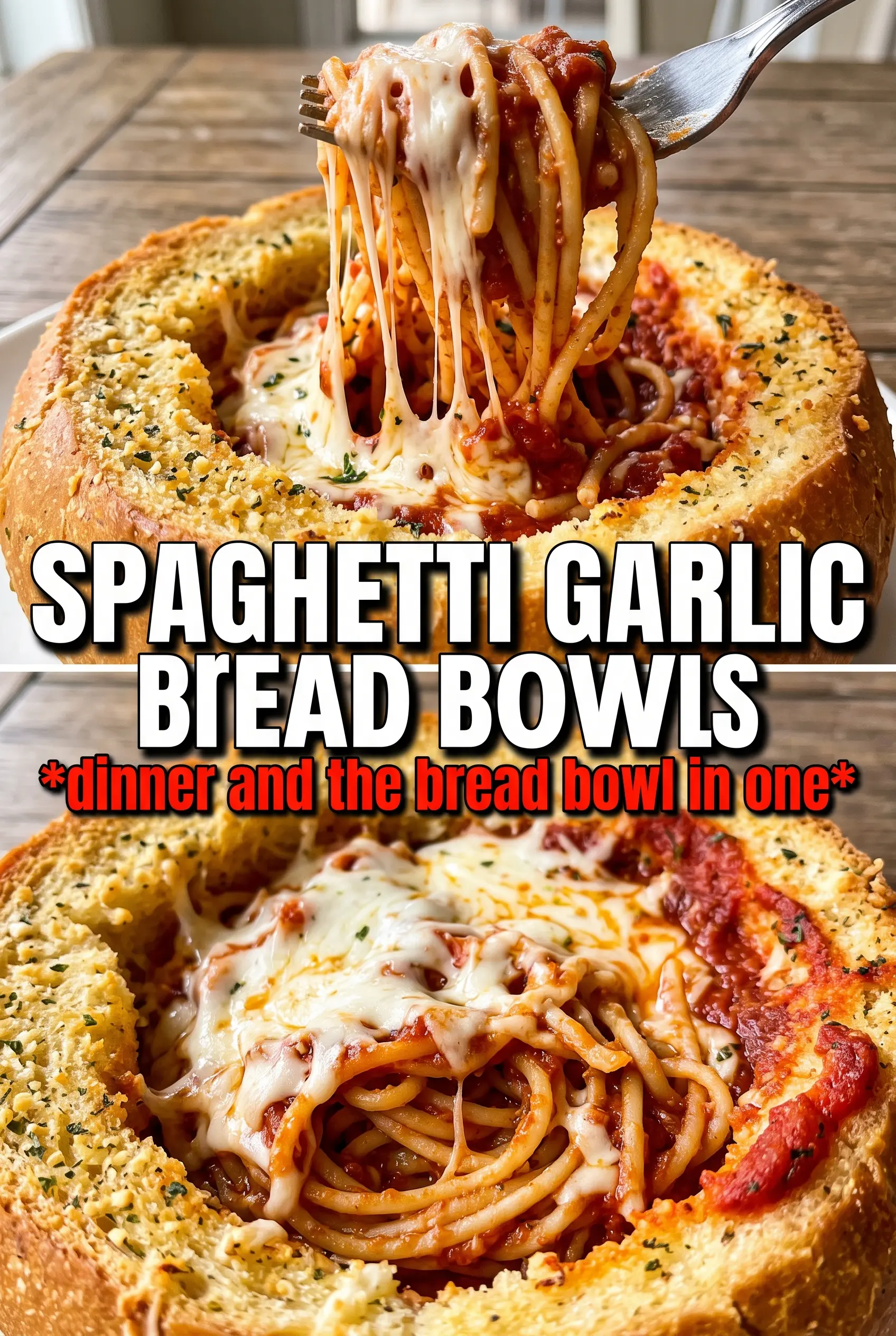
Spaghetti Garlic Bread Bowls
Ingredients
Equipment
Method
- Preheat the oven to 375°F.
- Cut the tops off the bread bowls and hollow out the centers, leaving a 1-inch border.
- Mix the melted butter with the minced garlic and chopped parsley, then brush generously inside and outside each bread bowl.
- Bake the bread bowls for 10 minutes, until the insides are toasted and the edges look crispy.
- Brown the ground beef in a skillet, then drain the fat.
- Add the marinara, Italian seasoning, and red pepper flakes, then simmer for 10 minutes so the sauce thickens slightly.
- Toss the cooked spaghetti with the meat sauce until evenly coated.
- Fill each bread bowl generously with the spaghetti and sauce.
- Top with shredded mozzarella and bake for 8–10 minutes, until the cheese is melted and bubbly.
- Serve immediately with Parmesan on top.