Juicy steak with creamy garlic sauce lands on the plate with a deep, crackly crust and a pan sauce that tastes like it came from a restaurant kitchen, not a rushed weeknight. The steak stays tender and pink in the center, while the sauce brings enough garlic, butter, and parmesan to turn a simple pan sear into something you’ll want to repeat.
The key is keeping the steak and the sauce in the same skillet. Those browned bits left behind after searing are what give the sauce its backbone, and reducing the beef broth before the cream goes in keeps everything concentrated instead of thin. A hot cast iron pan also matters here, because it builds the crust fast without overcooking the center.
Below, I’ll walk through the exact sear, the timing on the sauce, and the small details that keep the cream from turning flat or greasy. There’s also a storage note for leftovers and a few smart ways to adjust the dish if you’re cooking with a different cut or avoiding dairy.
The steak got that deep crust I always chase, and the garlic cream sauce was thick enough to cling to every slice without running all over the plate. My husband kept sneaking pieces straight from the skillet.
Save this ribeye with creamy garlic sauce for the night you want a hard sear, a silky pan sauce, and one skillet to do almost all the work.
The Sear That Builds the Sauce Before the Sauce Exists
The biggest mistake with pan steak is moving too soon. If the pan isn’t hot enough, the meat steams before it browns, and then the sauce has nothing worth picking up from the skillet. You want the oil just shimmering and the pan hot enough that the steak releases only when a real crust has formed.
That crust does double duty here. It gives you the flavor of a steakhouse sear, and it leaves browned bits in the pan that dissolve into the broth and cream. If your skillet looks dark and sticky after the steaks come out, that’s a good sign, not a problem.
- Ribeye or NY strip — Ribeye gives you more built-in richness and a little more forgiveness if you miss the perfect second on the sear. NY strip is leaner and a touch firmer, but it still works beautifully if you keep the cook time tight.
- Cast iron skillet — This is the pan that gets you the deepest crust fastest. A thin stainless pan can work, but it won’t hold heat as steadily, which makes medium-rare harder to hit.
- Heavy cream — This gives the sauce body without curdling when it simmers with the broth. Half-and-half will make a thinner sauce and needs extra attention so it doesn’t split.
- Parmesan — Use the finely grated kind, not thick shreds. It melts into the sauce more smoothly and helps it cling to the steak instead of sliding off.
- Fresh thyme — Dried thyme works in a pinch, but use less. Fresh thyme keeps the sauce from tasting heavy and adds a cleaner finish that balances the garlic.
Building the Creamy Garlic Sauce Without Losing the Sear
Seasoning and Resting the Steaks
Salt the steaks generously on all sides and let them sit at room temperature for about 30 minutes. That short rest helps the surface dry a little, which gives you better browning, and it helps the center cook more evenly. If the steaks go into the skillet cold, the outside overcooks before the middle has a chance to catch up.
Hard Sear, Then Butter Baste
Heat the cast iron until it’s smoking lightly, then add the oil and lay the steaks in away from you. Don’t move them for the first few minutes; the crust needs time to set. Add the butter in the last minute and tilt the pan so you can spoon the melted butter over the top, which deepens the color and adds a glossy finish. If the butter burns before the steak is done, the pan was too hot, so pull it off the burner for a few seconds before basting.
Rest First, Sauce Second
Take the steaks out and tent them with foil for five minutes. That rest matters because the juices settle back into the meat instead of spilling out the second you cut in. Use that time to build the sauce in the same pan; if you cut the steak too early, the resting juices end up on the board instead of in every bite.
Turning the Pan Drippings Into Sauce
Melt the remaining butter over medium heat, then add the garlic and cook it for about a minute, just until fragrant. Pour in the beef broth and let it reduce by half, scraping the pan as you go so the browned bits dissolve into the liquid. Add the cream, parmesan, and thyme, then simmer until the sauce lightly coats the back of a spoon. If it looks thin at first, keep going; cream sauce thickens as it reduces, not when it’s blasted with heat.
Make It with NY Strip Instead of Ribeye
NY strip gives you a firmer bite and a slightly leaner finish. It still sears well, but don’t overcook it past medium-rare if you want it to stay juicy, since it has less internal fat to protect it.
Dairy-Free Version That Still Feels Rich
Swap the butter for a neutral plant-based butter and use full-fat coconut cream in place of the heavy cream. The sauce will taste a little different and less savory than the original, so lean harder on the beef broth and garlic to keep the flavor balanced.
Lower-Carb Serving Idea
The steak and sauce already fit a low-carb plate; the main adjustment is what you serve alongside it. Spoon the sauce over cauliflower mash, sautéed greens, or roasted mushrooms so you still get something to catch the pan sauce.
Cooking for Four
Cook the steaks in batches so the skillet stays hot enough to sear properly. If you crowd the pan, the meat steams and you lose the crust that makes the sauce taste deeper.
Storage and Reheating
- Refrigerator: Store the sliced steak and sauce separately for up to 3 days. The sauce will thicken as it chills.
- Freezer: The steak freezes okay, but the cream sauce doesn’t thaw with the same silky texture. Freeze the steak alone if needed and make the sauce fresh.
- Reheating: Warm the steak gently in a low oven or in a covered skillet over low heat, then reheat the sauce slowly on the stove with a splash of broth. High heat is the mistake here; it tightens the steak and can make the sauce split.
Questions I Get Asked About This Recipe
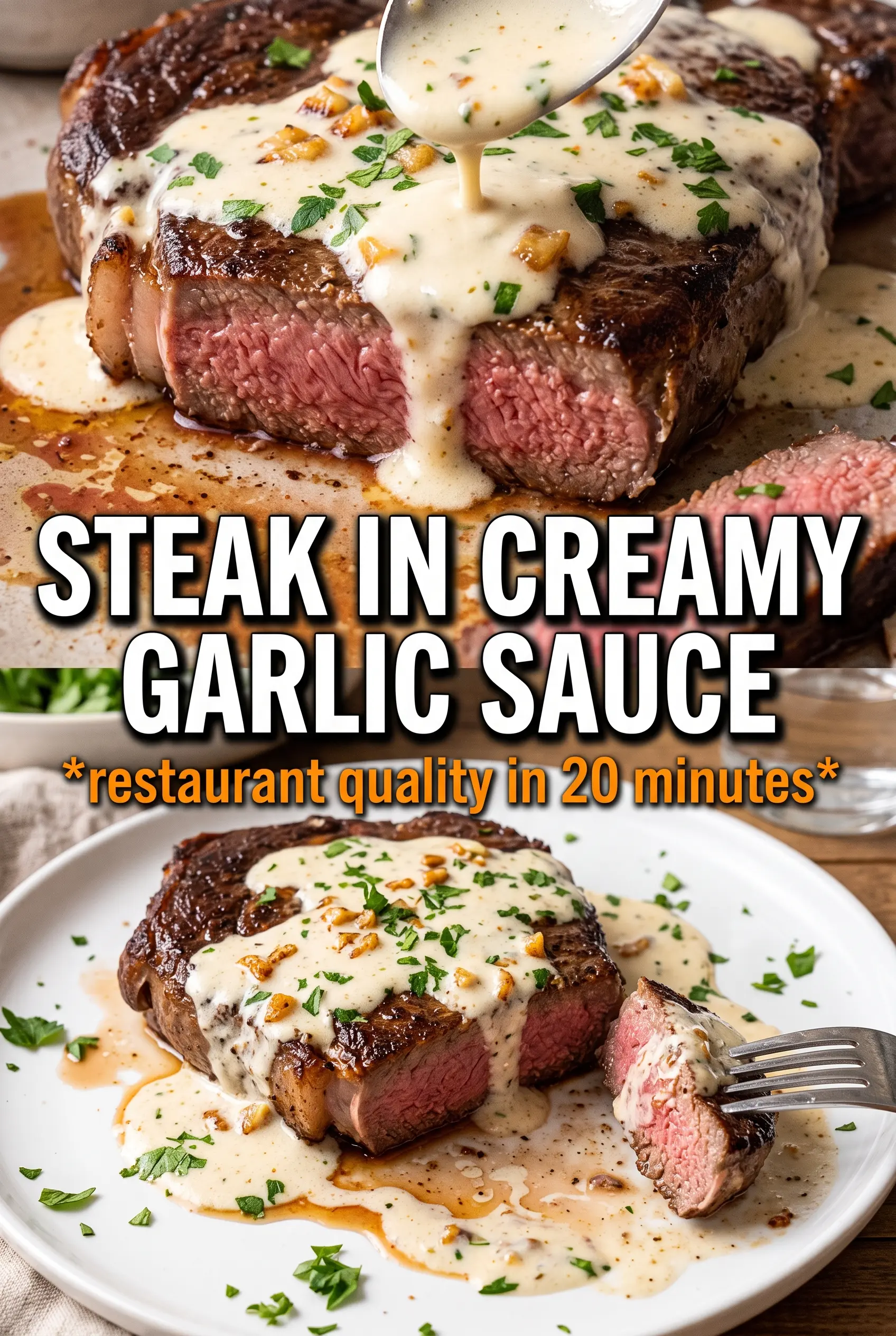
Juicy Steak with Creamy Garlic Sauce
Ingredients
Equipment
Method
- Generously season the steaks with salt and coarse black pepper on all sides, then let them rest at room temperature for 30 minutes.
- Heat a cast iron skillet over high heat until smoking, then add the vegetable oil.
- Place steaks in the skillet and sear for 3–4 minutes per side for medium-rare.
- In the last minute of searing, add 2 tablespoons of butter and baste constantly for a glossy crust.
- Remove steaks, tent with foil, and rest for 5 minutes.
- In the same pan over medium heat, melt the remaining butter, then add the minced garlic and cook for 1 minute.
- Add the beef broth and reduce by half.
- Add the heavy cream, parmesan, and fresh thyme, then simmer until the sauce coats the back of a spoon.
- Slice the steaks and serve with creamy garlic sauce spooned generously over the top.