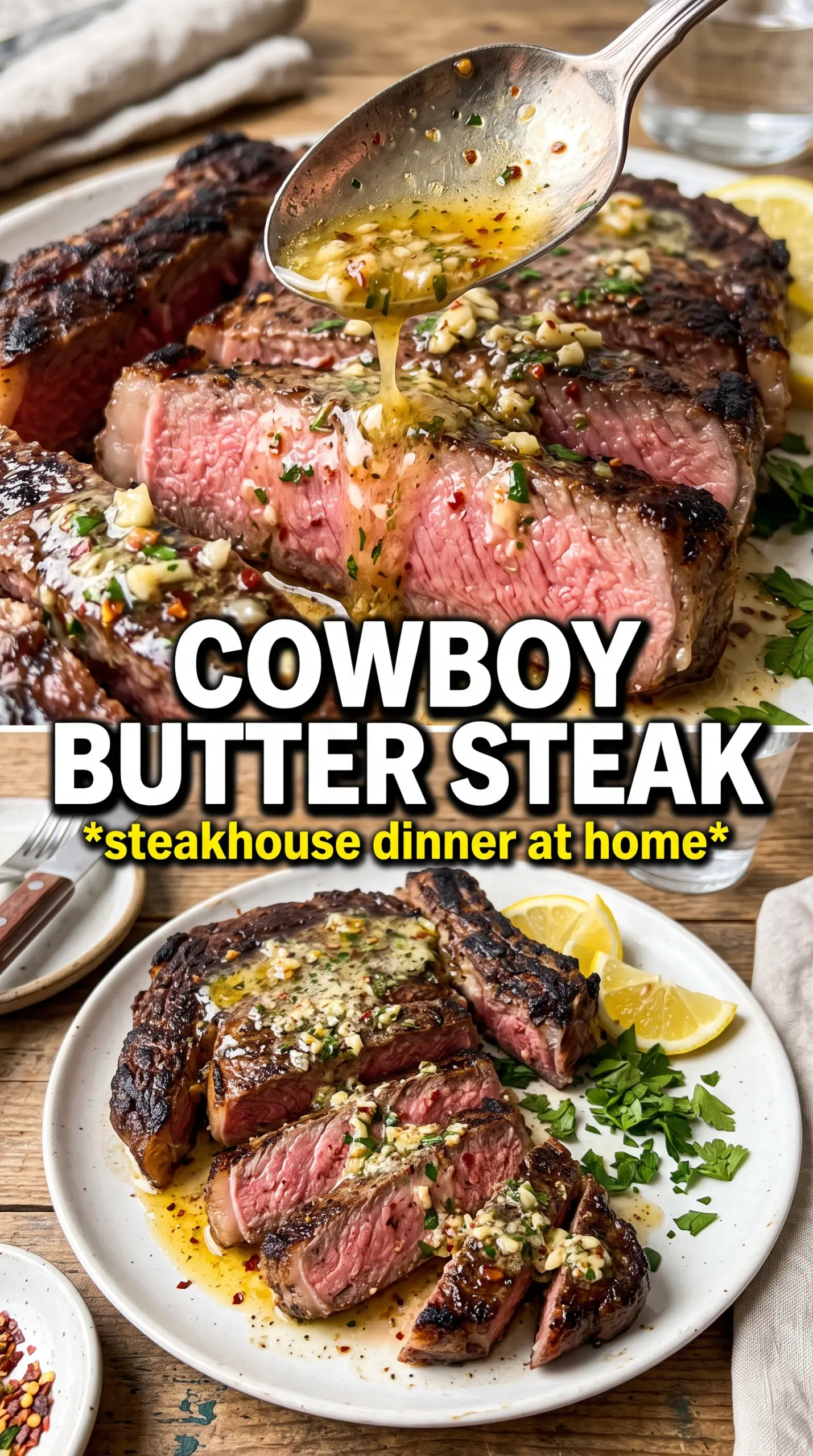
Thick ribeye and cowboy butter make sense together in a way that a plain pan sauce never quite does. You get a hard, savory sear on the steak, then the butter melts into the crust and settles into every cut edge with garlic, lemon, herbs, and a little heat. The result is rich without feeling heavy, which is why this one earns a spot in the dinner rotation whenever steak night needs to feel a little more special.
The key is treating the butter like an ingredient, not a garnish. It gets mixed ahead of time, chilled until firm, then added at the end so the garlic, mustard, paprika, and herbs stay bright instead of cooking into something dull. The steak itself needs a dry surface and a hot cast iron pan; if the skillet isn’t smoking before the meat goes in, you’ll lose that crust and end up steaming the outside instead of searing it.
Below, I’ve included the small details that matter most: when to add the cowboy butter, how to keep the steak juicy, and what to change if you’re cooking for a different cut or want to adjust the heat.
The steak seared beautifully and the cowboy butter melted into every slice without turning greasy. I rested it five minutes like you said, and it stayed juicy all the way through.
Save this cowboy butter steak for the nights when you want a hard sear, a garlicky herb butter finish, and almost no cleanup.
The Sear Matters More Than the Butter
With a steak this thick, the difference between a great crust and a pale exterior comes down to surface heat and dryness. Moisture is the enemy here. If the steak goes into the pan damp, the skillet has to spend its energy evaporating water before the browning starts, and that steals both color and flavor.
Cast iron helps because it holds heat when the meat hits the pan. Keep the oil neutral and high-heat friendly, and wait until it shimmers and just starts to smoke before the steak goes in. That first minute is where the crust starts building, and once the meat releases naturally from the pan, you know it has browned enough to turn.
What the Cowboy Butter Is Actually Doing
- Unsalted butter — This is the base that carries everything else. Unsalted butter gives you control over the final seasoning, and it softens enough to blend with the herbs and spices into a spoonable log. Salted butter works in a pinch, but it can push the finished steak over the edge once the pan drippings and steak seasoning are added.
- Garlic — Fresh minced garlic gives the butter its sharp backbone. Jarred garlic tastes flatter here and can pick up a pickled note, so fresh is worth it. If you want a smoother finish, grate the garlic finely instead of chopping it; it melts into the butter better and spreads more evenly over the hot steak.
- Dijon mustard — This doesn’t make the butter taste like mustard. It adds a subtle tang and helps the mixture taste more rounded, especially once the butter melts over beef. Whole grain mustard can work, but the texture will be a little more rustic.
- Fresh parsley and chives — These are the bright part of the butter, and dried herbs won’t give the same clean finish. Parsley brings freshness, chives add a gentle onion note, and both keep the butter from tasting too heavy after it melts.
- Smoked paprika and red pepper flakes — These give the cowboy butter its warmth and color. The paprika adds depth without heat, while the flakes add a slow burn. If you want less spice, cut the flakes in half instead of leaving them out completely; the little bit of heat helps the butter stand up to a rich ribeye.
Build the Crust, Then Finish With the Butter
Mix and Chill the Butter First
Blend the softened butter with the garlic, lemon juice, herbs, Dijon, paprika, red pepper flakes, and salt until it looks evenly flecked and smooth. Roll it into a log and chill it until firm enough to slice. That step matters because soft butter melts too fast in the pan and disappears before it can finish the steak; chilled butter holds its shape long enough to baste, then melts on the hot meat exactly where you want it.
Season the Steak Generously
Pat the ribeyes dry, then season all over with salt and coarse black pepper. Don’t be shy here; thick steaks need enough seasoning on the outside to balance the rich butter. Let them sit for a few minutes while the pan heats. If the surface still looks wet from the seasoning dissolving, blot lightly with a paper towel before they hit the skillet.
Sear in a Smoking Hot Cast Iron Skillet
Heat the skillet over high heat until it’s hot enough that the oil shimmers and lightly smokes. Add the oil, lay in the steaks, and leave them alone for 3 to 4 minutes so a proper crust forms. If you move them too early, they’ll stick and tear. For medium-rare, the center should still feel springy, not hard, and the edges should have a deep brown crust.
Baste in the Final Minute
During the last minute, add a small pat of cowboy butter to the pan and tilt the skillet so it pools. Spoon that butter over the steaks as it foams and turns glossy. This is the part that gives you the garlicky shine without overcooking the butter; if you add it too early, the herbs and garlic can scorch and turn bitter.
Rest Before You Slice
Move the steaks to a plate and rest them for 5 minutes, tented loosely with foil. Resting keeps the juices inside the meat instead of running out onto the board the second you cut in. Finish each steak with a thick slice of the chilled cowboy butter while it’s still warm so it melts slowly over the top instead of vanishing into the pan.
How to Adapt Cowboy Butter Steak for Different Nights
Swap the Ribeye for Strip Steak
Strip steak gives you a firmer bite and a little less marbling than ribeye, but the cowboy butter helps make up for that. Keep the sear time close to the same, then use a meat thermometer if you’re unsure, because strip can go from perfect to dry faster than ribeye.
Make It Dairy-Free
Use a high-quality plant-based butter that behaves like a stick of butter at room temperature. You’ll still get the herb and garlic finish, but the flavor will be a little less rich and the melting pattern a little softer. Skip any spread that stays whipped or oily, because it won’t hold its shape as a log.
Adjust the Heat Without Losing the Cowboy Butter Character
For a milder version, halve the red pepper flakes and keep the smoked paprika. You’ll still get the warm finish and deep color, just without the lingering burn. For more heat, add a pinch more flakes to the butter rather than the steak seasoning so the spice melts into each slice.
Storage and Reheating
- Refrigerator: Store cooked steak and leftover cowboy butter separately for up to 3 days. The butter keeps its texture well, while the steak will firm up a bit as it chills.
- Freezer: The cowboy butter freezes well for up to 2 months. Wrap the log tightly, then slice what you need while it’s still cold. Cooked steak can be frozen, but the texture won’t be as good after thawing.
- Reheating: Reheat steak gently in a low oven, covered, just until warmed through. High heat dries out the edges fast, so don’t toss it back into a screaming hot pan. Add a fresh slice of butter after reheating to bring the richness back.
Questions I Get Asked About This Recipe
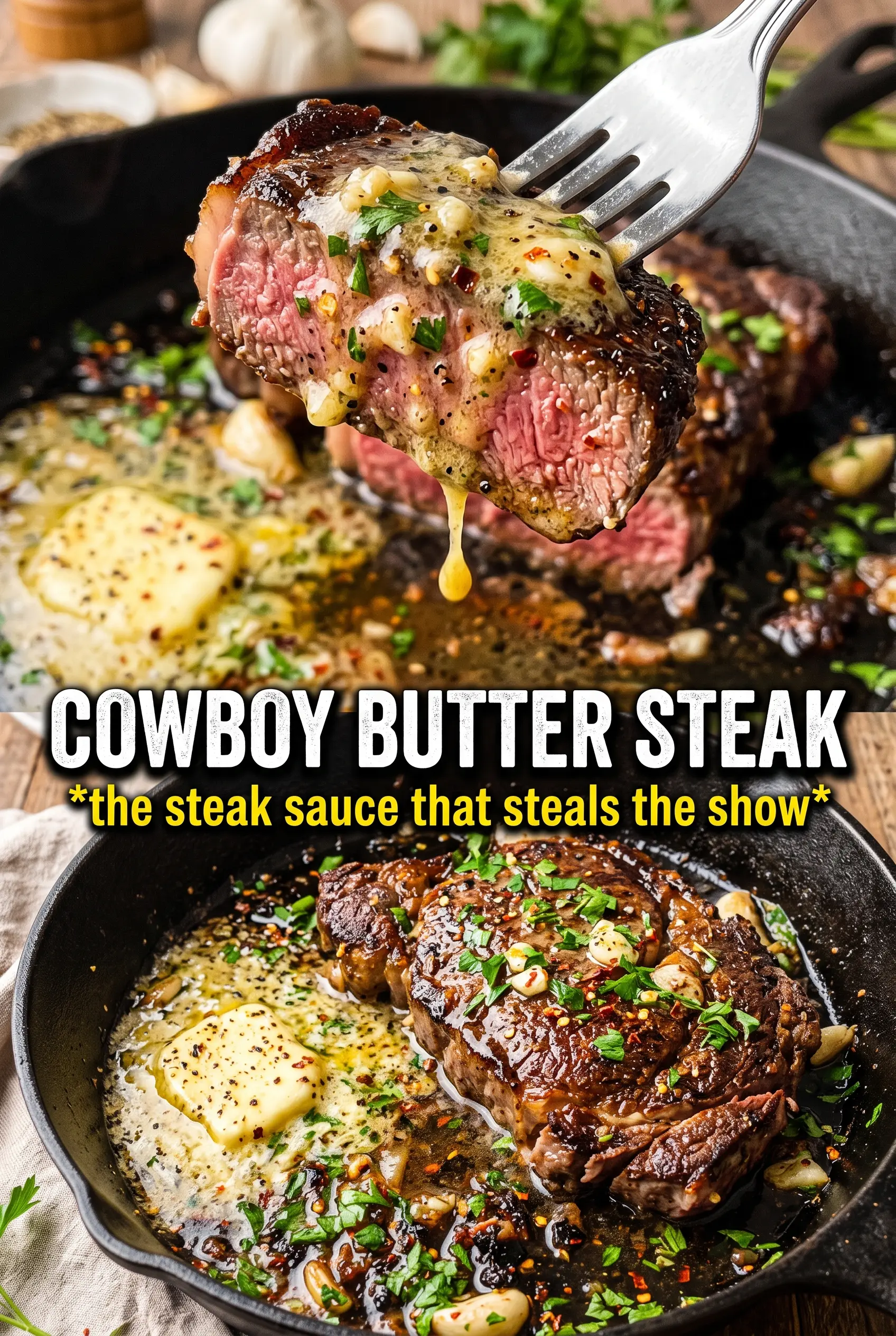
Cowboy Butter Steak
Ingredients
Equipment
Method
- Blend unsalted butter, garlic, lemon juice, fresh parsley, fresh chives, Dijon mustard, smoked paprika, red pepper flakes, and salt until smooth, watching for a uniform, pale-gold color with visible herb flecks.
- Shape the mixture into a log using plastic wrap, then refrigerate until firm for about 5 minutes so it slices and melts cleanly.
- Season ribeye steaks generously with salt and coarse black pepper on all sides, pressing to help the seasoning adhere.
- Heat a cast iron skillet over high heat until smoking, then add vegetable oil and swirl to coat the pan.
- Add ribeye steaks and sear for 3–4 minutes per side for medium-rare, turning once when a deep brown crust forms.
- In the final minute, baste each steak with a pat of cowboy butter, letting it melt and bubble around the edges.
- Remove the steaks and rest them for 5 minutes tented with foil, so juices reabsorb and the center stays medium-rare.
- Place a thick slice of cowboy butter directly on each steak while still warm so it melts immediately into a glossy coating.
- Serve with extra cowboy butter on the side, spooning any pooled butter over the top.