Sticky honey-balsamic pork chops pull double duty here: they roast up with a deep mahogany glaze while the Brussels sprouts catch the same sweet-tangy drips and the tomatoes slump into little bursts of juice. The whole pan tastes like it took more effort than it did, which is exactly why this one keeps getting made again.
The trick is giving the vegetables a head start so they’re already on the way to caramelized before the pork goes in. That first 10 minutes gets the sprouts browned at the edges, and the glaze goes on later so the honey doesn’t scorch before the chops are cooked through. Bone-in chops help here, too, because they stay juicier through a hot sheet-pan roast.
Below, I’ve laid out the small details that matter most: how to keep the glaze from burning, what to do if your chops are thicker or thinner than mine, and the best way to get the vegetables to roast instead of steam.
The glaze got sticky and dark without burning, and the Brussels sprouts picked up all that balsamic flavor from the pan. My husband said the pork tasted like something from a restaurant.
Like this sheet-pan pork dinner? Save it to Pinterest for the nights when you want sticky glazed pork chops and caramelized vegetables with one pan to wash.
The One Place This Sheet Pan Can Go Wrong
The biggest mistake with a honey-balsamic pork dinner is adding the glaze too early and trusting the oven to babysit it. Honey burns fast, and once it goes too dark, the whole pan tastes bitter instead of glossy. The vegetables also need room to roast; if they’re piled up, they steam and turn soft instead of getting those browned edges that make the whole meal feel finished.
This recipe works because the sprouts get a head start and the pork chops finish in the same hot oven. That timing lets the vegetables begin to caramelize before the glaze hits them, and the pork comes out juicy instead of dried out. Bone-in chops give you a little extra insurance, especially if yours are on the thicker side.
- Glaze timing — Brush it on after the vegetables have already started roasting. That keeps the honey from scorching before the pork reaches 145°F.
- Pan spacing — Spread everything out in a single layer. Crowding traps steam, and steam is the enemy of browning here.
- Chop thickness — A full 1-inch chop holds up best. If yours are thinner, start checking them several minutes early so they don’t overcook.
What Each Ingredient Is Actually Doing in the Pan
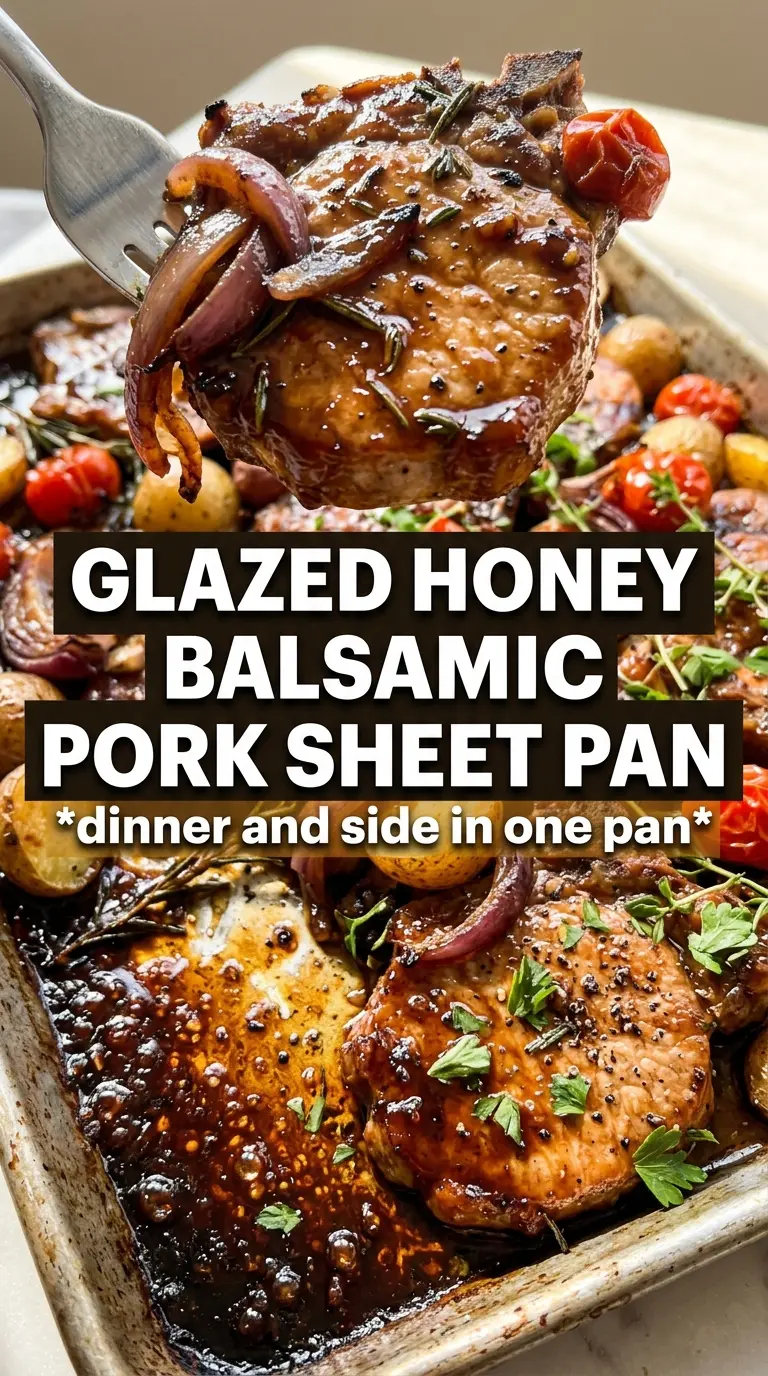
- Bone-in pork chops — The bone slows down the cook a little and helps the meat stay juicier. Boneless works in a pinch, but it cooks faster and dries out more easily, so watch the temperature closely.
- Balsamic vinegar — This gives the glaze its sharp backbone and that dark, glossy finish. Cheap balsamic is fine here because it’s being cooked with honey and mustard, not served raw.
- Honey — It softens the vinegar and turns sticky in the oven. It’s also the reason the broil step needs only a minute or two; more heat than that can push it from caramelized to burnt fast.
- Dijon mustard — It thickens the glaze slightly and keeps the sweetness from tasting flat. Regular yellow mustard won’t give the same depth.
- Brussels sprouts — They hold up to the oven and catch the glaze in their cut edges. Halve them so the flat sides can brown.
- Cherry tomatoes — They burst into a little sauce on the pan and loosen the glaze around the pork. Grape tomatoes work the same way if that’s what you have.
Building the Glaze, the Roast, and the Finish
Mix the glaze until it looks glossy and smooth
Whisk the balsamic, honey, Dijon, garlic, olive oil, salt, and pepper until the mixture looks emulsified and slightly thickened. The garlic should be evenly suspended, not sitting in clumps at the bottom. If the honey is stubborn, warm the bowl with your hands for a minute and whisk again. A broken-looking glaze at this stage usually means the oil wasn’t fully incorporated.
Give the vegetables their first turn in the oven
Toss the Brussels sprouts and cherry tomatoes with olive oil, salt, and pepper directly on the sheet pan, then spread them out with space between pieces. Roast them for 10 minutes before the pork goes in. This starts the browning on the sprouts and gives the tomatoes time to soften without collapsing too early. If they go in crowded, they’ll sweat instead of roast.
Glaze the pork right before it goes back into the heat
Push the vegetables to the edges and nestle the pork chops in the center. Brush the glaze generously over the top of each chop, then spoon any extra over the vegetables. The glaze should look wet and shiny when it goes in; that shine is what turns into the sticky coating later. If you add it too far ahead, the sugars can darken before the meat is done.
Roast to temperature, then hit it with the broiler only if needed
Roast until the pork reaches 145°F in the thickest part and the glaze looks lacquered, about 18 to 22 minutes. If you want deeper color, broil for about 2 minutes at the end, watching closely the entire time. Broilers can go from glossy to scorched in a flash, especially with honey in the pan. Let the pork rest briefly before serving so the juices stay in the meat instead of running onto the plate.
How to Adapt This for Different Pans, Diets, and Leftovers
Make It Without Gluten
This recipe is naturally gluten-free as written if your Dijon mustard and balsamic vinegar are certified gluten-free. That matters more than people think, because some condiments hide additives that can sneak gluten into an otherwise simple pan dinner. The texture and roast time stay the same.
Swap the Pork Chops for Chicken Thighs
Bone-in, skin-on chicken thighs handle this glaze beautifully and bring even richer drippings to the pan. Roast them until the chicken reaches 165°F, which usually takes a bit longer than the pork, and expect the skin to brown more deeply than the chops do. The vegetables can stay the same.
Use What You Have in the Vegetable Drawer
Cauliflower florets, broccoli, or sliced red onion can stand in for the Brussels sprouts. The key is choosing vegetables that can take the oven heat without turning watery. If you use something softer, add it later so it doesn’t fall apart before the pork finishes.
Storage and Reheating
- Refrigerator: Store leftovers in an airtight container for up to 3 days. The glaze will tighten up a bit, but the flavor holds well.
- Freezer: The pork freezes better than the vegetables. For best texture, freeze the chops separately from the roasted vegetables for up to 2 months.
- Reheating: Warm gently in a 325°F oven, covered loosely with foil, until heated through. High heat dries out pork fast and can burn the sugar in the glaze before the center is warm.
Questions I Get Asked About This Recipe
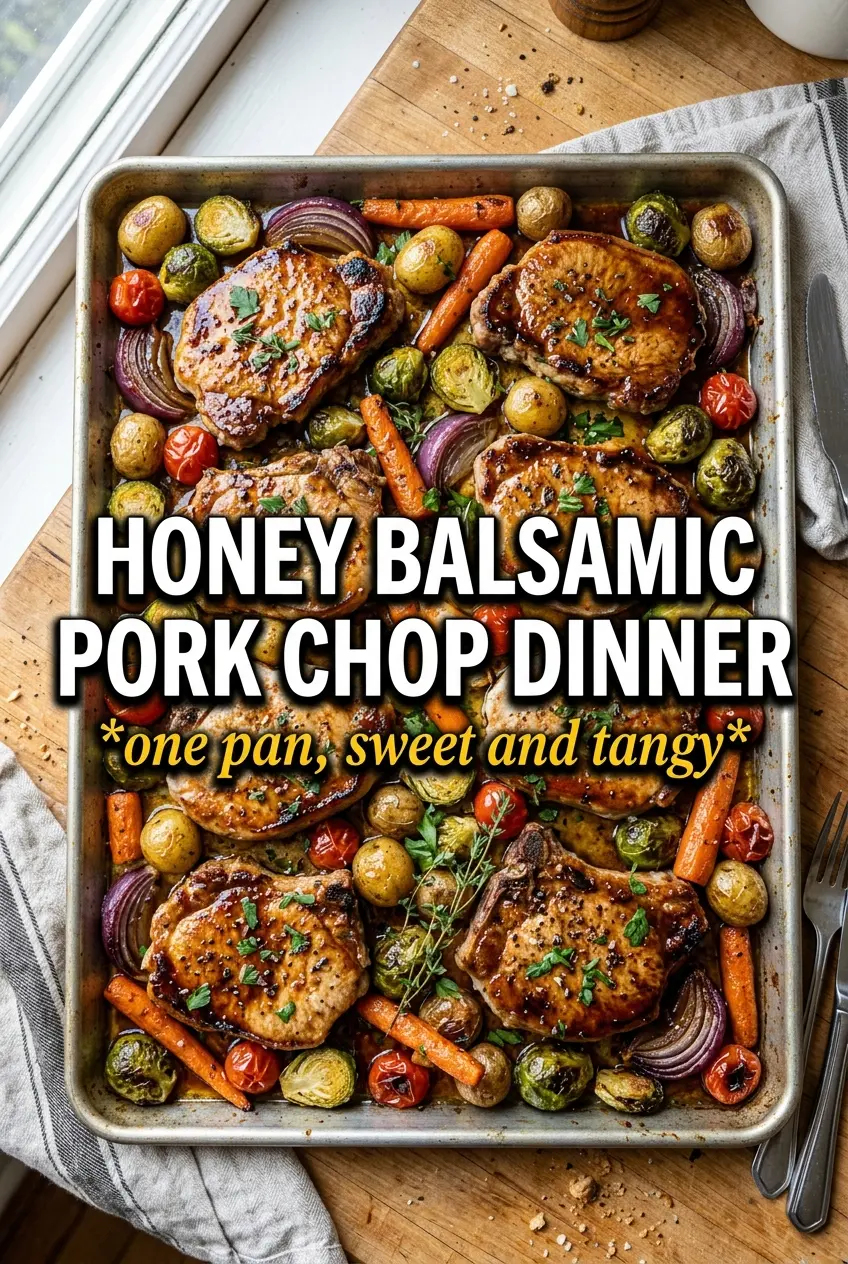
Sheet-Pan Honey-Balsamic Pork Chop Dinner
Ingredients
Equipment
Method
- Preheat oven to 400°F. Position a rack in the middle for even browning.
- Whisk balsamic vinegar, honey, Dijon mustard, minced garlic, and olive oil in a bowl. Continue whisking until the glaze looks smooth and glossy.
- Toss Brussels sprouts and cherry tomatoes with olive oil, salt, and pepper on a large sheet pan, spreading into an even layer. Roast for 10 minutes, until the edges start to blister and turn lightly golden.
- Season pork chops with salt and pepper, then push vegetables to the edges and nestle pork chops in the center. Keep the sheet pan’s hot surfaces exposed around the pork for better caramelization.
- Brush glaze generously over the pork chops and drizzle any extra over the vegetables. Make sure the glaze forms an even coating you can see pooling slightly.
- Roast for 18–22 minutes until pork reaches 145°F and the glaze turns caramelized, deep mahogany. Broil for 2 minutes for extra color, watching closely so the edges don’t burn.