Tender orzo, crisp cucumber, juicy tomatoes, and salty feta all work together here in a way that never feels heavy, even when the bowl sits out for a while. The small pasta shape catches the lemon herb vinaigrette in every crease, so each bite tastes bright instead of watered down. That matters with pasta salad. If the dressing doesn’t cling, the whole dish turns flat fast.
This version keeps the balance tight: enough olive oil for body, enough lemon juice and vinegar for lift, and just a little honey to round off the sharp edges. The orzo gets cooled before it meets the vegetables, which keeps the cucumbers crisp and the feta from turning mushy. A short chill in the fridge gives the pasta time to absorb the dressing without losing its texture.
Below, I’ve included the small details that make this salad better after a rest, plus the swaps that still keep the bowl tasting clean and fresh. It’s the kind of side dish that earns its place at potlucks because it tastes even better after it sits for a bit.
The dressing soaked into the orzo just enough after chilling, and the feta stayed in little creamy bites instead of disappearing. I brought it to a cookout and the bowl was scraped clean before the burgers were done.
Like this lemon herb orzo salad? Save it to Pinterest for potlucks, picnics, and easy make-ahead sides that stay bright and crisp.
The Dressing Has to Cling, Not Pool
Orzo salad fails when the pasta sits in a thin, sharp dressing that slides to the bottom of the bowl. This version works because the lemon, vinegar, Dijon, and olive oil are whisked into a proper emulsion, so the dressing coats the orzo instead of leaking away. That coating matters more than people think. Orzo is small, but it still needs a dressing with enough body to stick to each piece after chilling.
The other mistake is mixing everything while the pasta is still warm. Warm orzo softens the cucumber and dulls the feta, which changes the whole texture of the salad. Cool the pasta fully, then toss. That gives you separate, distinct bites instead of a bowl that starts bright and ends watery.
What the Lemon, Olive Oil, and Feta Are Actually Doing Here
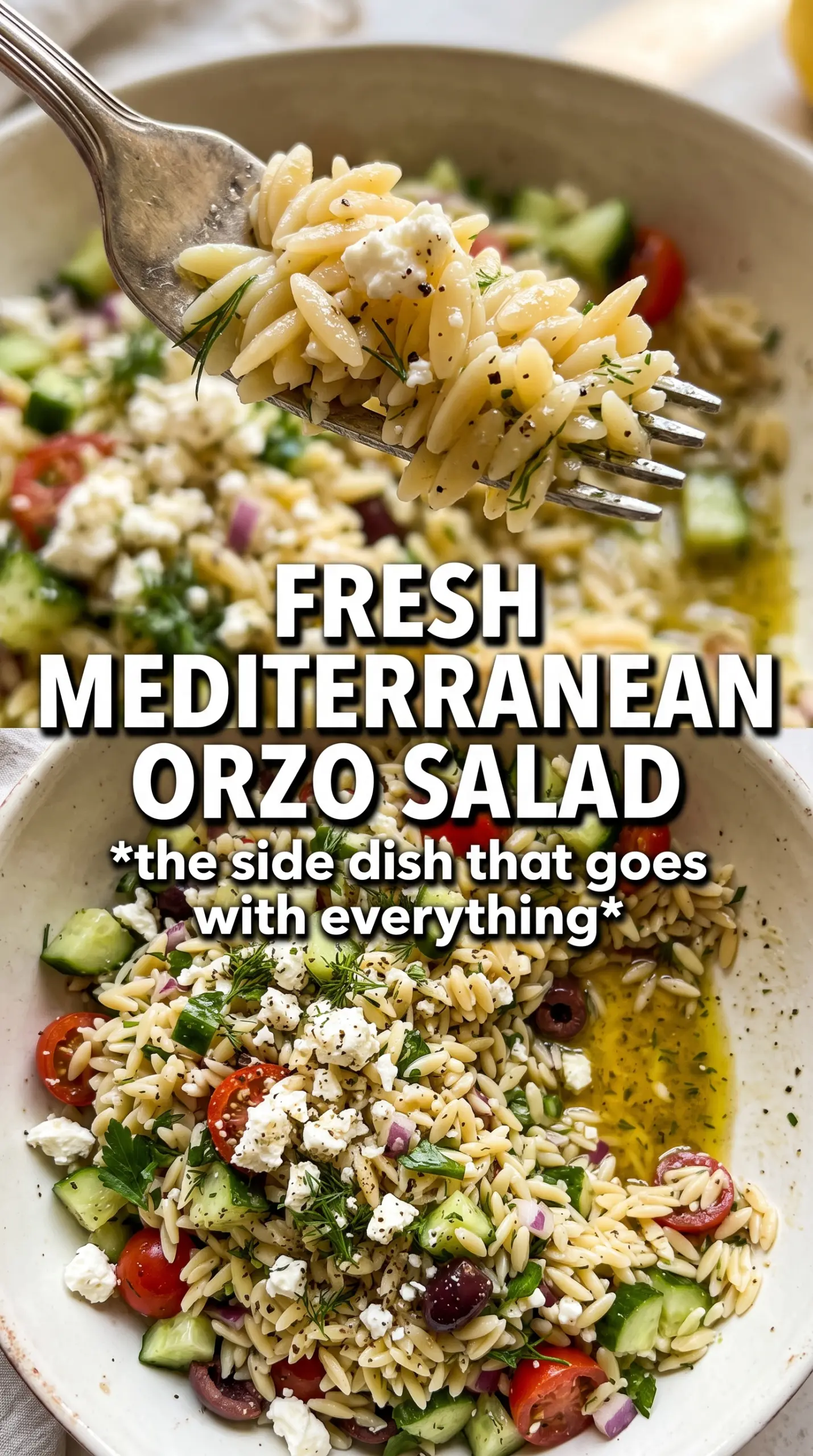
- Orzo pasta — This is the base that carries the dressing. Cook it just until tender, then cool it before mixing so it stays separate and doesn’t turn sticky. If you overcook it, the salad goes soft after chilling.
- Fresh lemon juice and zest — The juice gives the salad its brightness, and the zest brings the lemon flavor up without adding more acid. Fresh lemon matters here. Bottled juice tastes flat and makes the whole bowl lose its lift.
- Olive oil — Use a good one if you have it, since the dressing is simple and the oil comes through. It helps round out the acid and gives the orzo something to cling to. A bland oil works in a pinch, but it won’t taste as clean.
- Feta cheese — Crumble it by hand if you can. The uneven pieces melt into the salad less than pre-crumbled feta and give you little salty pockets throughout the bowl. Fold most of it in gently so it doesn’t disappear.
- Kalamata olives and red onion — These bring the briny, sharp edge that keeps the salad from tasting one-note. Slice the onion finely so it blends in instead of taking over. If red onion tastes too strong, rinse it briefly in cold water and drain well.
- Parsley and basil — Don’t skip both. Parsley adds freshness and basil gives the salad a sweeter, rounder herb note. Add them at the end so they stay green and don’t bruise into the dressing.
Building the Bowl So the Vegetables Stay Crisp
Whisking the Dressing Until It Tightens
Start with the olive oil, lemon juice, lemon zest, red wine vinegar, Dijon, honey, oregano, salt, and pepper in a bowl or jar. Whisk until the mixture looks slightly thickened and no longer separates immediately. If the dressing looks broken, keep whisking for another few seconds; the Dijon is there to help it hold together. Taste it now, not later, because once it hits the pasta the acidity softens a little.
Cooling the Orzo Before It Meets the Vegetables
Cook the orzo until just tender, then drain it and cool it completely. A quick rinse under cold water is fine here because you want to stop the cooking fast and prevent clumping. Drain it well afterward so extra water doesn’t dilute the dressing. If the pasta is even a little warm, the cucumbers will slump and the feta will smear instead of staying in pieces.
Tossing, Chilling, and Finishing
Combine the cooled orzo with the tomatoes, cucumber, olives, red onion, parsley, and basil in a large bowl. Pour the dressing over everything and toss until every grain looks coated. Fold in most of the feta gently so it stays chunky. Chill for at least 30 minutes, then taste again before serving; cold food needs a little more salt or lemon to wake it back up.
Three Smart Ways to Adapt This Orzo Salad
Make It Dairy-Free Without Losing the Briny Bite
Leave out the feta and add a little extra salt plus a handful of chopped olives to keep that salty edge in the bowl. You lose the creamy, crumbly contrast, so the salad leans brighter and cleaner, but it still eats well if the dressing is seasoned confidently.
Turn It Into a Gluten-Free Pasta Salad
Use a small gluten-free pasta shape that holds its texture after chilling, and cook it one minute shy of the package time. Some gluten-free pastas firm up as they cool, while others get fragile, so drain them carefully and toss with the dressing only after they’re fully cool.
Add More Protein for a Fuller Meal
Chopped grilled chicken, chickpeas, or shrimp all work here. Chickpeas keep it vegetarian and add a firmer bite, while chicken makes the salad more filling without changing the flavor much. Add any protein after the dressing so the grains and vegetables still get coated evenly.
Storage and Reheating
- Refrigerator: Keeps well for 3 to 4 days. The herbs soften a bit and the orzo absorbs more dressing, so brighten it with a squeeze of lemon before serving.
- Freezer: Don’t freeze this salad. The cucumber turns watery, the feta crumbles dry out, and the tomatoes lose their texture after thawing.
- Reheating: This salad is best served cold or just slightly cool. If it’s been chilled hard, let it sit at room temperature for 15 to 20 minutes and toss once before serving so the dressing loosens back up.
Answers to the Questions Worth Asking
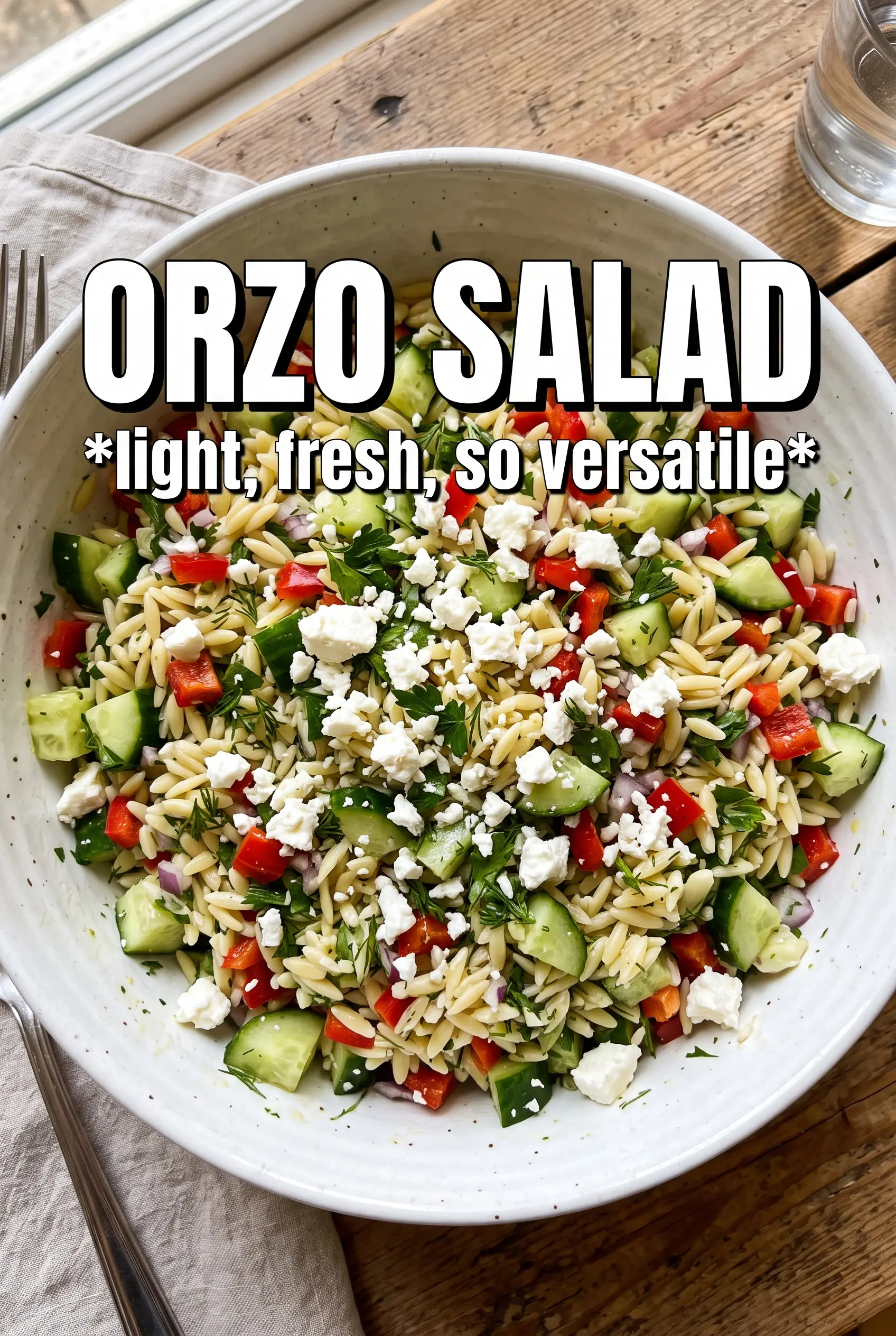
Orzo Salad
Ingredients
Method
- Whisk olive oil, fresh lemon juice, lemon zest, red wine vinegar, Dijon mustard, honey, dried oregano, salt, and pepper until emulsified, glossy, and evenly combined.
- Combine cooled orzo, cherry tomatoes, cucumber, Kalamata olives, red onion, parsley, and basil in a large bowl.
- Pour the lemon herb dressing over the salad and toss until every small grain of orzo is evenly coated and the vegetables look lightly glossy.
- Fold in most of the crumbled feta so it disperses throughout the salad.
- Refrigerate for at least 30 minutes, then taste and adjust lemon or salt for balance.
- Top with remaining feta and extra fresh herbs right before serving for brighter flavor and a fresh look.