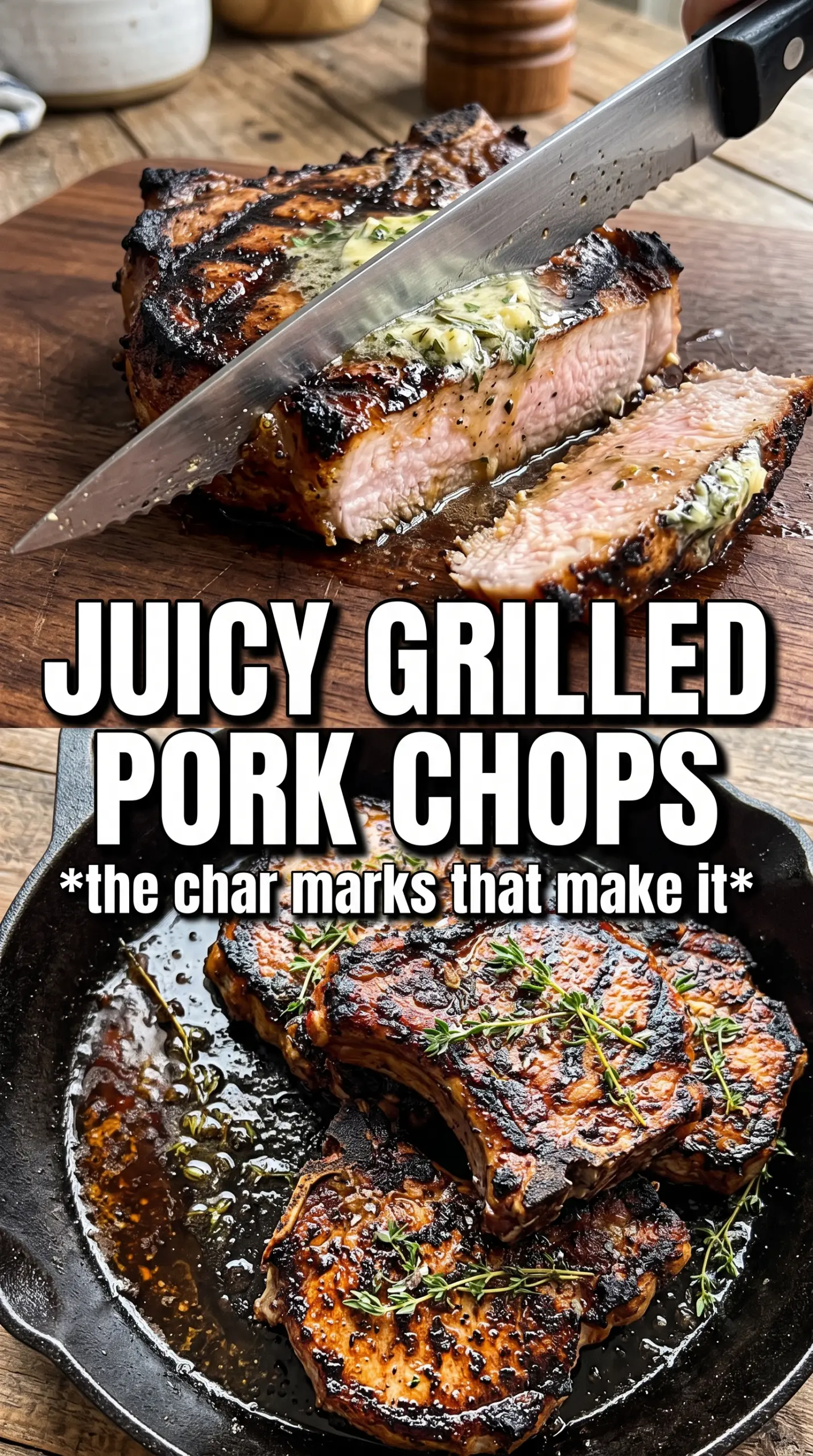
Thick grilled pork chops earn their place on the grill when they come off with a smoky crust, clean grill marks, and a center that stays juicy instead of turning dry and chalky. The best version has a little char at the edges, a savory-herb marinade that clings to the meat, and just enough lemon to brighten the pork without taking over.
What makes this method work is the balance between a short marinade and a hot grill. Olive oil keeps the surface from drying out, soy sauce adds depth, and lemon juice loosens the fibers just enough to season the meat without turning it mushy. The real key is not overcooking them; pork chops are at their best when you pull them at 145°F and let the juices settle back in during the rest.
Below, I’ve included the little details that keep these chops tender, from grill temperature to the exact moment to flip them. If you’ve had dry pork chops before, the fix is in the timing and the heat.
The chops got those perfect crosshatch marks and stayed juicy all the way through. I used a thermometer and pulled them at 145, then let them rest like you said — no dry center at all.
Save these juicy grilled pork chops for the next time you want smoky grill marks, a bright lemon finish, and dinner on the table fast.
The Part Most People Miss When Grilling Pork Chops
The mistake with pork chops isn’t the seasoning. It’s rushing the heat and moving the meat too soon. A good sear needs a hot grate and a dry enough surface to brown instead of steam, which is why the chops should come out of the marinade with the excess shaken off. If they go onto an underheated grill or sit around flipped every minute, you lose both the crust and the juiciness.
Bone-in chops also give you a little more forgiveness. The bone helps slow the heat near the center, which makes it easier to hit that sweet spot where the outside is browned and the inside still has a little give. The grill marks are only part of the job; the real goal is a chop that feels springy when pressed and reads 145°F in the thickest part.
- Bone-in pork chops — These stay juicier on the grill than boneless chops and handle direct heat better. A 1-inch thickness is the sweet spot because it gives you time to build color before the center overcooks.
- Lemon juice — This brightens the pork and helps the marinade taste fresh, but don’t push the marinating time too far. Over many hours, the acid can start to change the texture on the surface.
- Soy sauce — This adds salt and savory depth without making the chops taste like barbecue sauce. If you need a gluten-free swap, use tamari and keep everything else the same.
- Smoked paprika, thyme, and rosemary — This combination gives the chops a grilled, herby finish that tastes deliberate, not random. Dried herbs work fine here because the grill heat wakes them up.
What Each Ingredient Is Actually Doing in This Recipe
- Primary ingredient (the star) — Quality matters most. Choose the best you can find.
- Cooking medium (oil, butter, or broth) — This carries flavors and prevents dryness.
- Seasonings (salt, pepper, spices, herbs) — Layer flavors so nothing overpowers. Build depth gradually.
- Aromatics (garlic, onion, herbs) — Cook with fat to bloom flavors. Become the foundation.
- Supporting ingredients — Complement the main ingredient without overpowering it.
- Sauce or liquid (if applicable) — Brings flavors together. Balance richness with acid.
- Acid (lemon, vinegar, wine, or other) — Brightens and prevents flat-tasting results.
- Final finish (garnish, glaze, or sauce) — Prevents one-dimensional taste and adds visual appeal.
Getting the Grill Marks Without Drying Out the Meat
Build the Marinade First
Mix the olive oil, garlic, lemon juice, soy sauce, paprika, thyme, rosemary, salt, and black pepper until it looks emulsified and fragrant. Coat the chops well, then let them sit at room temperature for at least 30 minutes or refrigerate them for up to 4 hours. If the chops go in ice-cold, they’ll cook unevenly, so bring them closer to room temperature before grilling.
Heat the Grill, Then Leave It Alone
Preheat the grill to medium-high and oil the grates once they’re hot. The surface should feel aggressive when the chops hit it; that’s what creates the marks instead of pale, steamed meat. Lay the chops down and don’t move them for 4 to 5 minutes, even if you’re tempted to peek. If they stick, they’re not ready to turn yet.
Flip Once and Watch the Temperature
Rotate the chops 45 degrees after the first few minutes if you want crosshatch marks, then grill about 1 minute longer. Flip and cook the second side for another 4 to 5 minutes, checking the thickest part with an instant-read thermometer. Pull them at 145°F; if you wait for them to look fully done in the pan, you’ll miss the carryover heat and end up with dry pork.
Rest Before Serving
Move the chops to a platter and let them rest for 5 minutes. That pause matters because the juices settle back into the meat instead of running out on the cutting board. Finish with lemon wedges and serve while the crust is still crisp and the center is hot.
How to Change These Chops Without Losing the Grill-Friendly Texture
Make Them Gluten-Free
Swap the soy sauce for tamari or coconut aminos. Tamari gives the closest savory depth, while coconut aminos will taste a little sweeter and lighter, so the chops finish with a softer edge.
Use Boneless Chops
Boneless chops work, but they cook faster and dry out more easily, so start checking them a minute or two earlier on each side. They won’t have the same built-in buffer as bone-in chops, which means a thermometer matters even more.
Add a Little Heat
A pinch of cayenne or red pepper flakes gives the marinade a subtle kick without changing the grilling method. Keep it restrained; too much heat can drown out the lemon and herbs.
Marinate for a Bigger, Brinier Flavor
If you want a deeper savory taste, marinate refrigerated for up to 4 hours. Any longer and the lemon starts working too hard on the surface, which can make the texture less clean when the chops hit the grill.
Storage and Reheating
- Refrigerator: Store leftovers in an airtight container for up to 3 days. The crust softens a bit, but the pork stays sliceable and useful for lunch the next day.
- Freezer: Freeze cooked chops wrapped tightly for up to 2 months. They thaw best in the refrigerator overnight, though the texture won’t be quite as juicy as fresh off the grill.
- Reheating: Rewarm gently in a covered skillet over low heat with a splash of water or broth, or in a 300°F oven until heated through. High heat dries pork fast, so don’t blast it in the microwave unless you’re only warming a small slice.
Questions I Get Asked About This Recipe
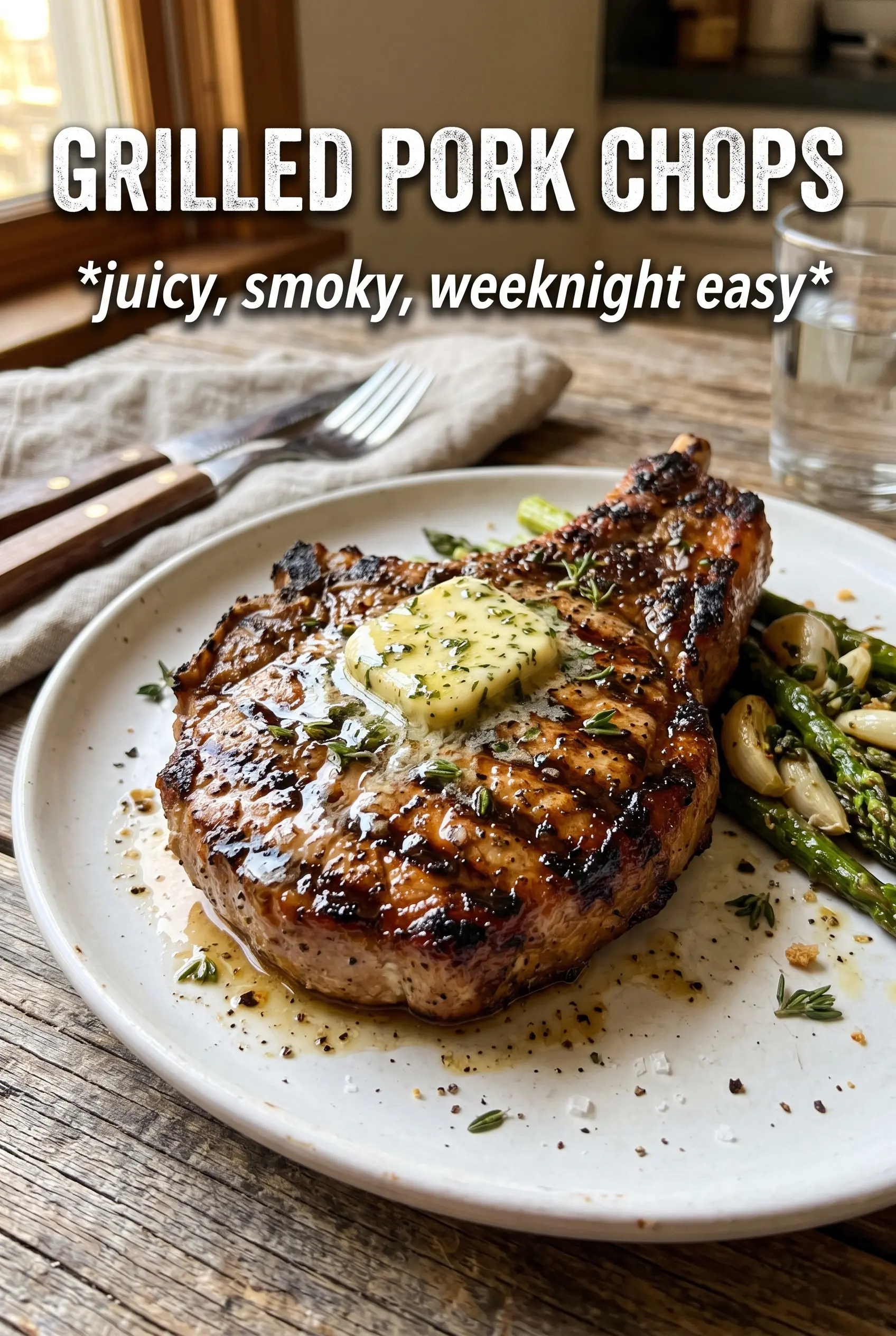
Grilled Pork Chops
Ingredients
Method
- Mix olive oil, garlic, lemon juice, soy sauce, smoked paprika, dried thyme, dried rosemary, salt, and black pepper until combined, then coat the bone-in pork chops. Let the chops marinate at room temperature for at least 30 minutes or refrigerate up to 4 hours while the surface looks glossy with marinade.
- Preheat the grill to medium-high and oil the grates, then place the marinated pork chops on the grill. When the grates sizzle, you should see light smoke beginning around the edges.
- Remove the chops from the marinade and shake off excess so it doesn’t drip, then lay them down without moving for 4–5 minutes. You’ll notice grill marks forming and the bottoms developing a smoky char.
- Rotate each chop 45° to create crosshatch grill marks, then grill for 1 more minute. The color should deepen to a golden-brown with visible sear lines.
- Flip the chops and grill for 4–5 more minutes until the internal temperature reaches 145°F. The thickest center should register 145°F with juices pooling slightly on the cut surface.
- Rest the pork chops on a platter for 5 minutes before slicing. The juices should redistribute, and the exterior should stay glossy with char at the edges.
- Serve the grilled pork chops with lemon wedges. You should be able to squeeze lemon over the top for a bright finish against the smoky char.