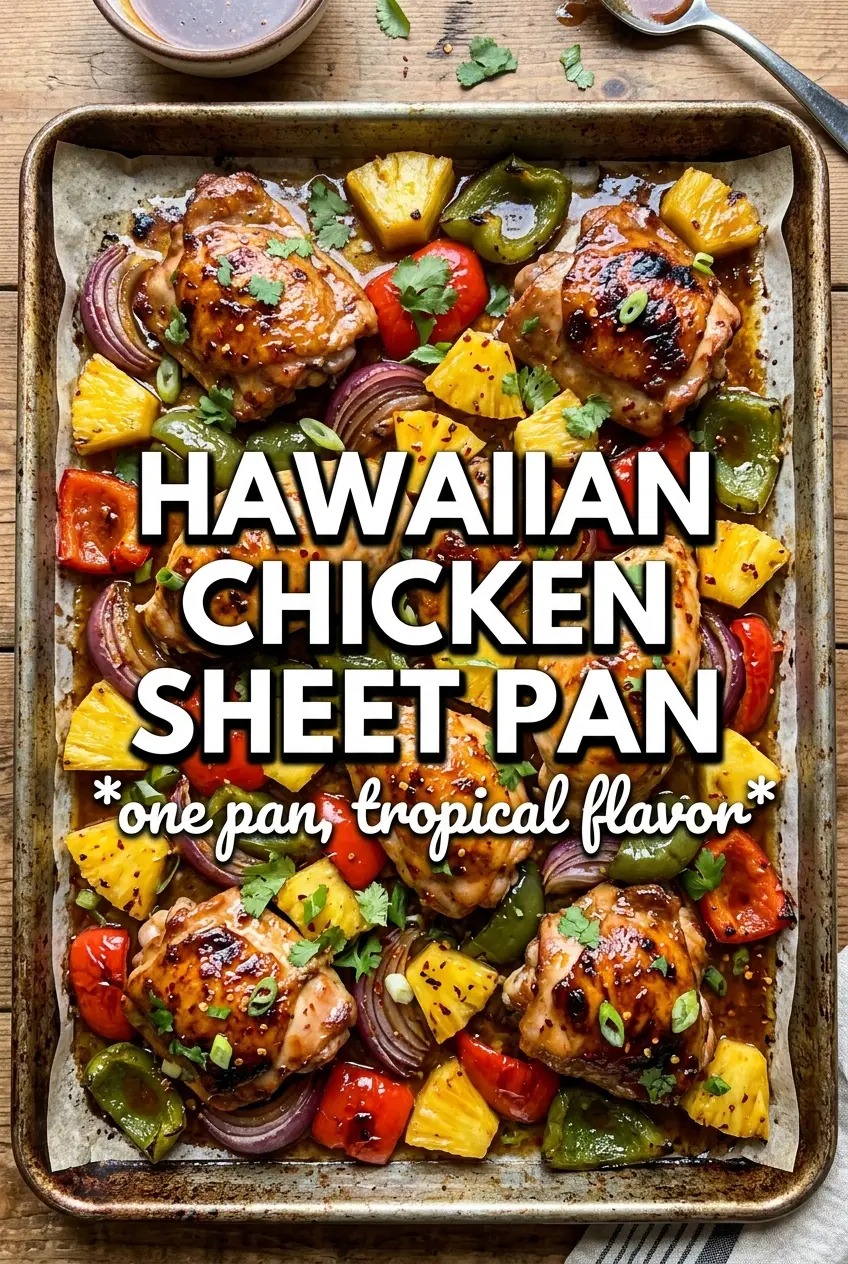
Sticky, caramelized Hawaiian chicken thighs with charred peppers and sweet pineapple hit that sweet spot between low-effort and restaurant-worthy. The chicken turns deeply savory under the oven’s high heat, while the pineapple and onions collapse just enough to glaze the pan in a glossy teriyaki-like sauce that clings to every bite. It’s the kind of dinner that looks like you worked harder than you did.
What makes this version work is the balance in the marinade and the way the pan is set up. Pineapple juice brings brightness and fruit, soy sauce gives the backbone, and a little brown sugar plus honey helps the skin brown instead of drying out. The chicken goes skin-side up so the fat renders and the top stays crisp while the vegetables roast underneath and around it, catching all that salty-sweet runoff.
Below, I’m walking through the few details that matter most: how long to marinate without turning the chicken mushy, why the reserved marinade goes over the vegetables instead of the meat, and how to keep the pineapple from disappearing into the sauce.
The chicken skin got crisp, the pineapple caramelized instead of turning watery, and the sauce on the pan was perfect spooned over rice. I’ll be making this again for busy weeknights.
Like this Hawaiian Chicken Sheet Pan? Save it for the nights when you want sticky pineapple glaze, crisp-edged chicken, and one pan to clean.
The Marinade Is Doing More Than Flavoring the Chicken
The biggest mistake with a sweet-savory sheet pan dinner is treating the marinade like a quick sauce. Here, it has three jobs at once: seasoning the chicken, helping the skin brown, and coating the vegetables with enough sugar to caramelize without burning. That’s why the balance matters. Too much sugar and the pan scorches before the thighs cook through. Too little and you lose the sticky finish that makes this dish work.
Twenty minutes of marinating is enough for flavor here. Chicken thighs are forgiving, but pineapple juice contains enzymes that can start softening the surface if the chicken sits too long. The result can be a slightly mushy texture instead of juicy meat with a clean bite. Keep the rest short, roast hot, and let the oven do the rest.
- Bone-in, skin-on chicken thighs — These bring the best combination of moisture and browning. Boneless thighs will work, but they cook faster and won’t give you the same crisp skin or rich pan juices.
- Fresh pineapple chunks — Fresh pineapple holds its shape better than canned and caramelizes more cleanly. If you use canned, drain it well or it will steam the pan instead of roasting.
- Rice vinegar — This keeps the glaze from becoming cloying. If you swap in lime juice, use a lighter hand because it’s sharper and can take over the marinade.
- Sesame oil — A small amount goes a long way. It doesn’t make the dish taste like sesame on its own, but it gives the glaze a rounded finish that reads as savory instead of just sweet.
What Each Ingredient Is Actually Doing in This Recipe

- Primary ingredient (the star) — Quality matters most. Choose the best you can find.
- Cooking medium (oil, butter, or broth) — This carries flavors and prevents dryness.
- Seasonings (salt, pepper, spices, herbs) — Layer flavors so nothing overpowers. Build depth gradually.
- Aromatics (garlic, onion, herbs) — Cook with fat to bloom flavors. Become the foundation.
- Supporting ingredients — Complement the main ingredient without overpowering it.
- Sauce or liquid (if applicable) — Brings flavors together. Balance richness with acid.
- Acid (lemon, vinegar, wine, or other) — Brightens and prevents flat-tasting results.
- Final finish (garnish, glaze, or sauce) — Prevents one-dimensional taste and adds visual appeal.
Roasting the Chicken So the Skin Stays Crisp
Get the Pan Hot and Uncrowded
Line a large sheet pan with foil so the sugary glaze doesn’t weld itself to the metal. Then spread the chicken thighs out skin-side up with space around each piece. If the pan is crowded, the vegetables steam and the chicken skin goes soft before it has a chance to crisp. The high oven heat needs room to move around the food.
Pour the Reserved Marinade Where It Can Reduce
Reserve the marinade before it touches the raw chicken again, then drizzle it over the vegetables and around the thighs. That keeps the glaze from washing the skin clean while still letting the onions, peppers, and pineapple cook down into a sticky pan sauce. If you pour it directly over the top of the chicken, you lose browning.
Roast Until the Edges Look Lacquered
Cook the sheet pan at 425°F until the chicken skin is deep golden and the pineapple has browned at the edges. The glaze should look sticky and a little thickened, not watery. Check the thighs at the thickest part; 165°F is the target, but thighs can go a touch beyond that and still stay juicy. If the top is coloring too slowly, move the pan to a higher rack for the last few minutes.
How to Change This Sheet Pan Dinner Without Losing the Good Parts
Make It Gluten-Free
Use a gluten-free tamari or certified gluten-free soy sauce. The flavor stays close to the original, and the marinade still reduces the same way in the oven. Don’t use a thin coconut aminos swap at a one-to-one measure without tasting first, since it’s sweeter and can push the glaze too far in that direction.
Use Boneless Thighs or Chicken Breasts
Boneless thighs shave off a few minutes and stay tender, but the skinless version won’t give you the same crispy finish. Chicken breasts work if that’s what you have, though they dry out faster, so pull them as soon as they hit temperature and cut the pineapple and peppers a little larger so everything finishes together.
Dial the Sweetness Up or Down
If you like a more savory glaze, cut the brown sugar back by half and keep the honey as written. If you want a stickier, more takeout-style finish, brush a little extra reserved marinade over the vegetables during the last 5 minutes. More sugar means more browning, so watch the pan closely once it starts to darken.
Storage and Reheating
- Refrigerator: Store leftovers in an airtight container for up to 4 days. The chicken skin softens, but the flavor deepens overnight.
- Freezer: Freeze the chicken and vegetables in a freezer-safe container for up to 2 months. The pineapple will soften more after thawing, so expect a less crisp texture.
- Reheating: Warm leftovers in a 375°F oven on a sheet pan until heated through, about 10 to 15 minutes. The microwave works in a pinch, but it turns the glaze loose and the skin rubbery.
Answers to the Questions Worth Asking
Hawaiian Chicken Sheet Pan
Ingredients
Equipment
Method
- Whisk together soy sauce, pineapple juice, honey, brown sugar, rice vinegar, garlic, ginger, and sesame oil until the honey and sugar dissolve.
- Toss the chicken thighs in the marinade, cover, and rest 20 minutes; reserve the remaining marinade.
- Preheat the oven to 425°F and line a large sheet pan with foil.
- Arrange the marinated chicken thighs skin-side up on the sheet pan, then scatter the red and green bell peppers, red onion, and pineapple chunks around the chicken.
- Pour the reserved marinade over the vegetables and around the chicken so the pineapple and peppers get coated.
- Roast for 22-25 minutes at 425°F until the chicken skin is golden and caramelized and the internal temperature reaches 165°F.
- Garnish the hot sheet pan with sesame seeds and sliced green onions, then serve over steamed rice.