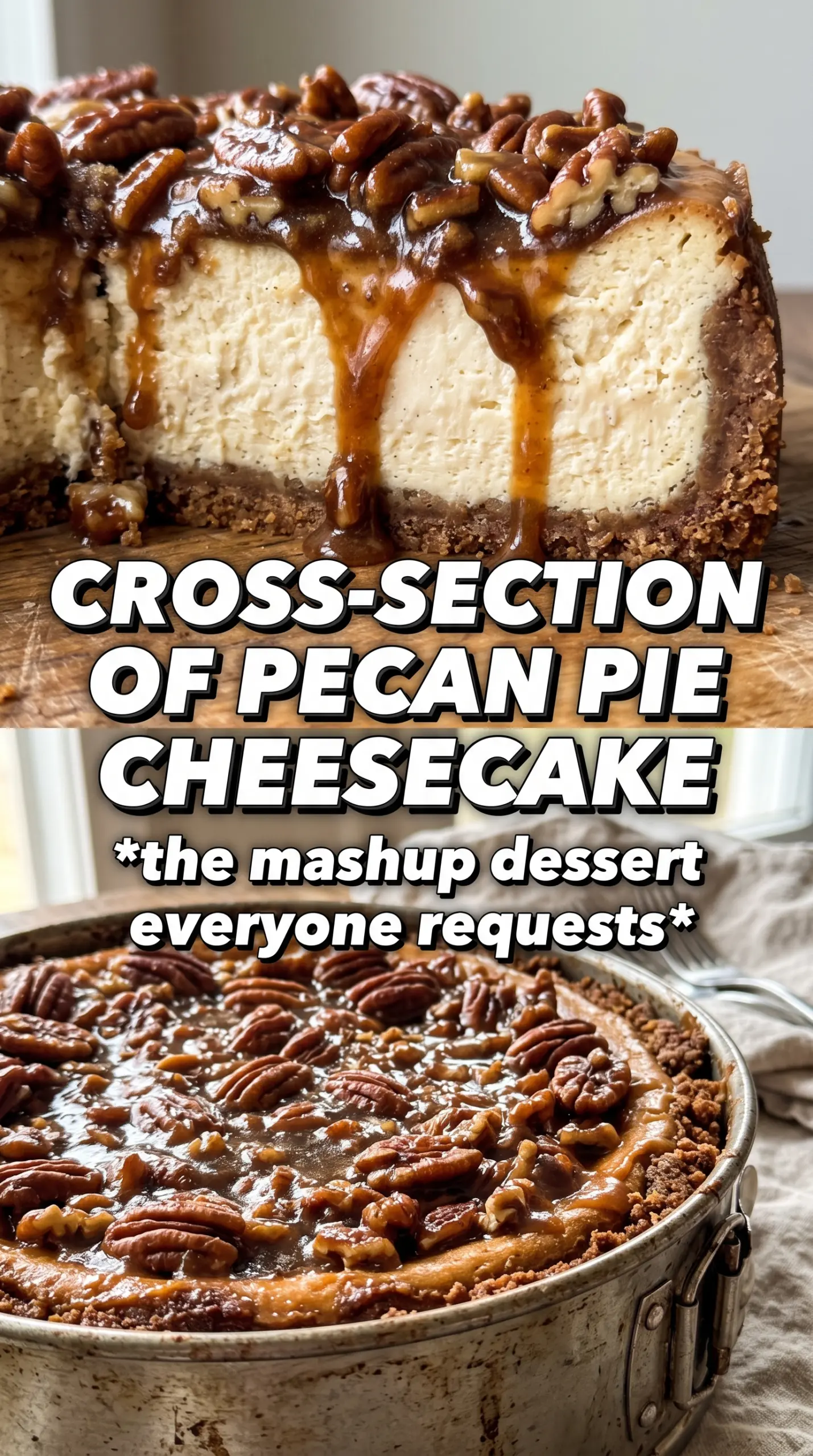
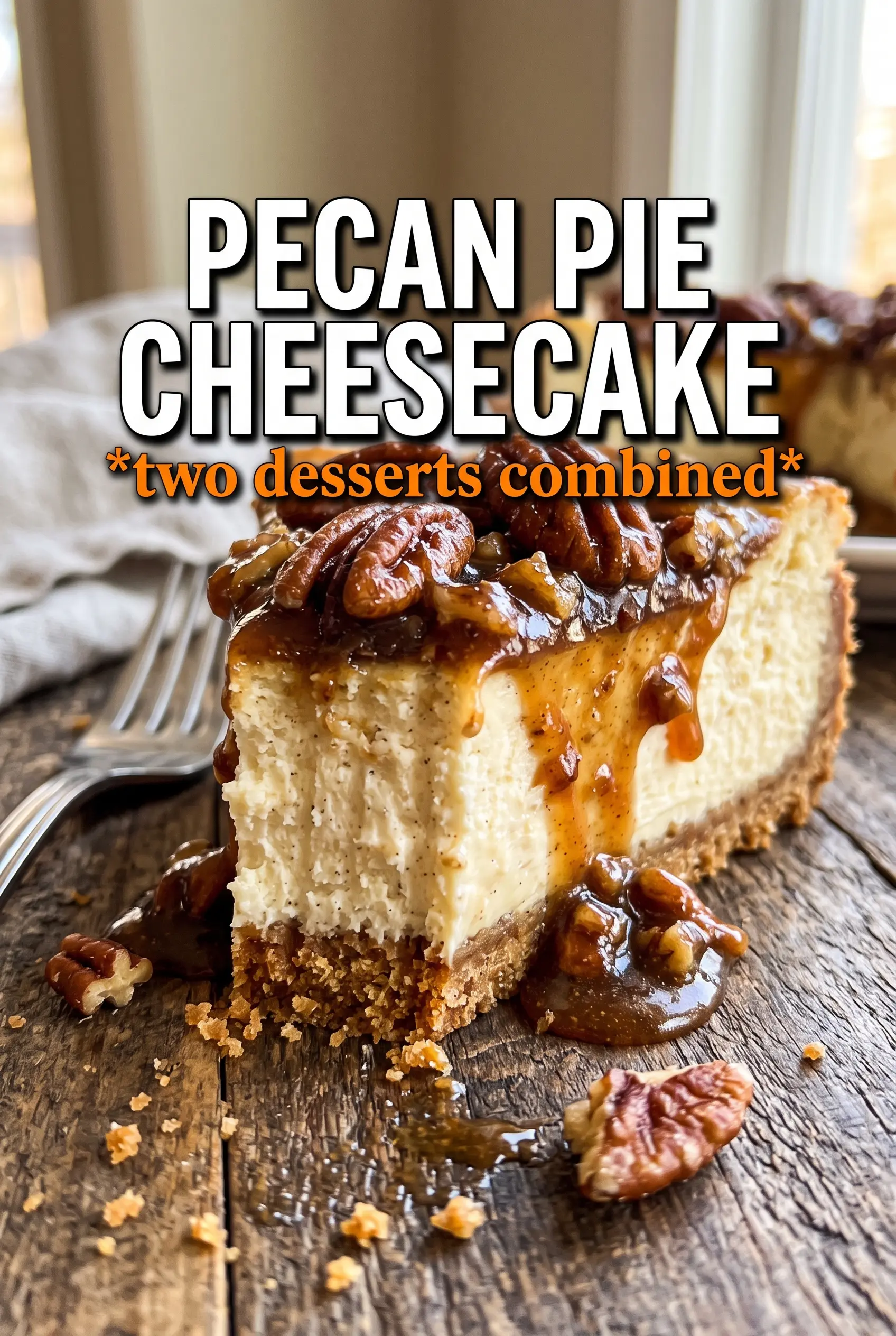
Pecan pie cheesecake lands somewhere between a dinner-party dessert and a holiday showpiece, but what makes it worth keeping around is the contrast. You get a crisp graham cracker crust, a dense and creamy cheesecake layer, and then that glossy pecan topping that tastes like the best part of a pecan pie cut loose from the rest of the filling. Every slice holds its shape, but the topping still drapes and settles over the top in that sticky, spoon-coating way that makes people pause before the first bite.
The trick here is treating the cheesecake and the pecan topping as two separate jobs. The cheesecake needs low, steady heat and time to set without drying out, which is why the water bath matters. The topping, on the other hand, only needs a short simmer to thicken before the pecans go in. If you cook it too long, it turns stiff instead of glossy. If you pour it on too early, it soaks into the cheesecake. Timing is what keeps this dessert clean, tall, and sliceable.
Below, I’ll walk through the part that matters most: how to avoid a cracked cheesecake and how to get that pecan topping thick enough to cling without becoming candy.
The cheesecake set up beautifully in the water bath and the pecan topping stayed glossy instead of turning grainy. I chilled it overnight, and the slices came out clean with that perfect sticky pecan layer on top.
Save this pecan pie cheesecake for the kind of dessert that needs a creamy center, a sticky pecan topping, and clean slices.
The Trick to Keeping the Cheesecake Tall and the Topping Separate
The most common mistake with a dessert like this is rushing the layers together. A cheesecake needs to cool all the way before the topping goes on, or the heat from the topping softens the surface and you lose that neat, bakery-style finish. The water bath is not optional here if you want a smooth top without deep cracks, because it keeps the oven heat gentle and even.
The other thing that matters is texture balance. The filling should look smooth and thick before it goes into the crust, and the center should still have a slight wobble when you pull it from the oven. If it looks fully firm in the oven, it’s already overbaked. It will keep setting as it cools, and that’s what gives you those clean slices instead of a dry, chalky middle.
What Each Ingredient Is Doing in This Dessert
- Graham cracker crumbs — They give you a crust that stays crisp under the cheesecake layer without fighting the filling. If you use a finer crumb, the crust packs tighter and slices cleaner. A store-bought crumb is fine here as long as it tastes fresh.
- Brown sugar — This pulls double duty in both the crust and the filling, adding a deeper caramel note that plain granulated sugar won’t give you. Packed brown sugar in the topping is important because it helps create that thick, sticky sauce. Light or dark both work, but dark brown sugar gives the deepest pecan pie flavor.
- Cream cheese — Full-fat blocks are the only version that give you the right structure. Tub cream cheese has too much water and the filling can turn loose or grainy. Let it soften completely before beating so you don’t end up with little lumps that never disappear.
- Sour cream — This softens the cheesecake and keeps the texture from feeling heavy. It also adds just enough tang to keep the dessert from tasting flat. Plain full-fat Greek yogurt can work in a pinch, but the result is a little less rich.
- Heavy cream — This is what turns the pecan topping into a glossy sauce instead of a dry candy layer. Half-and-half won’t thicken the same way, so don’t swap it unless you’re prepared for a thinner topping.
- Corn syrup — It helps the topping stay smooth and pourable. You don’t need much, but it keeps the sugar from crystallizing as the sauce simmers. If you leave it out, the topping can turn grainy as it cools.
- Whole pecans — Whole pecans look better on the slice and hold their crunch better than chopped nuts. If all you have are halves, break some up but leave a few larger pieces for texture. Toasting them first is optional, but it adds a deeper nutty flavor.
How to Build the Layers Without Overbaking Anything
Pressing and Prebaking the Crust
Mix the crumbs, brown sugar, and melted butter until every crumb looks evenly moistened, then press the mixture firmly into the springform pan, including a slight push up the sides. Bake it just long enough to smell toasty and look set, about 10 minutes, because that short bake helps the crust hold up under the filling. If you skip this step, the bottom can turn soft once the cheesecake goes in. Let the crust cool for a few minutes before adding the batter so the butter doesn’t melt the cheesecake base.
Mixing the Filling Until Smooth, Not Airy
Beat the cream cheese and brown sugar until the mixture looks completely smooth before the eggs go in. Once the eggs are added, mix only until combined; overbeating after the eggs enter the bowl is how you trap too much air and invite cracks later. The sour cream, vanilla, and cinnamon should disappear into the batter without making it loose. Pour it over the crust and tap the pan once on the counter to knock out any obvious bubbles.
Using the Water Bath the Right Way
Set the springform pan inside a larger pan and add hot water around it before baking. The water bath keeps the oven heat from blasting the edges first, which is what causes the center to overcook before the middle sets. Bake until the edges are set and the center still has a small, soft wobble when you nudge the pan. If the top starts to brown hard or crack wide open, the oven is running too hot or the pan isn’t insulated well enough.
Cooking the Pecan Topping Until It Clings
Melt the butter, brown sugar, cream, and corn syrup together over medium heat, then let it simmer just long enough to thicken slightly. Three minutes is enough for the sugar to dissolve and the sauce to turn glossy; much longer and it starts setting into candy as it cools. Stir in the pecans, vanilla, and salt off the heat so the nuts stay coated instead of overcooking. Cool the topping for about 15 minutes before pouring so it sits on the cheesecake instead of sliding off the edges.
How to Adapt This Dessert for Different Kitchens
Gluten-Free Crust
Swap the graham crackers for your favorite gluten-free graham-style crumbs or crushed gluten-free cookies with a neutral flavor. The crust will still bake up crisp, but some gluten-free crumbs need a touch less butter, so add it gradually until the mixture holds together when squeezed.
Dairy-Free Version
Use dairy-free cream cheese, vegan butter, and a thick plant-based cream, but expect a softer set and a slightly less tangy filling. The topping will still work if the cream substitute is rich enough to simmer, though it may not thicken quite as firmly as the original.
Make-Ahead for a Crowd
Bake the cheesecake a full day ahead and chill it overnight before adding the pecan topping. That gives the filling time to firm up completely, which makes cleaner slices and keeps the topping from sinking in. You can also make the topping ahead and warm it just until loosened before serving.
Using Chopped Pecans Instead of Whole
Chopped pecans work if that’s what you have, but the topping will look more rustic and the nuts will spread out less neatly over each slice. Keep some bigger pieces if you can so the topping still has that dramatic pecan pie look.
Storage and Reheating
- Refrigerator: Store covered for up to 5 days. The topping may firm up a bit in the fridge, but the flavor gets even better after a night of chilling.
- Freezer: Freeze the cheesecake without the pecan topping for best results. Wrap it tightly and freeze for up to 2 months, then thaw in the refrigerator before adding the topping.
- Reheating: This dessert is best served cold or cool, not reheated. If you want the topping slightly softer, let a slice sit at room temperature for 15 to 20 minutes. Microwaving can make the cheesecake greasy and loosen the topping.
Questions I Get Asked About This Recipe
Pecan Pie Cheesecake
Ingredients
Equipment
Method
- Preheat the oven to 325F. Fit a 9-inch springform pan and press the graham cracker crumbs mixture into an even crust layer.
- Bake the crust for 10 minutes at 325F. Remove and keep the pan on the counter while you prepare the filling.
- Beat the cream cheese smooth until lump-free. Pour the cheesecake batter over the baked crust and tap the pan lightly to level the top.
- Place the springform pan in a water bath setup using a roasting pan and hot water. Bake at 325F for 60-65 minutes until the center is just set with a slight jiggle.
- Cool the cheesecake completely at room temperature. Refrigerate for 6 hours to fully chill and firm up the filling.
- Melt the unsalted butter with the packed brown sugar, heavy cream, and corn syrup over medium heat. Simmer for 3 minutes, stirring, until glossy and thickened.
- Stir in the whole pecans, vanilla, and salt. Continue stirring until the pecans look evenly coated, then cool the topping for 15 minutes.
- Unmold and slice the chilled cheesecake. Pour the pecan topping over each portion just before serving for a thick, sticky finish.