Italian Zuppa Toscana Casserole turns the familiar soup into a full, spoon-coating bake with layers of creamy potatoes, savory sausage, and kale tucked under a bubbling cheese top. The potatoes stay tender without turning mushy, the broth base thickens just enough in the oven, and the crispy bacon on top gives every bite a little snap. It’s the kind of casserole that comes out of the oven smelling like dinner is already handled.
What makes this version work is the order. The potatoes simmer in the dairy mixture before baking, which lets them absorb flavor instead of tasting like plain boiled slices buried in sauce. Using both mozzarella and parmesan gives you melt plus salt, and the final bacon goes on after baking so it stays crisp instead of disappearing into the cheese. If you’ve ever had a cream casserole split or a potato bake that stayed watery, the details here fix both problems.
Below you’ll find the small technique choices that matter most, plus a few swaps that still keep the dish rich and hearty. Once you’ve made it this way, it’s hard to go back to the soup version.
The potatoes were tender all the way through and the sauce baked up thick instead of watery. I added the bacon at the end like you said and it stayed crisp on top, which made the whole casserole taste finished.
Save this Zuppa Toscana casserole for the nights when you want creamy potatoes, sausage, kale, and a golden cheese crust all in one pan.
The Part That Keeps the Potatoes Creamy Instead of Watery
The biggest mistake in a potato-and-cream casserole is rushing the potatoes into the oven raw and expecting the dairy to carry the whole dish. Thin slices need a head start in the broth, cream, and milk mixture so they soften evenly before the cheese goes on top. That simmer also thickens the base just enough that the finished casserole slices instead of slumping into a pool.
If your casserole has broken or looked greasy before, the heat was probably too aggressive once the dairy went in. Keep the mixture at a gentle simmer, not a hard boil, or the cream can separate and the potatoes can break down before they’re tender. You want the potatoes just yielding at the edges when a knife slides in, because they’ll finish in the oven.
What Each Ingredient Is Actually Doing in This Bake

- Yukon gold potatoes — These hold their shape better than russets and turn creamy instead of mealy. Slice them thin and evenly so they cook at the same rate; a mandoline helps, but a sharp knife works if you keep the slices consistent.
- Italian sausage — This is the main seasoning for the casserole, so choose one you actually like eating. Mild or hot both work; hot sausage gives the closest nod to the soup version, while mild keeps the pepper flakes in control.
- Bacon or pancetta — This adds smoky salt and a crisp finish. Pancetta gives a cleaner pork flavor, while bacon brings more smokiness; either one should be cooked separately and added at the end so it doesn’t soften in the bake.
- Kale — Kale stands up to the cream and oven heat without disappearing. Chop it fairly small, and strip out the thick center ribs if your bunch is on the woody side.
- Heavy cream and whole milk — The cream gives body, while the milk keeps the casserole from feeling too dense. I wouldn’t swap both for lower-fat dairy here; the sauce needs enough fat to stay smooth in the oven.
- Mozzarella and parmesan — Mozzarella gives the melt, parmesan brings the salty edge and helps the top brown. If you only have one cheese, use mozzarella on top and add extra parmesan at the end for more flavor.
Building the Casserole So the Sauce Stays Smooth
Brown the sausage and save the good fat
Cook the sausage until it’s deeply browned before you move on. That color is flavor, and it seasons the whole casserole in a way pale sausage never will. Drain off excess grease, but don’t scrub the pan clean if you’re using it for the onion and garlic next; a thin coating of rendered fat helps carry the aromatics.
Let the potatoes soften in the liquid
Once the broth, cream, milk, and potatoes are in the pan, keep the heat low enough for a steady simmer. Stir now and then so the slices don’t stick to the bottom, and watch for the edges of the potatoes to go translucent before the centers soften. If the liquid starts boiling hard, the dairy can turn grainy and the potatoes can cook unevenly.
Finish under cheese, then add the bacon last
After the kale and sausage go back in, transfer everything to the baking dish and cover the top with mozzarella and parmesan. Bake until the edges are bubbling and the cheese is patched with gold, not just melted and pale. Add the crispy bacon after baking so it stays crunchy; if it goes in too early, it turns soft and gets lost in the cheese.
How to Adapt This Without Losing the Comfort of the Dish
Make it dairy-free without a broken sauce
Use unsweetened full-fat oat milk or a plain dairy-free cream alternative, but expect a lighter, less lush finish. Skip the parmesan or use a dairy-free hard-style substitute, and keep the simmer gentle because plant-based milks can split if they’re boiled hard. The casserole will still be hearty, but the sauce won’t have quite the same richness.
Swap in turkey sausage for a lighter version
Turkey sausage works well if you brown it well and season the base a little more assertively with pepper and red pepper flakes. It won’t give you as much rendered fat, so add a spoonful of olive oil when you sauté the onion and garlic. The result is a little leaner, but still satisfying.
Use spinach instead of kale if that’s what you have
Spinach works in a pinch, but it wilts down much faster and brings a softer texture. Add it at the very end, just long enough to collapse before baking, or it will disappear completely and the casserole can taste less substantial. Kale gives a sturdier, more soup-like result, while spinach makes the dish feel lighter.
Storage and Reheating
- Refrigerator: Store covered for up to 4 days. The potatoes will firm up a little as it chills, but the flavor stays strong.
- Freezer: This casserole can be frozen, but the cream sauce may separate a bit after thawing. For the best texture, freeze in portions and thaw overnight in the refrigerator.
- Reheating: Reheat covered in a 325F oven until hot in the center, or warm individual portions in the microwave at medium power. High heat can make the dairy look oily, so go low and slow.
Questions I Get Asked About This Recipe
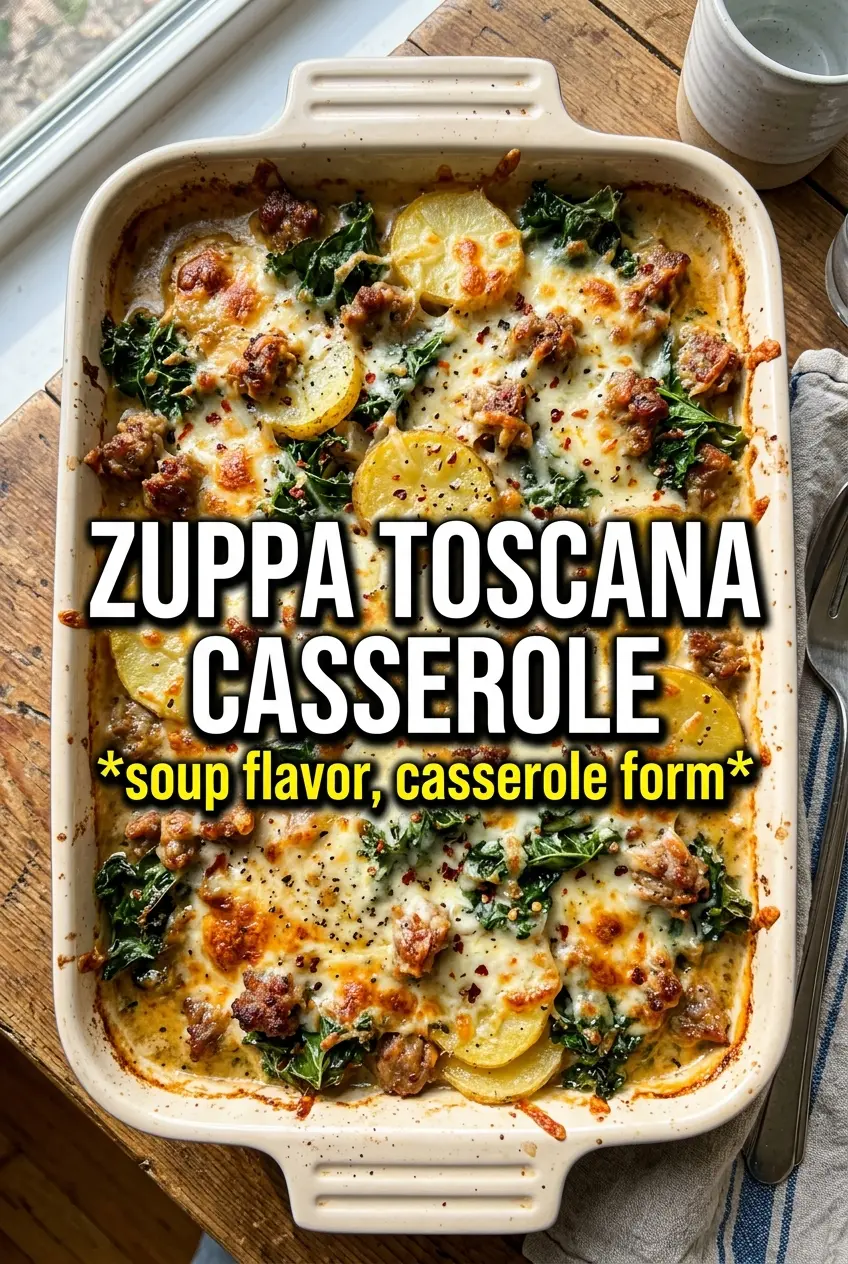
Italian Zuppa Toscana Casserole
Ingredients
Equipment
Method
- Preheat the oven to 375F. Brown the Italian sausage in a large oven-safe skillet over medium-high heat until cooked through with visible browning, then drain the fat and set the sausage aside.
- Cook the bacon or pancetta until crispy, stirring occasionally so the bits render and turn golden. Remove to a plate and set aside.
- Sauté the onion and garlic in the reserved skillet fat for 4 minutes until softened and fragrant. Add the chicken broth, heavy cream, whole milk, and red pepper flakes, stirring to combine.
- Add the thinly sliced potatoes and simmer for 12-15 minutes until just tender, with the liquid visibly thickening around the slices. Stir occasionally to keep the potatoes from sticking.
- Fold in the chopped kale and the sausage, pressing down lightly so the kale wilts. Season with salt and pepper to taste, then turn off the heat when the mixture looks glossy and evenly combined.
- Transfer the mixture to a 9x13 baking dish if needed so it spreads in an even layer. Scatter the shredded mozzarella and grated parmesan over the top.
- Bake at 375F for 20-25 minutes until the cheese is golden and bubbling. Top with the crispy bacon or pancetta right before serving for a crunchy finish.