Mashed potato soup turns leftover mashed potatoes into a bowl of pure comfort with almost no extra work. The texture lands somewhere between a loaded baked potato and a classic cream soup: thick enough to coat a spoon, smooth enough to feel silky, and rich enough that a small bowl goes a long way. The best part is that it tastes like you planned it, not like you were cleaning out the fridge.
The trick is to whisk the mashed potatoes into the broth and dairy slowly so they loosen evenly instead of clumping. That matters even more if your leftovers were seasoned heavily or made with butter and cream already, because the soup can go from balanced to too salty fast. A little sour cream at the end brightens the whole pot and keeps the cheddar from tasting flat.
Below, I’ll show you how to keep the texture smooth, what to do if your mashed potatoes are extra thick, and how to adapt the soup if you want it a little lighter or even richer.
The soup came out unbelievably smooth, and the cheddar melted right in without getting grainy. I used leftover mashed potatoes from Sunday dinner, and it was thick, cozy, and ready in about 30 minutes.
Pin this mashed potato soup for the nights when you want leftover potatoes turned into something thick, silky, and finished with cheddar and chives.
The Secret to Smooth Soup Starts With Breaking Up the Potatoes Early
Mashed potatoes already contain starch, butter, and often milk, which means they can turn lumpy fast if you dump them into hot liquid all at once. The first whisking step is what keeps this soup from eating like glue. Loosening the potatoes with broth and cream in stages gives you a smoother base before the cheese goes in.
The other thing that matters is heat. Once the soup starts simmering, keep it gentle. A hard boil can make dairy separate and can give the soup a gummy texture, especially if the mashed potatoes were on the denser side. Slow heat gives the starch time to relax instead of tightening up.
- Leftover mashed potatoes — These bring the body of the soup. Cold leftovers work fine, but break them up a bit before they hit the pot so they dissolve faster and don’t leave little pockets behind.
- Chicken broth — This thins the potatoes into soup without making the base bland. Vegetable broth works too, but chicken broth gives a fuller, more savory finish.
- Heavy cream and whole milk — The cream adds richness, while the milk keeps the soup from feeling heavy. You can use all milk in a pinch, but the texture won’t be as velvety.
- Sour cream — Stirred in at the end, it adds a little tang and keeps the finished soup from tasting one-note. Greek yogurt can stand in, but add it off the heat so it doesn’t curdle.
What Each Ingredient Is Doing in the Bowl

- Unsalted butter — This is the base for sautéing the garlic and it also gives the soup a richer finish. Unsalted is the right choice here because the mashed potatoes and broth may already have plenty of salt.
- Garlic — Fresh minced garlic gives the soup a real savory backbone. Garlic powder alone won’t taste as rounded, so keep the fresh garlic even though the recipe also uses garlic powder later.
- Cheddar cheese — Shred it yourself if you can. Pre-shredded cheese has anti-caking starches that can make the soup slightly grainy instead of smooth.
- White pepper — This adds gentle heat without black flecks floating through the soup. If you only have black pepper, use a little less and expect a more rustic look.
How to Keep the Cheese Smooth Instead of Grainy
Bloom the garlic first
Melt the butter over medium heat and cook the garlic just until fragrant, about a minute or two. You want it softened, not browned, because browned garlic can make the soup taste bitter and distract from the creamy base. If the garlic starts to sizzle hard, lower the heat right away.
Whisk the potatoes into the liquid
Add the mashed potatoes, broth, cream, and milk, then whisk until the mixture looks mostly smooth before it fully heats through. If your mashed potatoes are especially stiff, break them up with the whisk and give them a minute or two to loosen before pushing ahead. This is the moment that decides whether the soup is silky or lumpy.
Let the cheese melt off the heat
Once the soup is hot and gently simmering, stir in the cheddar and sour cream with the heat turned down low. High heat is what makes dairy turn grainy or separate, especially cheese. Stir until the soup looks glossy and unified, then season with garlic powder, salt, and white pepper.
Finish with the toppings that make it taste complete
Ladle the soup into bowls and top it with a swirl of butter, bacon bits, and chives. That last bit of butter melts into the center and gives you the same comfort-food payoff you expect from a loaded baked potato. The toppings aren’t just garnish here; they give the soup texture and keep each spoonful interesting.
Make It Meatless
Swap the chicken broth for vegetable broth and skip the bacon bits. The soup stays creamy and rich, but the flavor leans a little softer, so a pinch more salt and an extra handful of chives help wake it up.
Use Freshly Made Mashed Potatoes
If you’re not using leftovers, make the mashed potatoes with a little less liquid than usual so the soup doesn’t get thin. Fresh potatoes tend to be lighter and fluffier, which is nice, but they also absorb broth differently, so you may need an extra splash of milk at the end.
Make It Gluten-Free
The soup is naturally gluten-free as written as long as your broth is certified gluten-free. That makes this an easy one to serve without changing the texture at all.
Make It Thicker or Looser
For a thicker bowl, simmer it a few minutes longer before adding the cheese, or stir in an extra spoonful of mashed potatoes. For a looser soup, add a splash more broth or milk at the end. The key is to adjust gradually, because the soup thickens a little more as it sits.
Storage and Reheating
- Refrigerator: Store in an airtight container for up to 4 days. It thickens as it chills, so expect a much denser texture the next day.
- Freezer: It freezes, but the dairy can separate a little on thawing. Freeze in portions if you want to try it, then whisk well while reheating.
- Reheating: Warm it slowly over low heat on the stove with a splash of broth or milk. Don’t boil it, or the cheese and cream can turn grainy.
Questions I Get Asked About This Recipe
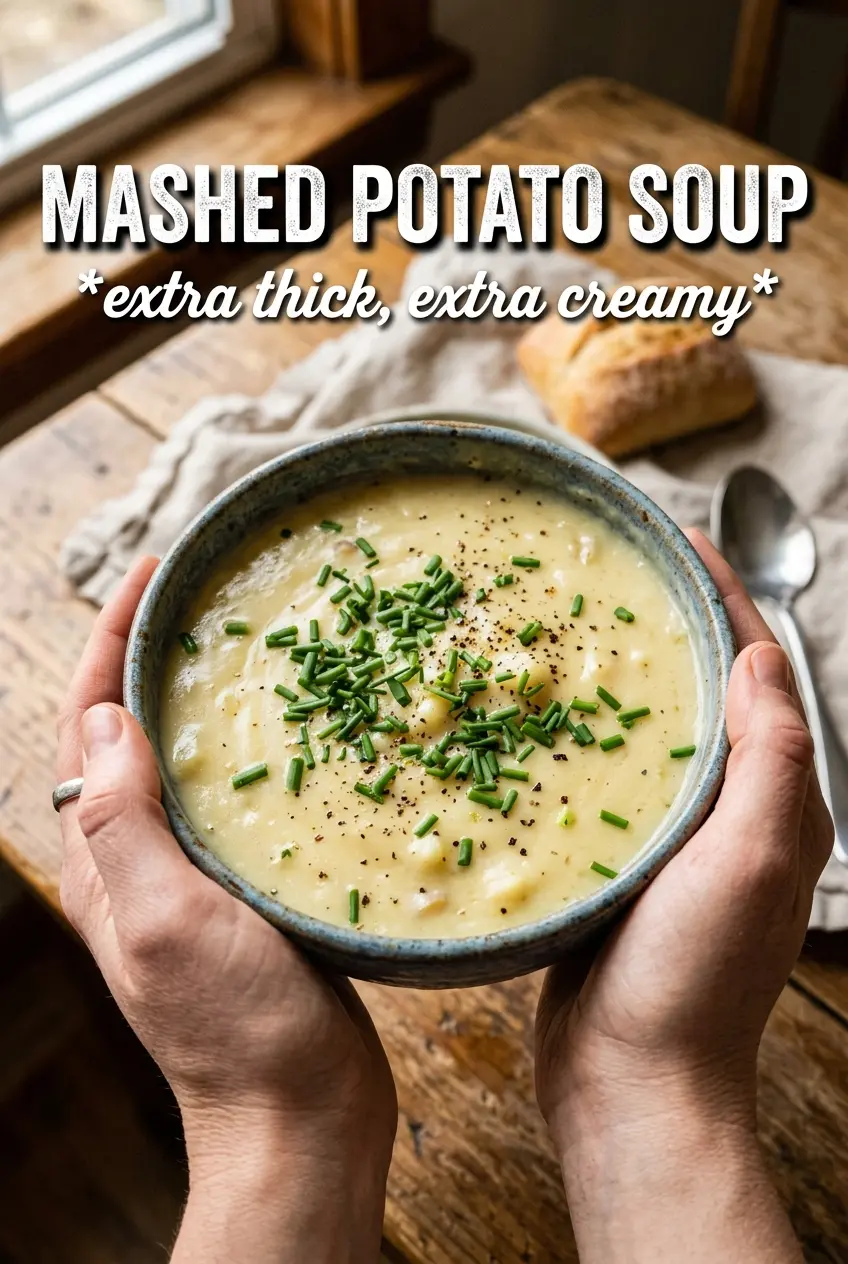
Mashed Potato Soup
Ingredients
Equipment
Method
- Melt 3 tablespoons unsalted butter in a large pot over medium heat, then sauté minced garlic for 1-2 minutes until fragrant and aromatic.
- Whisk the leftover mashed potatoes, chicken broth, heavy cream, and whole milk together in the pot until smooth and lump-free.
- Bring the mixture to a gentle simmer over medium heat, whisking until smooth and heated through (about 5-7 minutes), until it looks glossy.
- Stir in shredded cheddar and sour cream, mixing until melted and completely smooth with no visible cheese strands.
- Season with garlic powder, salt, and white pepper, stirring until evenly distributed.
- Serve hot with a swirl of extra butter, bacon bits, and chives on top.