Caramelized sausage, tender roasted squash, and Brussels sprouts with browned edges make this sheet pan dinner the kind of meal that disappears fast. The apple softens just enough to bring a little sweet sharpness, and the balsamic-maple glaze ties everything together without turning the pan into a sticky mess. It’s the kind of dinner that lands on the table looking like you worked harder than you did.
What makes this version work is the balance in the pan. The sausage gives off just enough fat to help the vegetables roast instead of dry out, while the glaze gets added before roasting so it can cling and reduce right on the tray. Cutting the squash and Brussels sprouts into similar sizes matters here, because uneven pieces finish at different times and leave you with either burnt edges or underdone centers.
Below, I’ll show you how to keep the vegetables browned instead of steamed, which ingredients matter most, and a few smart swaps if you want to adjust the mix based on what’s in your kitchen.
The squash got those caramelized edges I was hoping for, and the apple held its shape instead of turning mushy. I stirred halfway through and the sausage came out browned all over, not greasy.
Save this sheet pan sausage and fall veggies dinner for nights when you want one pan, big roasted flavor, and almost no cleanup.
The Trick to Roasting Everything Without Steaming the Pan
The biggest mistake with sheet pan dinners is crowding everything so tightly that the vegetables steam before they brown. This recipe works because the tray gets a full, even layer and the oven stays hot enough at 425°F to push moisture off the surfaces quickly. If your pan looks packed, use two pans. That extra space is what gives you browned sausage rounds instead of pale, rubbery ones.
Stirring once halfway through matters, but only once. Too much tossing keeps the cut sides from staying in contact with the hot pan, and that’s where the caramelized edges happen. The broiler at the end is optional in theory, but it’s the fastest way to get the sausage blistered and the squash glossy without overcooking the softer vegetables.
What Each Ingredient Is Actually Doing in This Dish
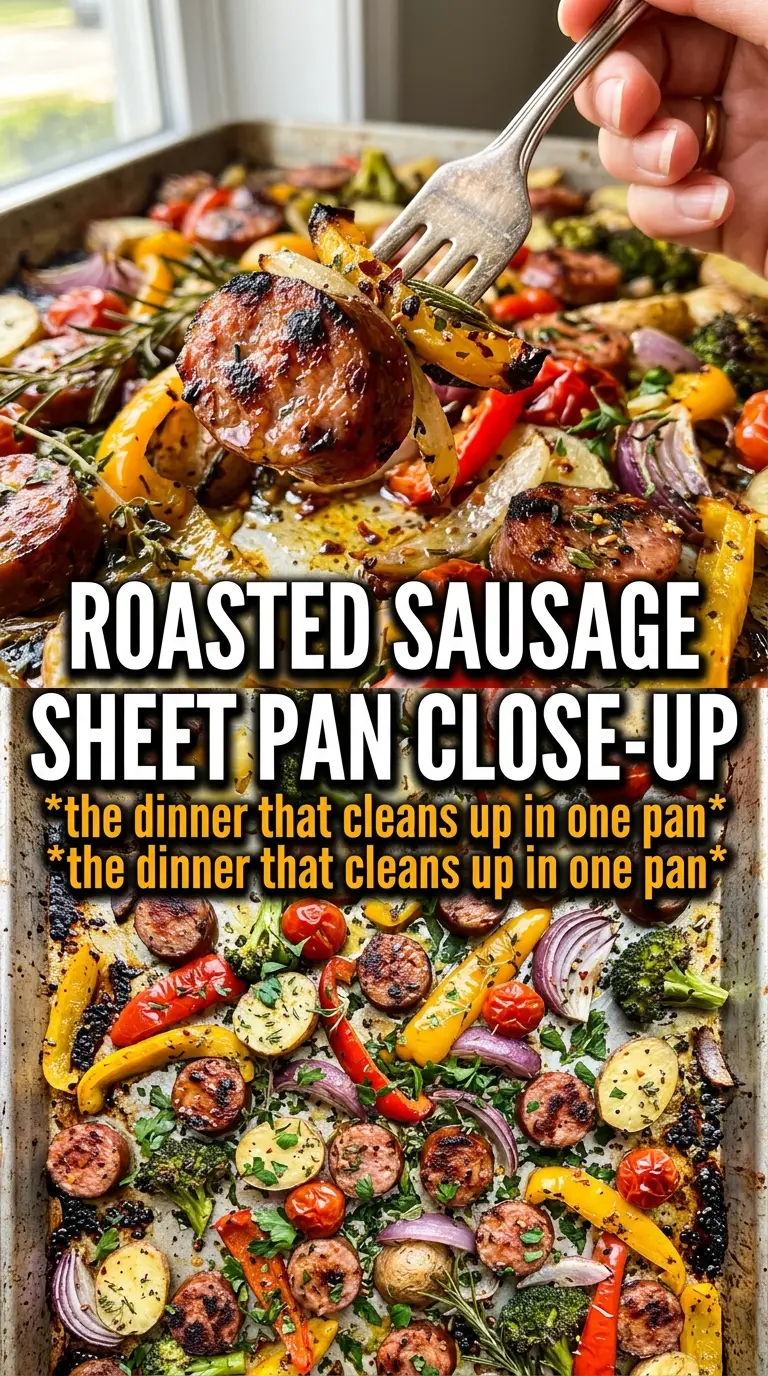
- Italian sausage links — This is the backbone of the dish. Slicing the links into rounds gives you more browned edges and lets the fat coat the vegetables as everything roasts. If you use pre-cooked sausage, cut the roasting time a little because you’re only looking to brown it and heat it through.
- Butternut squash — This needs the full roast time, so cut it into even cubes. If the pieces are too large, the outside dries out before the center softens. Fresh cubed squash from the store is fine here, but keep the pieces uniform.
- Brussels sprouts — Halving them exposes the cut sides, which caramelize beautifully. Whole sprouts won’t brown the same way, and tiny shredded sprouts will overcook before the rest of the pan is done.
- Apple — The apple adds a fresh sweet-tart note that keeps the dish from tasting heavy. Use a firm apple like Honeycrisp, Fuji, or Pink Lady so the slices stay intact in the oven.
- Maple syrup and Dijon — These give the glaze body and a little sharpness. Maple alone would lean too sweet, while Dijon keeps the glaze from tasting flat.
Building the Glaze and Finishing the Roast
Whisk the Glaze First
Mix the oil, balsamic, maple syrup, Dijon, garlic, rosemary, Italian seasoning, salt, and pepper before anything hits the pan. That gives you a loose, even coating instead of little pockets of mustard or garlic burning in one spot. The mixture should look emulsified enough to cling lightly to the spoon, not thick like a sauce.
Spread Everything in One Even Layer
Add the sausage, squash, Brussels sprouts, onion, bell peppers, and apple to the baking sheet and keep them in a single layer. If the vegetables are piled on top of each other, they trap steam and never develop those browned edges. Tossing with the glaze right on the pan is fine as long as you redistribute everything after coating.
Roast Until the Edges Turn Deep Gold
Roast for 30 to 35 minutes, stirring once halfway through. You’re looking for browned sausage, soft squash, and Brussels sprouts with crisped cut sides. If the pan still looks pale at 35 minutes, it usually means the vegetables were cut too large or the oven ran cool; give it a few extra minutes rather than pulling it early.
Use the Broiler for the Last Burst of Color
The broiler is the part that gives the dish its finished look. Two to three minutes is enough to deepen the caramelization, but watch closely because the glaze can go from glossy to scorched fast. Keep the pan on a middle rack if your broiler runs hot, and pull it as soon as the edges darken and the sausage starts to blister.
How to Adjust the Pan Without Losing the Balance
Make It Gluten-Free Without Changing the Method
Use a gluten-free sausage brand and check the Dijon label, since some mustards include additives that aren’t always gluten-free. The roasting method stays the same, and you won’t lose any texture by swapping here.
Swap the Sausage for Chicken Sausage
Chicken sausage works well if you want a lighter pan, but it won’t release as much fat, so the vegetables may brown a little less aggressively. If you use it, drizzle on the full amount of oil and don’t skip the broiler.
Skip the Apple for a Savory Edge
If you want the pan less sweet, leave out the apple and add a few extra wedges of red onion. You’ll lose that fresh contrast, but the dish turns deeper and more savory.
Storage and Reheating
- Refrigerator: Store leftovers in an airtight container for up to 4 days. The vegetables soften a bit, but the flavor holds up well.
- Freezer: It freezes, but the squash and Brussels sprouts will be softer after thawing. Freeze in portions for up to 2 months, then thaw overnight in the fridge.
- Reheating: Reheat on a sheet pan in a 400°F oven until hot, about 10 to 12 minutes. The oven brings back the roasted edges; the microwave makes the vegetables limp and the sausage greasy.
Questions I Get Asked About This Recipe
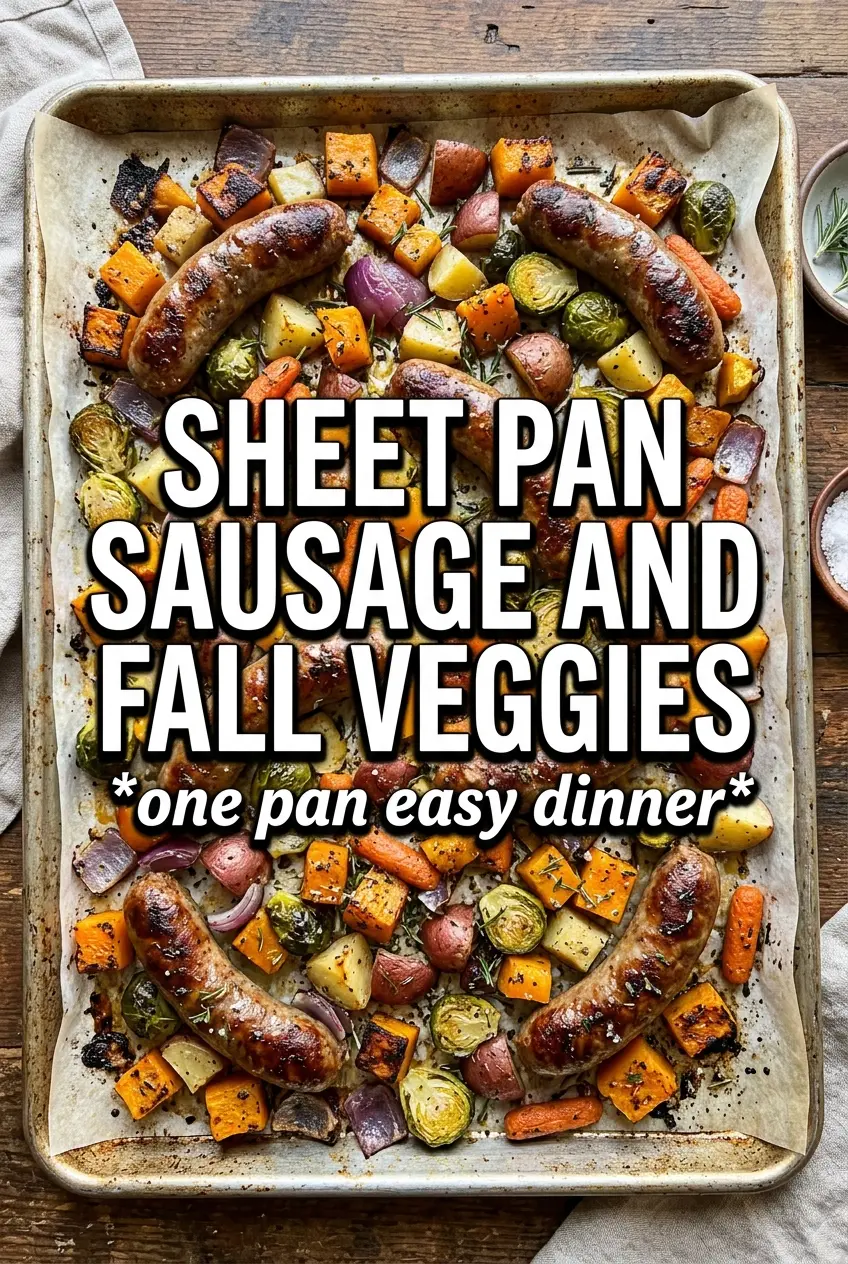
Sheet Pan Sausage And Fall Veggies
Ingredients
Equipment
Method
- Preheat the oven to 425°F and line a large rimmed baking sheet with parchment. A hot oven helps the vegetables brown quickly.
- Whisk olive oil, balsamic vinegar, maple syrup, Dijon mustard, garlic, rosemary, Italian seasoning, salt, and pepper. Mix until the glaze looks smooth and glossy.
- Arrange the sausage, butternut squash, Brussels sprouts, red onion, bell peppers, and apple in an even layer. Keep space between pieces for caramelization.
- Drizzle the glaze over everything and toss to coat. The vegetables should look lightly lacquered.
- Roast at 425°F for 30-35 minutes, stirring once halfway. Roast until vegetables are caramelized and the sausage is cooked through.
- Broil for 2-3 minutes for extra caramelization. Watch closely until edges turn deep golden brown.