Apple cider doughnut loaf cake brings the cozy bakery flavor of a fall doughnut into a sliceable, no-fuss pan dessert with a deep golden crust and a tender, spiced crumb. The outside gets brushed with butter and rolled in cinnamon sugar, so every slice has that crackly, sugared edge you usually only get from the doughnut case.
What makes this version work is the reduced cider. Cooking it down concentrates the apple flavor instead of watering down the batter, and the sour cream keeps the loaf plush without making it heavy. The mix of oil and butter on the finish matters too: oil gives the crumb a soft, cake-like texture while the butter coating gives you that classic doughnut finish on the outside.
Below you’ll find the small details that keep the loaf from turning dense or gummy, plus a few swaps that still keep the flavor where it should be. The cinnamon sugar coating is worth the extra minute.
The cider flavor came through beautifully, and the cinnamon sugar stuck to the warm loaf just like a bakery doughnut. Mine baked in 63 minutes and sliced cleanly after cooling for a bit.
Save this apple cider doughnut loaf cake for the day you want bakery-style cinnamon sugar edges without frying a single doughnut.
Why Reducing the Cider Changes Everything
Unreduced apple cider looks like it should work in quick breads, but it usually just dilutes the batter and leaves the apple flavor flat. Reducing it to a quarter cup concentrates the fruit and gives the loaf a stronger, rounder flavor that survives the oven. That small step also keeps the crumb from turning wet in the center before the edges are baked through.
The other thing that matters here is balance. This loaf has baking powder and baking soda, but the sour cream and reduced cider bring enough acidity to help lift it without making it taste sharp. If your cakes often sink in the middle, the usual problem is too much liquid or not enough bake time. This batter stays structured because the wet ingredients are measured to support the flour instead of flooding it.
What Each Ingredient Is Actually Doing in This Loaf
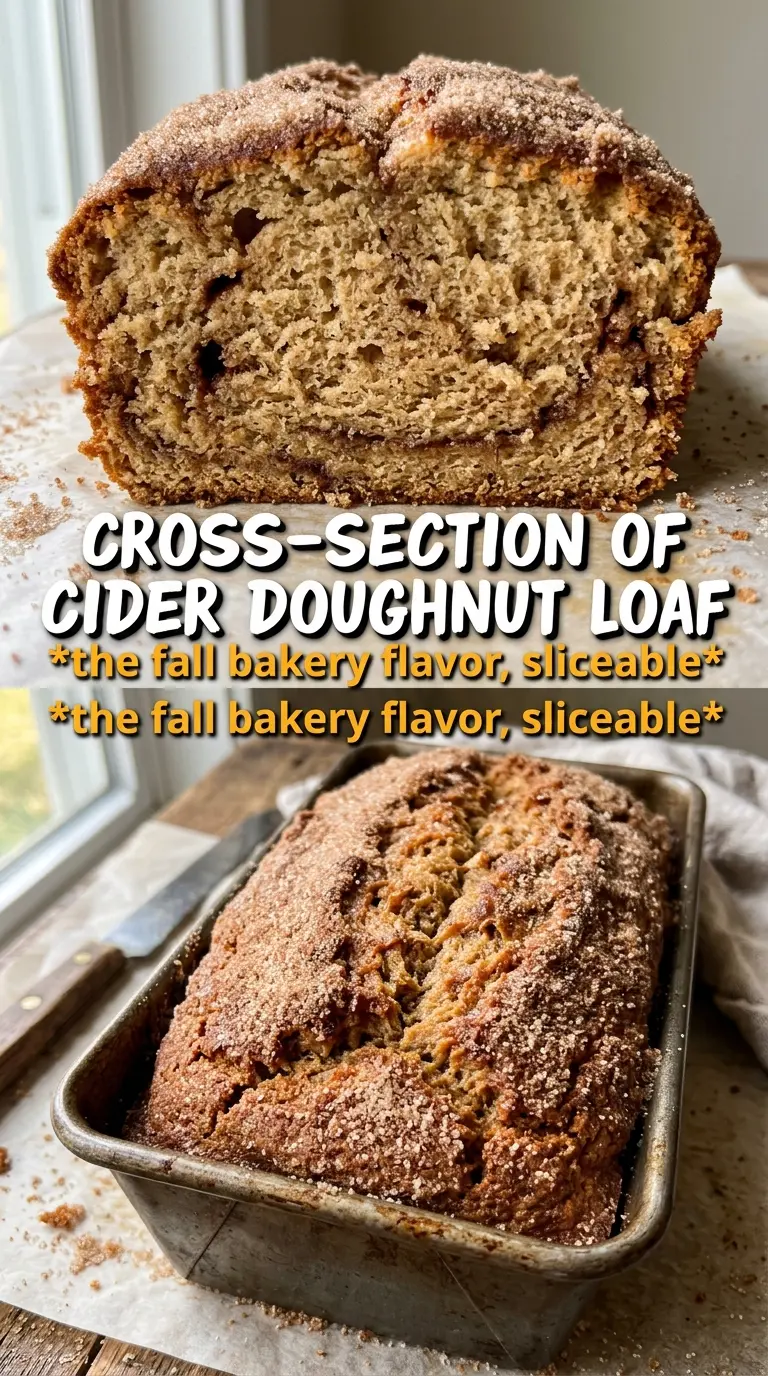
- Apple cider — Reducing it is nonnegotiable. Raw cider won’t give you the same depth, and it can water down the batter. Let it cool before mixing or it can warm the eggs and change the batter texture.
- Sour cream — This keeps the loaf tender and adds the slight tang that makes the spice flavor pop. Plain full-fat yogurt works in a pinch, but the crumb will be a little less rich and slightly tighter.
- Vegetable oil — Oil is what keeps this loaf soft for days. Butter would add flavor, but it also firms up more once cooled, and this cake needs that plush, doughnut-shop texture.
- Brown sugar and granulated sugar — The granulated sugar gives structure and the brown sugar adds moisture and a deeper molasses note. Using all white sugar will make the flavor cleaner but less bakery-like.
- Cinnamon, nutmeg, allspice, and cardamom — This is the spice blend that makes the loaf taste like an apple cider doughnut instead of plain spice cake. Cardamom is subtle, but it adds a lift that keeps the flavor from going flat.
Building a Tender Crumb Before the Sugar Coating Goes On
Reduce the cider first
Put the cider in a small saucepan and simmer it until it measures about a quarter cup, not just until it looks darker. You want concentrated apple flavor, not syrup. Let it cool before it goes into the batter, because hot cider can loosen the eggs and make the mixture look curdled.
Mix the wet ingredients until smooth
Whisk the oil, both sugars, eggs, vanilla, cooled cider, and sour cream until the mixture looks glossy and even. You don’t need to beat air into it; you just want the sugar dissolved and the batter cohesive. If it looks broken, the cider was still warm or the sour cream was too cold, but it usually comes together once the flour goes in.
Fold, don’t overwork
Add the dry ingredients and fold just until the flour disappears. A few streaks are fine; a stiff, overmixed batter is what gives quick breads that tunnelled, chewy texture. The batter should be thick but spoonable, and it should mound gently in the pan instead of pouring like cake batter.
Test for the right bake
Bake until a toothpick comes out clean or with just a few moist crumbs, usually 60 to 65 minutes. The top should be deeply golden and split in the center, and the loaf should spring back lightly when pressed. If the top browns before the center is done, tent it loosely with foil for the last part of the bake.
Brush and coat while warm
Let the loaf cool just long enough to leave the pan, then brush all sides with melted butter while it’s still warm. Roll or sprinkle on the cinnamon sugar right away so it sticks. If you wait until the loaf is fully cool, the coating won’t grab as well and you’ll lose that classic doughnut finish.
How to Adapt the Loaf Without Losing the Doughnut Feel
Dairy-Free Version
Use a thick plain dairy-free yogurt instead of sour cream and brush the loaf with melted vegan butter or neutral oil before coating it in cinnamon sugar. The loaf will still be soft and spiced, though the finish will be a little less rich than the dairy version.
Gluten-Free Swap
A good 1:1 gluten-free baking flour can work here, but use one that already contains xanthan gum. The crumb will be a touch more delicate, so let the loaf cool in the pan for about 10 minutes before turning it out.
Turning It Into Mini Loaves or Muffins
Divide the batter into smaller pans or a muffin tin and start checking early, because the edges set faster in smaller portions. You lose a little of the dramatic loaf slice, but you gain more cinnamon sugar edge per bite.
Storage and Reheating
- Refrigerator: Store tightly wrapped for up to 4 days. The coating softens a little, but the crumb stays moist.
- Freezer: Freeze the uncoated loaf well wrapped for up to 2 months. Thaw at room temperature, then brush with butter and add the cinnamon sugar after it warms up.
- Reheating: Warm slices for 10 to 15 seconds in the microwave or in a low oven just until the edges loosen. Too much heat makes the sugar coating melt off and dries the crumb faster than you expect.
Questions I Get Asked About This Recipe
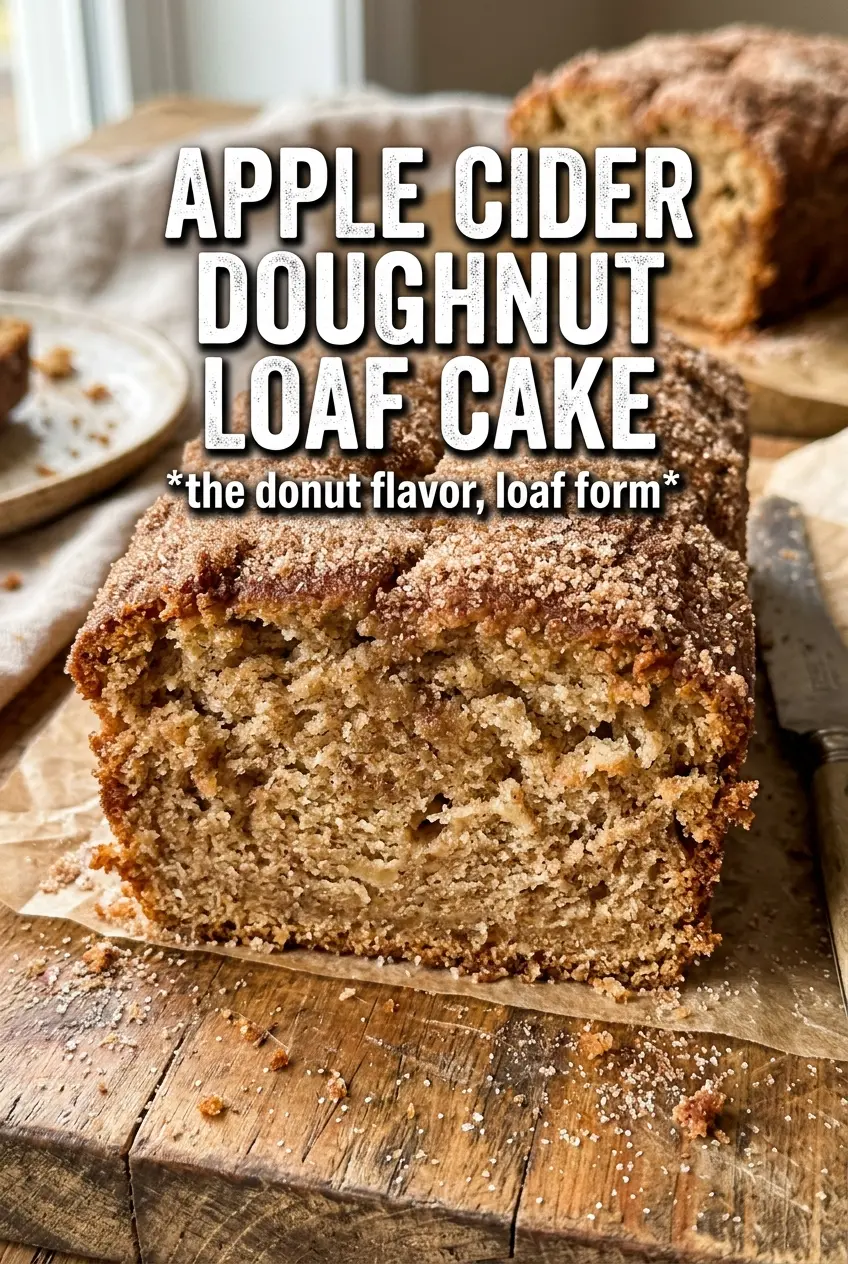
Apple Cider Doughnut Loaf Cake
Ingredients
Equipment
Method
- Reduce the apple cider to 1/4 cup over medium heat, then cool.
- Preheat the oven to 350F and grease a 9x5 loaf pan.
- Whisk the flour, baking powder, baking soda, cinnamon, nutmeg, allspice, cardamom, and salt.
- Whisk the vegetable oil, granulated sugar, brown sugar, eggs, vanilla extract, reduced cider, and sour cream until smooth.
- Fold the flour mixture into the wet ingredients until just combined.
- Bake at 350F for 60-65 minutes, until a toothpick comes out clean.
- Remove the loaf from the pan while warm, then brush all sides with melted butter.
- Roll in or sprinkle generously with cinnamon sugar for a deep golden, speckled crust.