French Onion Chicken Orzo Casserole lands in that sweet spot between cozy and practical: deeply caramelized onions, tender chicken, and orzo that cooks right in the sauce until it turns creamy instead of heavy. The top gets that bronzed Gruyere crust, while the pasta underneath stays saucy and spoonable. It eats like a casserole but finishes with the kind of savory onion depth you usually only get after a long stovetop simmer.
The key is giving the onions enough time to go all the way from pale and sweet to dark and jammy before anything else goes into the pan. That step builds the whole dish. The other thing that matters is adding the orzo with enough liquid and enough heat control that it cooks through without sticking to the skillet or turning mushy. Cream cheese smooths out the broth into a rich base, while the wine and Worcestershire keep it from tasting flat.
Below you’ll find the timing that keeps the onions from rushing, the ingredient swaps that still make sense, and the few places where this casserole can go wrong if you move too fast.
The onions turned jammy and sweet, and the Gruyere browned into that perfect salty crust. The orzo stayed creamy after baking instead of getting dry like I expected.
Save this French Onion Chicken Orzo Casserole for a night when you want caramelized onions, creamy orzo, and a golden Gruyere top in one pan.
The Onion Step You Can’t Rush If You Want Real Flavor
Most casserole-style pasta dishes lean on broth and cheese for depth, which works fine until the first few bites taste a little one-note. Here, the onions do the heavy lifting, but only if they cook long enough to lose their sharp edge and turn sweet, brown, and almost spreadable. That 30 to 35 minute window isn’t background time. It’s the part that gives the whole pan its French onion character.
If you stop when the onions are just soft, the final dish tastes flat and the sauce can come off sweeter than intended once the cheese melts in. Deep caramelization gives you a darker, more savory base that stands up to the wine, Worcestershire, and Gruyere. Keep the heat at medium and stir often enough that the edges don’t scorch before the center catches up.
What Each Ingredient Is Actually Doing In This Casserole

- Onions — These are the flavor base, not a garnish. Yellow onions work best because they soften into sweetness without falling apart, and slicing them thin helps them caramelize evenly. Don’t swap in chopped onions if you want that silky jammy texture.
- Orzo — Uncooked orzo absorbs the broth and cream cheese as it bakes, which is what makes the casserole feel cohesive instead of soupy. Another small pasta can work, but orzo gives the cleanest spoonable finish and the fastest bake.
- Beef broth and Worcestershire — This is the savory backbone. Chicken broth will work in a pinch, but it tastes lighter; beef broth brings the deeper French onion note that makes the dish taste like it simmered longer than it did.
- Cream cheese — This is what turns the broth into a creamy sauce without needing a flour roux. Let it cube and soften a bit before it goes in so it melts smoothly instead of leaving little lumps.
- Gruyere — Gruyere gives you that nutty, stretchy top that belongs in French onion anything. If it’s too pricey, Swiss is the closest swap, but you’ll lose some of the richness and browning power.
- Dry white wine — The wine cuts through the richness and lifts the onion flavor. If you leave it out, add a little extra broth plus a small splash of lemon juice so the casserole doesn’t taste heavy.
Building The Sauce Before The Orzo Goes In
Caramelize the onions first
Melt the butter in a large oven-safe skillet and add the onions with a pinch of salt if you’re using it early. They should soften first, then slowly shrink, then pick up color, and finally turn deep brown and glossy. If the pan starts looking dry before the onions are done, add a small splash of water to loosen the browned bits, not more butter. That keeps the fond in the pan and prevents scorching.
Let the wine cook down
Once the garlic and thyme hit the skillet, give them just enough time to smell fragrant, then pour in the wine. The pan will steam and the fond will loosen into the liquid. Cook it for the full 2 minutes so the sharp alcohol edge cooks off; if you rush this part, the finished casserole can taste boozy instead of round and savory.
Simmer the orzo gently, not aggressively
Stir in the broth, Worcestershire, and uncooked orzo, then add the chicken and bring everything to a gentle simmer. The goal is active bubbles around the edges, not a hard boil. A hard boil can make the orzo gummy on the outside before the center cooks, and it can tighten the chicken too quickly.
Finish with cheese after the cream base is smooth
Drop in the cream cheese and stir until it disappears into the liquid before the casserole goes into the oven. If you see small white flecks, keep stirring over low heat until the sauce looks even and silky. Then scatter the Gruyere over the top and bake until the cheese is bronzed and the orzo is tender with just a little bite in the center.
Ways To Adjust The Casserole Without Losing The Point Of It
Make It Gluten-Free With Rice-Orzo Style Pasta
Use a gluten-free orzo-style pasta and check the package for liquid ratios, since some brands need a little more broth than regular orzo. The texture will be slightly more delicate, but the caramelized onions, chicken, and Gruyere still carry the dish.
Swap In Chicken Thighs For More Forgiveness
Boneless thighs stay juicier in a bake like this and give you a little more insurance if the casserole goes a few minutes long. The flavor is a touch richer, though the dish will feel less lean than it does with breast meat.
Make It Alcohol-Free Without Losing Depth
Replace the wine with extra broth and a teaspoon of white wine vinegar or lemon juice at the end. That keeps the brightness the wine would normally bring, even though you lose a little of the roundness that comes from cooking it down.
Use Swiss Instead Of Gruyere If Needed
Swiss cheese melts well and gives you a similar browning top, though it tastes a little milder and less nutty. If you use it, add a pinch of extra thyme or a few grinds of black pepper to keep the top from tasting soft and generic.
Storage and Reheating
- Refrigerator: Store leftovers in an airtight container for up to 4 days. The orzo will keep absorbing sauce, so expect it to thicken a bit by the next day.
- Freezer: It freezes well, but the sauce will be a little less smooth after thawing. Freeze in portions for up to 2 months and thaw overnight in the fridge before reheating.
- Reheating: Warm it covered in the oven at 325°F with a splash of broth to loosen the sauce. The common mistake is reheating it dry, which makes the pasta tight and the cheese greasy instead of creamy.
Questions I Get Asked About This Recipe
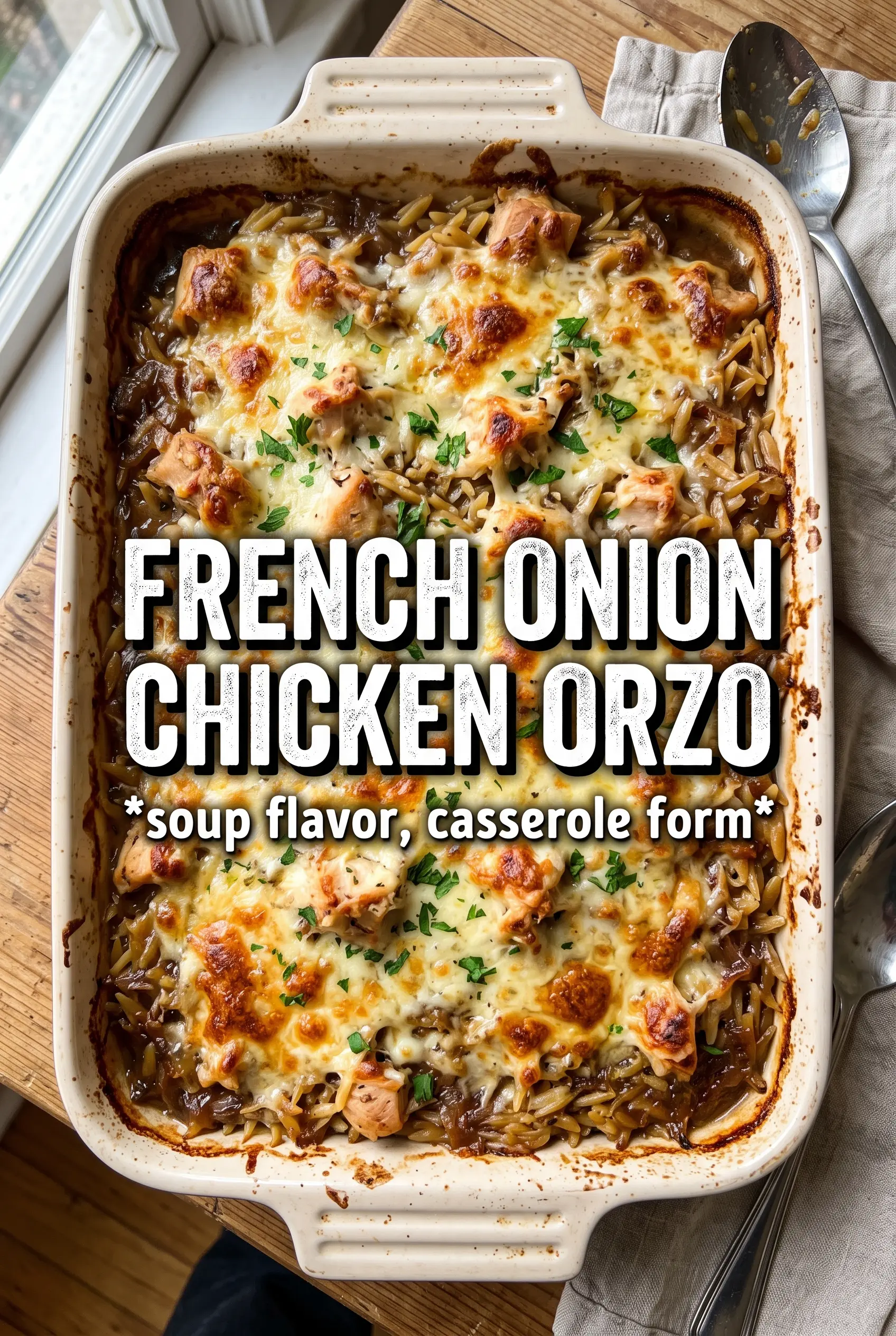
French Onion Chicken Orzo Casserole
Ingredients
Equipment
Method
- Preheat the oven to 375F.
- Melt the butter in a large oven-safe skillet over medium heat, then cook the onions 30-35 minutes until deeply caramelized, stirring occasionally so they brown evenly.
- Add the garlic and dried thyme and cook for 2 minutes, until fragrant.
- Add the white wine and cook for 2 more minutes, letting the liquid reduce slightly.
- Add the beef broth, Worcestershire sauce, and uncooked orzo, then stir in the diced chicken until everything is combined and no dry orzo remains.
- Bring the mixture to a simmer, then stir in the cream cheese until fully melted and the sauce looks smooth and creamy.
- Season with salt and pepper to taste, then scatter the Gruyère evenly over the top so it melts into a browned crust.
- Bake for 25-30 minutes at 375F until the orzo is cooked, the chicken is done, and the cheese is golden with visible browned spots.
- Let the casserole rest for 5 minutes, then garnish with fresh thyme before serving.