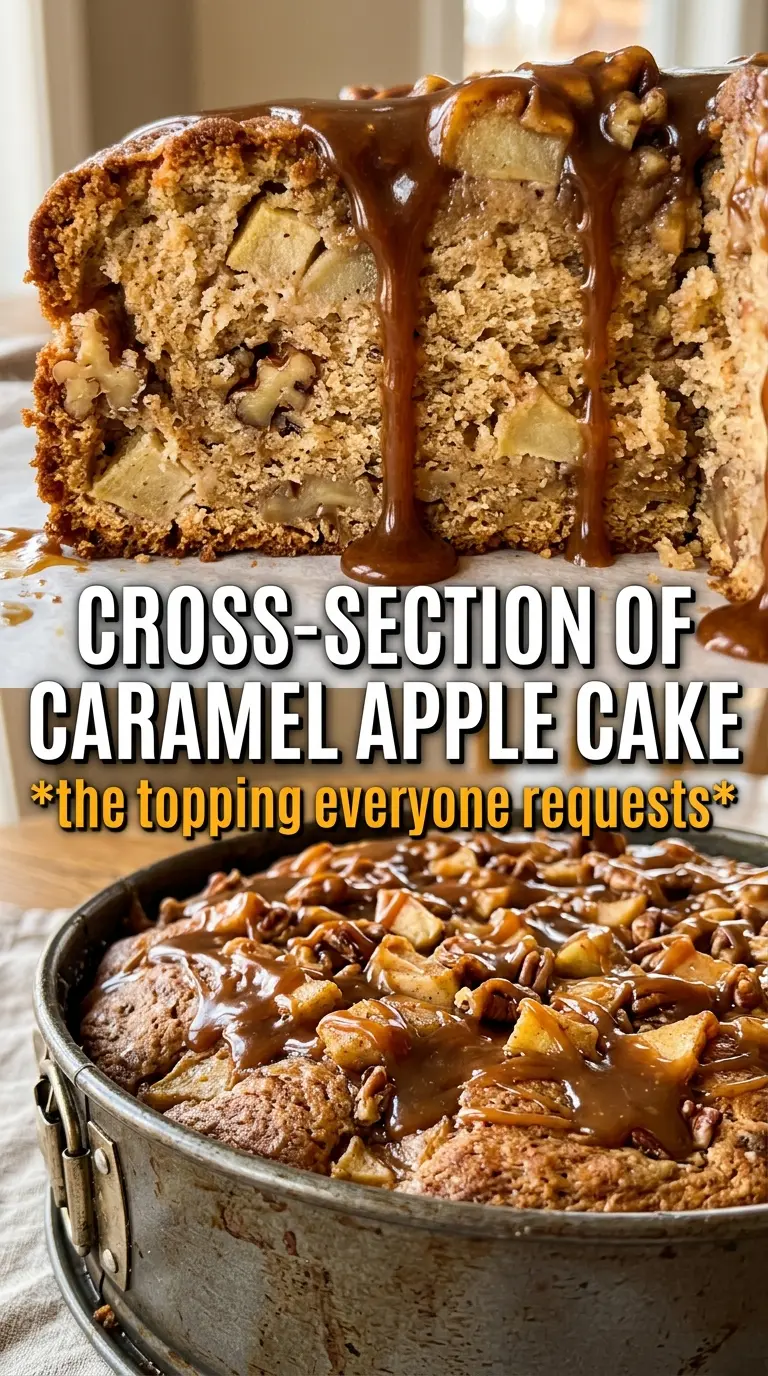
Caramel apple cake lands in that sweet spot between cozy and impressive: tender spice cake, soft bites of apple, and a caramel cream cheese frosting that settles into the layers instead of sliding off the sides. The crumb stays moist for days thanks to sour cream and diced apples, and the caramel on top gives every slice a bakery-style finish without turning the whole cake cloying.
The part that makes this version worth baking is the balance. Brown sugar deepens the cake, cinnamon and nutmeg give it warmth, and the sour cream keeps the crumb plush while the apples add moisture without making it heavy. I chop the apples small so they soften inside the cake instead of breaking the layers apart, and I keep the frosting thick enough to hold its shape but loose enough to spread cleanly.
Below, I’ve included the timing cues that matter most, the frosting texture you’re looking for, and a few swaps that still keep the cake sturdy. If you’ve ever had apple cake come out dense or greasy, the notes here will help you avoid both.
The cake stayed incredibly moist and the apple pieces baked up soft without sinking. I loved that the caramel frosting held its shape between the layers and didn’t run everywhere when I sliced it.
Save this caramel apple cake for the kind of dessert that slices cleanly, stays moist, and brings caramel into every bite.
The Trick to Keeping Apple Cake Light Instead of Heavy
The mistake most apple cakes make is packing in too much fruit or overmixing once the flour goes in. Both lead to a dense middle and a gummy crumb. This cake stays lighter because the batter starts with a proper butter-and-sugar aeration, then gets the dry ingredients and sour cream alternated in just enough to keep the structure tender.
The apples matter too. Finely diced apples distribute through the batter instead of dropping to the bottom, and they bake into soft pockets that read as apple in every slice without weighing the layers down. If your apples are cut too large, the cake can tunnel around them and bake unevenly in the center.
- Brown sugar gives the cake a deeper, molasses-backed sweetness that fits the caramel frosting. White sugar will work in a pinch, but the flavor gets flatter.
- Sour cream keeps the crumb rich and moist. Plain Greek yogurt is the best substitute if that’s what you have, and it behaves almost the same.
- Diced apples should be small enough to soften fully in the oven. Large chunks sound appealing, but they can make slicing messy and the layers unstable.
- Cinnamon and nutmeg don’t just add warmth; they keep the apple flavor from tasting one-note and sweet.
What Each Ingredient Is Actually Doing in the Batter and Frosting
- All-purpose flour gives the cake enough structure to support the apple pieces and thick frosting. Cake flour makes it a little softer, but the layers can become too fragile under the weight of the filling.
- Butter has to be softened, not melted, so it can trap air with the brown sugar. That step is what gives you a fluffy crumb instead of a compact one.
- Eggs build structure and help the cake hold together once the apples release moisture. Add them one at a time and beat well after each so the batter stays smooth.
- Cream cheese and caramel sauce make the frosting tangy, thick, and spreadable. If your caramel sauce is very thin, reduce it a little first or the frosting can soften too much to hold clean layers.
How to Build the Layers Without Overbaking the Cake
Whipping the base properly
Beat the butter and brown sugar until the mixture looks pale and fluffy, not just blended. That step adds the air the cake needs to lift around the apples. If the mixture still looks dense and grainy, keep going for another minute or two before adding the eggs.
Alternating the dry ingredients and sour cream
Add the flour mixture in batches, alternating with the sour cream, and stop mixing as soon as the batter comes together. Overmixing at this stage develops gluten and gives you a tough, rubbery crumb. The batter should look thick and smooth, with the apple pieces folded in evenly at the end.
Knowing when the cake is done
Bake until a toothpick in the center comes out clean or with just a few moist crumbs. The tops should spring back lightly when touched, and the edges will start to pull away from the pan. If you wait for the top to look deeply browned, the center usually ends up dry before the layers are set.
Cooling before frosting
Let the layers cool all the way down before you frost them. Warm cake melts cream cheese frosting fast, and once that happens, the caramel starts slipping. If the layers feel even slightly warm, give them more time; patience here keeps the cake neat and easy to slice.
How to Adapt This Cake for Different Pans, Lighter Frosting, or No Dairy
Bake It as a 9×13 Sheet Cake
If you want a simpler presentation, pour the batter into a greased 9×13-inch pan and start checking it around 40 to 45 minutes. The texture stays the same, but you lose the dramatic layer look. That tradeoff is worth it when you want easier slicing for a crowd.
Make It Gluten-Free with a Cup-for-Cup Blend
A good 1:1 gluten-free flour blend works here because the cake has enough moisture from the sour cream and apples. The crumb may be a little more delicate, so let the layers cool completely before turning them out. If your blend already includes xanthan gum, don’t add extra.
Swap in Greek Yogurt for the Sour Cream
Plain Greek yogurt works well when you want the same tang and moisture with a slightly lighter finish. The cake may bake just a touch faster, so start checking a few minutes early. Full-fat yogurt gives the closest texture.
Use a Less Sweet Frosting Finish
If you want the caramel to stay in the background, cut the powdered sugar a little and use the frosting mostly between the layers with just a thin coat on top. You’ll still get the caramel-cream cheese flavor without overwhelming the apple spice cake underneath.
Storage and Reheating
- Refrigerator: Store covered for up to 4 days. The cake stays moist, and the frosting firms up slightly but softens again at room temperature.
- Freezer: Freeze unfrosted layers tightly wrapped for up to 2 months. Frosted slices can be frozen, but the cream cheese frosting softens after thawing, so the texture isn’t as neat.
- Reheating: Let chilled slices sit at room temperature for 20 to 30 minutes. If you want the caramel to loosen slightly, warm a slice for 10 to 15 seconds in the microwave, but don’t overdo it or the frosting will melt.
Questions I Get Asked About This Cake
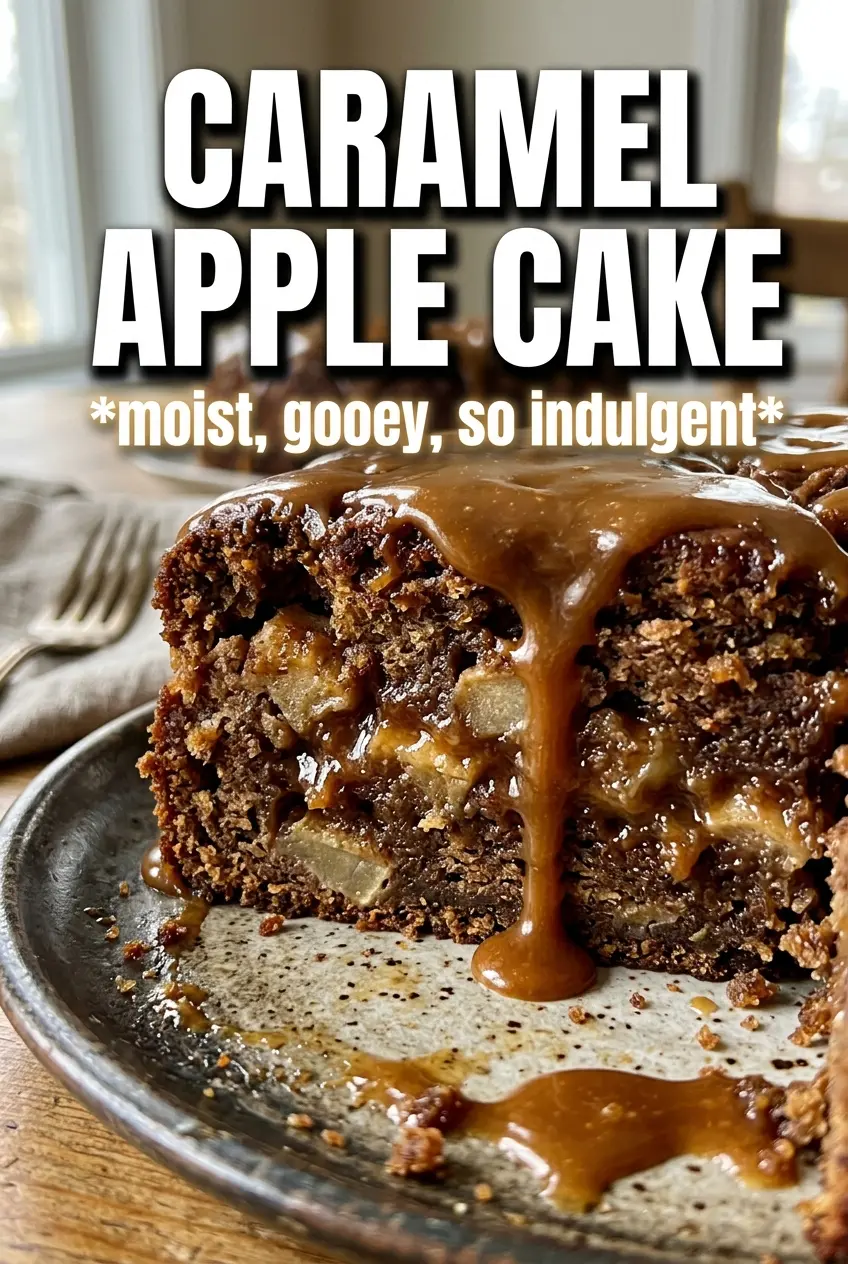
Caramel Apple Cake
Ingredients
Equipment
Method
- Preheat the oven to 350F and grease two 9-inch round pans.
- Whisk all-purpose flour, baking powder, baking soda, cinnamon, nutmeg, and salt in a bowl.
- Beat the softened butter and packed brown sugar until very fluffy, then beat in the eggs and vanilla.
- Alternate adding the flour mixture and the sour cream, mixing just until combined, then fold in the finely diced apples.
- Divide the batter between the two pans and bake for 50-55 minutes, until a toothpick comes out clean.
- Cool the cakes completely before frosting.
- Beat the cream cheese frosting ingredients until smooth, keeping the texture glossy and spreadable.
- Frost between the layers and over the top, then drizzle with extra caramel for a cascading finish.