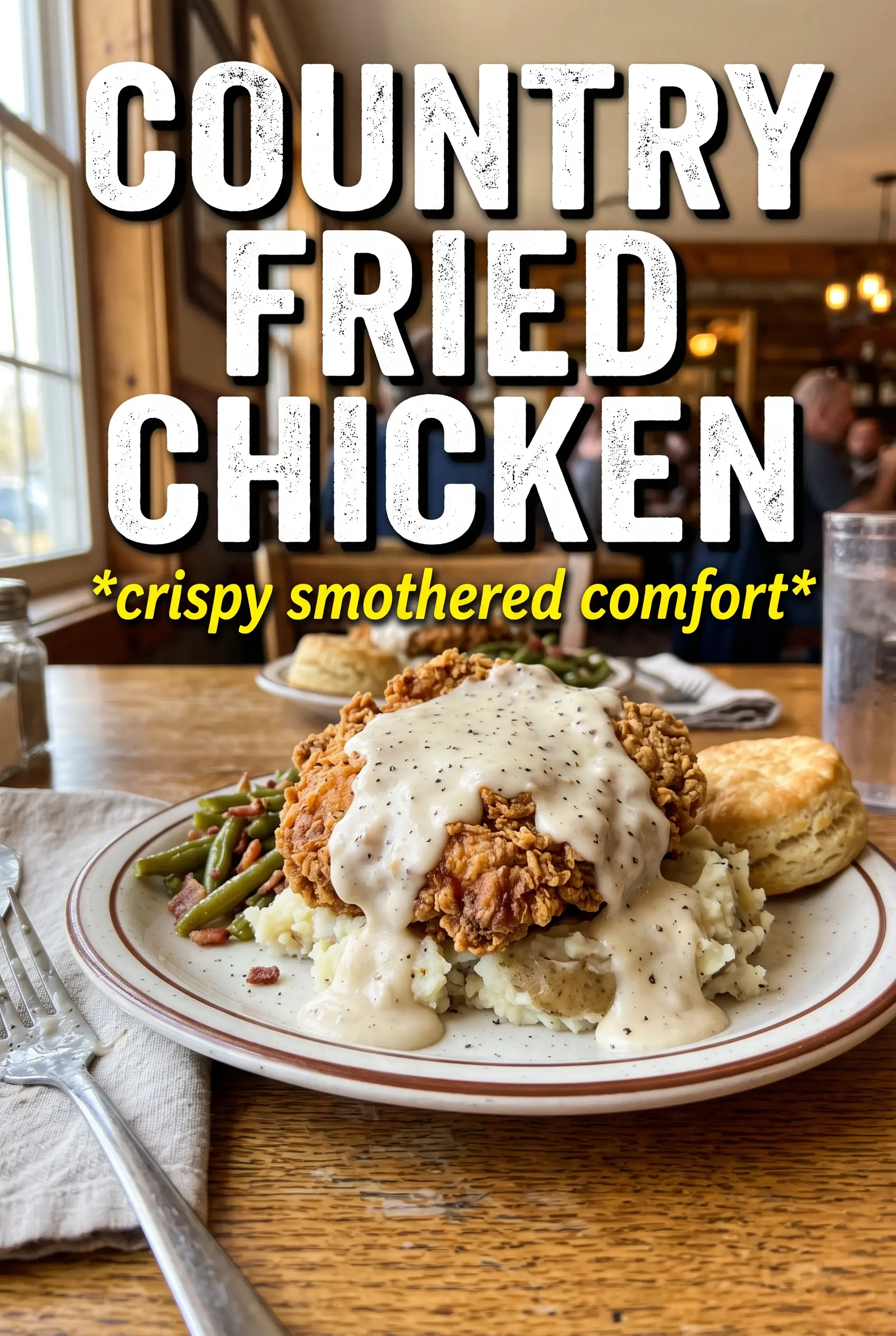
Country fried chicken lands on the plate with a crust that crackles under your fork and meat that stays juicy all the way to the bone. The gravy pulls everything together with a peppery, creamy finish that belongs right on top, not on the side. When it’s done well, it’s the kind of dinner people get quiet over for the first few bites.
What makes this version work is the buttermilk soak, which seasons the chicken from the inside and helps the coating cling without turning heavy. Cornstarch in the dredge keeps the crust a little lighter and crispier than flour alone, and the low frying temperature gives you time to cook the chicken through before the outside goes too dark. The gravy uses the drippings in spirit, even if you start it from butter, flour, milk, and broth, so it tastes like it belongs with the chicken instead of just sitting on top of it.
Below, I’ll walk through the points that matter most: how to keep the crust from slipping, why the gravy thickens the way it does, and how to keep the chicken hot and crisp until serving.
The crust stayed shatteringly crisp even after I spooned the gravy over it, and the chicken was cooked through without drying out. I used the full hour in the buttermilk and the seasoning went all the way into the meat.
Save this country fried chicken for the nights when you want a crunchy crust, creamy pepper gravy, and true Southern comfort on one plate.
The Secret to a Crust That Stays Put Under the Gravy
Country fried chicken fails in one of two ways: the coating slides off, or the crust turns soft before you get it to the table. The fix starts in the buttermilk marinade, which gives the flour something tacky to grab onto, but the real insurance is in the dredge itself. Cornstarch interrupts the gluten structure just enough to keep the shell crisp instead of bready and dense.
The other mistake is frying too hot. At 325°F, the crust has time to set gradually while the chicken cooks through. If the oil is screaming hot, the outside browns before the bone-in pieces are ready, and people either pull them too early or burn the crust waiting for the center to catch up.
- Let the excess marinade drip off, but don’t wipe the chicken clean. You want a damp surface, not a bare one.
- Press the dredge onto every side. A light toss leaves gaps; a firm press builds a better shell.
- Rest the coated chicken briefly before frying if you have time. That extra minute helps the flour hydrate and cling.
What the Flour, Cornstarch, and Gravy Base Are Each Doing
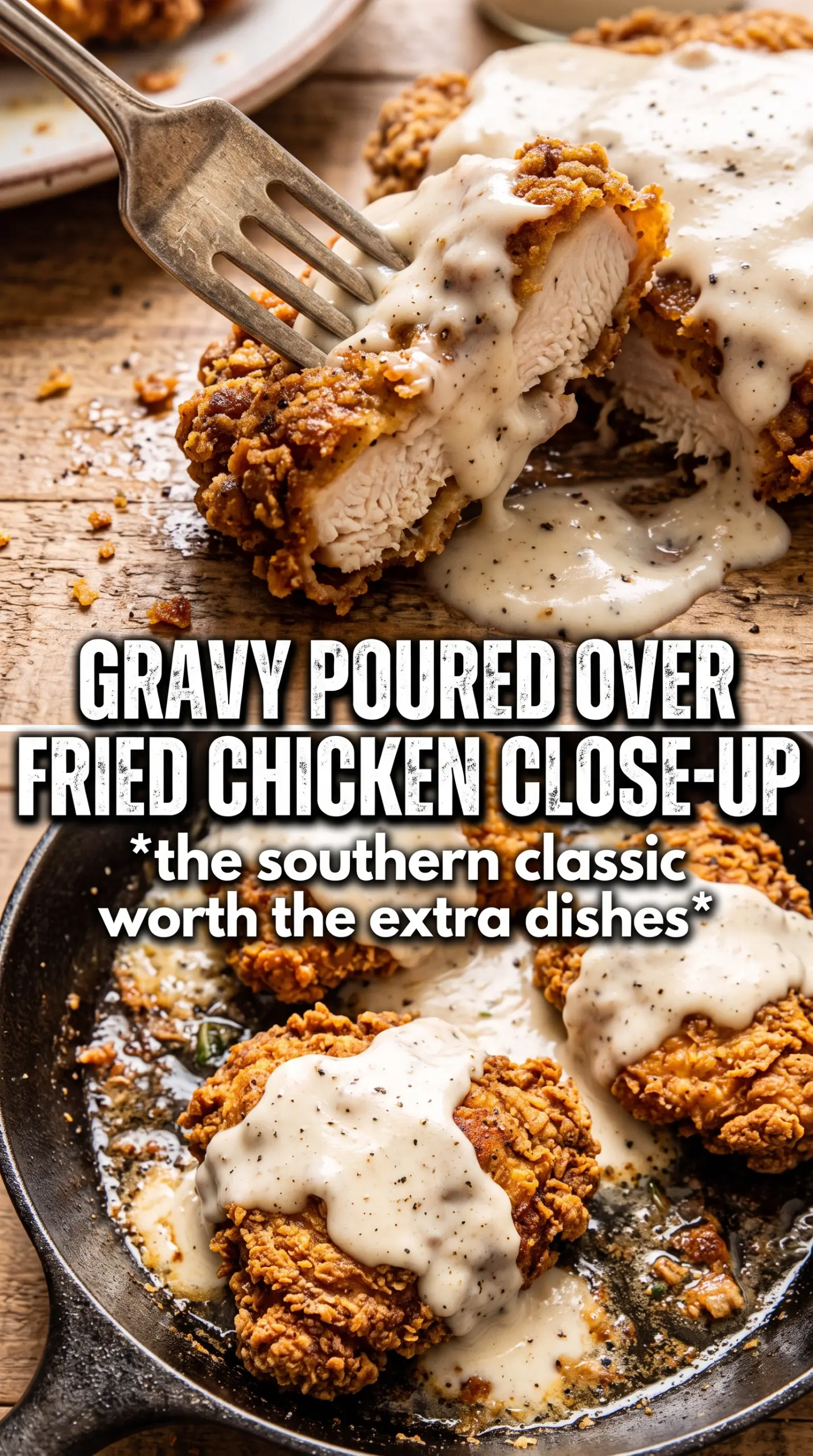
- Bone-in chicken pieces — Bone-in cuts stay juicier through a longer fry, especially if you’re cooking thighs, drumsticks, and breasts together. Boneless chicken cooks faster but dries out more easily in a recipe like this.
- Buttermilk — This isn’t just for tang. The mild acid helps tenderize the surface of the chicken and gives the coating a sticky base that flour holds onto well.
- Hot sauce — You won’t taste heat in the finished chicken so much as a little lift in the background. If you don’t have it, a pinch more black pepper works better than leaving the marinade flat.
- Cornstarch — This is the ingredient that makes the crust feel extra crisp instead of thick and cakey. Don’t skip it unless you want a heavier, more old-fashioned coating.
- Whole milk and chicken broth — The milk gives the gravy body, while the broth keeps it from tasting one-note. Using all milk works, but the broth brings a deeper savory edge that matches fried chicken better.
Building the Chicken and Gravy in the Right Order
Marinating for Flavor and Grip
Mix the buttermilk, hot sauce, salt, and pepper until combined, then submerge the chicken and let it sit for at least an hour. That time matters because it seasons the meat and gives the coating a surface to cling to. If you rush this part, the crust can still fry up fine, but the chicken underneath will taste flatter and less seasoned.
Setting Up the Dredge
Whisk the flour, cornstarch, and spices together in a shallow bowl so every bite of crust tastes the same. The seasoning has to be mixed all the way through or you’ll end up with patches that are bland and patches that taste like cayenne hit them directly. When you coat the chicken, press the flour mixture in firmly so it forms a rough, craggy layer.
Frying to a Deep Golden Color
Heat the oil to 325°F in a heavy skillet and keep an eye on the temperature between batches. Bone-in chicken needs time, and that lower heat lets the inside catch up without scorching the outside. Look for a deep golden crust and an internal temperature of 165°F at the thickest part; if the crust is coloring too fast, lower the heat before the center turns dry.
Whisking the Gravy Until It Turns Silky
Melt the butter, whisk in the flour, and cook it for a minute or two until it smells a little nutty and looks smooth, not raw. Then add the milk and broth gradually while whisking, because dumping it all in at once makes lumps harder to beat out. The gravy is ready when it coats a spoon and drapes off instead of running like cream.
How to Make This Country Fried Chicken Work for Your Table
Buttermilk-Free Swap
Use plain yogurt thinned with a little milk until it has the texture of buttermilk. It won’t taste exactly the same, but it gives you the same clingy, tangy marinade that helps the coating adhere. Skip sour cream here unless you thin it well, or the coating can get too thick and patchy.
Gluten-Free Version
Use a 1:1 gluten-free flour blend in place of the all-purpose flour and keep the cornstarch. The crust won’t have quite the same chew, but the texture still fries up crisp if you don’t overcrowd the pan. Check that your broth is gluten-free too, since that’s an easy place for hidden wheat to sneak in.
Extra-Spicy Southern Fried Chicken
Increase the cayenne and add a little more hot sauce to the marinade if you want more heat in every bite. That change deepens the bite without changing the structure of the crust, which is better than dusting heat on at the end. Too much cayenne can turn bitter, so add it in small increments.
Storage and Reheating
- Refrigerator: Store leftovers in an airtight container for up to 3 days. The crust softens in the fridge, but the flavor holds up well.
- Freezer: You can freeze fried chicken, though the crust won’t stay as crisp. Freeze pieces on a tray first, then pack them tightly once solid for up to 2 months.
- Reheating: Reheat on a wire rack in a 375°F oven until the outside crisps back up and the center is hot. The common mistake is microwaving it first, which steams the crust and makes it leathery.
Answers to the Questions Worth Asking
Country Fried Chicken
Ingredients
Equipment
Method
- Whisk buttermilk, hot sauce, salt, and black pepper together in a bowl until combined, then add bone-in chicken pieces.
- Cover and refrigerate for 1 hour (up to overnight) so the chicken absorbs flavor and tenderizes.
- Whisk all-purpose flour, cornstarch, garlic powder, onion powder, smoked paprika, cayenne, salt, and black pepper in a shallow bowl.
- Remove chicken from the buttermilk marinade, letting excess drip off, then dredge each piece in the flour mixture and press to adhere.
- Heat vegetable oil to 325°F in a large cast-iron skillet until it’s shimmering.
- Fry chicken 12-15 minutes per side, until deeply golden and cooked through to 165°F internal temperature, with the crust looking crisp and set.
- Melt butter in a pan, whisk in flour, and cook for 1-2 minutes until smooth and lightly foamy.
- Gradually add whole milk and chicken broth while whisking, then cook until thick, stirring until glossy and pourable.
- Season the gravy with plenty of salt and black pepper until it tastes balanced and bold.
- Serve country fried chicken smothered in country gravy, finishing with cracked black pepper on top for a peppery look.