Apple cider cheesecake lands in that sweet spot between familiar and special: a classic creamy slice with a quiet tang from sour cream, warm spice in the filling, and a cider syrup that tastes like the best part of a fall orchard visit. The texture is what keeps you coming back. It slices cleanly after a long chill, stays dense without feeling heavy, and the topping adds just enough shine and sharpness to keep each bite moving.
The detail that makes this version work is the reduced apple cider in two places. Reducing the cider concentrates the flavor before it ever touches the batter, which means you get apple cider character without thinning the filling. The water bath matters here too. Cheesecake needs gentle, even heat or the edges set before the center does, and that’s when cracks start showing up.
Below, I’ll walk through the parts that actually change the outcome: how far to reduce the cider, why the crust should be pre-baked, and how to know when the cheesecake is done before it turns grainy or overbaked.
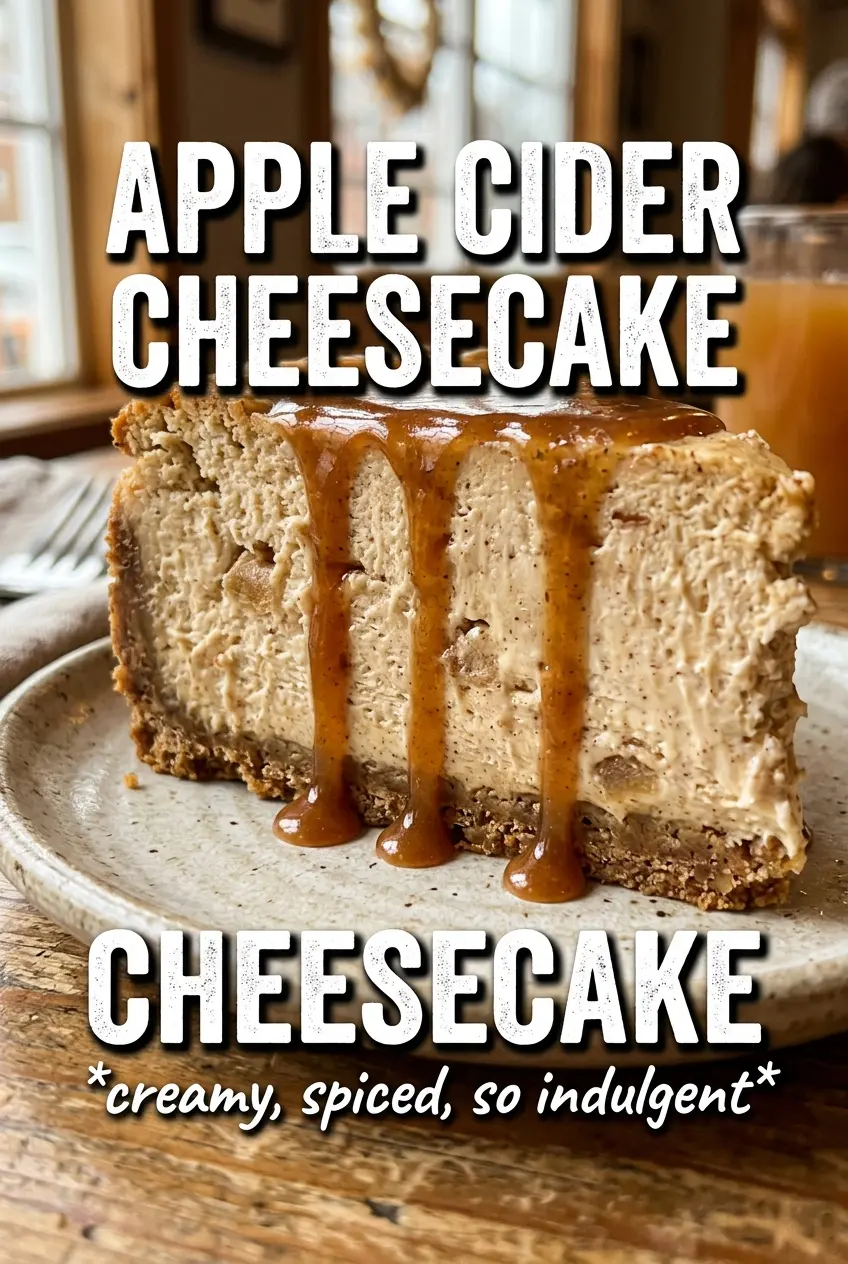
The cider flavor came through without making the filling loose, and the syrup on top set into a glossy drizzle that didn’t slide off the slice.
Save this apple cider cheesecake for the nights when you want a silky cheesecake with spiced cider on top.
The Cider Has to Be Concentrated Before It Hits the Batter
Fresh cider straight from the bottle sounds tempting, but it waters down the filling and mutes the flavor. Reducing it to a thicker 1/4 cup gives you a clean apple note that survives the cream cheese and sugar. Cool it before mixing it in, or it can soften the batter and make the texture less even.
The other common failure is overmixing after the eggs go in. Once the eggs are added, beat only until the batter looks smooth and cohesive. Too much air gives you a puffed cheesecake that falls and cracks as it cools.
What Each Ingredient Is Actually Doing in This Cheesecake
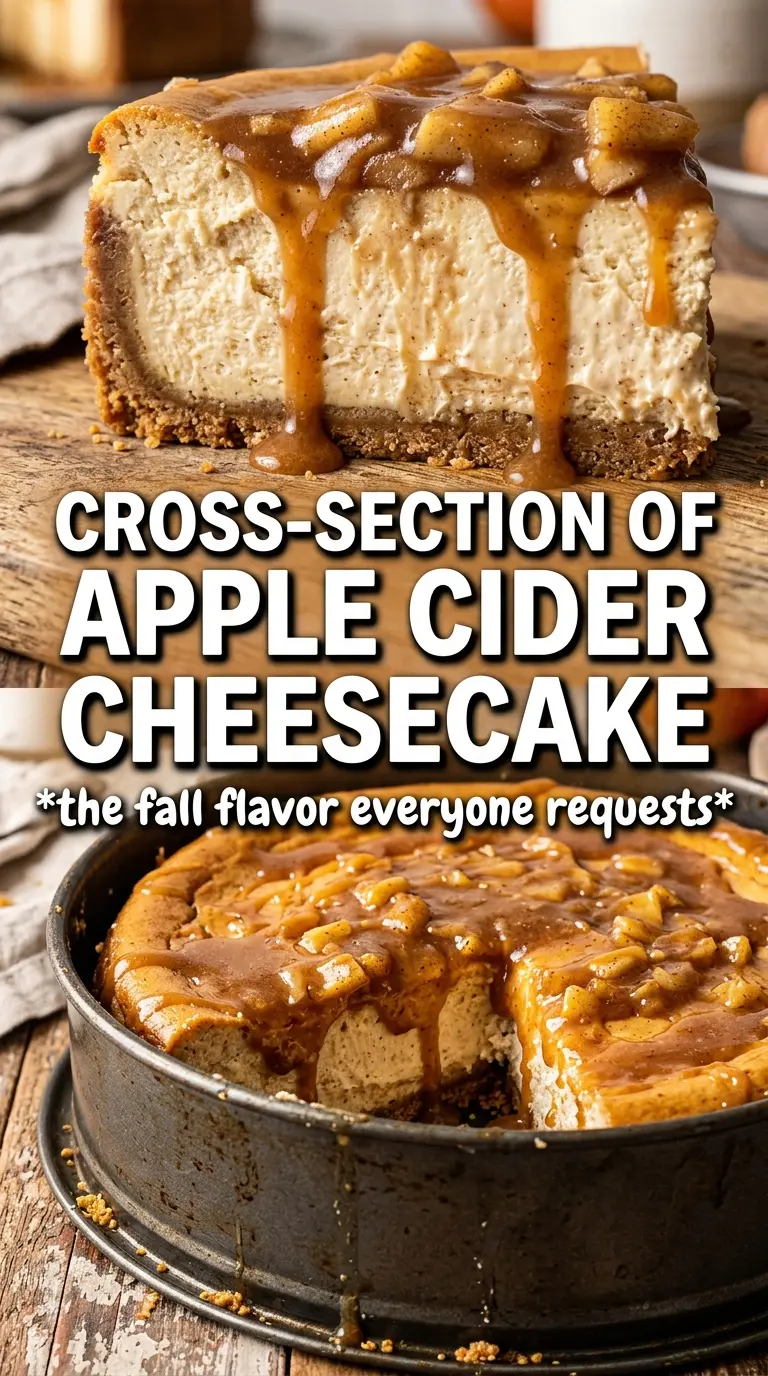
- Reduced apple cider — This is where the apple flavor comes from, not from the spices alone. Reduce it until it tastes concentrated and a little glossy; if it’s still thin and sharp, it hasn’t gone far enough. You can use bottled cider or fresh cider, but plain apple juice won’t give the same rounded flavor.
- Cream cheese — Use full-fat blocks, softened all the way through. Cold cream cheese leaves little lumps that don’t disappear later, and whipped tubs won’t give the same dense, sliceable texture.
- Sour cream — This keeps the filling from tasting flat. It adds just enough tang to balance the brown sugar and makes the cheesecake feel lighter on the tongue.
- Graham cracker crust — The cinnamon in the crust echoes the filling and keeps the base from tasting plain. Press it firmly into the pan and pre-bake it so it stays crisp under the creamy filling.
- Cider syrup topping — This is the part that makes the slice feel finished. Simmer it until it lightly coats a spoon; if you stop too early, it will run off the cheesecake instead of sitting in a neat drizzle.
Building the Cheesecake So It Bakes Evenly
Press and Pre-Bake the Crust
Mix the crumbs, sugar, cinnamon, and melted butter until every crumb looks evenly moistened, then press it into the springform pan with a flat-bottomed glass or measuring cup. You want a compact layer with no loose sandy patches. Bake it for 10 minutes until it smells toasted and looks slightly darker at the edges. If the crust is underbaked, it softens once the filling goes in.
Beat the Filling Without Whipping It
Start with the cream cheese and brown sugar until the mixture looks completely smooth and glossy, with no grainy streaks. Add the reduced cider, sour cream, cinnamon, nutmeg, and vanilla next, then the eggs one at a time. Stop mixing as soon as the batter looks uniform. If the batter gets fluffy, the cheesecake will rise too much and crack as it cools.
Bake in Gentle Heat
Pour the filling over the crust and set the pan in a water bath. The bath keeps the oven heat steady and protects the edges from overcooking before the center sets. Bake until the edges are firm and the center still has a slight wobble when you tap the pan. If the middle looks fully set in the oven, it’s already overdone.
Cool Slowly, Then Chill Long Enough
Let the cheesecake cool completely before it goes into the refrigerator. A sudden temperature drop can cause surface cracks and a gummy texture near the top. Chill it for at least 6 hours, and overnight is even better if you want the cleanest slices. Warm cheesecake cuts badly and hides the texture you worked to get right.
Three Ways to Adjust It Without Losing the Point
Gluten-Free Crust
Use gluten-free graham-style crumbs in place of standard graham crackers. The filling stays exactly the same, and the texture of the crust will be a little more delicate, so pack it firmly and let it cool before adding the filling.
Dairy-Free Swap
Use dairy-free cream cheese and a thick plant-based sour cream substitute. The flavor stays close, but the texture is usually a little softer, so chill it fully before slicing and don’t skip the water bath.
Make It More Spice-Forward
Add a pinch of clove or allspice to the filling if you want the cheesecake to lean more warmly spiced. Keep the amount small or it will cover the apple cider instead of supporting it.
Storage and Reheating
- Refrigerator: Store covered for up to 5 days. The crust softens a little by day two, but the filling stays creamy.
- Freezer: Freezes well in slices. Wrap tightly, then freeze up to 2 months; thaw overnight in the refrigerator.
- Reheating: Cheesecake is best served cold or just barely cool. Don’t microwave it, or the filling can turn greasy and lose its clean slice.
Answers to the Questions Worth Asking
Apple Cider Cheesecake
Ingredients
Equipment
Method
- Reduce 1/2 cup apple cider until syrupy, then cool completely.
- Preheat the oven to 325F and press the graham cracker crumbs, sugar, and cinnamon into a 9-inch springform pan, then mix in melted butter and press firmly into an even layer.
- Bake the crust for 10 minutes at 325F, then let it cool while you prepare the filling.
- Beat the cream cheese and packed brown sugar until smooth.
- Mix in the cooled reduced apple cider.
- Add the eggs one at a time, mixing just until smooth.
- Mix in the sour cream, cinnamon, nutmeg, and vanilla until fully combined.
- Pour the cheesecake batter over the baked crust.
- Bake in a water bath at 325F for 55-60 minutes, until the edges look set and the center is just set.
- Cool the cheesecake completely, then refrigerate for 6 hours to chill and fully set.
- Simmer 1 cup apple cider with brown sugar and cinnamon until reduced by about half and syrupy.
- Drizzle the cider syrup over each slice just before serving.