Brown butter dirty chai cupcakes land with a deep, toasty sweetness that plain spice cupcakes just can’t match. The browned butter brings a nutty edge, the espresso sharpens the chai, and the frosting ties everything together with a finish that tastes a little bold, a little cozy, and completely bakery-worthy. The crumb stays soft, but it never turns bland or one-note.
What makes these work is balance. Browning the butter adds flavor before anything even hits the bowl, and cooling it first keeps the batter from turning greasy. Strong coffee or espresso matters here because it should read as real depth, not just a hint of mocha, and the buttermilk keeps the crumb tender enough to hold up under a thick swirl of frosting.
Below you’ll find the small details that matter most: how to brown the butter without pushing it too far, how to keep the frosting fluffy instead of heavy, and a few smart swaps if you need to adjust for what’s in your kitchen.
The cupcakes baked up with a soft, even crumb and the espresso didn’t overpower the chai at all. The brown butter frosting was the best part — fluffy, not greasy, and it held its shape beautifully when I piped it.
Save these brown butter dirty chai cupcakes for the day you want a spiced espresso cupcake with a fluffy brown butter frosting.
The Mistake That Makes Brown Butter Cupcakes Taste Flat
Brown butter gives these cupcakes their backbone, but it only pays off if you cool it before mixing. Warm brown butter can melt the sugar too much and leave the batter loose, which often turns into cupcakes that bake up dense at the center and greasy around the edges. Once the butter has cooled to room temperature and is still soft, it creams with the brown sugar and traps air the way you want it to.
The espresso also needs to earn its place. Too little and the chai takes over; too much and the cupcakes drift into coffee cake territory. Here, the espresso powder in the batter sharpens the spice, while the brewed espresso deepens the crumb without making it wet or bitter.
What Each Ingredient Is Actually Doing In This Batter
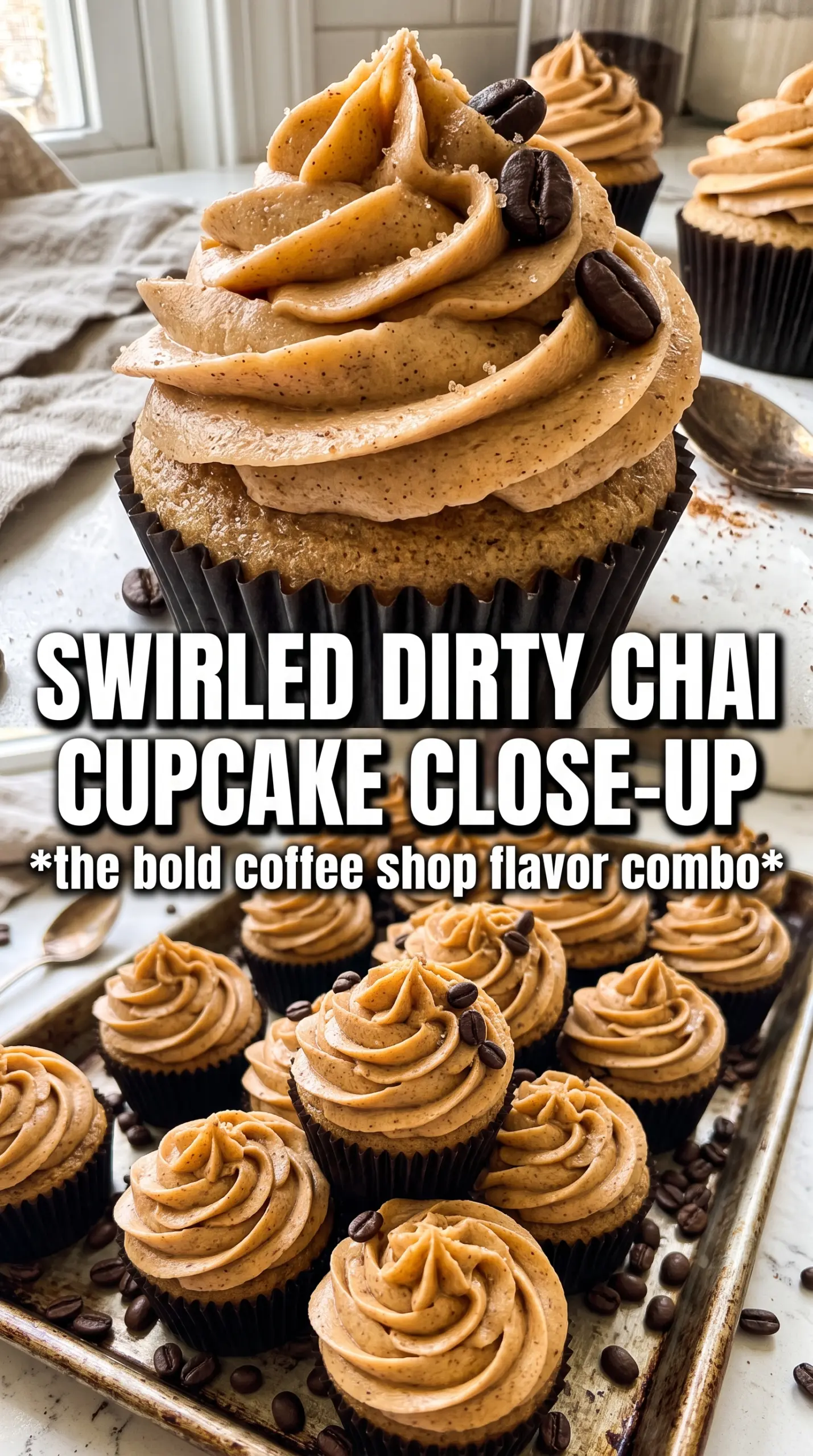
- Browned butter — This is the flavor engine. Browning the butter gives the cupcakes a nutty, toasted note that plain melted butter can’t fake, and it’s worth taking the extra few minutes to do it right. Cool it before mixing so the batter stays balanced.
- Brown sugar — It adds moisture and a deeper caramel note that works with the chai spices. White sugar will bake fine, but the flavor gets flatter and the crumb loses a little softness.
- Chai spice blend — This is where the warm spice character comes from, so use one you actually like the taste of. If your blend is mild, add a pinch more cinnamon and cardamom; if it’s heavy on clove, keep the measure as written so it doesn’t take over.
- Espresso powder and brewed espresso — The powder boosts the chocolatey, roasted edge in the cupcakes and frosting, while the cooled brewed espresso adds depth without thinning the batter too much. Instant coffee can stand in, but use a strong mix or the coffee note disappears.
- Buttermilk — It keeps the crumb tender and works with the baking soda for a soft rise. Regular milk will work in a pinch, but the texture won’t be as fine.
- Powdered sugar for the frosting — This gives the frosting its body and pipeable texture. If you reduce it too much, the frosting turns loose fast, especially once the chai and espresso are added.
Building The Batter And Frosting Without Losing Flavor
Brown the butter first, then let it cool fully
Cook the butter over medium heat until the milk solids turn amber and smell nutty, then pull it off the heat right away. You want browned bits, not black specks. Split the butter between the cupcake batter and the frosting, then cool both portions until they’re soft but no longer warm to the touch. If the butter is warm, the batter can separate and the frosting will slide instead of whip.
Mix the dry and wet ingredients with a light hand
Whisk the flour, leaveners, chai spice, espresso powder, and salt first so the spices distribute evenly. Beat the cooled brown butter with the brown sugar until it looks fluffy and slightly lighter in color, then add the eggs one at a time. Once the espresso, buttermilk, and vanilla go in, the batter may look a little curdled; that’s normal and it smooths out as soon as the flour is folded in. Stop mixing as soon as the streaks disappear so the cupcakes stay tender.
Bake until the centers spring back
Fill the liners about two-thirds full and bake at 350°F for 18 to 20 minutes. They’re done when the tops look set, the edges pull just slightly from the liners, and a toothpick comes out with a few moist crumbs instead of wet batter. If they bake past that point, the crumb tightens fast and you lose the soft, plush texture that makes these cupcakes worth making.
Whip the frosting until it holds soft peaks
Beat the browned butter with powdered sugar, milk, espresso powder, and chai spice until the frosting looks pale and airy. If it starts to feel heavy, add the milk a teaspoon at a time and keep beating until it loosens. The frosting should pipe in clean swirls and hold shape without looking greasy. If it splits, the butter was probably too warm or the sugar went in too fast.
Three Ways To Adjust These Cupcakes Without Losing The Point
Gluten-Free Cupcakes That Still Hold Their Shape
Swap in a 1:1 gluten-free baking flour that includes xanthan gum. The cupcakes will be a touch more delicate, but they’ll still rise well and stay soft if you don’t overmix the batter. Let them cool completely before frosting so they don’t crumble under the piping tip.
Dairy-Free Version With The Same Toasty Edge
Use a plant-based butter that browns well and swap the buttermilk for unsweetened dairy-free milk mixed with 1 teaspoon of lemon juice or vinegar. The frosting will work best with a sturdy dairy-free butter alternative, but it may need a little extra powdered sugar to hold its shape. You’ll keep the spice and espresso balance, though the flavor will be slightly less rich.
Make Them Less Coffee-Forward
Cut the espresso powder in the batter to 1/2 teaspoon and keep the frosting amount the same, or swap the brewed espresso for strongly brewed black tea if you want the chai to lead. The cupcakes will still have that dirty chai character, but the coffee note will sit in the background instead of standing out.
Storage and Reheating
- Refrigerator: Store frosted cupcakes in an airtight container for up to 4 days. The crumb stays soft, but the frosting firms up cold.
- Freezer: Freeze unfrosted cupcakes tightly wrapped for up to 2 months. Thaw at room temperature, then frost fresh for the best texture.
- Reheating: These are best served at room temperature, not warmed. If they’ve been chilled, let them sit out for 30 to 45 minutes so the frosting softens and the brown butter flavor comes back.
Answers To The Questions Worth Asking
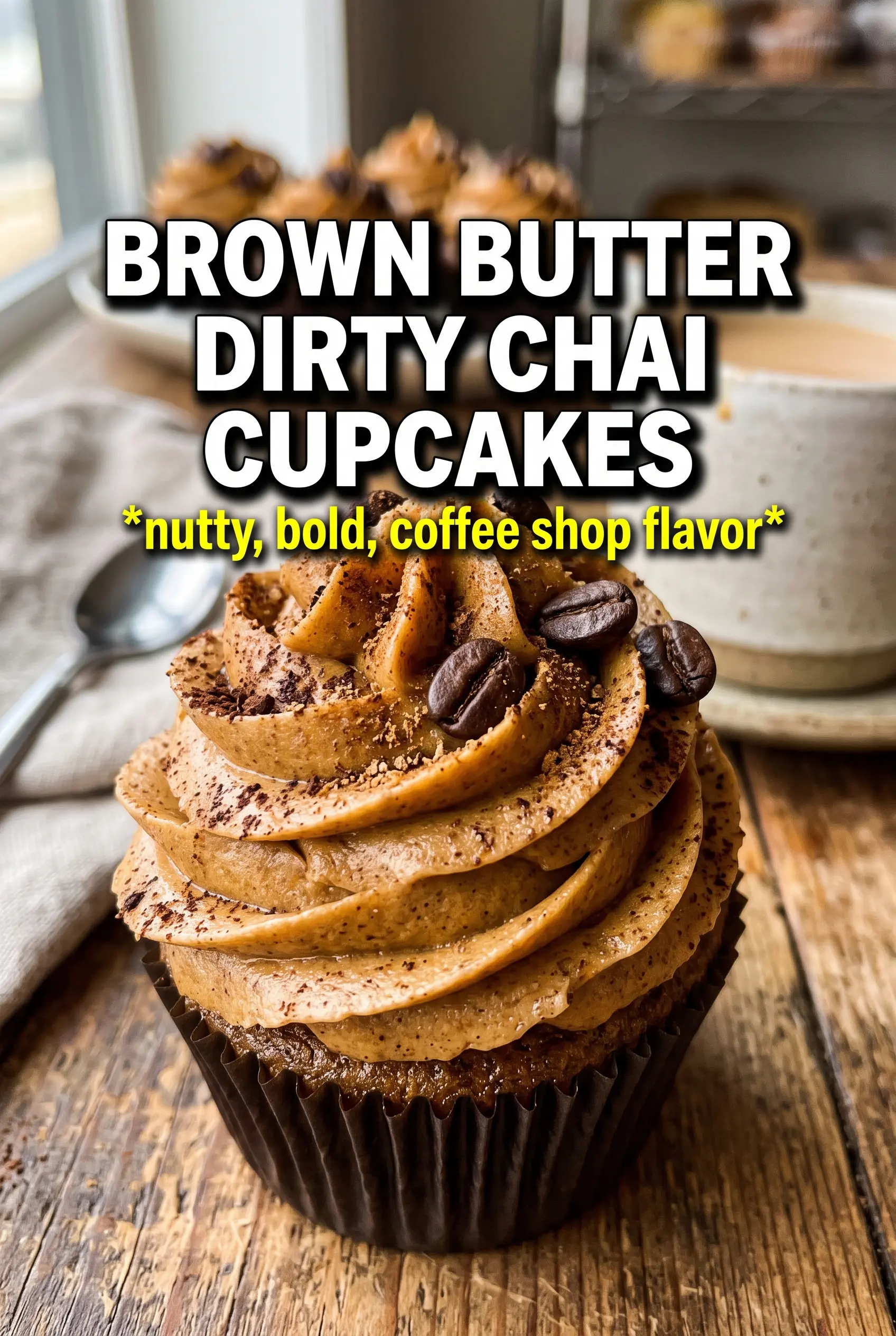
Brown Butter Dirty Chai Cupcakes
Ingredients
Equipment
Method
- Brown 3/4 cup unsalted butter and cool it completely.
- Brown the remaining butter for the frosting and cool it completely.
- Preheat the oven to 350F and line a cupcake tin with liners.
- Whisk all-purpose flour, baking powder, baking soda, chai spice blend, espresso powder, and salt in a bowl until evenly combined.
- Beat the cooled brown butter and packed brown sugar, then add eggs one at a time.
- Beat in strongly brewed espresso, buttermilk, and vanilla until the batter looks smooth and glossy.
- Fold the flour mixture into the wet ingredients just until no dry streaks remain.
- Spoon batter into liners to about 2/3 full and bake 18-20 minutes, until the tops spring back and a toothpick comes out clean.
- Cool the cupcakes completely before frosting.
- Beat browned butter with powdered sugar, then mix in milk, espresso powder, and chai spice blend until fluffy and spreadable.
- Pipe frosting onto cooled cupcakes and dust with espresso powder and chai spice blend for a dark speckled top.