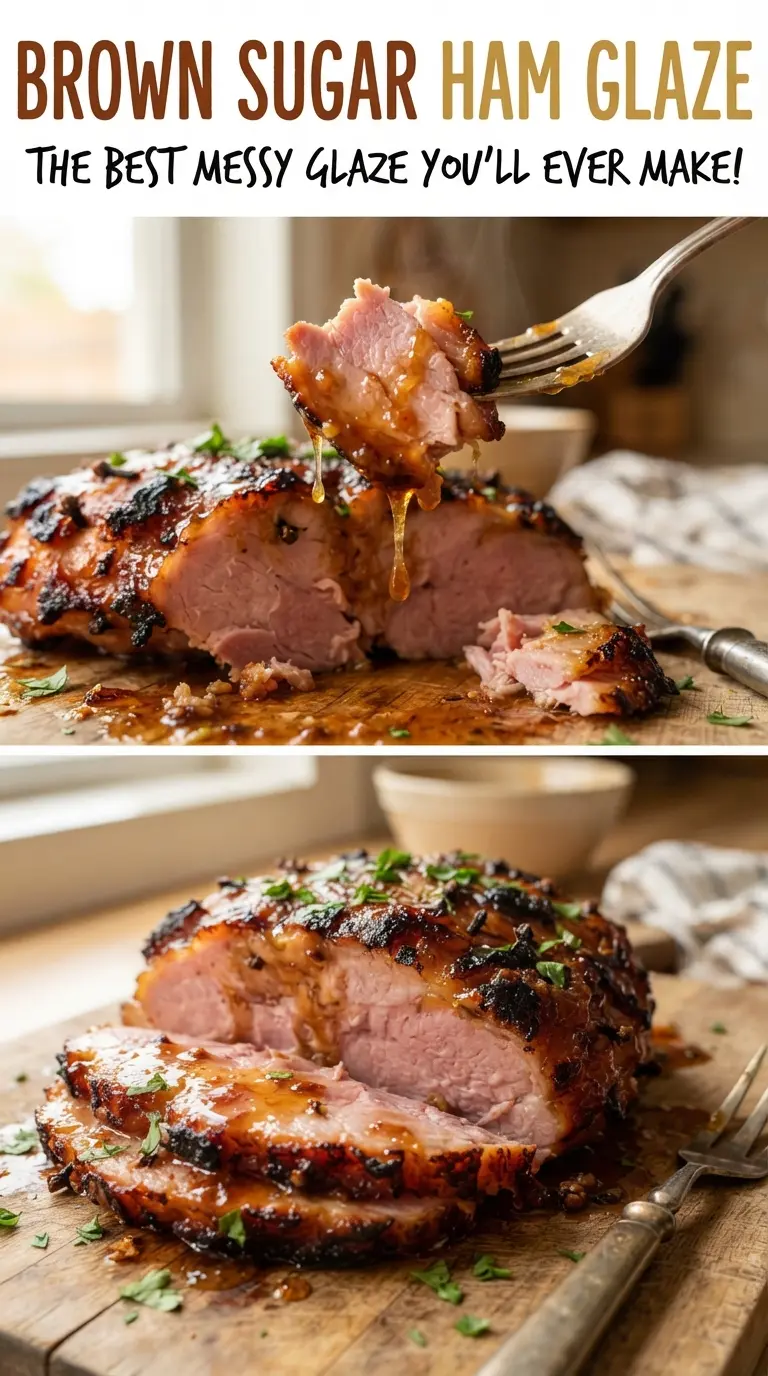
Glossy, sticky, and just tangy enough to keep each bite from tasting one-note, this brown sugar ham glaze turns an already festive ham into the kind of centerpiece people keep circling back to. It brushes on like warm caramel, then sets into a shiny lacquer that clings to the scored edges and settles into every cut line. The result is sweet, spiced, and deeply savory instead of flatly sugary.
The balance matters here. Brown sugar and honey build body and shine, while Dijon and apple cider vinegar keep the glaze from turning cloying. Pineapple or orange juice adds fruit brightness and helps the sugar dissolve smoothly, and a little butter gives the sauce that glossy finish that looks as good as it tastes. A short simmer is all it needs; if you cook it too long, it can thicken into a stiff syrup before it ever reaches the ham.
Below you’ll find the timing that keeps the glaze bold without burning, plus a few swaps if you’re working with what you have on hand. If you’ve ever had ham glaze slide off or taste thin, the details here will help.
The glaze thickened up fast and brushed on in a perfect shiny layer. I used orange juice, and the little hit of citrus kept it from tasting too sweet. My ham came out with a gorgeous sticky crust.
Like this glossy brown sugar ham glaze? Save it to Pinterest for a ham that bakes up sticky, shiny, and perfectly balanced with Dijon and spice.
The Reason This Glaze Sticks Instead of Sliding Off
The difference between a glaze that clings and one that runs straight to the pan is thickness and timing. This one starts with enough sugar and honey to create body, then gets cooked just long enough for the sugar to dissolve and the mixture to look glossy and slightly syrupy. That short simmer matters because a glaze that is undercooked looks thin and watery on the ham, while one that is overcooked turns tacky before it can spread evenly.
Brushing the glaze on during the last 30 minutes of baking gives it time to caramelize without scorching. Ham already cooks hot on the surface, and sugar burns fast once the oven heat has had time to dry it out. Reapplying every 10 minutes builds layers, which is what gives you that deep amber finish instead of one thin swipe that disappears as soon as it hits the meat.
- Don’t rush the simmer — the glaze needs a full minute or two of bubbling after the sugar dissolves so it can coat the back of a spoon lightly and brush on in a smooth layer.
- Watch the last 10 minutes closely — if the edges are getting too dark, the oven is too hot for the amount of sugar on the surface. Tent loosely with foil if needed.
- Use the pan drippings — if any glaze collects below the ham, spoon it back over the slices before serving. That’s where the strongest flavor sits.
What Each Ingredient Is Actually Doing in This Glaze
- Brown sugar — This is the base of the glaze and the main source of that deep amber color. Packed brown sugar gives you molasses notes and better body than white sugar, so don’t swap it unless you’re willing to lose both depth and stickiness.
- Honey — Honey adds shine and helps the glaze cling to the ham. If you don’t have it, maple syrup works, but the flavor gets a little woodsy instead of clean and floral.
- Pineapple or orange juice — This thins the glaze just enough to make it brushable while adding acidity and fruit brightness. Orange juice tastes a little rounder; pineapple gives a sharper sweet-tart edge.
- Dijon mustard — Dijon is what keeps this from tasting like candy. It cuts the sweetness and gives the glaze a savory backbone that works especially well with salty ham.
- Butter — Butter softens the edges and gives the glaze a richer finish. If you skip it, the glaze still works, but it won’t look as silky when it hits the meat.
- Apple cider vinegar — This wakes up the whole mixture and keeps the sweetness from flattening out. Lemon juice can stand in, but vinegar gives a slightly deeper tang that holds up better in the oven.
- Cinnamon and cloves — These two spices are strong, so a little goes a long way. They give the glaze that classic holiday-style warmth without overpowering the ham.
Getting the Glaze from Saucepan to Ham Without Burning It
Melting the Base
Combine everything in a saucepan over medium heat and stir until the sugar disappears into the liquid. At first it will look grainy and loose, then it will turn smoother as the butter melts and the sugar dissolves. If you see dry sugar stuck to the sides, keep stirring so it doesn’t recrystallize into hard bits later.
Building the Shine
Let the mixture come to a gentle simmer, not a rolling boil. You want small bubbles around the edges and a glossy surface that looks slightly thicker than when you started. Three to four minutes is enough; if you reduce it too far, it becomes sticky in the pan and harder to brush on evenly.
Brushing the Ham
Brush the glaze over a fully cooked ham during the last 30 minutes of baking, then repeat every 10 minutes. The first layer helps the next one cling, and each round deepens the color. If your ham is already heavily scored, work the brush into the cuts so the glaze slips down into the diamonds instead of sitting only on top.
Serving the Finish
Warm the remaining glaze and spoon it over sliced ham at the table. That final spoonful matters because the surface glaze caramelizes a little in the oven, but the fresh warm glaze brings back the boldest sweetness and spice. If it thickens too much while sitting, set the pan over low heat and stir in a teaspoon of water or juice until it loosens.
How to Adapt This Glaze for Different Hams and Different Tables
Orange Glaze for a Brighter Finish
Use orange juice instead of pineapple for a softer citrus note that tastes a little more classic and less tropical. It still balances the brown sugar, but the final glaze reads brighter and a touch less sharp.
Dairy-Free Version
Swap the butter for a dairy-free butter substitute or leave it out entirely. The glaze will still set up and taste balanced, though it won’t have quite the same rounded finish.
Spicier Holiday Style
Add a pinch of black pepper or a tiny dash of cayenne if you want a little heat behind the sweetness. It won’t make the glaze spicy, but it does sharpen the finish and keeps each bite from leaning too sweet.
Make-Ahead Timing
Cook the glaze up to 3 days ahead and refrigerate it in a covered container. Warm it gently before brushing so it loosens back into a spreadable consistency instead of staying thick and pasty.
Storage and Reheating
- Refrigerator: Store leftover glaze for up to 5 days in a sealed container. It will thicken as it chills.
- Freezer: This glaze freezes well for up to 2 months. Thaw it in the refrigerator before reheating.
- Reheating: Warm it slowly over low heat, stirring often. High heat can make the sugar seize or scorch before it loosens.
Questions I Get Asked About This Recipe
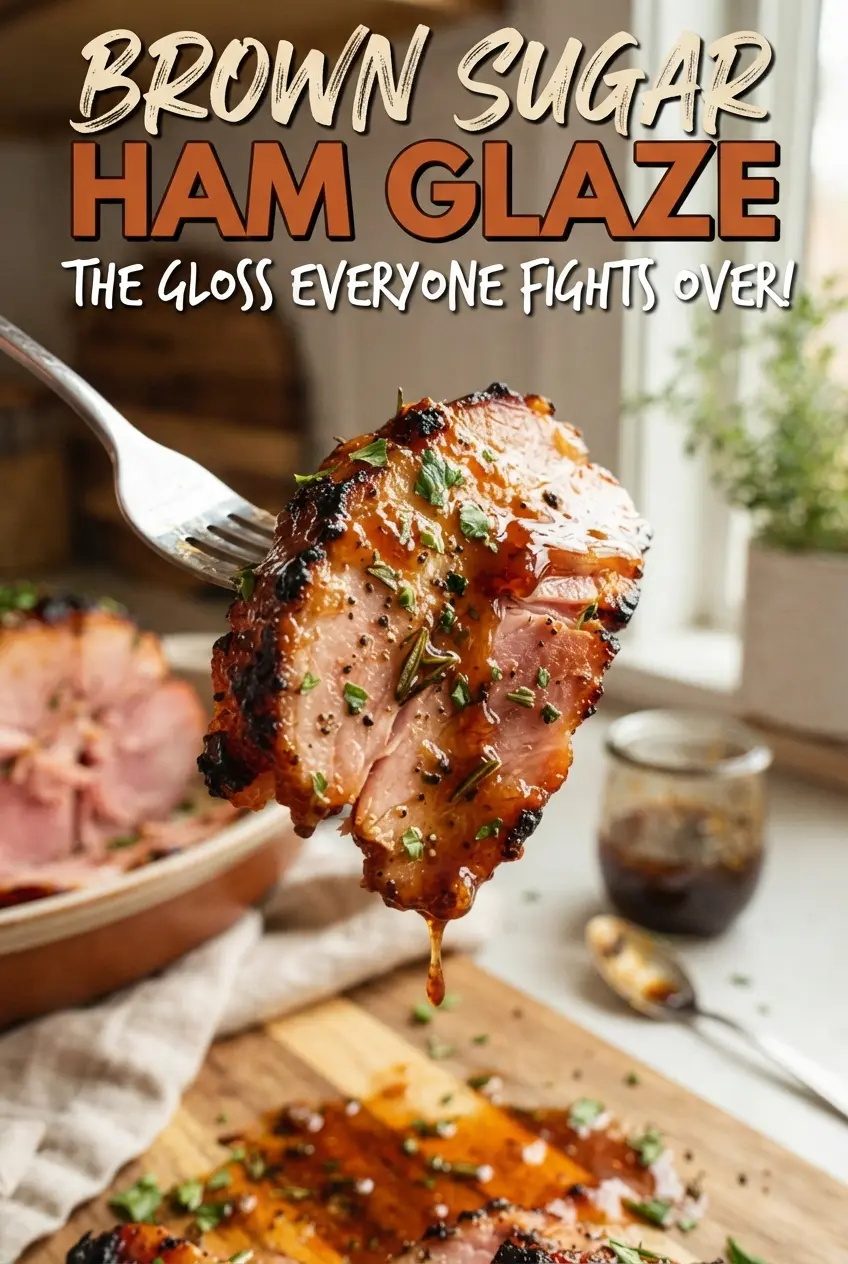
Brown Sugar Ham Glaze
Ingredients
Equipment
Method
- Add brown sugar, honey, pineapple or orange juice, Dijon mustard, butter, apple cider vinegar, cinnamon, and ground cloves to a saucepan. Stir to combine so no dry pockets of sugar remain.
- Set the saucepan over medium heat and bring the mixture to a simmer, stirring constantly. Watch for steady bubbles and a smooth, melted look as the sugar dissolves.
- Simmer for 3-4 minutes until slightly thickened and glossy, continuing to stir. Visual cue: the glaze should coat the spoon lightly and shine like amber syrup.
- Brush the warm glaze over a fully cooked ham during the last 30 minutes of baking. Visual cue: coat the scored diamond pattern so glossy drips follow the lines.
- Brush again every 10 minutes during the final 30 minutes of baking. Time cue: repeat at 20 minutes, 10 minutes, and the final few minutes for a deeper sheen.
- Spoon any remaining warm glaze over sliced ham at the table. Visual cue: let it pool slightly on the surface for extra shine and caramelized edges.