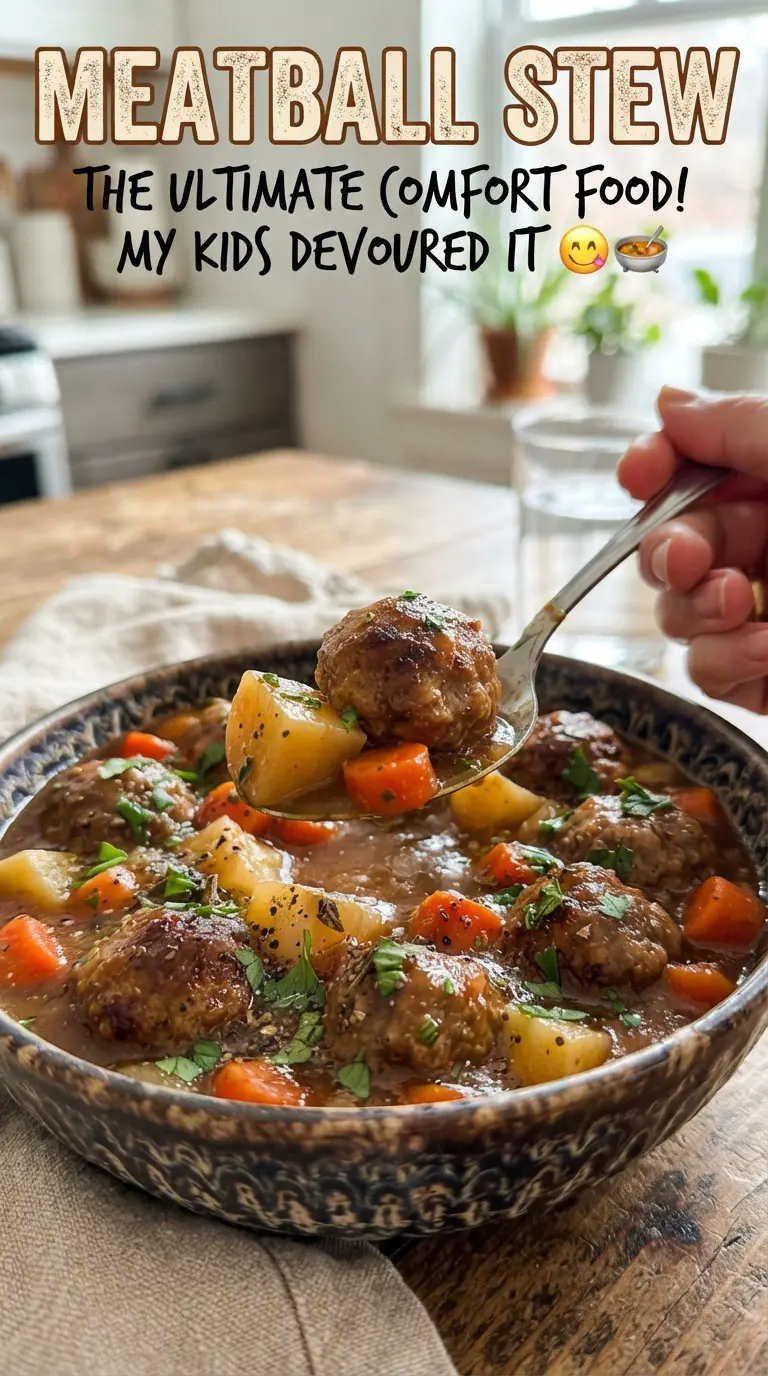
Meatball stew lands somewhere between a classic beef stew and the kind of supper that gets scraped clean without anyone asking what else is for dinner. The meatballs stay tender, the broth turns savory and thick, and the potatoes and carrots soak up all that browned flavor from the pan. It eats like a full meal in one bowl, with just enough gravy to make every bite feel substantial.
What makes this version work is the order. Browning the meatballs first gives the stew its deep, meaty base, and a quick flour step with the onions keeps the broth from staying thin and brothy. Tomato paste and Worcestershire don’t make it taste like tomato soup; they sharpen the beef flavor and give the gravy more backbone. That little bit of thyme also matters, because it ties the vegetables and meat together without turning the pot into something that tastes overtly herbal.
Below, I’ve included the parts that matter most: how to keep the meatballs tender, why the broth thickens the way it does, and a few smart swaps if you want to adjust the vegetables or make the stew ahead.
The meatballs stayed tender and the gravy thickened up beautifully after the flour went in with the onions. I added the peas at the end like you said, and they stayed bright instead of turning mushy.
Save this meatball stew for a hearty one-pot dinner with tender meatballs, thick brown gravy, and vegetables that hold their shape.
The Trick to Keeping the Meatballs Tender While the Stew Simmers
The biggest mistake in meatball stew is treating the meatballs like they need to be cooked through before they ever hit the broth. They don’t. Browning them first is enough. That short sear gives you flavor and helps them hold together, but the long simmer finishes the job gently so they stay soft instead of turning tight and dry.
The other thing that matters is the mix itself. Breadcrumbs and milk keep the meatballs light, while the egg binds everything just enough to survive the browning step. If the mixture feels sticky, that’s normal; overworking it is what makes meatballs dense. Roll them with a light hand and stop as soon as they hold their shape.
What the Broth, Flour, and Worcestershire Are Each Doing
The flour is what turns this from soup into stew. Cooking it with the onions for a minute takes away the raw taste and gives the broth a body that clings to the potatoes and meatballs. If you skip that step, the liquid stays thin no matter how long it simmers.
- Ground beef — An 80/20 blend gives the best balance of flavor and tenderness. Leaner beef works, but the meatballs won’t be as juicy.
- Breadcrumbs and milk — This is the panade, and it’s what keeps the meatballs from packing down. Plain breadcrumbs are fine; seasoned ones can push the stew too far toward salty.
- Tomato paste — Just a tablespoon deepens the broth without making it tomato-forward. It helps the gravy taste slow-cooked even though the whole dish comes together in under an hour.
- Potatoes and carrots — Yukon Gold or red potatoes hold their shape better than russets. Cut the vegetables into even pieces so they finish at the same time as the meatballs.
- Frozen peas — Add them at the end. They only need a few minutes, and that keeps them sweet and green instead of dull and split.
Building the Stew Without Breaking the Gravy
Browning the Meatballs First
Heat the oil until it shimmers, then brown the meatballs in batches so they get real color instead of steaming in the pan. You’re not cooking them through here; you’re building the base of the stew. If the pan is crowded, the meatballs release moisture and you lose the browned bits that give the broth its depth.
Cooking the Onion and Flour Together
Once the meatballs are out, cook the onion until it softens and turns translucent around the edges. Stir in the flour and let it cook for about a minute so the stew won’t taste pasty. The flour should cling to the onion and look a little sandy before you add the broth.
Simmering Until the Vegetables Turn Tender
Whisk in the broth, tomato paste, Worcestershire, and thyme, then add the potatoes and carrots. Scrape the bottom of the pot well; those stuck-on browned bits dissolve into the liquid and carry a lot of flavor. Keep the simmer gentle after the meatballs go back in. A hard boil can break the meatballs apart and make the potatoes fall to pieces before the stew has thickened.
Finishing with Peas
Stir the peas in at the end and cook just until they’re hot. They should stay bright and sweet, not wrinkled or drab. If the stew needs a little more thickness at this point, let it bubble uncovered for a few minutes before serving instead of adding more flour.
How to Adapt This Meatball Stew Without Losing the Good Part
Swap the Ground Beef for Ground Turkey
Ground turkey works, but the stew will taste lighter and less beefy. Use the same method and add an extra pinch of salt or a little more Worcestershire to bring the flavor back into focus. A mix of dark meat turkey works better than very lean turkey breast.
Make It Gluten-Free
Use gluten-free breadcrumbs in the meatballs and replace the all-purpose flour with a 1:1 gluten-free blend. The texture stays close to the original, though the gravy may need an extra minute or two to thicken after the broth goes in.
Change the Vegetables Without Changing the Method
Parsnips, celery, or green beans can stand in for part of the carrots and potatoes. Keep the total volume about the same and cut everything to a similar size so the simmer stays even. Softer vegetables like green beans should go in later, just like the peas.
Storage and Reheating
- Refrigerator: Store in an airtight container for up to 4 days. The broth thickens as it chills, which is normal.
- Freezer: This freezes well for up to 3 months. Cool it completely first, then freeze in portions. The potatoes may soften a little after thawing, but the flavor holds up.
- Reheating: Warm it gently on the stove over medium-low heat with a splash of broth or water if needed. Don’t boil it hard, or the meatballs can tighten and the potatoes can break down too much.
Answers to the Questions Worth Asking
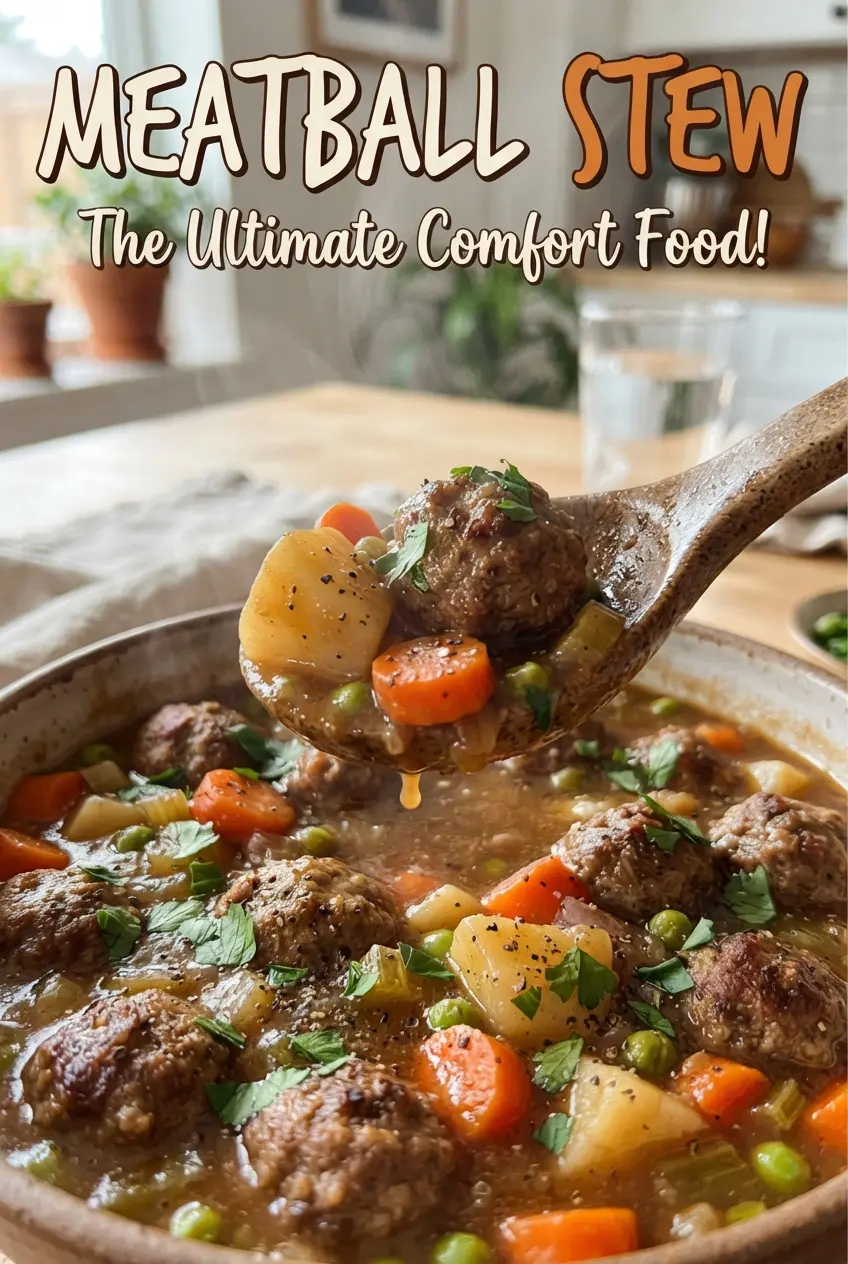
Meatball Stew
Ingredients
Equipment
Method
- Mix ground beef, breadcrumbs, large egg, milk, salt, and garlic powder until evenly combined; shape into 1 1/2-inch meatballs. Aim for uniform size so they brown and simmer at the same pace.
- Heat vegetable oil in a Dutch oven over medium-high heat, then brown the meatballs in batches and set them aside. Cook until browned on the outside, which you’ll see as deep golden-brown color.
- Cook the diced onion for 4 minutes in the Dutch oven until softened. Stir and watch for a translucent look and light browning at the edges.
- Sprinkle in all-purpose flour and stir for 1 minute. The mixture should look slightly thicker and paste-like as the raw flour smell cooks off.
- Whisk in beef broth, tomato paste, Worcestershire sauce, and dried thyme, stirring until smooth. Stop when no flour lumps remain and the gravy looks cohesive.
- Add the potatoes and carrots, then return the browned meatballs to the pot. Make sure the meatballs are partially submerged in the thick brown gravy.
- Simmer the stew covered for 25-30 minutes until the vegetables are tender. You should see gentle bubbling and potatoes that pierce easily with a fork.
- Stir in frozen peas and simmer for 5 minutes. The peas should turn bright green while staying tender-crisp.
- Serve the meatball stew hot. Spoon the thick brown gravy over the meatballs and vegetables for maximum coating.