Rich, brown, and deeply savory, Scottish beef stew earns its place on the table because it eats like a full meal in one bowl. The beef turns tender without falling apart, the barley gives the broth a gentle body, and the turnip adds an earthy note that keeps the stew from tasting heavy. It’s the kind of pot that makes the kitchen smell like it’s been working for hours, because it has.
The key is building flavor in layers. Browning the flour-dusted beef creates the base for the gravy, and the ale or broth loosens the browned bits on the bottom of the pot instead of leaving them behind. Pearl barley goes in late so it stays pleasantly chewy instead of turning mushy, and the carrots and turnip hold their shape long enough to give the stew some texture.
Below, you’ll find the small timing details that keep the stew thick but not pasty, plus a few swaps that still keep the spirit of the dish intact. If you’ve ever had beef stew that tasted flat or watery, this method fixes both problems.
The gravy thickened up beautifully and the barley stayed tender with just enough bite. I’ve made a lot of beef stews, and this was the first one where the turnips didn’t disappear into the sauce.
Save this Scottish beef stew for a night when you want tender beef, pearl barley, and a thick, rustic gravy in one pot.
The Trick to Keeping the Barley Tender Instead of Turning the Pot Into Porridge
The mistake most people make with beef barley stew is adding the barley too early and letting it ride through the whole simmer. Pearl barley keeps soaking up liquid as it cooks, and if it stays in the pot from the start, the stew can go from hearty to stodgy fast. Adding it in the last 45 to 60 minutes gives you a broth that still has body while the grains stay distinct.
Another thing that matters here is the long, low simmer after the beef is browned. Chuck needs time for the connective tissue to relax, and rushing it with high heat leaves you with meat that tastes cooked but still chews like a bargain roast. Keep the stew at a gentle bubble, not a hard boil, so the broth stays clear and the beef softens evenly.
What Each Ingredient Is Actually Doing in This Pot
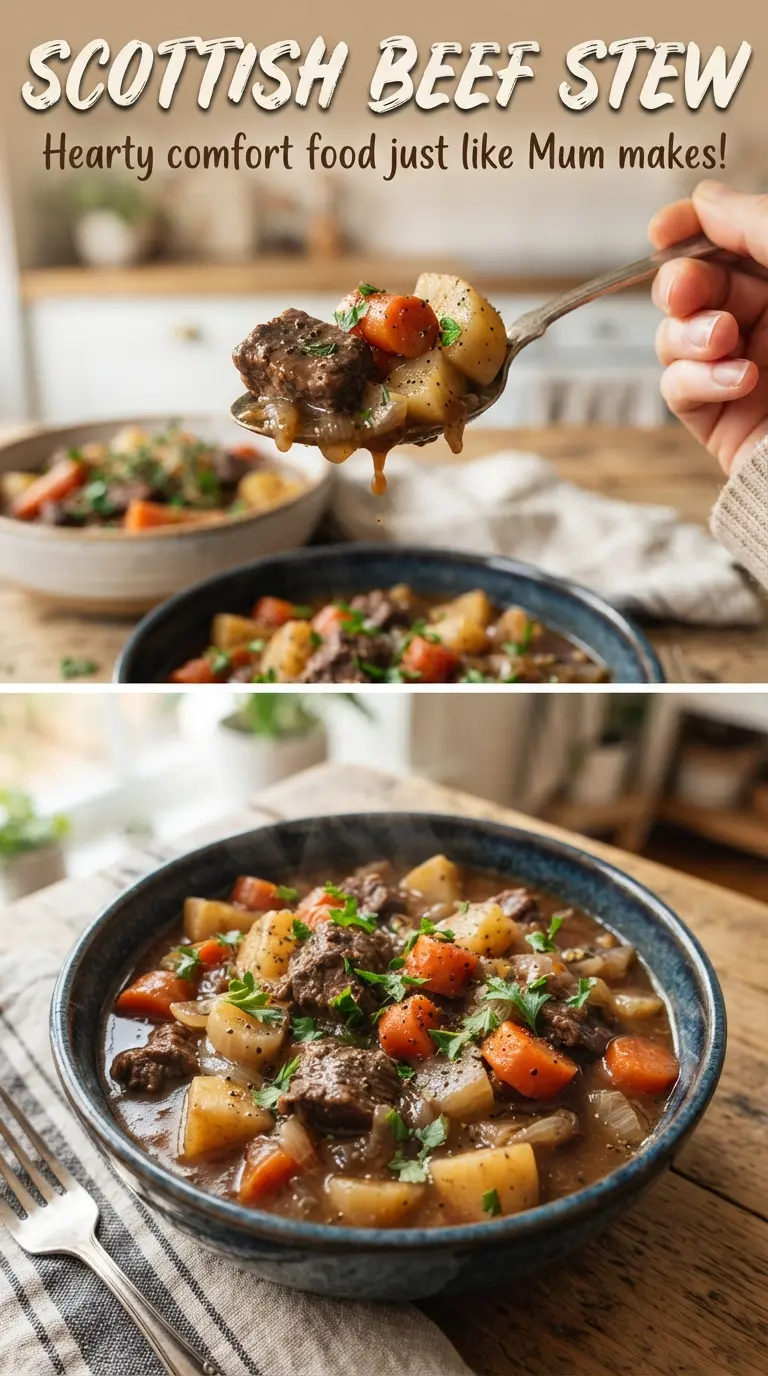
- Beef chuck — This cut has the fat and connective tissue that turn silky after a long simmer. Lean stew meat dries out before the broth has time to do its work.
- Scottish ale or beef broth — Ale brings a malty depth that feels right in this stew, but extra broth works if you want a more straightforward beef flavor. Use a beer you’d actually drink; bitter, aggressively hoppy ales can make the pot taste sharp.
- Pearl barley — It thickens the broth naturally and gives the stew that classic Scottish backbone. Don’t swap in quick-cooking barley here; it breaks down too fast and loses the texture you want.
- Turnip or swede — This is the ingredient that keeps the stew from tasting one-note. Swede is a little sweeter and fuller than turnip, but either one should be cut into even cubes so it softens at the same rate as the carrots.
- Leeks and onions — Together they build a sweeter, softer base than onions alone. Slice the leeks well and rinse them if there’s any grit hiding between the layers.
Building the Stew in the Right Order
Browning the Beef in Batches
Season the beef, toss it with flour, then brown it in a hot mix of butter and oil. The flour helps the gravy thicken later, but it also burns if the pan is crowded, so work in batches and leave space between the pieces. You want a dark crust on several sides, not gray meat releasing juice into the pan. That crust is where the stew gets its deep, roasted flavor.
Softening the Alliums
Once the beef is out, cook the onions and leeks in the same pot until they’re soft and glossy. They should pick up some of the brown residue from the meat without scorching. If the pan looks dry, add a small splash of broth rather than extra heat; burnt onions will push the whole stew into a bitter place.
Deglazing and Long Simmering
Pour in the ale and scrape the bottom well, then add the broth, Worcestershire sauce, thyme, and beef. The bottom of the pot should look clean before the lid goes on. Simmer gently for about 90 minutes, just until the beef is starting to give, because a hard boil can tighten the meat and cloud the broth.
Finishing with Barley and Vegetables
Add the barley, turnip, and carrots for the last stretch of cooking and keep the simmer low. This is when the stew changes from beef soup to true stew: the barley thickens the liquid, the roots soften, and the broth turns glossy. Stop when the beef cuts with a spoon and the barley is tender but still holds its shape.
How to Adjust This Stew Without Losing Its Character
Make It Gluten-Free
Skip the flour on the beef and thicken the stew with 1 to 2 tablespoons of cornstarch mixed with cold water near the end. The broth will be a little lighter in body, but the flavor stays grounded if you still brown the beef well and simmer long enough.
Use Beer-Free Broth Only
If you don’t want to cook with ale, replace it with more beef broth plus 1 teaspoon of balsamic vinegar. You lose the malty edge, but the vinegar gives back a little of the depth and keeps the broth from tasting flat.
Swap the Root Vegetables
Parsnips work well in place of the turnip if you want a sweeter stew, and celery root gives a more earthy finish. Keep the pieces about the same size as the carrots so they finish at the same time.
Storage and Reheating
- Refrigerator: Keeps well for 4 days. The barley will continue absorbing broth, so expect the stew to thicken overnight.
- Freezer: Freezes well for up to 3 months, though the barley softens a little after thawing. Cool it completely first, then portion it into airtight containers.
- Reheating: Reheat gently on the stove over low heat with a splash of broth or water. Don’t boil it hard, or the beef can tighten and the barley can go gluey.
Answers to the Questions Worth Asking
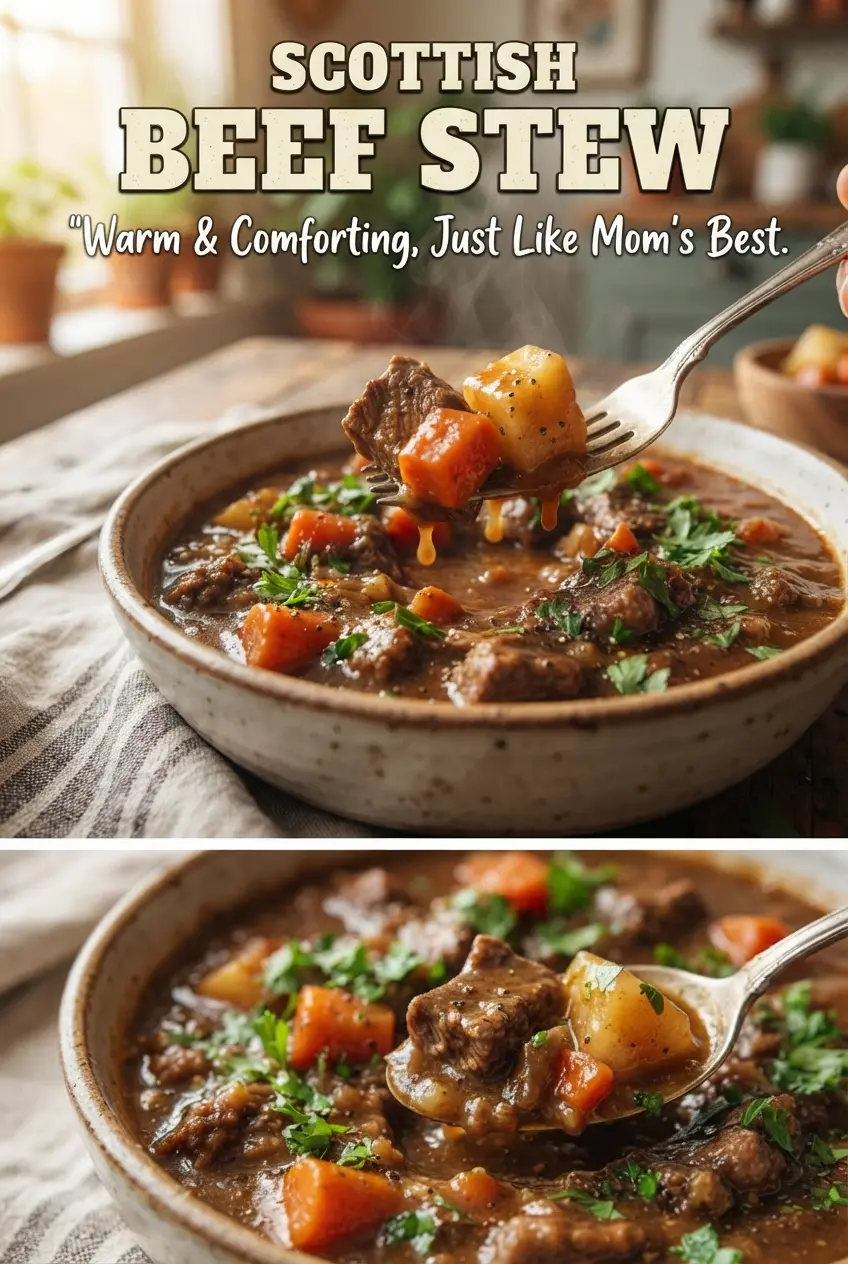
Scottish Beef Stew
Ingredients
Equipment
Method
- Season the beef chuck cubes with salt and black pepper, then toss with the all-purpose flour to coat evenly. Brown in batches in a Dutch oven with the butter and vegetable oil until deeply browned on the outside, then set the beef aside.
- Keep the browned bits in the pot for maximum flavor. If the pot looks dry between batches, add a small splash of oil to prevent scorching.
- Add the chopped onions and sliced leeks to the Dutch oven and cook for 6 minutes, stirring, until soft. Scrape any remaining browned bits as you cook for a consistent gravy base.
- Pour in the Scottish ale (or extra beef broth) and scrape the bottom of the pot to loosen the caramelized bits. Add the beef broth, Worcestershire sauce, and dried thyme, then return the browned beef to the pot.
- Cover and simmer for 1 1/2 hours, keeping a steady simmer. Stir once or twice during simmering to prevent sticking at the bottom.
- Add the rinsed pearl barley, cubed turnip or swede, and sliced carrots to the pot. Simmer for 45 to 60 minutes, until the barley and beef are tender and the stew thickens.
- Season to taste with additional salt and black pepper if needed, then turn off the heat. Top with the chopped fresh parsley right before serving for a bright finish.