Roasted butternut squash and Brussels sprouts turn into something special when the edges go deeply caramelized and the center stays tender. The contrast is what keeps this dish on repeat: sweet squash, nutty sprouts, tart cranberries, and toasted pecans in every bite. It lands on the table looking like a holiday side, but it’s simple enough for a regular weeknight when you want vegetables that actually get eaten.
The trick is giving the vegetables enough space on the pan and enough heat to brown instead of steam. A hot oven at 425°F does the heavy lifting, and tossing the pan halfway through keeps the sprouts from scorching before the squash is done. The maple-balsamic finish is just enough to glaze everything without making it sticky or soft.
Below you’ll find the small details that matter most: how to cut the squash so it cooks at the same pace as the sprouts, when to add the cranberries and pecans so they stay bright and crisp, and the easy swaps that still keep the dish balanced.
The squash caramelized beautifully and the Brussels sprouts stayed crisp on the edges. The maple balsamic brought everything together without making it soggy, and even my picky eater went back for seconds.
Save these roasted butternut squash and Brussels sprouts for a side dish with caramelized edges, tart cranberries, and toasted pecans.
The Part That Stops the Vegetables from Turning Mushy
The biggest mistake with this kind of sheet pan side dish is crowding the pan. When the squash and Brussels sprouts sit on top of each other, they steam, and steaming gives you soft edges instead of the browned, crisp spots that make the dish worth making. Use a large sheet pan and spread everything out in a single layer so the heat can reach the cut surfaces.
The second thing that matters is cutting the squash into pieces that match the halved sprouts. If the squash is in oversized chunks, it stays hard while the Brussels sprouts overcook; if it’s too small, it breaks down before it ever gets those caramelized edges. Aim for bite-size cubes that roast in the same window as the sprouts, and toss once halfway through so the cut sides can hit the pan again.
What Each Ingredient Is Actually Doing in This Dish
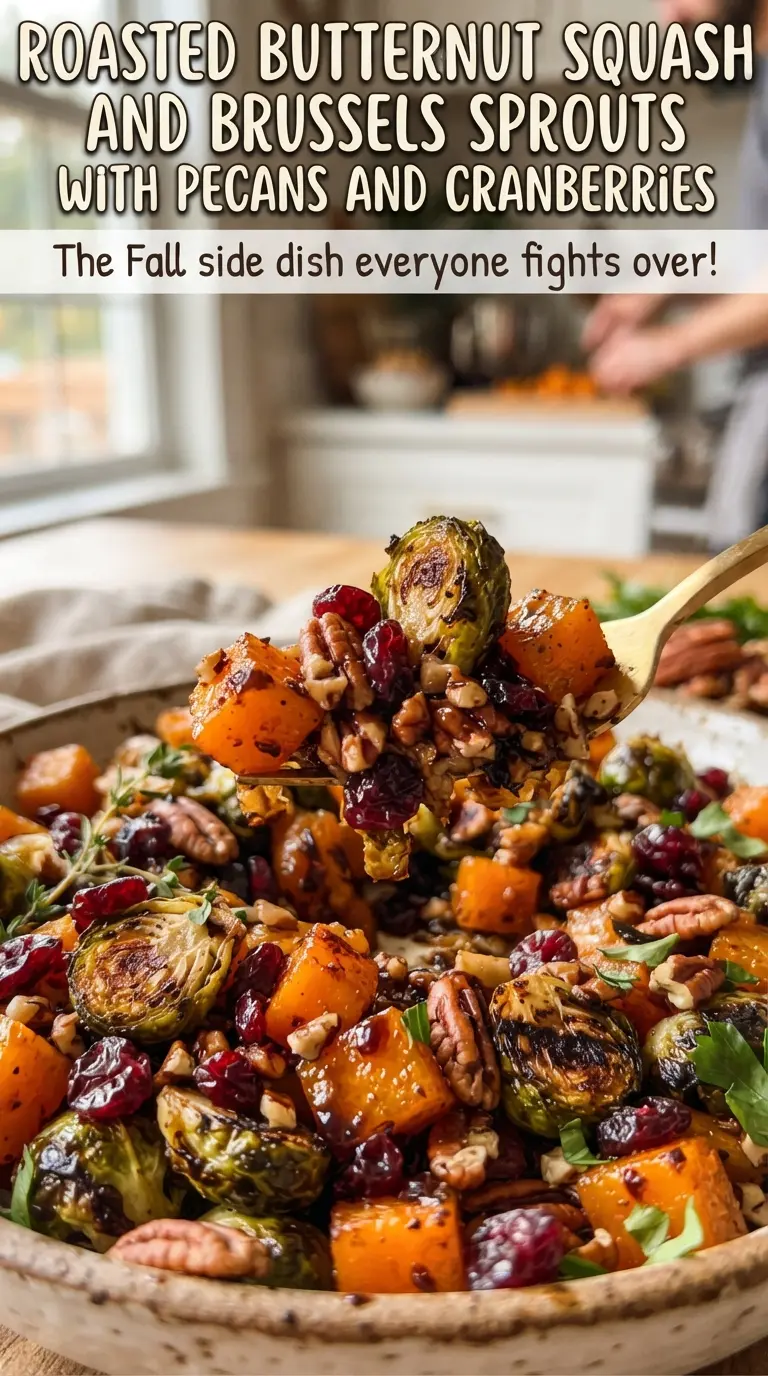
- Butternut squash — This brings the sweet, soft contrast that balances the sharper Brussels sprouts. Fresh squash roasts best here because frozen squash tends to soften too fast and lose those browned edges.
- Brussels sprouts — Halving them exposes the cut side, which is where the real browning happens. Smaller sprouts can go in as-is if they’re truly tiny, but the goal is always more flat surface against the pan.
- Olive oil — It carries the heat and helps the vegetables caramelize instead of drying out. You need enough to coat every piece lightly; skimpy oil gives you pale, leathery vegetables.
- Maple syrup and balsamic vinegar — This finish gives the dish its gloss and sweet-tart balance. Don’t whisk it into the vegetables before roasting or the sugars can burn; add it after the vegetables come out of the oven.
- Pecans — Toasted pecans bring crunch and a buttery note that plain roasted vegetables can’t give you. Walnuts work in a pinch, but pecans stay a little sweeter and match the maple better.
- Dried cranberries — They add bright chew and keep the whole dish from tasting one-note. Add them at the end so they stay plump instead of drying out in the oven.
Getting the Glaze On at the Right Moment
Roasting Until the Edges Brown
Heat the oven to 425°F before the vegetables go in, because a hot pan is what starts the browning fast enough to keep the squash from softening into cubes of puree. Roast until the undersides have deep golden patches and the sprouts look browned at the outer leaves. If the pan looks dry halfway through, leave it alone; the vegetables need direct contact with the metal to caramelize.
Mixing the Maple Balsamic Finish
Whisk the maple syrup and balsamic vinegar together in a small bowl and add it after roasting, while the vegetables are still warm. That warmth helps the glaze coat everything without needing extra cooking. If you add it earlier, the sugar can darken too fast and the final dish can taste slightly bitter at the edges.
Adding the Crunch and Chew at the End
Stir in the cranberries and toasted pecans after the vegetables are out of the oven and sauced. The pecans keep their snap, and the cranberries stay bright instead of turning wrinkly and hard. Serve it warm, when the glaze is still loose enough to coat but not so hot that the cranberries bleed all over the pan.
Make It More Savory
Add a pinch of garlic powder or a little chopped rosemary before roasting if you want the dish to lean more savory than sweet. That extra herb note works especially well next to roasted poultry or pork, but it does nudge the dish away from the lighter, holiday-style balance.
Dairy-Free and Naturally Gluten-Free
This dish already fits both diets as written, which is part of why it shows up so often on mixed menus. Just check that your dried cranberries don’t include any extra coating ingredients if you need to keep it strict.
Swap the Nuts for Seeds
Use pepitas instead of pecans if you need a nut-free version. Toast them first so they still bring crunch, since raw pumpkin seeds can taste flat next to the maple balsamic.
How to Make It Ahead
Roast the vegetables a little underdone if you plan to reheat them later, then add the glaze, cranberries, and pecans right before serving. That keeps the nuts crisp and prevents the squash from turning too soft in the fridge.
Storage and Reheating
- Refrigerator: Store leftovers in an airtight container for up to 4 days. The pecans will soften a bit, but the flavor holds up well.
- Freezer: Freezing isn’t ideal once the vegetables are glazed and mixed with cranberries, because the texture turns soft after thawing. If you must freeze it, freeze only the roasted vegetables and add the nuts and cranberries fresh later.
- Reheating: Warm on a sheet pan in a 375°F oven until heated through. The microwave works in a pinch, but it softens the sprouts and wipes out the roasted edges.
Questions I Get Asked About This Recipe
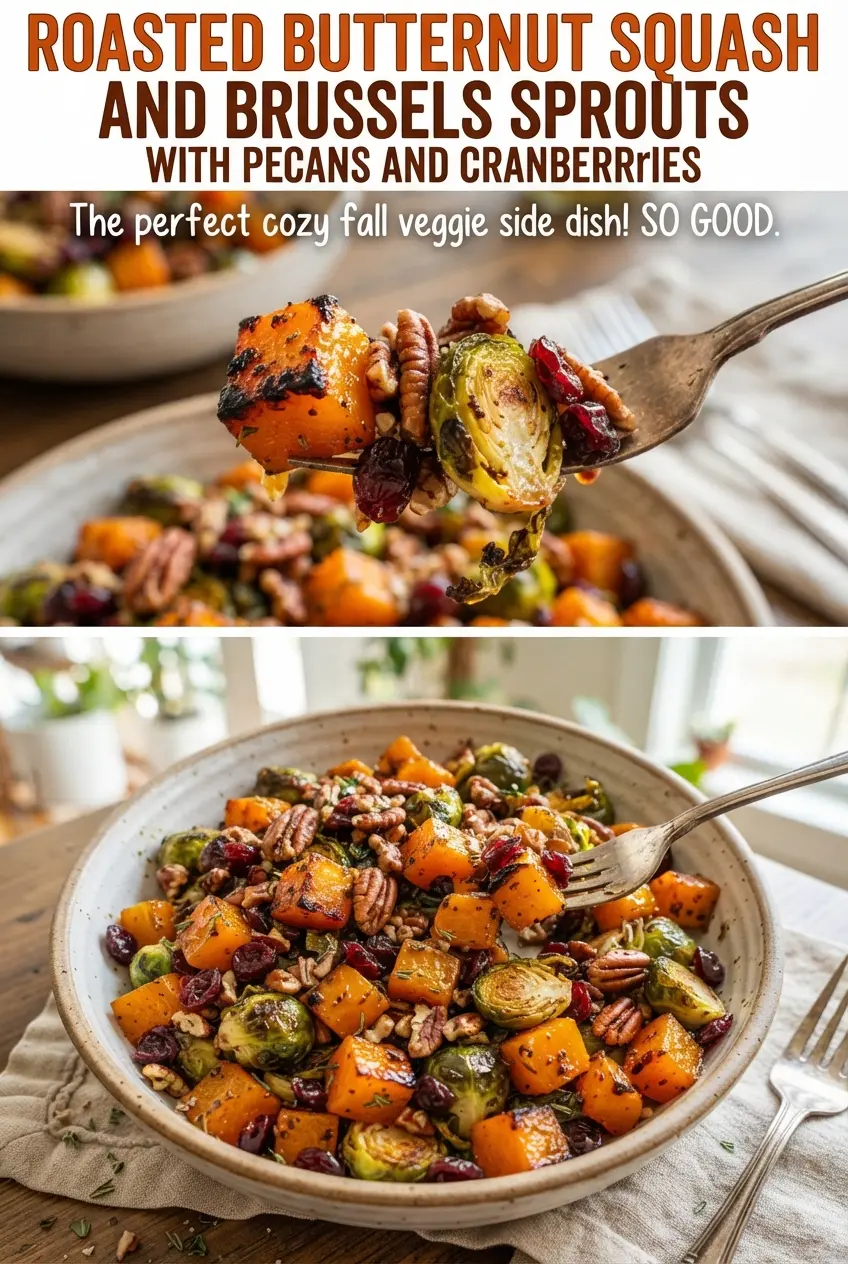
Roasted Butternut Squash and Brussels Sprouts with Pecans and Cranberries
Ingredients
Equipment
Method
- Preheat oven to 425F. Set a large sheet pan inside to warm as the oven comes to temperature.
- Toss squash and Brussels sprouts with olive oil, salt, and black pepper on the sheet pan. Spread into an even layer for better caramelization.
- Roast for 25-30 minutes, tossing halfway, until tender and caramelized. Look for browned edges on the Brussels sprouts and lightly golden squash cubes.
- Whisk maple syrup and balsamic vinegar together until combined. The mixture should look glossy and pourable.
- Toss the roasted vegetables with the maple balsamic, dried cranberries, and toasted pecans, then serve warm. The vegetables should be evenly coated with visible bits of cranberry and pecan.