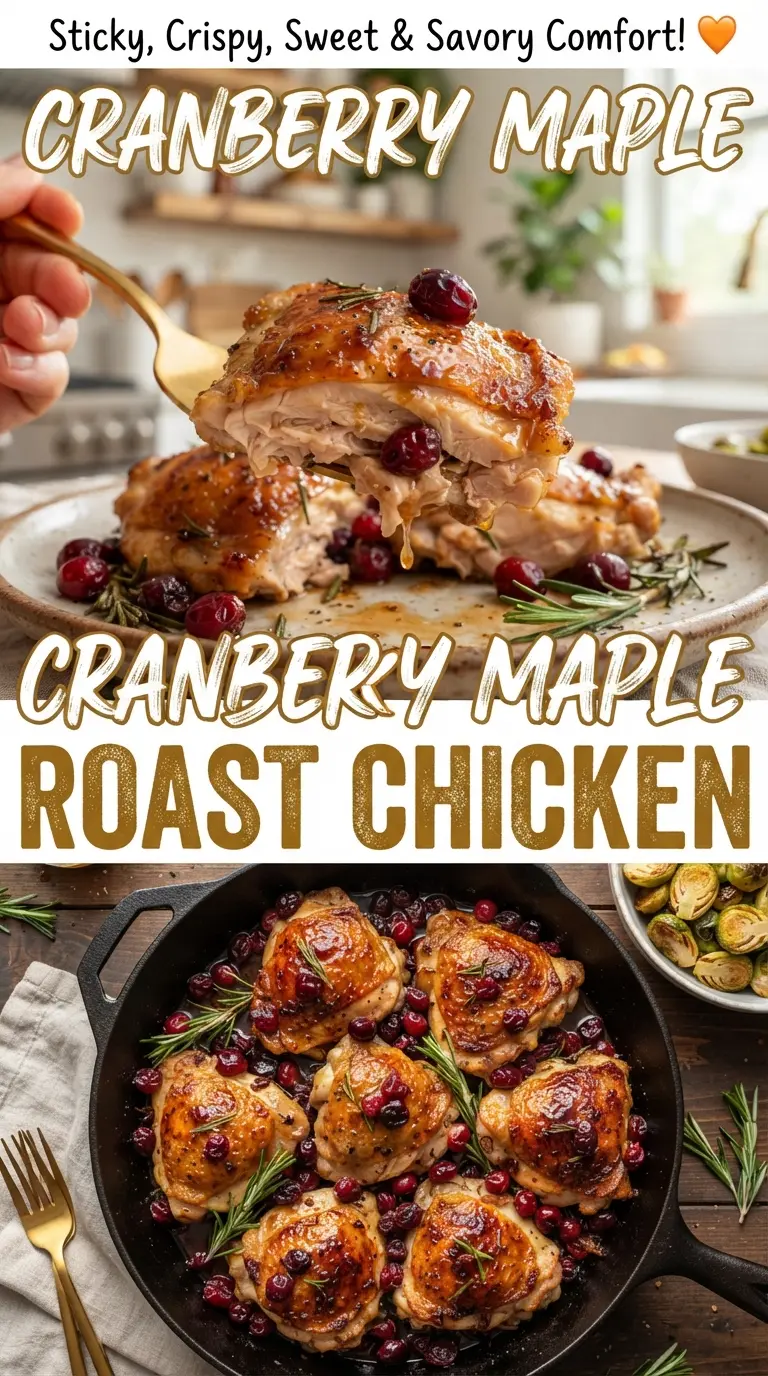
Cranberry maple roast chicken comes out with crisp, burnished skin, juicy meat, and a pan sauce that tastes like it cooked for hours instead of just over an hour. The maple glaze turns glossy and deep, the cranberries burst into a tart little sauce around the bird, and the onions and garlic soften into the drippings until every spoonful tastes built, not dumped together. It’s the kind of roast chicken that looks special on the table without asking for much more than a good pan and a little patience.
The trick is to roast the chicken mostly before glazing it. That gives the skin time to dry and brown properly, so the maple syrup doesn’t seal in moisture too early and turn the surface sticky instead of crisp. The butter, rosemary, orange, and garlic do more than flavor the meat; they perfume the whole pan and keep the bird tasting bright even with the sweeter glaze.
Below you’ll find the timing that keeps the glaze from burning, the ingredient choices that matter most, and a few smart swaps if you need to work with what’s already in your kitchen.
The skin turned out lacquered and the cranberries popped into the pan sauce right on time. I was worried the maple glaze would get too sweet, but the Dijon and orange kept it balanced and my husband kept going back for more.
Cranberry Maple Roast Chicken brings crisp skin, tart cranberries, and a glossy maple-Dijon pan sauce together in one pan.
The Trick to Glossy Skin Without Burning the Maple
Maple syrup is the part that makes this chicken memorable, but it’s also the part that can go from glossy to scorched fast if it goes on too early. The first stretch of roasting is there for a reason: it dries and colors the skin before the glaze gets involved. Once the chicken has some structure on the outside, the maple-Dijon mixture can cling instead of slipping off and caramelizing into dark spots too quickly.
The cranberries go into the pan later for the same reason. They need enough heat to burst and release their juice, but not so much time that they collapse into jam before the chicken is done. That late addition keeps the sauce bright and a little sharp against the sweetness of the maple.
- Chicken — A 5-pound bird roasts evenly in the time given here. Patting it dry matters more than people think; wet skin steams first and browns later, which works against the glaze.
- Butter and rosemary — Softened butter helps the herb stay in place under and over the skin. Olive oil can work in a pinch, but it won’t carry the rosemary the same way or give you that rich roasted flavor in the drippings.
- Orange and garlic — These perfume the meat from the inside as the chicken roasts. Lemon works if that’s what you have, but orange gives the glaze a rounder sweetness that fits the maple better.
- Maple syrup and Dijon — This is the balance point of the whole dish. Pure maple syrup brings body and shine, while Dijon keeps the glaze from tasting flat or candy-sweet. Yellow mustard won’t give you the same depth or bite.
What Each Ingredient Is Actually Doing in This Recipe
- Primary ingredient (the star) — Quality matters most. Choose the best you can find.
- Cooking medium (oil, butter, or broth) — This carries flavors and prevents dryness.
- Seasonings (salt, pepper, spices, herbs) — Layer flavors so nothing overpowers. Build depth gradually.
- Aromatics (garlic, onion, herbs) — Cook with fat to bloom flavors. Become the foundation.
- Supporting ingredients — Complement the main ingredient without overpowering it.
- Sauce or liquid (if applicable) — Brings flavors together. Balance richness with acid.
- Acid (lemon, vinegar, wine, or other) — Brightens and prevents flat-tasting results.
- Final finish (garnish, glaze, or sauce) — Prevents one-dimensional taste and adds visual appeal.
The Roasting Schedule That Keeps the Bird Juicy
Building the Herb Butter
Mix the softened butter with the chopped rosemary until the herbs are evenly distributed, then work it under the skin and over the top of the bird. Under the skin is where it does the most work, because it seasons the meat directly and helps protect the breast from drying out. If the butter is too cold, it tears the skin; if it’s melted, it slides right off.
The First Roast
Set the chicken in a roasting pan with the onion wedges around it and let it roast for about 50 minutes at 425°F. You’re looking for pale gold skin that has started to tighten and render some fat, not full color yet. If your oven runs hot and the breast is already deep brown before the timer, tent it loosely with foil while the thighs keep going.
Glazing and Finishing
Whisk the maple syrup and Dijon together, brush on half, then add the cranberries and broth to the pan before returning the chicken to the oven. The broth keeps the pan juices from burning and gives the cranberries enough moisture to burst instead of drying out. Brush with the rest of the glaze near the end and cook until the thigh reads 165°F; if you pull it much earlier, the juices won’t settle and the meat will carve messily.
Resting Before Carving
Let the chicken rest for 15 minutes before you carve it. That pause keeps the juices in the meat instead of running into the board the second you cut in. Spoon the cranberry pan sauce over the slices, because that’s where the roasted onion, garlic, and maple glaze all come together.
How to Adapt This When You Need to Work With What’s in the Kitchen
Dairy-Free Version
Swap the butter for an equal amount of olive oil or a plant-based butter with a neutral flavor. You’ll lose a little of the rich, browned milk solids that butter gives the skin, but the rosemary still carries well and the glaze stays front and center.
No Fresh Cranberries
Use frozen cranberries straight from the freezer or replace them with halved fresh grapes for a softer, sweeter pan sauce. Frozen berries behave almost the same as fresh once they hit the hot pan, while grapes give you less tartness but a similar burst of juice.
Smaller Chicken or Chicken Pieces
A smaller bird or bone-in chicken pieces work well, but the timing changes. Pieces glaze beautifully and cook faster, though you’ll lose some of the dramatic presentation and need to watch the pan more closely so the maple doesn’t overcaramelize.
Storage and Reheating
- Refrigerator: Store leftovers up to 4 days. The skin will soften, but the meat stays juicy and the pan sauce tastes even better the next day.
- Freezer: Freeze carved chicken with some of the sauce for up to 2 months. Freeze the meat separately from the bones if you can, and thaw it in the refrigerator so the texture stays tender.
- Reheating: Warm the chicken covered in a 300°F oven with a spoonful of pan sauce or broth until hot. High heat dries out roast chicken fast, and the glaze can turn sticky and dark before the center is warm.
Questions I Get Asked About This Recipe
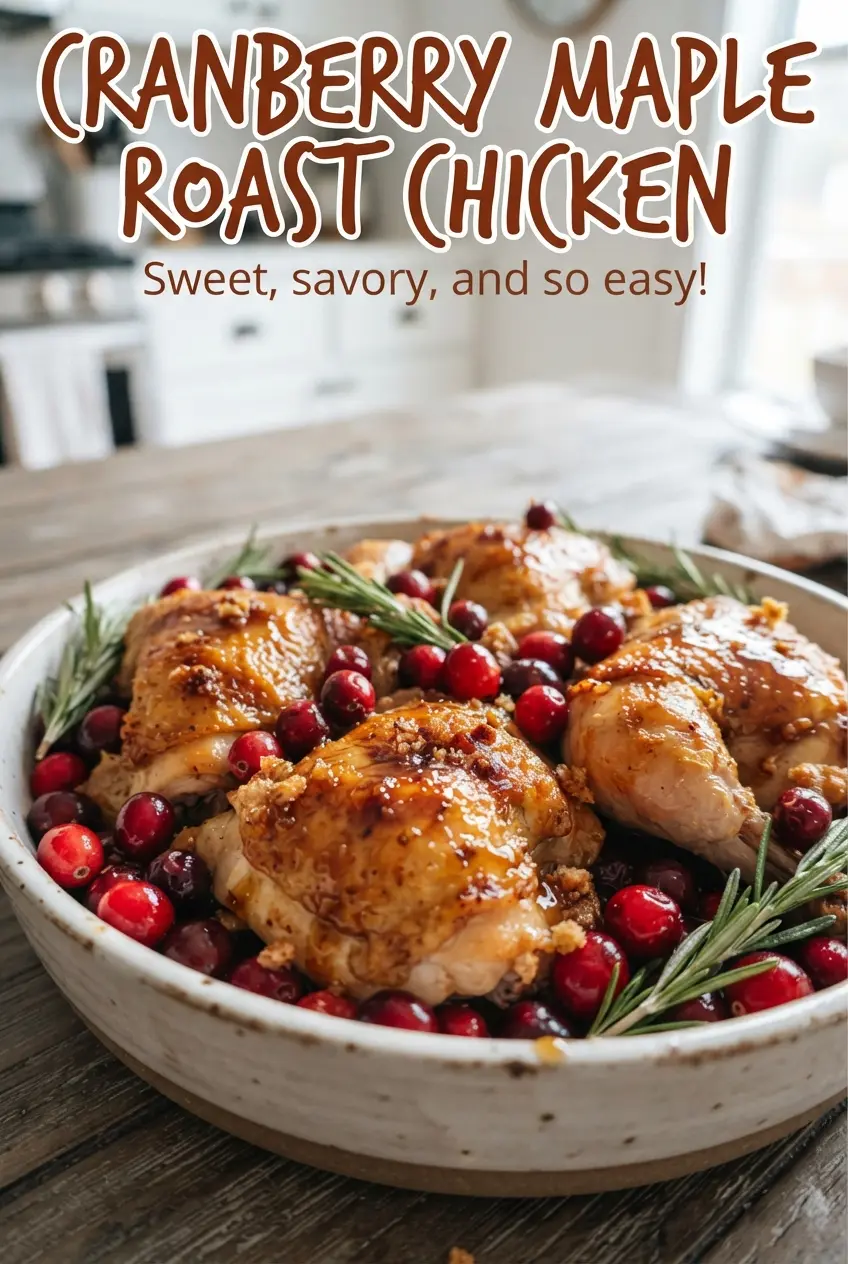
Cranberry Maple Roast Chicken
Ingredients
Equipment
Method
- Preheat the oven to 425F.
- Pat the chicken dry and season the inside and out with salt and black pepper, then rub the butter mixed with rosemary under and over the skin.
- Stuff the cavity with orange halves and halved garlic, then set the chicken in a roasting pan with the red onion wedges around it.
- Roast for 50 minutes.
- Whisk the maple syrup and Dijon mustard, then brush half of the glaze over the chicken.
- Add the cranberries and chicken broth to the pan, then roast for 25-30 minutes more, brushing with the remaining glaze.
- Continue roasting until the thigh reaches 165F, with the skin lacquered and golden.
- Rest the chicken for 15 minutes before carving, letting the juices settle.
- Spoon the cranberry pan sauce over the top and serve.