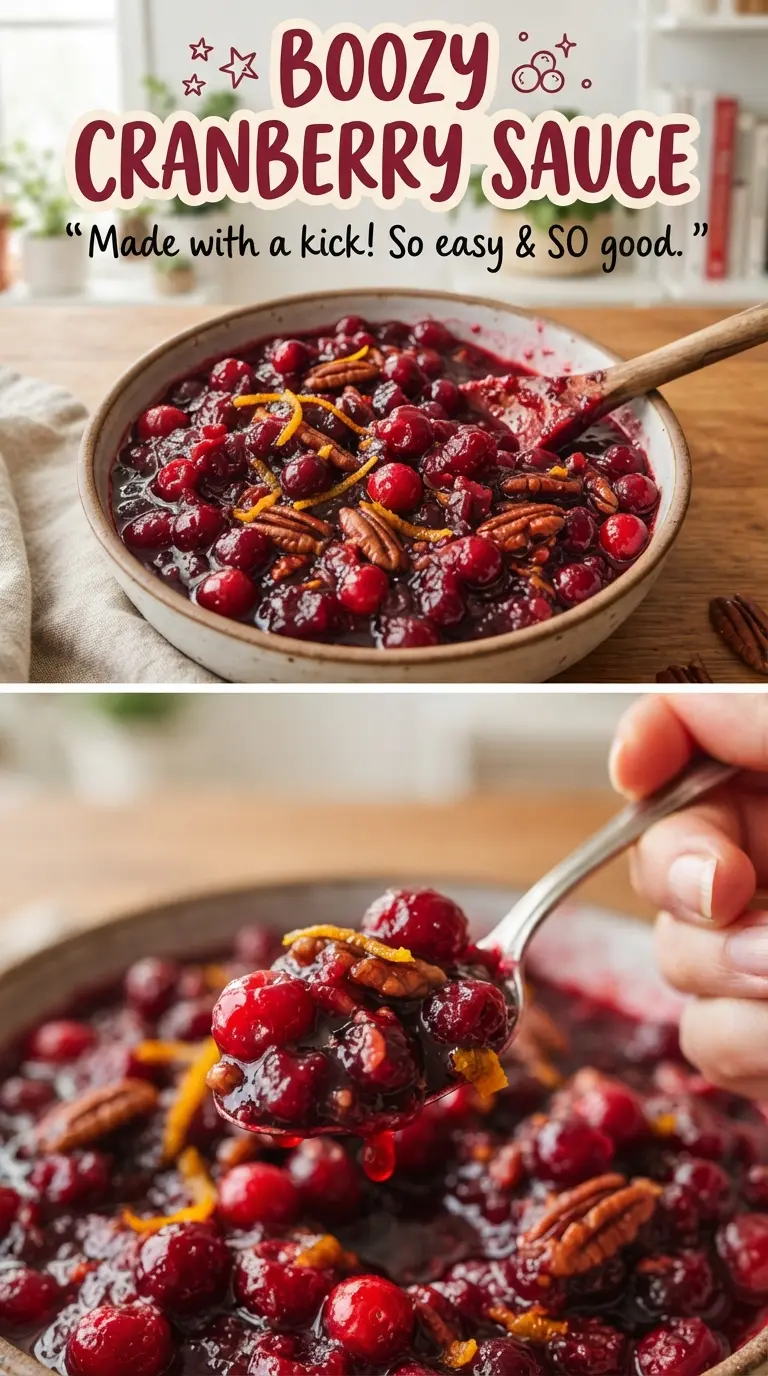
Deep ruby cranberry sauce gets a lot more interesting when the fruit is cooked with port, orange juice, and a little orange liqueur. The result is glossy, tart-sweet, and just thick enough to sit in a spoon without turning jammy. It tastes brighter than the canned version and has enough depth to hold its own next to roast turkey, baked ham, or a simple platter of cheese.
What makes this version work is the layered acidity. The cranberries bring their own sharp pop, the orange juice softens the edges, and the port gives the sauce a rounder, almost plum-like note that keeps it from tasting one-note sweet. The Grand Marnier goes in off the heat, which keeps the citrus aroma fresh instead of cooked down and dull. Letting it chill matters, too, because cranberry sauce thickens a lot as it cools.
Below, I’ve included the one timing detail that keeps the sauce from getting too loose, plus a few smart swaps if you want to use what’s already in the pantry.
The sauce thickened beautifully as it cooled, and the port gave it a deeper flavor that made it taste like it came from a nice restaurant.
Make this boozy cranberry sauce when you want a glossy, ruby-red side with port, orange, and a clean finish.
The Part Most Cranberry Sauces Get Wrong: Cooking the Alcohol Down Too Hard
The trick here is not to reduce the port into a syrup before the cranberries go in. You want enough liquid in the pan to help the sugar dissolve cleanly and give the berries room to burst without scorching on the bottom. Once the cranberries hit the hot liquid, they start popping fast, and that’s what turns the mixture from thin and noisy to glossy and thick.
If the sauce tastes flat, it usually means the fruit was undercooked or the citrus never had a chance to brighten it up. The sauce should finish with a clean tart edge, a little warmth from the port, and no raw alcohol smell. If you cook it until every berry is collapsed and the sauce looks heavy in the pan, it will set up almost like jam once chilled.
What Each Ingredient Is Actually Doing in This Recipe
- Primary ingredient (the star) — Quality matters most. Choose the best you can find.
- Cooking medium (oil, butter, or broth) — This carries flavors and prevents dryness.
- Seasonings (salt, pepper, spices, herbs) — Layer flavors so nothing overpowers. Build depth gradually.
- Aromatics (garlic, onion, herbs) — Cook with fat to bloom flavors. Become the foundation.
- Supporting ingredients — Complement the main ingredient without overpowering it.
- Sauce or liquid (if applicable) — Brings flavors together. Balance richness with acid.
- Acid (lemon, vinegar, wine, or other) — Brightens and prevents flat-tasting results.
- Final finish (garnish, glaze, or sauce) — Prevents one-dimensional taste and adds visual appeal.
What the Port and Orange Liqueur Are Actually Doing Here
- Fresh cranberries — These are nonnegotiable. Frozen cranberries work too, and you don’t need to thaw them first, but old cranberries that have gone soft can give you a duller finish. Fresh berries burst with better texture, so the sauce still has some body instead of turning uniform.
- Ruby port or red wine — Port brings sweetness and depth, while red wine gives a drier, more винous finish. Port is the better choice if you want a round, polished sauce; red wine works if you want something sharper. Don’t swap in white wine unless you want the flavor to drift away from the dark, rich cranberry note.
- Orange juice and zest — Juice helps dissolve the sugar and keeps the sauce bright. Zest goes in at the end because it holds onto the orange aroma better than juice alone. If your oranges are small or bland, use the zest with care and let the port carry more of the flavor.
- Grand Marnier or another orange liqueur — This adds a citrus-cognac note that tastes deeper than plain juice. Stir it in after the pan comes off the heat so the aroma stays lifted. If you don’t have it, add an extra teaspoon of zest and a splash more orange juice, but the sauce will be a little less complex.
How to Cook It So the Sauce Sets Up Instead of Running
Starting the Base
Combine the sugar, port, orange juice, cinnamon stick, and salt in a saucepan and bring it to a boil. You’re looking for the sugar to fully disappear before the cranberries go in, not just melt around the edges. If the sugar stays grainy at this stage, the finished sauce can taste sandy and unbalanced.
Letting the Cranberries Burst
Add the cranberries and keep the mixture at a steady simmer for 10 to 12 minutes. The berries should pop with a little pressure and the liquid should turn thick and jewel-like around them. Stir occasionally so the sugars don’t stick to the bottom, but don’t mash the fruit unless you want a smoother sauce.
Finishing Off the Heat
Take the pan off the burner before adding the Grand Marnier and orange zest. That keeps the citrus aroma from disappearing and prevents the liqueur from cooking off too fast. Pull out the cinnamon stick, then let the sauce cool in the pan before chilling it, because the texture tightens as it rests.
Make It Without Alcohol
Replace the port with more orange juice plus a splash of pomegranate juice, and skip the Grand Marnier. You’ll lose the winey depth, but the sauce still turns bright, tart, and festive. A teaspoon of vanilla can help round it out if you want a softer finish.
Use Red Wine for a Less Sweet Sauce
Dry red wine makes the sauce sharper and a little more savory, which works well alongside rich meats. If you go this route, keep the sugar as written and taste only after the sauce has cooled a bit. Hot cranberry sauce always tastes sweeter than it will after chilling.
Make It Ahead for a Holiday Table
This sauce is even better after a night in the fridge because the flavors settle in and the texture firms up. You can make it up to 5 days ahead and hold it cold until serving. If it seems too thick after chilling, stir in a spoonful of orange juice to loosen it.
Storage and Reheating
- Refrigerator: Store covered for up to 1 week. It will thicken as it chills.
- Freezer: It freezes well for up to 2 months. Freeze in a sealed container with a little headspace for expansion, then thaw in the fridge overnight.
- Reheating: Serve it cold or bring it to room temperature. If you want it warm, heat it gently over low heat with a splash of orange juice. High heat can make the sugar taste harsh and thin the texture too much.
Questions I Get Asked About This Recipe

Boozy Cranberry Sauce
Ingredients
Equipment
Method
- Combine sugar, ruby port or red wine, orange juice, cinnamon stick, and salt in a saucepan, then bring to a boil over medium-high heat.
- Add fresh cranberries and simmer at a gentle boil for 10-12 minutes, stirring occasionally, until berries burst and the sauce thickens and looks glossy.
- Remove the saucepan from heat and stir in Grand Marnier or orange liqueur and orange zest until fully combined and fragrant.
- Discard the cinnamon stick, then pour the sauce into a bowl.
- Cool completely, then chill for at least 10 minutes so it thickens further before serving.