Guinness beef stew earns its place in the rotation because the broth turns deep, dark, and glossy while the beef softens into spoon-tender pieces that still hold their shape. The vegetables soak up the stout-kissed gravy without turning to mush, and every bowl tastes like it spent the afternoon becoming better on purpose.
The key is in the layering. Browning the beef in batches builds the base flavor, and the tomato paste needs that minute in the pot so it darkens instead of tasting raw. Guinness brings bitterness and roasted depth, but it needs the beef broth, Worcestershire, and a little brown sugar to keep the stew balanced instead of sharp. Simmering gently matters more than rushing; hard boiling tightens the meat and clouds the broth.
Below you’ll find the timing that keeps the vegetables intact, the small tricks that make the gravy silky, and a few easy swaps if you want to adjust the texture or make it gluten-free.
The stew got that deep, rich gravy I was hoping for, and the beef was fall-apart tender after the long simmer. Adding the potatoes near the end kept them from turning into mash, which was exactly what I needed.
Save this Guinness Beef Stew for a slow-simmered dinner with tender chuck, stout-rich gravy, and vegetables that stay hearty.
The Trick That Keeps the Beef Tender Instead of Tight
Beef chuck needs time, but it also needs gentleness. If the stew boils hard, the meat fibers seize up before the collagen has a chance to melt, and the result is chewy beef in a thin broth. A low simmer gives you the opposite: the connective tissue breaks down slowly, the liquid stays clear enough to look glossy, and the beef tastes rich instead of dry.
Flouring the beef before browning does two jobs here. It helps the meat pick up a better crust, and it gives the stew just enough body later on without turning the broth pasty. The other thing worth watching is the bottom of the pot after the Guinness goes in; those browned bits are pure flavor, and scraping them up is what keeps the stew from tasting flat.
- Beef chuck — This is the cut that pays off with long cooking. It has enough fat and connective tissue to turn silky, while leaner stew meat can dry out before the broth develops.
- Guinness stout — The stout gives the stew its dark color and roasted edge. A dark beer with similar bitterness can work, but lighter beers won’t give the same depth.
- Tomato paste — It adds concentration and a little acidity, which keeps the stew from tasting heavy. Let it cook for a full minute with the onions so it loses the raw tinny edge.
- Parsnips — They bring sweetness and a faint earthy note that matches the stout better than carrots alone. If you don’t have them, use extra carrots, but the stew will taste a little less layered.
What Each Ingredient Is Actually Doing in the Pot

- Flour — The coating helps the beef brown and lightly thickens the broth as it simmers. If you need a gluten-free version, use a 1:1 gluten-free flour blend for the coating.
- Onions, garlic, and tomato paste — This is the savory base. The onions soften and sweeten, the garlic sharpens it, and the tomato paste deepens the color and body.
- Worcestershire sauce — It adds salt, tang, and umami in a way plain broth can’t. It’s the quiet ingredient that keeps the stout from tasting one-note.
- Brown sugar — Just enough to round off the bitterness from the Guinness. Don’t skip it unless you’re using a much sweeter beer; the stew needs that balance.
- Thyme and bay leaves — Thyme leans woody and savory, while bay adds a subtle background note. Remove the bay leaves at the end so they don’t leave a bitter aftertaste.
Building the Stew So the Broth Stays Rich and the Vegetables Stay Whole
Brown the Beef in a Single Layer
Season the chuck with salt and pepper, toss it with flour, then brown it in hot oil in batches. Don’t crowd the pot or the meat will steam instead of sear; you want dark edges and a few sticky brown bits on the bottom. Those bits are what give the stew its deep savory backbone, so let them form before you turn each batch.
Cook Out the Tomato Paste Before the Liquid Goes In
After the onions soften, add the garlic and tomato paste and stir for a minute. The paste should darken slightly and smell sweeter, not raw and sharp. If you add the Guinness too soon, the tomato paste stays flat and the broth won’t have the same rounded depth.
Simmer Low, Not Wild
Pour in the Guinness and scrape the bottom well, then add the broth, Worcestershire, brown sugar, thyme, and bay leaves. Return the beef, cover the pot, and keep it at a gentle simmer; a few lazy bubbles are perfect. If it boils hard, the beef tightens and the liquid can taste rough instead of mellow.
Add the Root Vegetables Late
The carrots, parsnips, and potatoes go in after the beef has had time to soften. That timing keeps them intact and lets them pick up flavor without collapsing. Cook them until a knife slides in easily but they still hold their edges, then finish with parsley for a fresh lift against the dark stew.
Three Ways to Adjust This Guinness Stew Without Losing the Good Parts
Gluten-Free Version
Use a gluten-free flour blend to coat the beef and make sure your Worcestershire sauce is certified gluten-free. The stew will still thicken nicely, though the broth may stay a touch looser than the original.
No Guinness on Hand
A dry stout or porter works best here because both keep that roasted edge. If you use a lighter beer, add a little more tomato paste and a small splash of balsamic to replace some of the depth you’ll lose.
Make It Even Heavier on the Vegetables
Add mushrooms with the onions or swap some of the potatoes for extra parsnips and carrots. The stew gets earthier and a little sweeter, which works well with the stout, but the broth may need a pinch more salt at the end to keep the flavor balanced.
For a Thicker Gravy
Let the stew simmer uncovered for the last 15 to 20 minutes, or mash a few potato cubes against the side of the pot. That thickens the broth without turning it gluey the way extra flour sometimes can.
Storage and Reheating
- Refrigerator: Keeps well for 4 days. The flavor gets deeper overnight, and the broth will thicken as it sits.
- Freezer: Freezes well for up to 3 months. Cool it completely first, then freeze in airtight containers; the potatoes soften a little after thawing, but the stew still reheats nicely.
- Reheating: Warm it gently on the stove over low heat, adding a splash of broth if needed. Don’t boil it hard, or the beef can tighten and the potatoes can break apart.
Answers to the Questions Worth Asking
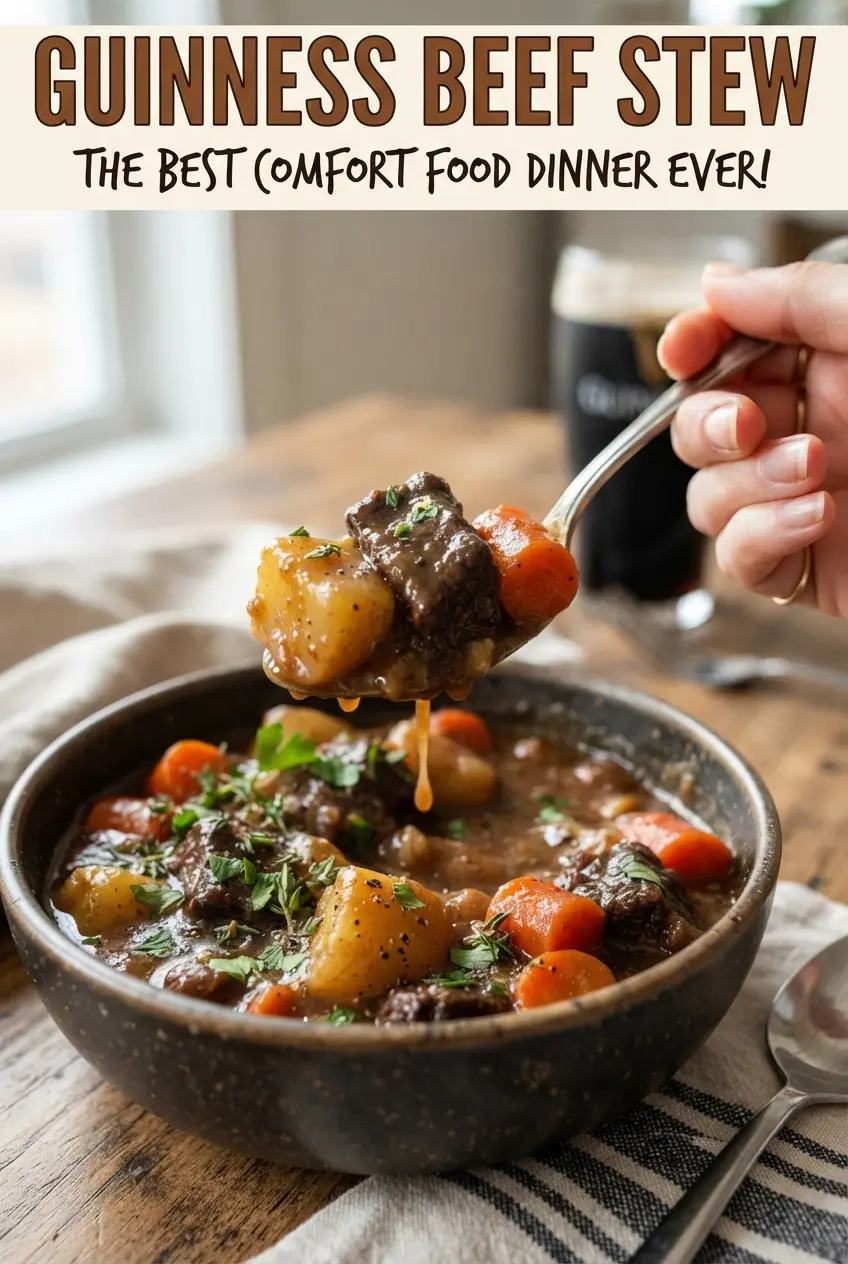
Guinness Beef Stew
Ingredients
Equipment
Method
- Season the beef cubes with salt and black pepper, then toss with the flour until lightly coated. Heat the oil in a Dutch oven over medium-high until shimmering.
- Brown the beef in batches in the hot oil, adding more oil only if needed to prevent steaming. Cook until deep golden-brown on the edges, then transfer to a plate.
- Add the onions to the pot and cook for 5 minutes, stirring until softened. Stir in the garlic and tomato paste and cook 1 minute, until fragrant.
- Pour in the Guinness and scrape up the browned bits from the bottom of the pot. Bring to a gentle simmer.
- Add the beef broth, Worcestershire sauce, brown sugar, dried thyme, and bay leaves to the pot. Stir well to combine.
- Return the browned beef to the pot, cover with a lid, and simmer gently for 2 hours. Watch for steady small bubbles rather than a rolling boil.
- Add the carrots, parsnips, and cubed potatoes to the stew. Stir so the vegetables are submerged.
- Simmer covered for 45-60 minutes, until the carrots and potatoes are tender when pierced with a fork. The stew should look nearly black and glossy as it thickens.
- Remove the bay leaves and discard them. Sprinkle with chopped fresh parsley right before serving.