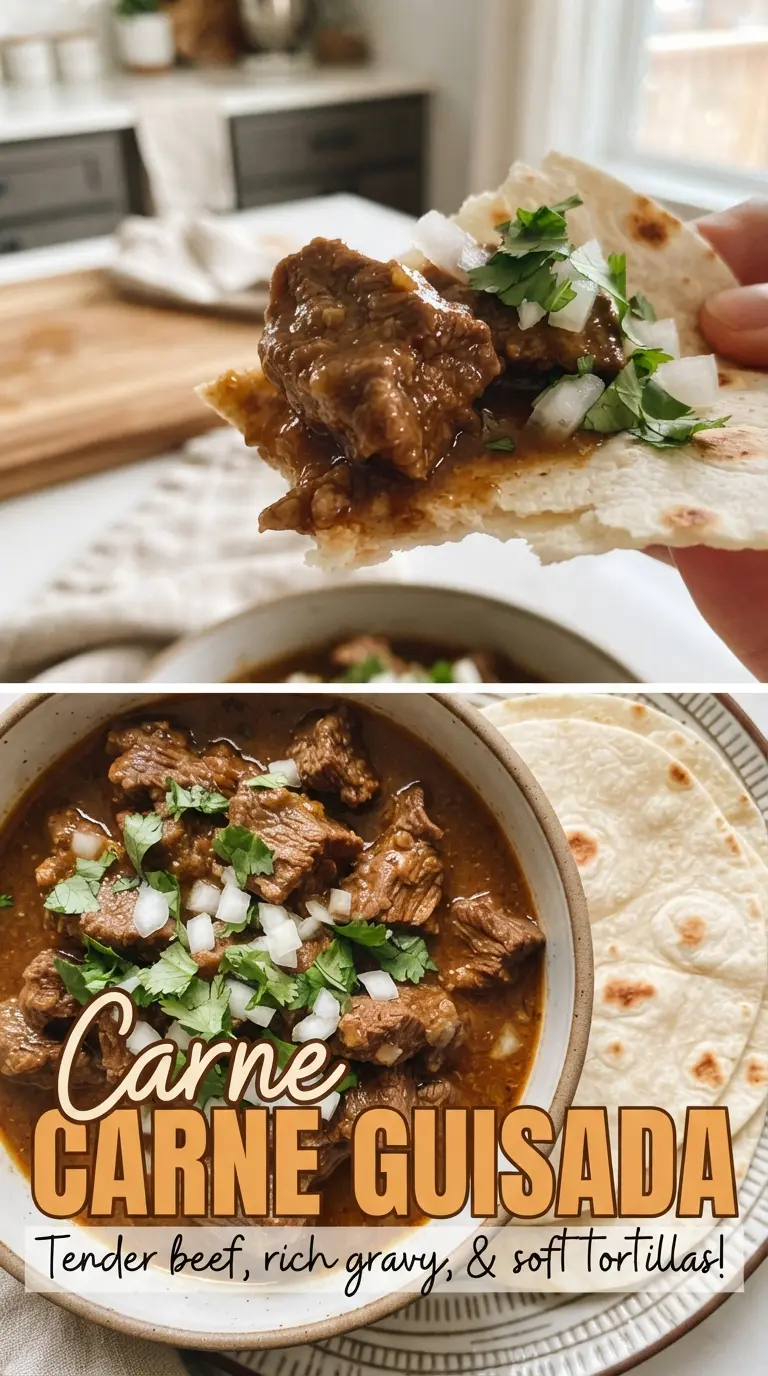
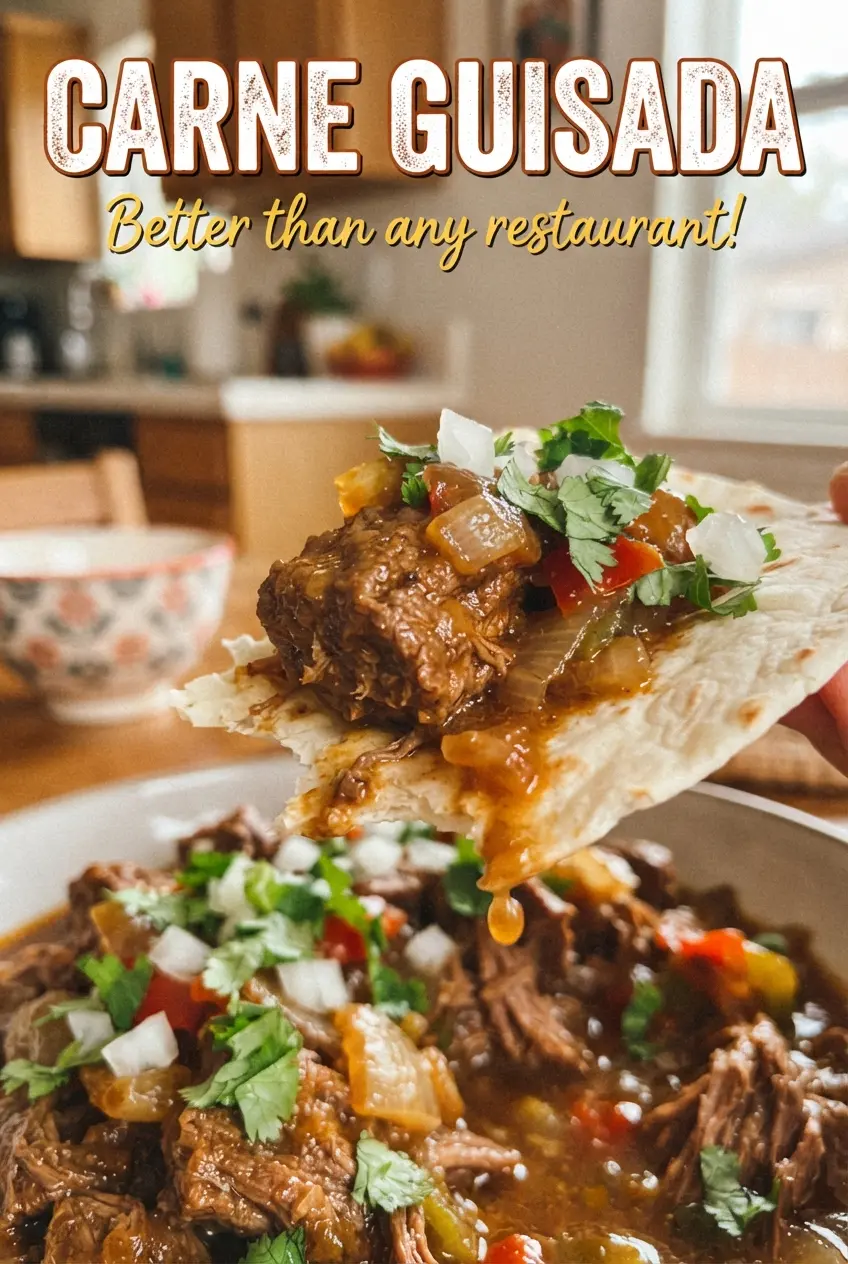
Carne guisada turns humble beef chuck into something rich, spoon-tender, and built for warm flour tortillas. The gravy should be thick enough to cling to the meat, with cumin, chili powder, and tomato giving it that deep Tex-Mex comfort that keeps pulling you back for another bite. When it’s done right, the beef doesn’t just get tender — it falls apart at the edges while the sauce turns glossy and concentrated.
What makes this version work is patience in the pot. Browning the beef first lays down flavor, and the flour gets cooked with the spices before the broth goes in, which keeps the gravy from tasting raw or ending up thin and chalky. The onions, bell pepper, jalapeno, and garlic build the base, but the long simmer is what ties everything together and turns the broth into a proper stew gravy.
Below, you’ll find the small details that matter most: how dark to brown the beef, how to keep the spice mixture from scorching, and what the finished gravy should look like before you stop cooking.
The gravy thickened up beautifully and the beef was fork-tender after about 2 hours. I served it in tortillas with lime like suggested, and the cumin-tomato flavor was spot on.
Save this carne guisada for the nights when you want tender beef, thick gravy, and warm tortillas all on one plate.
The Trick to Keeping the Gravy Rich Instead of Thin
Carne guisada can go watery fast if the flour never gets a chance to cook or if the pot is crowded enough that the beef steams instead of browns. That first batch of browning is not optional. It’s the difference between a stew with depth and a pot that tastes like seasoned broth.
The flour, chili powder, cumin, and oregano need a full minute in the hot pan after the vegetables soften. That brief toast wakes up the spices and coats the aromatics before the liquid goes in, which helps the gravy thicken later without tasting pasty. If the bottom starts to look too dark before the broth is added, lower the heat. Burnt flour makes the whole pot taste bitter.
- Beef chuck — This cut has enough connective tissue to turn tender during a long simmer. Lean beef won’t give you the same silky, falling-apart texture.
- Tomato sauce — It adds body and a mellow acidity that keeps the gravy from tasting flat. Crushed tomatoes work in a pinch, but they leave a looser stew.
- Beef broth — Use a broth with real beefy flavor, since the liquid becomes the sauce. If yours is salty, hold back a little salt at the beginning and adjust at the end.
- Jalapeno — Seed it for gentle heat and clean flavor. Leave a few seeds in if you want the stew to land hotter, but don’t overload it or the pepper will take over.
What Each Ingredient Is Actually Doing in This Recipe
- Primary ingredient (the star) — Quality matters most. Choose the best you can find.
- Cooking medium (oil, butter, or broth) — This carries flavors and prevents dryness.
- Seasonings (salt, pepper, spices, herbs) — Layer flavors so nothing overpowers. Build depth gradually.
- Aromatics (garlic, onion, herbs) — Cook with fat to bloom flavors. Become the foundation.
- Supporting ingredients — Complement the main ingredient without overpowering it.
- Sauce or liquid (if applicable) — Brings flavors together. Balance richness with acid.
- Acid (lemon, vinegar, wine, or other) — Brightens and prevents flat-tasting results.
- Final finish (garnish, glaze, or sauce) — Prevents one-dimensional taste and adds visual appeal.
How to Build the Pot so the Beef Turns Tender
Brown the Beef in Small Batches
Season the beef first, then get it into hot oil in a single layer. If you crowd the pan, the cubes will gray out and leak juice instead of picking up the deep brown crust that gives the stew its backbone. Pull the meat as soon as it browns on several sides; it doesn’t need to cook through at this stage.
Soften the Vegetables Before the Spices Go In
Onion, bell pepper, and jalapeno need a few minutes to lose their raw edge and pick up the browned bits left in the pan. Stir in the garlic only for the last minute so it perfumes the base without scorching. If the garlic goes in too early, it can turn sharp and bitter under the flour.
Cook the Flour and Spices Until They Smell Toasty
Once the flour, chili powder, cumin, and oregano hit the pan, stir constantly for about a minute. The mixture should look pasty and smell earthy, not dusty. This step keeps the gravy smooth later and gives the spices a deeper, rounder flavor than dumping them straight into the broth.
Simmer Low Until the Meat Gives Up Easily
Add the tomato sauce, broth, bay leaf, and beef, then cover and simmer gently. You want a lazy bubble, not a hard boil. Hard boiling tightens the meat and can break the gravy; low heat slowly melts the chuck into tenderness and reduces the sauce at the same time. When the beef shreds with a fork and the gravy coats a spoon, it’s ready.
What to Change When You Want It Spicier, Lighter, or Make-Ahead Friendly
Make It a Little Hotter
Leave some jalapeno seeds in, or add a pinch of cayenne with the other spices. The heat will stay cleaner if you don’t overdo it, since the stew already has a warm base from cumin and chili powder.
Gluten-Free Version
Use a gluten-free all-purpose flour blend or swap in cornstarch mixed with a little cold broth near the end. The flour in the original recipe helps build the base early, while cornstarch thickens later and gives a glossier finish.
Make-Ahead and Reheat
Carne guisada tastes even better the next day because the gravy settles and the spices round out. Refrigerate it for up to 4 days, or freeze it for up to 3 months in airtight containers. Reheat it slowly on the stove with a splash of broth if needed; a fast boil will dry out the beef and make the sauce look broken.
Questions I Get Asked About This Recipe
Carne Guisada
Ingredients
Equipment
Method
- Season the beef with salt and black pepper. Brown the beef in hot vegetable oil in batches in a Dutch oven until browned all over, so you can see a deep sear on the cubes.
- Add the onion, green bell pepper, and jalapeno and cook for 5 minutes. Stir in the minced garlic and cook for 1 minute until fragrant.
- Sprinkle in the flour, chili powder, ground cumin, and dried oregano, then stir for 1 minute. Keep stirring until the flour is incorporated and looks slightly toasted.
- Add the tomato sauce, beef broth, bay leaf, and the browned beef. Cover and simmer for 1 1/2-2 hours, stirring occasionally, until the beef is very tender and the gravy is thick enough to coat a spoon.
- Serve the carne guisada in warm flour tortillas topped with cilantro and lime wedges. Spoon the thick beef gravy into the tortillas so it clings to the meat.