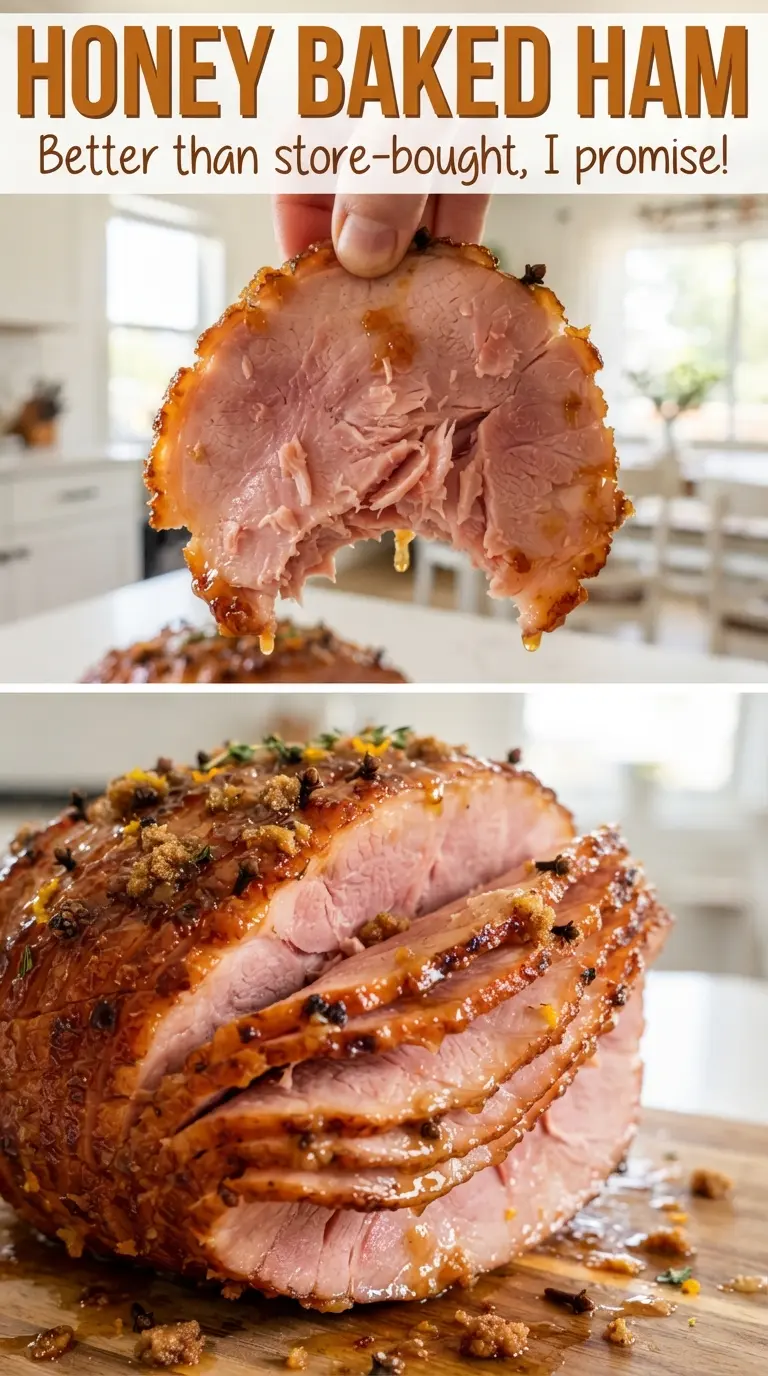
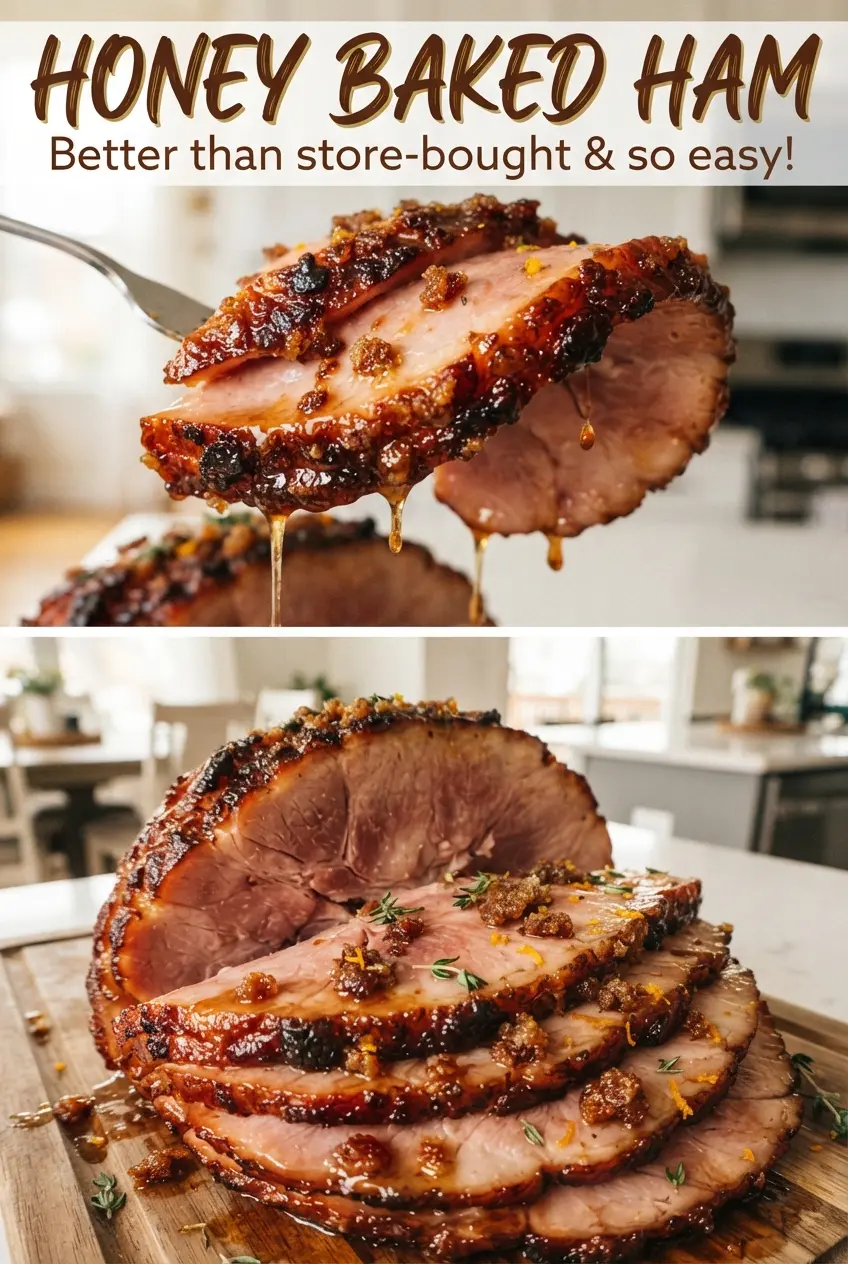
Honey baked ham comes out with a glossy, crackly crust and slices that stay juicy all the way through. The sweet glaze melts into the spiral cuts, so every piece gets a little caramelized edge and a little salty ham underneath. It’s the kind of centerpiece that looks festive on the platter and still feels easy enough to pull off without stress.
What makes this version work is the layering. The ham heats gently first, covered, so the meat stays moist while it warms through. Then the honey butter and spiced sugar go on in rounds, and that repeated brushing builds the crust instead of letting the sugar burn in one shot. The oven starts low, then turns hot at the end, which is the difference between a glossy finish and a grainy glaze that never quite sets.
Below, I’ve included the timing cues that matter most, the best way to keep the sugar crust from sliding off, and a few smart swaps if you need to adjust the spice mix.
The glaze set up with that crackly candy shell everyone fights over, and the ham still stayed juicy after reheating the leftovers the next day.
Like this honey baked ham? Save it for the holidays when you want a caramelized crust, a juicy center, and a centerpiece that slices cleanly every time.
The Trick Behind a Crust That Stays on the Ham
The biggest mistake with glazed ham is rushing the sugar onto a surface that’s too wet or too cold. If you pile on the glaze right away, it melts into syrup and runs to the bottom of the pan instead of building that glassy shell on the outside. The first low bake warms the ham through and dries the surface just enough so the honey butter can cling.
The other piece that matters is heat at the end. The sugar needs a short blast at 400F to caramelize, but not long enough to scorch the spices. That’s why this ham gets brushed and sugared in rounds: each layer catches and hardens a little more, and by the final pass you get that crackly finish instead of a soft sticky coating.
What Each Glaze Ingredient Is Doing in This Ham
- Honey — This gives the glaze its shine and helps the crust set into that candy-like shell. A runny grocery-store honey works fine here; save the expensive varietal honey for drizzling at the table.
- Butter — Butter helps the honey spread evenly and keeps the glaze from turning brittle too fast. Melt it fully with the honey so it brushes on in a smooth layer instead of leaving greasy streaks.
- Brown sugar and granulated sugar — The brown sugar brings a deeper caramel note, while the white sugar makes the crust crisp. If you cut one of them, you lose either the color or the crunch.
- Cinnamon, cloves, ginger, nutmeg, allspice, and paprika — This mix gives the glaze warmth and a little complexity without turning it into pumpkin pie. The paprika doesn’t make it taste smoky; it helps the crust take on a richer color.
- Bone-in spiral-sliced ham — The spiral cuts let the glaze seep between the slices, and the bone helps the meat stay juicy while it heats. Use a fully cooked ham here; a raw ham needs a completely different cooking time and method.
Building the Glaze Without Burning the Sugar
Warming the Ham Slowly
Set the ham cut-side down in the roasting pan and cover it tightly with foil. That covered bake is what brings the center up gently without drying the outer slices. Keep the oven at 325F for this part and use the timing as a guide, but trust the thermometer more than the clock. You want the ham to reach 120F before you start glazing, because the final hot bake finishes the job.
Mixing the Honey Butter and Spiced Sugar
Melt the honey and butter together until the mixture looks smooth and loose. In a separate bowl, stir the sugars with all the spices so the coating is evenly distributed and doesn’t clump in one spot. If the butter-honey mixture cools and thickens before you brush it on, warm it briefly again; a thick glaze won’t spread into the slices the same way.
Layering on the Crust
Remove the foil and brush the ham generously with the honey butter, then pat on a layer of the spiced sugar. The word here is pat, not dump. Pressing the sugar on helps it stick where the glaze lands instead of falling straight into the pan. Raise the oven to 400F and bake for 5 minutes, then repeat the brushing and sugaring two more times. By the last round, the surface should look lacquered and the edges should start to darken into a deep golden color.
Knowing When It’s Done
Keep baking until the crust is crackly and the ham reaches 140F in the thickest part. If the top looks done before the center hits temperature, cover the browned spots loosely with foil and keep going. Don’t stop at color alone; a glazed ham can look finished long before the inside is ready. Let it rest for 15 minutes so the juices settle and the slices hold together when you cut them.
How to Adapt This Honey Baked Ham for Different Tables
Less Sweet, More Savory
Cut the granulated sugar back by 1/4 cup and lean a little harder on the cloves, ginger, and paprika. The glaze will still caramelize, but the finish will taste less candy-like and more balanced against the saltiness of the ham.
Gluten-Free Ham for the Same Crowd
This recipe is naturally gluten-free as written as long as your ham is labeled gluten-free. The glaze ingredients don’t need flour or thickeners, so the only thing worth checking is the ham packaging and any added seasoning packet.
Using a Ham That’s Smaller or Bigger
For a smaller ham, start checking early so it doesn’t dry out before the glaze is finished. For a larger one, keep the same glaze method but extend the covered bake until the internal temperature is close to 120F; the carving and glazing steps stay the same.
Storage and Reheating
- Refrigerator: Store leftovers tightly covered for 4 to 5 days. The glaze softens a little in the fridge, but the flavor holds well.
- Freezer: Slices freeze well for up to 2 months. Wrap portions tightly and freeze with a little pan juice if you have it so the meat stays moist.
- Reheating: Reheat covered at 300F with a splash of pan juices or water until just warmed through. Don’t blast it in a hot oven or the edges will dry out before the center heats.
Questions I Get Asked About This Recipe
Honey Baked Ham
Ingredients
Equipment
Method
- Preheat the oven to 325F. Place the ham cut-side down in a roasting pan and cover tightly with foil, ensuring the lid seals well so it heats evenly.
- Bake at 325F for 12-14 minutes per pound until the center reaches 120F when checked with an instant-read thermometer. Keep the foil on throughout this stage to prevent drying.
- Melt the honey and butter together in a small saucepan over low heat until smooth. Keep warm so it brushes easily.
- In a separate bowl, mix the granulated sugar and brown sugar with the cinnamon, cloves, ginger, nutmeg, allspice, and paprika. Stir until the spices are evenly distributed.
- Remove the foil, then brush the ham generously with the honey butter. Pat on a layer of the spiced sugar so it adheres.
- Raise the oven temperature to 400F. Bake for 5 minutes until the crust starts to set, then brush again with honey butter and pat on another layer of spiced sugar.
- Repeat the 400F bake cycle—brush with honey butter, pat on spiced sugar, and bake for 5 minutes two more times. Bake until the crust is deep golden and crackly and the ham reaches 140F in the center.
- Rest the ham for 15 minutes before serving. Slice through the spiral for fan-open pieces that show the glossy, crackly crust.