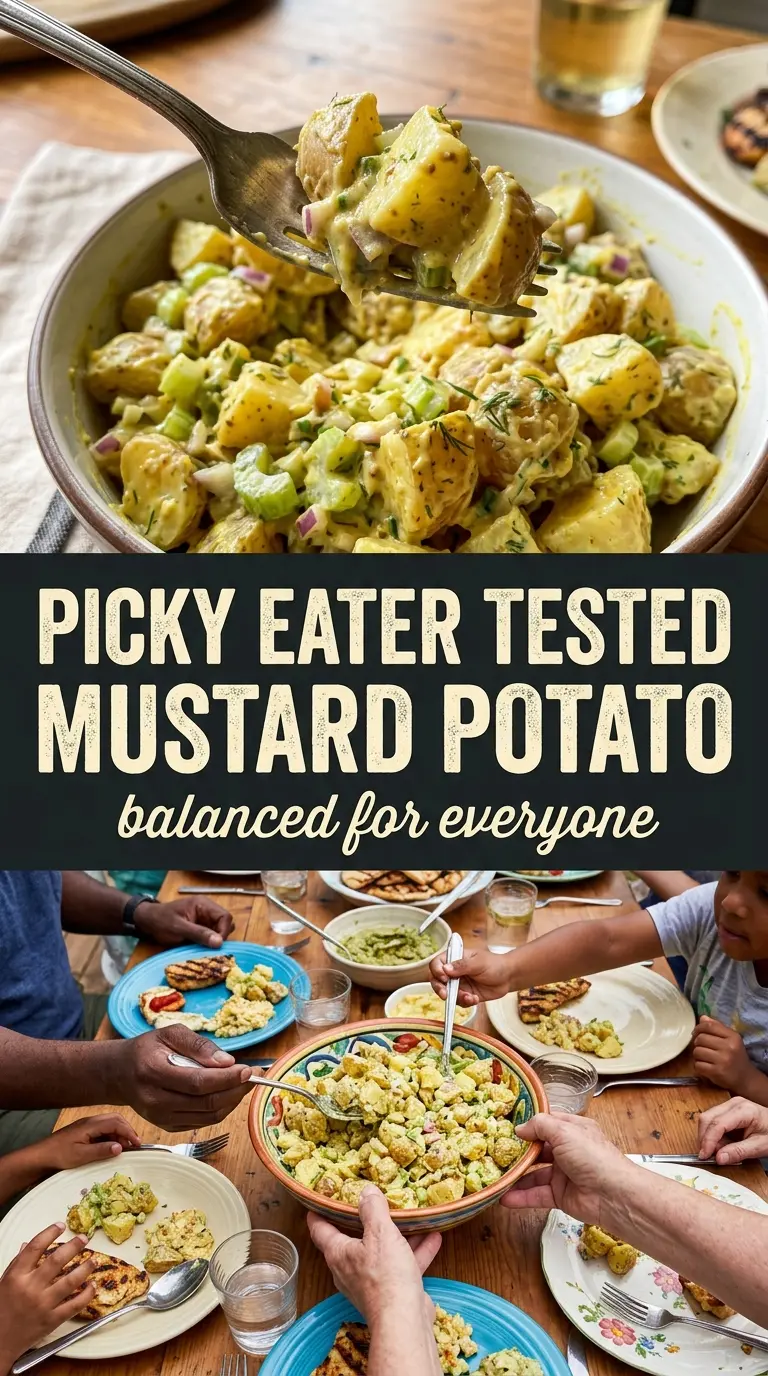
Mustard potato salad lands with that familiar creamy texture first, then the mustard comes through in a clean, tangy wave that keeps each bite from feeling heavy. The Yukon gold potatoes hold their shape without turning waxy or crumbly, and the dressing clings instead of sliding to the bottom of the bowl. It’s the kind of side dish that disappears fast at a cookout, but it also works just as well next to roast chicken or a simple sandwich lunch.
The balance matters here. Yellow mustard brings the classic picnic flavor and the bright color people expect, while a little Dijon adds depth without taking over. A splash of white vinegar sharpens the dressing, and the sugar smooths out the edges just enough to round everything out. Chilling the salad for a couple of hours isn’t just waiting time — it gives the potatoes time to absorb the dressing so the flavor reaches all the way through.
Below, I’m walking through the detail that keeps the salad from going bland or soupy, plus a few easy ways to adjust it if you want it a little creamier, a little sharper, or better suited to what’s already in your kitchen.
The dressing coated every potato instead of pooling at the bottom, and the mustard flavor was bright without being harsh. I chilled it for two hours like you suggested and the eggs held up beautifully.
Love a tangy, creamy potato salad? Pin this mustard potato salad for cookouts, potlucks, and easy make-ahead sides.
The Trick to Tangy Potato Salad That Still Tastes Balanced
The biggest mistake with mustard potato salad is pushing the mustard so far that it turns sharp and one-note. This version works because the mayonnaise carries the dressing and the mustard sits on top of it, not instead of it. Yellow mustard gives you that classic picnic color and bite, while Dijon adds a little backbone so the flavor doesn’t taste flat after it chills.
The other thing people miss is potato texture. Yukon golds are the right choice because they stay tender without collapsing into mash when you toss them with dressing. If you boil them past tender, the salad turns cloudy and heavy as soon as you mix everything together. Cook them until a knife slides in easily, then stop there and let the heat fall off before the dressing goes in.
What Each Ingredient Is Doing in This Bowl
- Yukon gold potatoes — These hold their shape and give you a creamy bite without turning grainy. Russets will break down too much, and red potatoes are a little firmer and less buttery, so Yukon golds sit in the sweet spot for this style of salad.
- Mayonnaise — This is the base that keeps the dressing smooth and helps it cling to the potatoes. A good regular mayo matters here; light mayo can taste thin and won’t coat as well.
- Yellow mustard — This is the classic mustard flavor and the main color source. It brings tang and a little brightness, but it needs the mayo and sugar around it or it can taste harsh.
- Dijon mustard — Dijon adds depth and a more rounded mustard note. If you only have yellow mustard, you can use all yellow, but the salad will taste simpler and a little less layered.
- White vinegar — A small amount sharpens the dressing so the salad tastes lively after chilling. Apple cider vinegar works in a pinch, but it brings a softer, sweeter edge.
- Celery and onion — These are there for crunch and a little bite. Dice them fine so they blend into the salad instead of taking over each forkful.
- Hard-boiled eggs — The eggs soften the texture and make the salad feel more old-fashioned and full. Chop them gently so they stay in pieces instead of disappearing into the dressing.
Building the Salad So It Chills Without Getting Watery
Cook the Potatoes Just Past Tender
Start the potatoes in well-salted water and cook them until a knife goes in with almost no resistance. You want tender edges with the pieces still holding their shape. If they’re falling apart in the pot, they’ll break down even more when you mix the salad and the whole bowl turns pasty. Drain them well and let the steam escape for a few minutes before dressing them.
Mix the Dressing Before It Hits the Potatoes
Stir the mayonnaise, both mustards, vinegar, sugar, salt, and pepper together in a separate bowl until the dressing looks smooth and uniform. That way the mustard and vinegar are evenly distributed instead of streaking through the potatoes. Taste it before you add it to the bowl; it should taste a touch stronger than you want the finished salad to taste because the potatoes will soften it.
Fold Everything Together While the Potatoes Are Warm
Combine the potatoes, celery, onion, and eggs, then pour the dressing over the top and toss gently. Warm potatoes absorb flavor better than cold ones, which is why the first coating matters most. Don’t mash or stir aggressively; use a light folding motion so the potatoes stay intact and the eggs don’t disappear into the dressing.
Chill Until the Flavor Settles
Refrigerate the salad for at least 2 hours before serving. This resting time lets the mustard mellow a little and helps the potatoes soak up the dressing instead of tasting coated on the outside and plain in the middle. If it looks a bit thick after chilling, stir in a spoonful of mayo or a small splash of vinegar to bring it back to life.
How to Adjust This Salad for Different Tables
Make It a Little Sharper
Add another tablespoon of Dijon or a small splash more vinegar if you want a stronger tang. That pushes the salad toward a punchier mustard flavor, but it also makes the dressing feel lighter, so it works best if you’re serving it with grilled meats or rich mains.
Use It for a Dairy-Free Table
This recipe is naturally dairy-free as written, which makes it easy for mixed-diet gatherings. Just check your mayonnaise label, since a few specialty versions add unexpected ingredients, but standard mayo usually keeps this one safe without any swaps.
Add Crunch Without Changing the Base
A handful of chopped dill pickles, relish, or extra celery gives the salad more snap without changing the dressing formula. The key is to keep the add-ins small and dry so they don’t water down the bowl after it sits.
Make It Ahead for a Crowd
This salad is even better the next day, so it’s a smart make-ahead side for parties. If you prep it more than a day ahead, hold back a spoonful of mayo and stir it in right before serving so the texture stays creamy after the potatoes settle.
Storage and Reheating
- Refrigerator: Keep covered for up to 4 days. The potatoes will absorb more dressing as it sits, so the salad may seem thicker on day two.
- Freezer: Don’t freeze this one. The mayo and potatoes both separate after thawing, and the texture turns grainy.
- Reheating: Serve it cold or let it sit at room temperature for 15 to 20 minutes before serving. Heating breaks the dressing and makes the potatoes soft in a bad way.
Answers to the Questions Worth Asking
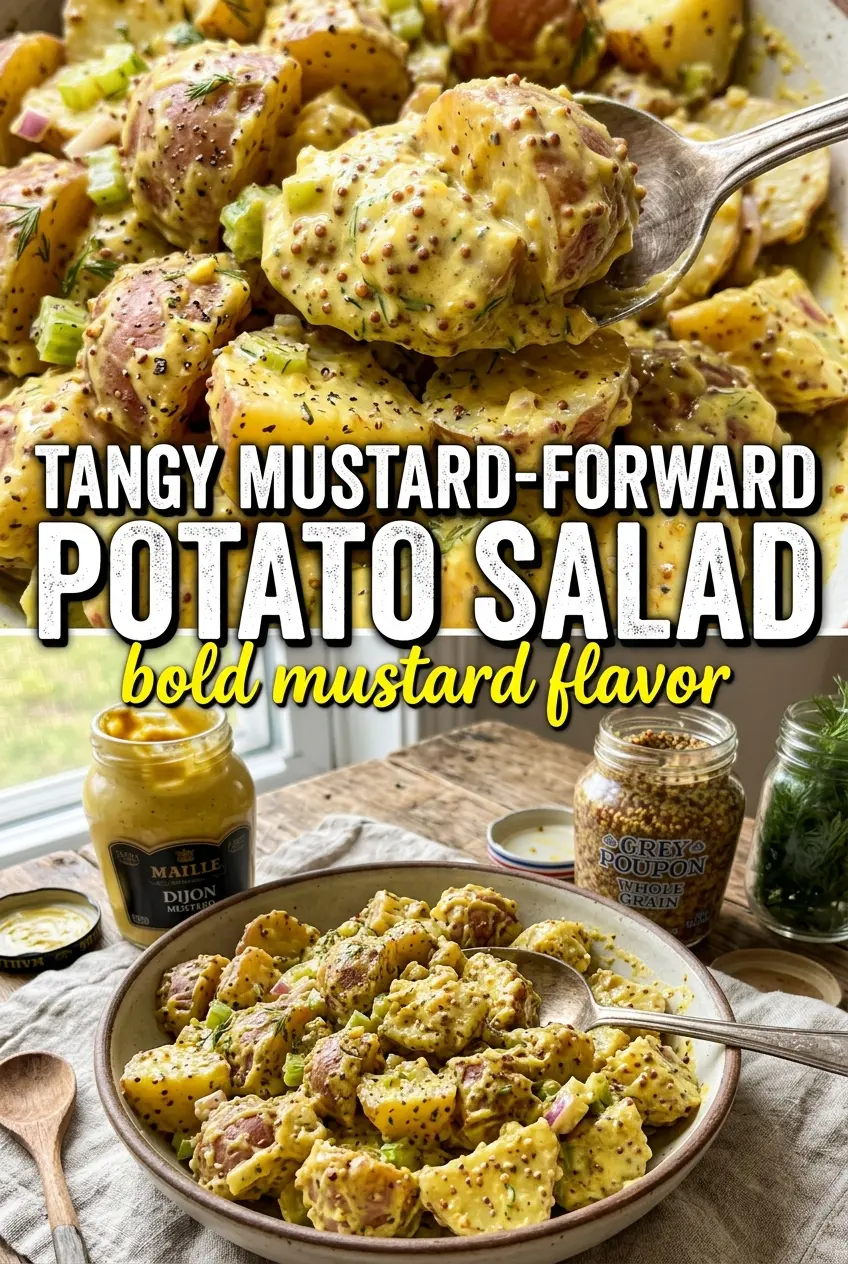
Mustard Potato Salad
Ingredients
Equipment
Method
- Bring a large pot of salted water to a boil, then add the cubed Yukon gold potatoes and cook until tender, 10-15 minutes. Visual cue: potatoes should pierce easily with a fork.
- Drain the potatoes thoroughly and spread them on a sheet pan to cool. Visual cue: the surface should look dry and no steam should pool in the pan.
- In a bowl, whisk together mayonnaise, yellow mustard, Dijon mustard, white vinegar, sugar, salt, and pepper until smooth. Visual cue: the dressing should look evenly yellow and glossy with no streaks.
- Add the cooled potatoes, diced celery, finely diced onion, and chopped hard-boiled eggs to the bowl. Visual cue: ingredients should be evenly distributed, with eggs visible throughout.
- Pour the dressing over the potato mixture and toss well until every piece is coated. Visual cue: potatoes should have a thick, mustard-tinted sheen.
- Cover and refrigerate for 2 hours before serving. Visual cue: the salad should look slightly thicker and the flavors should set after chilling.