Campfire baked beans are the kind of side dish that disappears fast because they hit every note at once: smoky bacon, a sticky-sweet sauce, tender onions, and beans that hold enough shape to feel hearty instead of mushy. The best part is how little fuss they need. Once everything goes into the pot, the fire does most of the work, and the whole thing turns glossy and bubbling with almost no babysitting.
What makes this version work is the balance. BBQ sauce gives depth, ketchup brings that familiar tang, mustard keeps the sweetness from going flat, and Worcestershire adds the background savoriness that makes people go back for another spoonful. Cooking uncovered matters here because the sauce needs to reduce a little; if you cover the pot the beans stay thinner than you want. I also like to keep the onion diced small so it softens right into the sauce instead of staying sharp.
Below, I’ll walk through the little details that keep campfire beans thick, smoky, and spoonable, plus a few easy ways to adapt them for a crowd or a backyard grill.
The sauce thickened up beautifully over the fire and the bacon stayed crisp enough to add texture instead of disappearing into the beans. I used a Dutch oven on the grill grate and it came out exactly like the campfire side I was hoping for.
Campfire baked beans with bacon get thick, smoky, and spoonable fast — save this one for your next cookout or camping trip.
The Secret Is Reducing the Sauce, Not Just Heating the Beans
Most baked bean recipes go wrong because they’re warmed through but never actually reduced. That leaves you with a loose, soupy pan that slides around on the plate instead of clinging to the beans the way it should. Uncovered cooking gives the sauce time to thicken while the sugar, ketchup, and BBQ sauce turn glossy and sticky.
The other thing that matters is heat control. Campfires can swing from barely warm to full boil in a minute, and beans scorch fast once the sugar starts concentrating. Keep the pot over steady heat and stir often enough to keep the bottom from catching, especially near the end when the mixture starts to bubble slower and look darker.
What Each Ingredient Is Actually Doing in These Beans
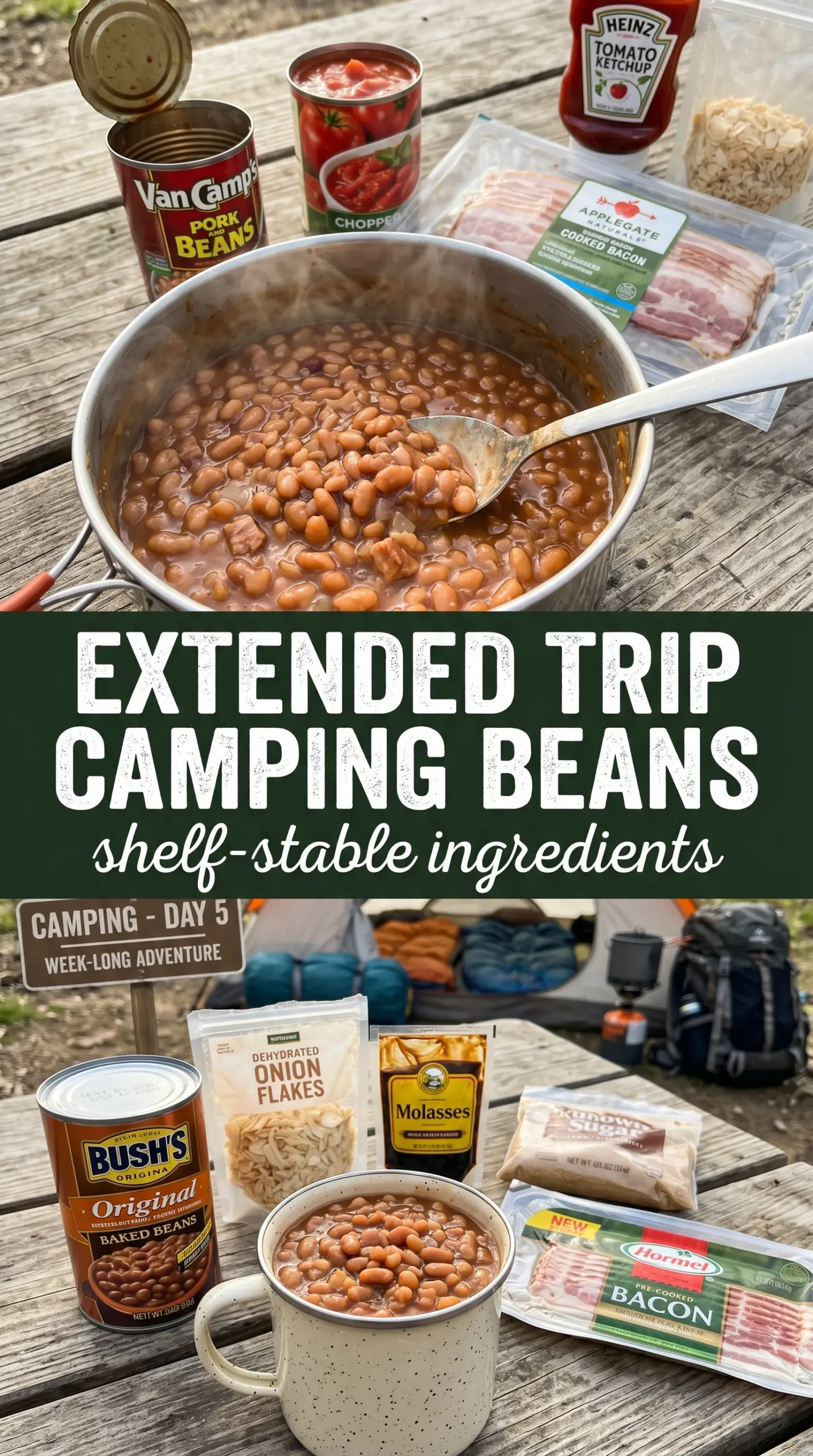
- Baked beans — Canned baked beans are the base and they already come seasoned, which saves time and helps the recipe taste finished fast. If you swap in plain canned beans, you’ll need more seasoning and a little extra sweetness to get the same balance.
- Bacon — Bacon brings smoke, salt, and a little fat that makes the sauce taste fuller. Cook it first so it stays crisp enough to hold its texture in the beans instead of turning rubbery.
- BBQ sauce — This gives the deepest smoky-sweet note, and the style you choose matters. A thick, molasses-heavy sauce makes the beans richer; a thinner vinegar-based sauce makes them tangier and a little sharper.
- Brown sugar — This is what gives the beans that classic sticky finish. If your BBQ sauce is already very sweet, you can cut the sugar back slightly, but don’t remove it entirely or the sauce will taste flat.
- Onion — Diced onion softens into the sauce and keeps the sweetness from becoming one-note. Chop it small so it melts into the pot during the short cook time.
- Mustard and Worcestershire — These two ingredients are the quiet backbone of the dish. Mustard cuts through the sweetness, and Worcestershire adds savory depth that keeps the beans from tasting like barbecue glaze alone.
Building the Pot So the Beans Don’t Turn Thin or Burn
Cooking the Bacon First
Cook the bacon until it’s crisp, then crumble it before adding it to the pot. If you use undercooked bacon, it can go limp during the simmer and lose the texture that makes the beans feel hearty. Save a spoonful of the rendered drippings if you want a little extra smoke and richness, but don’t flood the pot with grease or the beans can taste heavy.
Mixing the Sauce Base
Combine the beans, sauce ingredients, onion, mustard, and Worcestershire before the pot goes over the fire. Stir until the brown sugar disappears into the liquid and the mustard is fully dispersed, because streaks of unmixed mustard can leave sharp pockets in the finished dish. The mixture should look loose at this stage; it tightens as it cooks.
Simmering Over the Fire
Set the pot over a steady campfire and bring it to a gentle simmer, not a hard boil. Hard boiling can pop the sauce up the sides of the pot and leave the bottom scorched before the top thickens. Stir occasionally, scraping the bottom and corners, and watch for the beans to look glossy and for the sauce to coat the spoon instead of running off immediately.
Knowing When It’s Done
After about 25 to 30 minutes, the beans should be bubbling lazily and the sauce should sit thick between the beans. If the mixture still looks loose, keep cooking uncovered for a few more minutes; if it starts to look too tight, pull it off the heat right away because it will thicken a little more as it sits. Serve them hot while the sauce is still shiny and spoonable.
How to Adapt These Beans for Different Setups
No-campfire stovetop version
Use a Dutch oven or heavy pot on the stove over medium-low heat and simmer uncovered the same way. You’ll get the same thick finish as long as you keep the heat gentle and stir often enough to prevent the sugar from sticking to the bottom.
Dairy-free and gluten-free by default
This recipe naturally fits both diets as written if your BBQ sauce and Worcestershire sauce are certified gluten-free. The only thing to watch is the label on those two condiments, since different brands can sneak in wheat-based ingredients.
Meatless version that still tastes full
Leave out the bacon and add a pinch of smoked paprika or a teaspoon of liquid smoke if you want that campfire edge back. You’ll lose the salty crisp bits, but the sauce still tastes balanced if you keep the Worcestershire and onion in place.
Storage and Reheating
- Refrigerator: Store leftovers in an airtight container for up to 4 days. The beans will thicken as they chill, which is normal.
- Freezer: They freeze well for up to 2 months. Cool completely first, then portion into freezer containers and leave a little room at the top for expansion.
- Reheating: Rewarm gently on the stove over low heat or in the microwave in short bursts, stirring between rounds. Add a splash of water if the sauce has tightened too much; high heat can make the sugars scorch before the center warms through.
Answers to the Questions Worth Asking

Campfire Baked Beans
Ingredients
Equipment
Method
- Combine the baked beans, cooked crumbled bacon, BBQ sauce, brown sugar, ketchup, onion, mustard, and Worcestershire sauce in a Dutch oven or large pot, stirring to mix evenly. Make sure the onion is distributed throughout for consistent flavor.
- Place the Dutch oven over the campfire and bring to a simmer, keeping the heat steady so bubbles form across the surface. Use a wooden spoon to scrape the bottom as needed to prevent scorching.
- Cook uncovered for 25 to 30 minutes at a gentle simmer, stirring occasionally, until thickened and bubbly. Look for a glossy, spoon-coating consistency before serving.
- Serve hot as a side dish, keeping the beans bubbling slightly in the pot for a fresh, hot texture. Stir once right before serving so the bacon and sauce are evenly distributed.