Campfire nachos Supreme hit the pan with a mix of crunch, smoke, and that pull-apart cheese layer that disappears fast once it lands on the table. The trick is stacking them in two thin layers instead of dumping everything on top at once. That keeps the chips underneath from turning into one soggy sheet while the cheese melts into the beef, beans, and corn.
The cast iron does the heavy lifting here. It holds steady heat over the fire, so the cheese melts before the chips burn, and the toppings warm through without needing a long cook time. Cold toppings like sour cream, guacamole, and tomatoes go on at the end so they stay bright and fresh against the hot skillet.
Below, I’ll walk through the layering order that keeps every bite loaded, plus a few smart swaps if you’re cooking for a crowd or working with what you brought to camp.
The chips stayed crisp on the bottom and the cheese melted right through the middle. I worried the beans and corn would make it heavy, but the two-layer build kept every scoop balanced.
These cast iron campfire nachos stay crisp underneath and melty on top — perfect for sharing straight from the skillet.
The Layering Trick That Keeps Campfire Nachos from Turning Soggy
The biggest mistake with nachos over a fire is building one thick mound and hoping the cheese reaches the bottom before the chips scorch. That usually gives you burnt edges, cold centers, and a pile that collapses the second someone digs in. Layering half the chips, then half the toppings, then repeating the stack spreads the heat out so the cheese melts evenly and the chips hold their shape longer.
Cast iron matters here because it acts like a heat buffer. Thin pans over a campfire can create hot spots fast, which is how you end up with charred chips and unmelted cheese. Medium heat is enough; if the coals or flame are aggressive, move the skillet to a slightly cooler part of the grate and let the residual heat do the work.
What Each Ingredient Is Actually Doing in This Dish
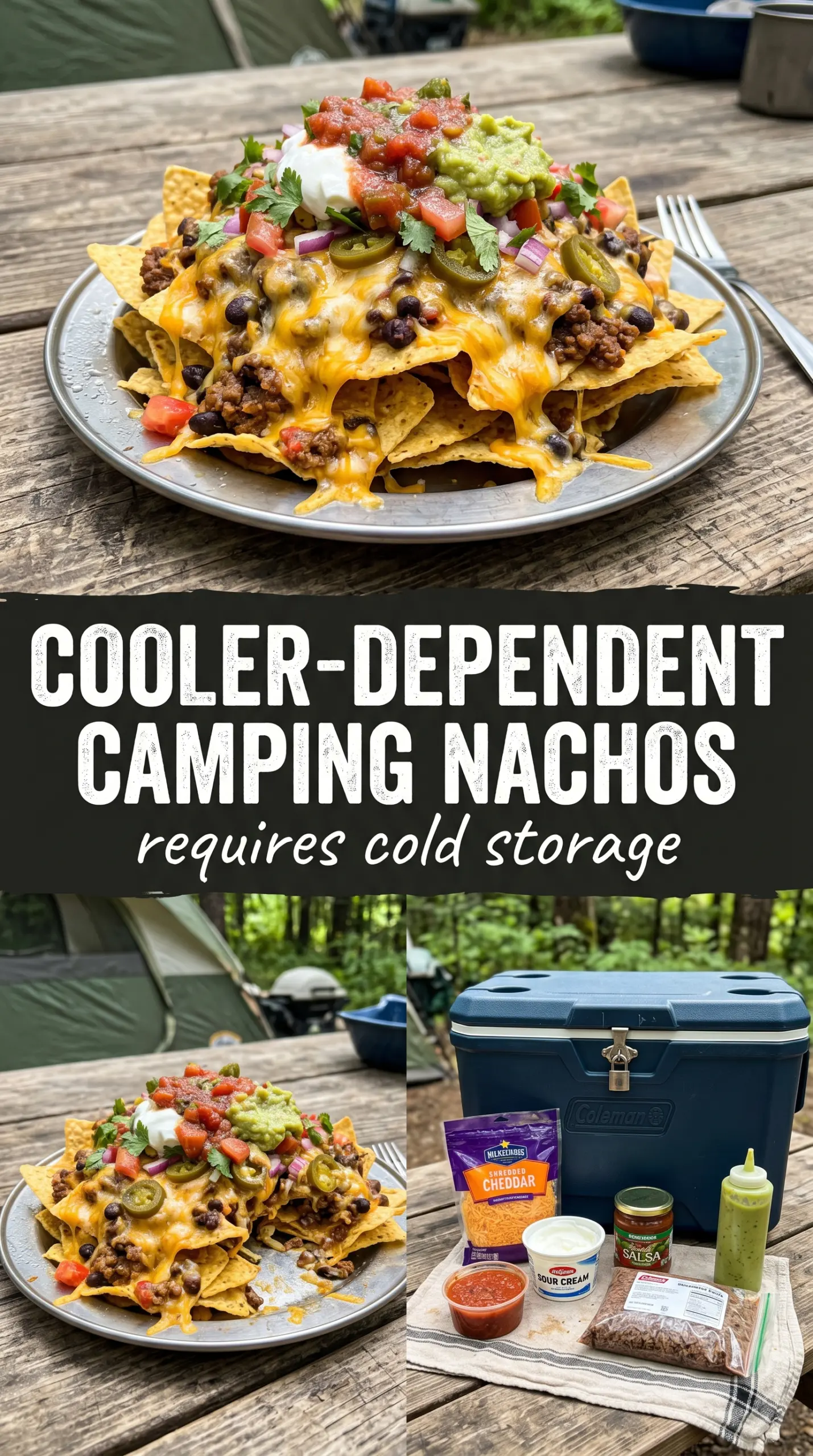
- Tortilla chips — Use thick chips if you can. Thin ones break under the weight of the beef and beans before the cheese melts, and you lose the scoopable layers that make this work.
- Ground beef — Taco-seasoned beef gives the nachos their backbone. You can swap in ground turkey or chicken, but cook it with enough seasoning and a little fat so it doesn’t taste dry once it hits the skillet.
- Mexican cheese blend — This is the melt engine. Pre-shredded cheese works fine for camp cooking, though freshly shredded cheese melts a little smoother if you’re prepping at home before the trip.
- Black beans and corn — These add bulk and keep the nachos from tasting like just chips and meat. Drain them well so extra liquid doesn’t puddle at the bottom of the pan.
- Tomatoes, jalapeño, sour cream, guacamole, cilantro, lime — These finish the dish with freshness, heat, and acidity. Keep them off the heat and add them after the skillet comes off the fire so they stay bright instead of watery or dull.
Building the Skillet Over the Fire Without Burning the Bottom
The First Layer of Chips
Start with half the chips in an even layer that covers the bottom of the skillet. A few gaps are fine, but don’t pile them so high that the heat can’t move through the pan. You’re building a base, not a mountain, and the goal is to give the melted cheese somewhere to bind everything together. If the chips are all smashed before you even add toppings, the skillet has already gone too heavy.
Stacking the Filling in Two Passes
Spoon on half the beef, beans, corn, and cheese, then repeat with the rest. This double layer keeps the top from sliding off and helps the cheese melt through both levels. Use drained ingredients here; any extra liquid from beans or corn collects fast in a hot skillet and softens the chips. The mixture should look full but not soupy.
Melting Over Medium Heat
Set the skillet on the campfire grate over medium heat and let it sit for 12 to 15 minutes. Watch for the cheese to turn glossy and start bubbling at the edges, and listen for a gentle sizzle rather than a hard crackle. If the bottom chips darken too fast, the fire is too hot; move the pan farther from the flames before the center has a chance to melt.
Finishing with Cold Toppings
Pull the skillet off the heat as soon as the cheese is fully melted. Add the tomatoes, jalapeños, sour cream, guacamole, cilantro, and lime wedges right away so the heat from the nachos warms them just enough without cooking them down. This last step gives you the contrast that makes each bite taste complete. Serve it immediately, while the cheese is still stretchy and the chips still crack when you scoop them.
What to Change When You Need These Nachos to Fit the Crowd
Make It Vegetarian
Skip the beef and double the beans, or use a mix of black beans and pinto beans for more texture. Add a little extra taco seasoning and a spoonful of oil to the bean mixture so the flavor still feels rich enough to stand up to all the cheese.
Make It Gluten-Free
Most tortilla chips are naturally gluten-free, but check the bag and the taco seasoning packet if you’re using one. The rest of the ingredients work as written, so this is one of the easiest crowd recipes to adapt without changing the texture.
Make It Spicier
Add extra jalapeños, or mix a little diced green chile into the beef before layering. If you want heat without changing the topping balance, hot sauce after cooking gives you more control than loading the skillet with too much spice up front.
Storage and Reheating
- Refrigerator: Best eaten right away, but leftovers keep 2 days. The chips soften as they sit, and the cold toppings should be removed before storing if possible.
- Freezer: I don’t recommend freezing assembled nachos. The chips lose their texture and the fresh toppings don’t recover well.
- Reheating: Reheat the beef, beans, and corn separately if you have leftovers, then build fresh nachos with a new layer of chips and cheese. Microwaving the whole pan turns the chips limp fast, which is the main thing to avoid.
Answers to the Questions Worth Asking
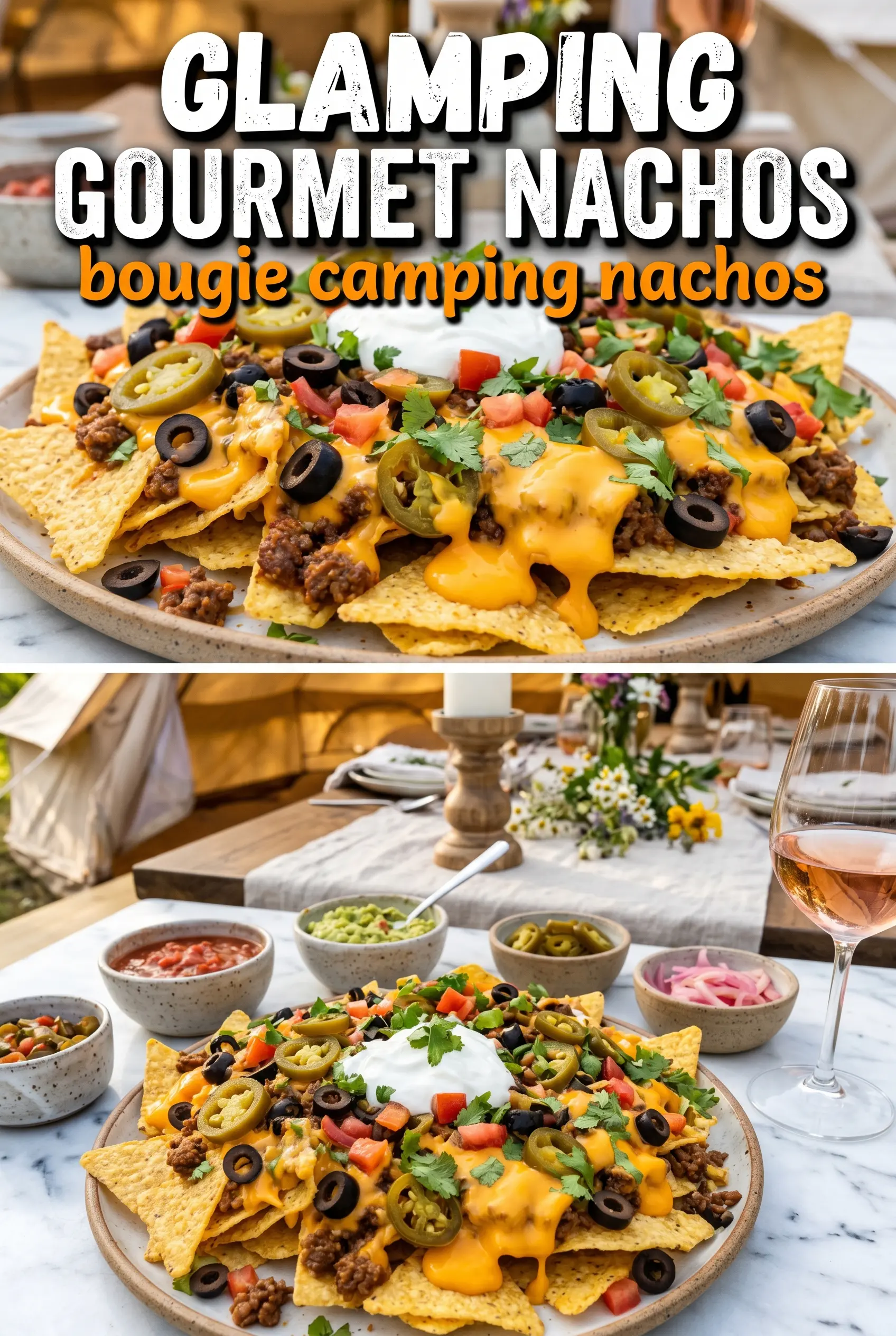
Campfire Nachos Supreme
Ingredients
Equipment
Method
- Layer half the tortilla chips in a large cast iron skillet or aluminum pan, spreading them into an even pile so the cheese can melt throughout. Add a visible base layer without leaving big gaps.
- Top the first chip layer with half the cooked ground beef, black beans, corn, and shredded Mexican cheese blend to create a dense, cheesy center. Press lightly so the toppings settle between chips.
- Add the remaining tortilla chips over the first layer to form a second nacho layer. Repeat with the remaining beef, beans, corn, and all remaining cheese.
- Place the skillet on the campfire grate over medium heat for 12-15 minutes, until the cheese is fully melted and the surface looks bubbly. Keep heat steady so the chips crisp slightly instead of scorching.
- Remove the skillet from the heat and immediately top with diced tomatoes and sliced jalapeño for fresh crunch. Scatter evenly so every bite gets a mix.
- Add the sour cream, guacamole, and chopped cilantro on top in dollops and pinches for layered flavor and color. Use more if you want a heavier supreme nacho style.
- Serve immediately with lime wedges on the side for squeezing over the top. Offer wedges at the table so guests can adjust acidity.