Hobo foil packets come out with tender potatoes, sweet carrots, and juicy meat all cooking together in their own little sealed pan. The best part is the steam that escapes when you open the packet at the table or by the fire. It feels rustic and simple, but the payoff is a full dinner with almost no cleanup.
This version works because the vegetables go in first and the meat sits on top, so the drippings and butter can run down and season everything underneath. Heavy-duty foil matters here. Thin foil tears easily once the packets soften and get moved around over heat, and that’s the fastest way to lose the juices that make the meal worth making.
Below, I’ve included the small details that keep the potatoes from turning hard and the packets from leaking. A few minutes of rest before opening makes a bigger difference than people expect.
The potatoes were tender right on time, and the butter and garlic powder soaked through the vegetables instead of pooling at the bottom. I opened one packet too soon the first time and lost some steam, so the rest of them got that 5-minute rest and came out perfect.
Save these hobo foil packets for a fuss-free campfire dinner with buttery vegetables and tender meat.
The Part That Keeps the Meat Juicy While the Potatoes Finish
The biggest mistake with foil dinners is packing everything in a way that looks neat but cooks unevenly. Potatoes need the most time, so they belong at the bottom where they’re closest to the heat and bathed in the butter and meat juices. If you bury the meat under the vegetables, the top layer can overcook before the potatoes soften.
Spacing matters too. When the ingredients are piled too thick, they steam unevenly and you end up with a soft outer layer and hard centers. A flatter packet cooks more predictably, and flipping it halfway helps both sides get steady heat without scorching the foil.
What the Butter, Foil, and Seasoning Are Each Doing

- Heavy-duty aluminum foil — This is the one ingredient you don’t want to cheap out on. Regular foil can tear when you flip the packets or open them after cooking, and that means lost juices and a mess on the grate. If all you have is thinner foil, double it up.
- Potatoes — They need to be sliced thin enough to soften in 25 to 30 minutes. Thick chunks stay hard while the meat finishes. Russets work, but Yukon golds hold their shape a little better and give a creamier bite.
- Ground beef or stew meat — Ground beef gives you a softer, more familiar foil-dinner texture, while stew meat brings a firmer, meatier chew. If you use stew meat, cut it into small, even portions so it doesn’t lag behind the vegetables.
- Butter — The butter melts into the vegetables and carries the garlic powder through the packet. Margarine works in a pinch, but it won’t give the same rich finish. If you want a little more sauce at the end, add an extra teaspoon per packet.
- Green beans — Drained canned green beans hold up well and keep the packet from getting too dry. Fresh green beans work, but they need to be trimmed and sliced smaller so they cook through at the same pace as everything else.
Building the Packets So Nothing Tears or Turns Mushy
Layer the vegetables where they can actually cook
Start with the potatoes, then carrots, onions, and green beans. That order gives the densest vegetables the best chance to soften before the packet is done. If your potato slices are thicker than about 1/4 inch, they’ll need more time than the rest of the packet, so cut them evenly from the start. Uneven slicing is what causes some bites to be perfect while others stay crunchy.
Seal them tightly, but don’t crush the steam room
Bring the foil up and fold the edges over twice so the packet is sealed without squeezing the ingredients flat. You want a little airspace inside because steam is what finishes the vegetables. If you press the packet down too hard, the juices have nowhere to move and the bottom can scorch before the potatoes are tender.
Cook over steady medium heat
Set the packets over medium heat for 25 to 30 minutes and flip them halfway through. The heat should be active enough to keep the packets sizzling, not blazing hot enough to burn the outside before the center is done. If the fire is too hot, move the packets to the cooler edge of the grate and give them a few extra minutes instead of guessing.
Let the steam settle before opening
After cooking, rest the packets for about 5 minutes before opening them. That short wait keeps the juices inside instead of blasting out the second you cut the foil. Open the top fold away from your face, because the steam trapped inside is intense and can burn faster than people expect.
How to Adapt These Packets for the Oven, the Grill, or a Meat Swap
Oven-Baked Hobo Foil Packets
Bake the sealed packets on a sheet pan at 400°F for about 35 to 40 minutes. The oven gives you more even heat than a campfire, so the potatoes soften consistently and the foil is less likely to burn. This is the easiest version when you want the same dinner without tending a fire.
Dairy-Free Version
Swap the butter for a dairy-free butter alternative or a drizzle of olive oil. You’ll lose a little of that classic buttery finish, but the packets still cook up tender and flavorful. Olive oil gives a cleaner, lighter taste, while dairy-free butter keeps the richer campfire feel.
Using Stew Meat Instead of Ground Beef
Stew meat gives you a heartier bite, but it needs smaller pieces and a little patience. Keep the cubes fairly small so they cook through in the same window as the potatoes. If the pieces are too large, the vegetables will be done before the meat is tender.
Storage and Reheating
- Refrigerator: Store leftovers in an airtight container for up to 3 days. The potatoes soften a little more as they sit, but the flavor holds well.
- Freezer: These don’t freeze well after cooking because the potatoes turn grainy and watery when thawed. If you want to get ahead, prep the raw packets and freeze those instead of freezing the cooked meal.
- Reheating: Reheat in a covered skillet over medium-low heat or in a 350°F oven until hot. Don’t blast them in the microwave for too long or the meat turns dry while the potatoes split open.
Answers to the Questions Worth Asking
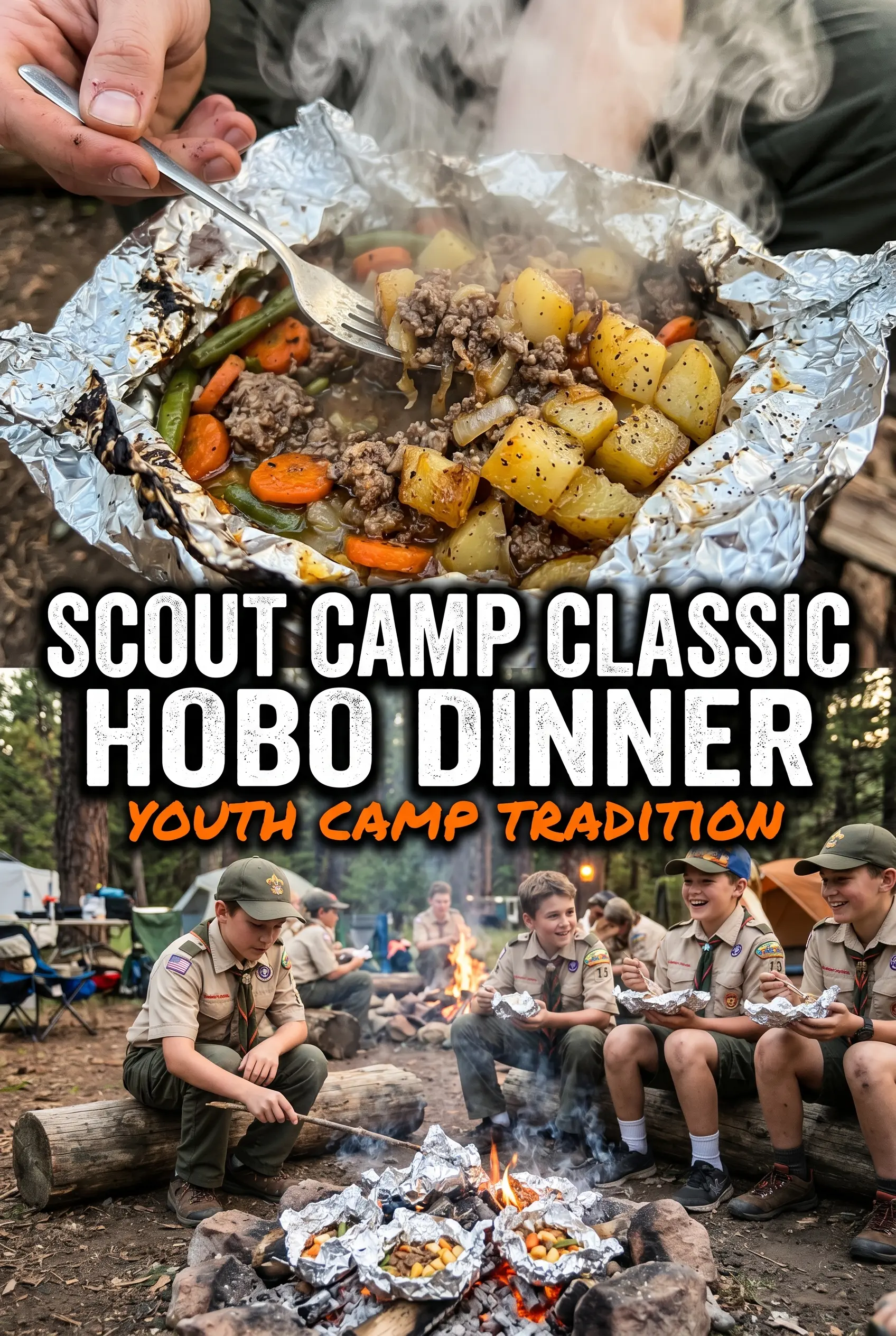
Hobo Foil Packets
Ingredients
Equipment
Method
- If using ground beef, form the meat into 4 patties; if using stew meat, divide it into 4 portions. Keep portions even so each packet cooks at the same pace.
- Lay out 4 heavy-duty aluminum foil sheets and layer vegetables on each one: potatoes, carrots, onions, then green beans. Arrange in a fairly even layer so steam reaches everything.
- Place the meat on top of the vegetable layers on each packet. Press lightly so the meat sits flat for more uniform cooking.
- Season each packet with salt, pepper, and garlic powder, then top with about 1 tablespoon butter. Distribute the butter across the top of the meat in each packet.
- Fold the foil into sealed packets, making sure seams are tight. Crimp along the edges so steam stays inside.
- Place the packets on a campfire grate over medium heat for 25-30 minutes. Cook until the packets are steaming and the meat and vegetables look tender through the foil.
- Flip the packets halfway through cooking, around the 12-15 minute mark. This helps both sides cook evenly over the uneven heat of the grate.
- Let the packets cool for 5 minutes before carefully opening and serving. Open away from your face so the steam releases safely.