Steaming ramen over a campfire turns into one of those meals people remember long after the trip is over. The broth picks up a little smokiness, the noodles stay springy instead of mushy, and the eggs cook right in the pot so you get a full dinner with almost no cleanup. It’s the kind of camp food that feels low-effort but lands like you planned ahead.
The trick is holding the seasoning packets back until the end. Instant ramen can get salty fast, and adding the packets early makes the broth taste flat and overcooked instead of bright and savory. Cooking the frozen vegetables with the noodles gives them time to heat through without turning to mush, and cracking the eggs into the simmering pot gives you soft poached eggs that turn the broth a little richer.
Below you’ll find the easiest way to keep the noodles from breaking apart over a campfire, plus a few swaps that work when your cooler is limited or your pantry is doing the heavy lifting.
I never thought ramen would work this well over the campfire, but the eggs poached perfectly and the seasoning went in at the end just like you said. It tasted fresh, not like salty packet soup, and the kids actually ate the vegetables.
Campfire ramen with soft eggs and vegetables is the kind of one-pot meal worth saving for your next quick outdoor dinner.
The Timing That Keeps Campfire Ramen from Turning Mushy
Instant noodles go from perfect to overcooked fast, and over a campfire that window gets even smaller because the heat keeps swinging. The goal is to cook the vegetables and noodles just until the noodles loosen and the vegetables are hot, then move straight into the eggs. If you boil the noodles all the way before adding the eggs, they’ll keep softening while the pot sits over the fire, and you’ll end up with a gluey bowl instead of a slurpy one.
The other thing that matters here is heat control. A rolling boil is too aggressive once the noodles are in the pot, especially if you’re using a thin camping pot that holds heat well. Keep the water at a lively simmer and stir once or twice so the noodles separate. That’s enough to cook everything evenly without breaking the noodles into scraps.
What Each Ingredient Is Actually Doing in This Dish
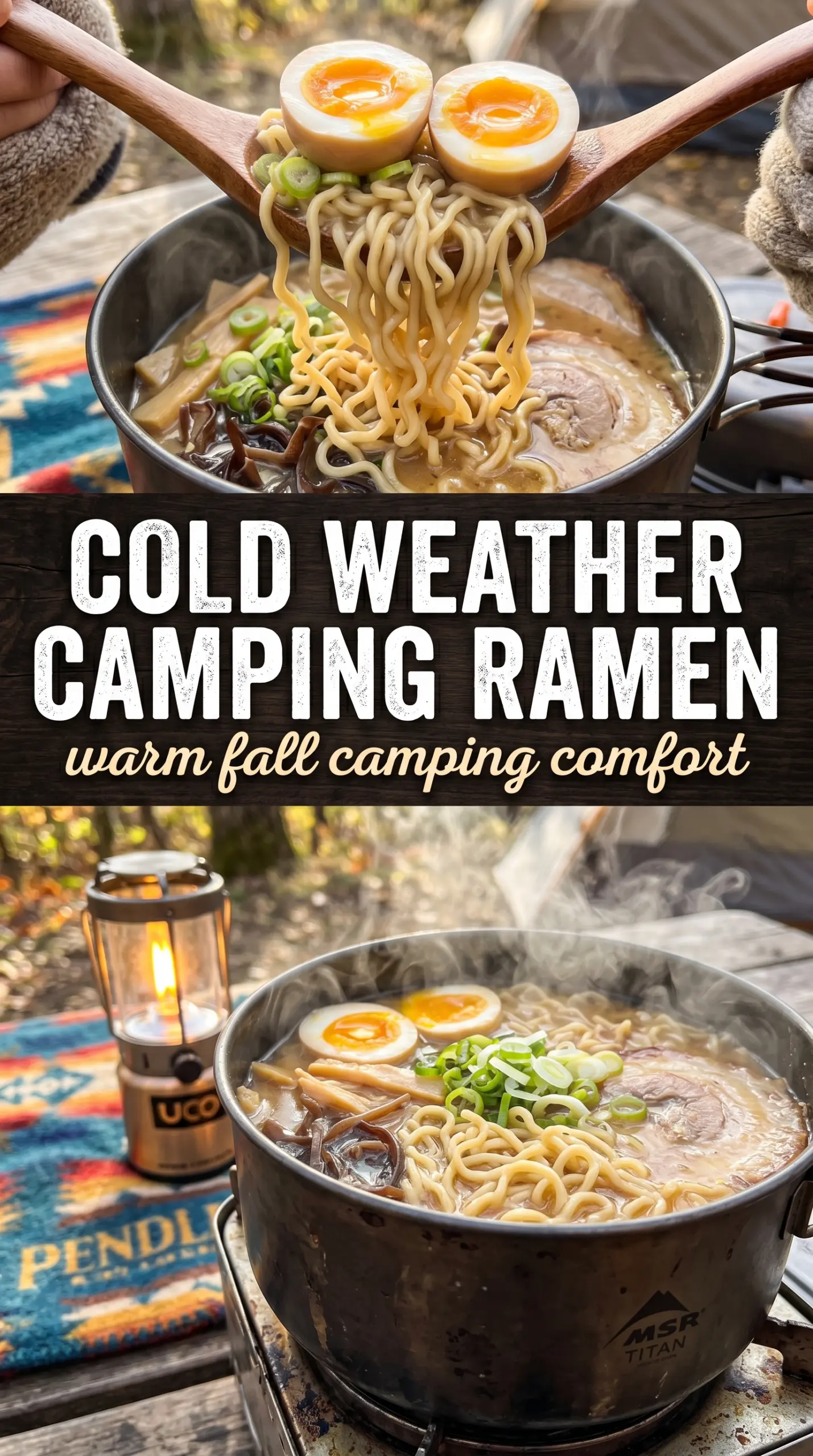
- Instant ramen noodles — These are built to cook fast and hold their shape in hot broth, which makes them ideal for camping. Any cheap brand works here because the texture matters more than the noodle itself.
- Frozen mixed vegetables — Frozen vegetables are the easiest way to get color and a little freshness into a camp meal without worrying about spoilage. They thaw in the pot and help cool the broth just enough so the eggs don’t overcook on contact.
- Eggs — The eggs turn this from snack food into an actual meal. Crack them into the simmering broth and leave them alone so the whites set around the yolks instead of shredding into the noodles.
- Soy sauce — A small splash deepens the broth when the ramen packet alone tastes thin. Use it lightly at first; the seasoning packets already bring a lot of salt.
- Hot sauce — This is for the finish, not the pot. A few drops at the table keep the broth bright and let everyone control the heat level.
Building Campfire Ramen in the Right Order
Start with a full boil
Bring the water to a steady boil before anything else goes in. Campfire heat isn’t as precise as a stovetop, so don’t add the noodles while the water is barely moving or they’ll sit there absorbing water unevenly. You want active bubbles and a pot that’s hot all the way through before the ramen goes in.
Cook the noodles and vegetables together
Add the noodles and the frozen vegetables at the same time, then stir them apart as the noodles soften. Three minutes is usually enough for the noodles to relax without falling apart, and the vegetables will lose their icy center by then. If the pot starts to boil over, pull it slightly off the hottest part of the fire and keep stirring; campfire foam can race up fast.
Poach the eggs in the broth
Crack the eggs directly into the simmering pot and let them cook undisturbed for 3 to 4 minutes. The whites should turn opaque while the yolks stay soft, and the broth should look a little richer around the eggs. If you stir too soon, you’ll lose that soft poached texture and end up with wisps of egg instead.
Season at the end
Stir in the ramen seasoning packets only after the noodles and eggs are cooked. That keeps the broth from getting too salty while it reduces over the fire. Finish with sliced green onions, then add soy sauce or hot sauce at the table so each bowl can be adjusted without overpowering the noodles.
Three Ways to Make This Work with What You Packed
Make it vegetarian
The recipe already leans that way, so you just need to watch the ramen packets you buy. Some brands include beef or chicken flavoring, so choose a vegetable ramen base if that matters. The eggs still give the bowl body and keep it filling.
Make it dairy-free and budget-friendly
This one is naturally dairy-free, which makes it an easy camping dinner for a crowd with different needs. Keep it budget-friendly by using store-brand noodles and whatever frozen vegetables you already have; the broth carries the flavor, not the price tag on the package.
Swap the eggs for another topping
If you don’t want to poach eggs in the pot, top the finished bowls with canned tuna, leftover cooked chicken, or a handful of toasted nuts for crunch. You lose the silky broth that the eggs bring, but the bowl still eats like a full meal.
Use whatever noodles you packed
If ramen isn’t in the cooler, any quick-cooking noodle can step in, but the timing changes. Thicker noodles may need another minute, while very thin noodles need less. Watch for tenderness instead of relying on the clock, because the pot heat will keep working after you pull it from the fire.
Storage and Reheating
- Refrigerator: Store leftovers up to 2 days. The noodles soften as they sit, and the eggs are best eaten sooner rather than later.
- Freezer: It doesn’t freeze well. The noodles turn soft and the eggs go rubbery after thawing.
- Reheating: Warm it gently over low heat with a splash of water or broth. A hard boil will break up the noodles and tighten the eggs, which makes the texture go from slurpy to tired fast.
Answers to the Questions Worth Asking
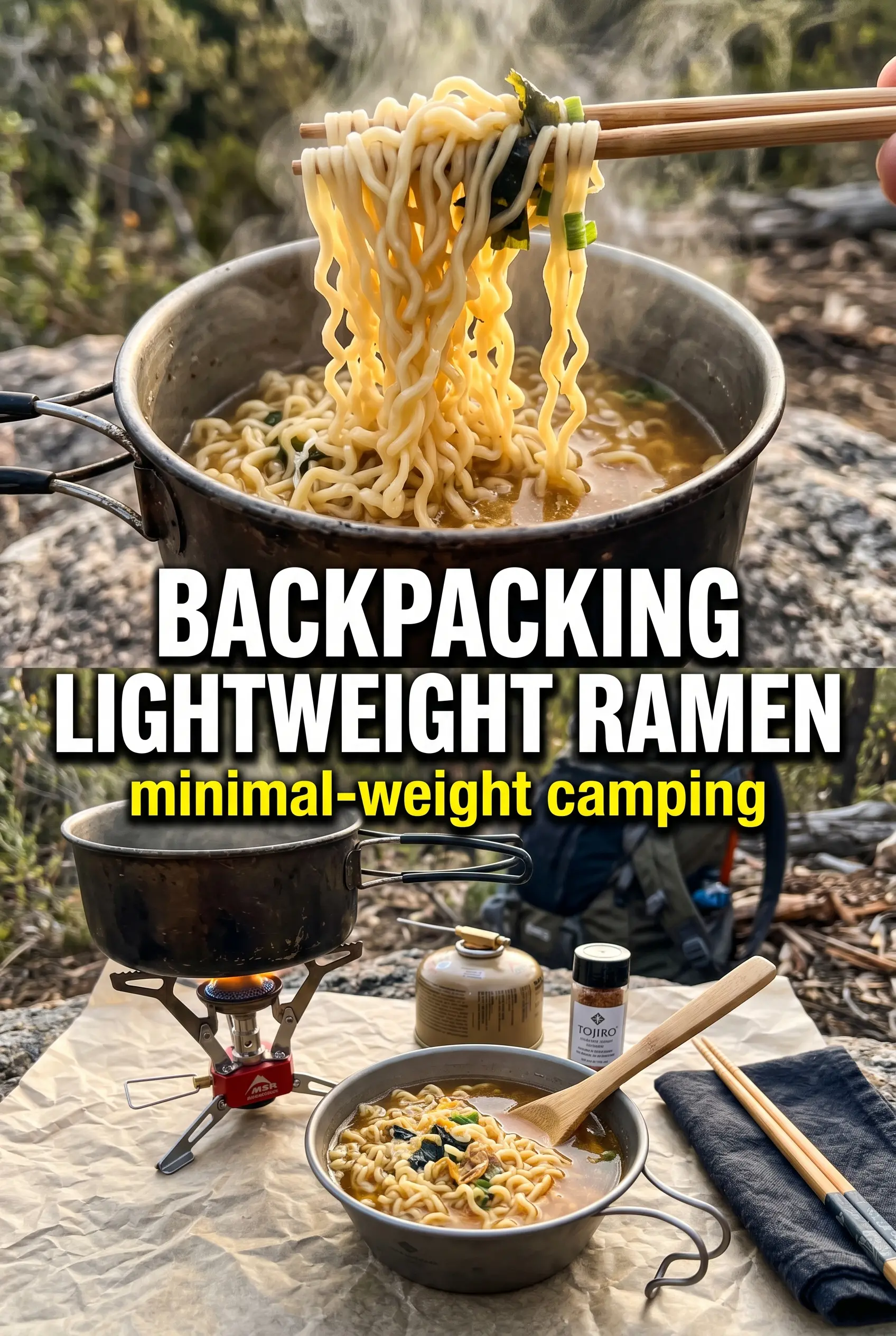
Ramen While Camping
Ingredients
Equipment
Method
- Bring 6 cups water to a rolling boil in a pot over the campfire, stirring occasionally so it heats evenly. You should see continuous bubbling across the surface before adding anything.
- Add 4 packages instant ramen noodles (reserve seasoning packets) and 1 cup frozen mixed vegetables to the boiling water. Continue campfire boil until the noodles are softened, about 3 minutes, with active bubbling around the noodles.
- Cook for an additional 3-4 minutes after adding the noodles and vegetables, until the noodles are tender. Keep the pot at a steady boil so the vegetables heat through.
- Crack 4 eggs directly into the pot after the first 3 minutes. Let them poach in the simmering boil until set around the edges, about 2-4 minutes, with whites turning opaque.
- Stir in the reserved ramen seasoning packets and combine everything until the broth is evenly seasoned. Aim for a hot, steaming broth with no dry seasoning pockets.
- Divide the ramen into bowls and top each serving with sliced green onions. Drizzle soy sauce to taste and add hot sauce if using, then serve immediately while steaming.