Hobo dinner foil packets deliver the kind of no-fuss, all-in-one meal that makes a campfire feel organized instead of chaotic. The beef stays juicy, the potatoes turn tender, and the carrots and onions soften into the buttery drippings from the meat. Everything cooks together in its own sealed little pocket, which means less cleanup and a lot more of those good browned, savory juices staying right where you want them.
The trick is slicing the potatoes thin enough to cook in the same window as the beef, then layering the vegetables under the patty so the juices drip down and season everything below. Heavy-duty foil matters here because flimsy foil tears when the packets get flipped or moved over the grate. A little butter on top helps carry the seasoning and keeps the vegetables from tasting flat.
Below, I’ll walk through the parts that matter most: how to keep the packets sealed, how to tell when the potatoes are tender, and the best swaps if you’re cooking this in the oven instead of over a fire.
The potatoes came out tender without turning mushy, and the butter in the packet made the beef and vegetables taste like they’d been cooking in their own gravy.
Save these hobo dinner foil packets for a campfire meal with tender potatoes, buttery vegetables, and juicy beef.
The Reason Foil Packets Stay Juicy Instead of Drying Out
Foil packet dinners can go dry fast when the meat sits on the hot side of the packet and the vegetables never get enough moisture to soften properly. This version avoids that by letting the vegetables sit under the beef, where they catch the fat and butter as everything cooks. The result is more steam, better seasoning, and fewer tough edges on the potatoes.
Thin patties matter here. A thick burger-shaped mound takes too long to cook through in the center, and by the time it’s safe, the vegetables below are uneven. Flattening the beef into a thinner patty keeps the cooking time aligned across the whole packet, which is what makes this work over a campfire.
- Heavy-duty foil — regular foil can tear when the packets are turned. Use the heavy stuff if you want the seal to hold and the juices to stay inside.
- Potatoes sliced evenly — thin, even slices cook at the same speed. If some are thick and some are thin, you’ll end up with a mixed bag of soft and firm pieces.
- Butter — this isn’t just for richness. It melts into the vegetables and helps carry the garlic powder and pepper through the whole packet.
- Ground beef — an 80/20 blend gives you enough fat for flavor without flooding the packet. Leaner beef works, but the vegetables will taste a little less rich.
What Each Layer Is Doing Inside the Packet
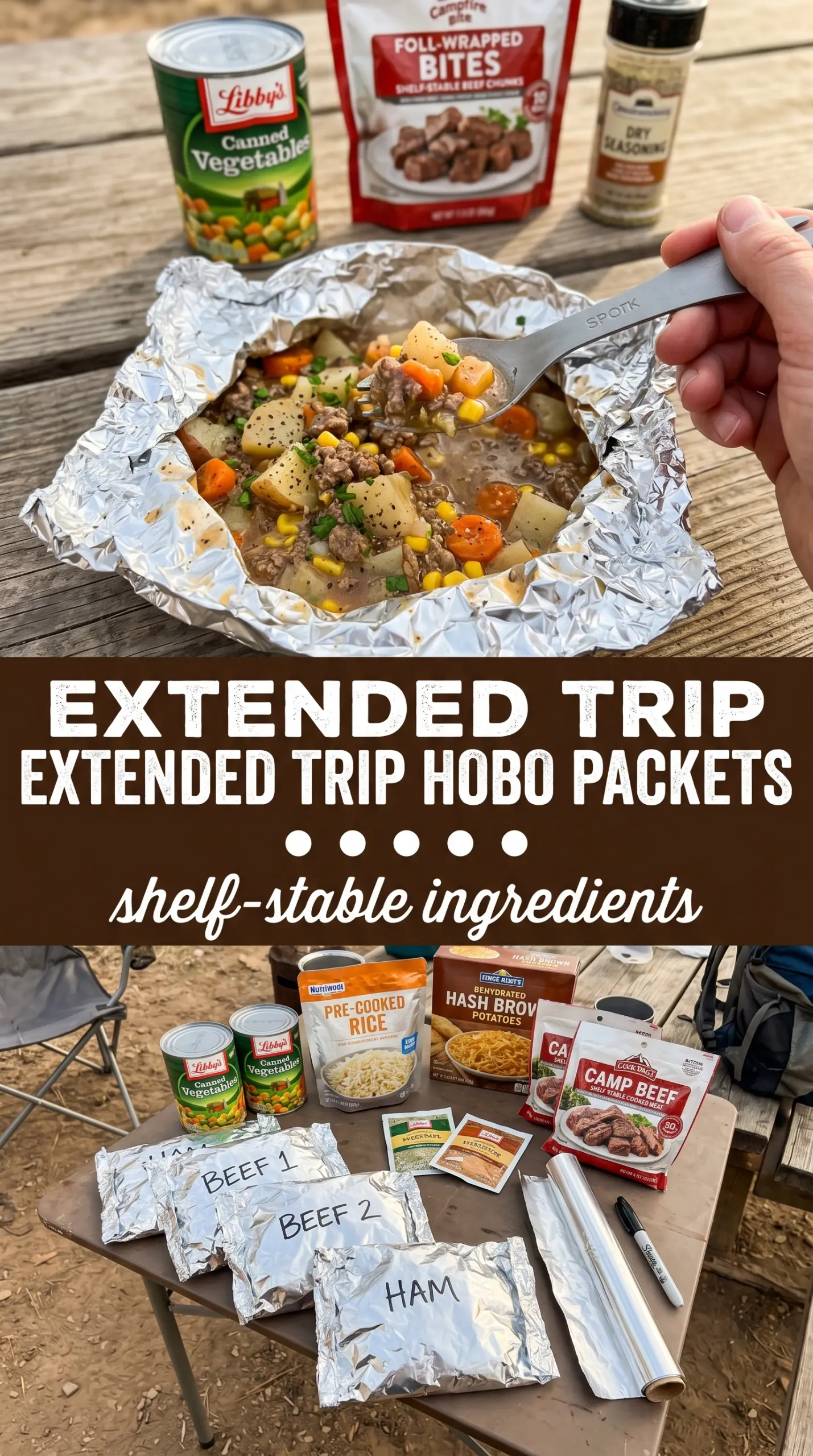
- Ground beef — shaping it into thin patties helps it cook evenly and keeps it from crumbling into the vegetables too soon. If you pack it too tightly, it turns dense instead of tender.
- Potatoes — these need the longest cook time, so they go at the bottom where they catch the heat and the drippings. Russets or Yukon Golds both work; just keep the slices about the same thickness.
- Carrots — they add sweetness and hold their shape better than softer vegetables. Slice them thin enough to soften in the same 25 to 30 minute window.
- Onion — onion turns sweet and soft as it steams inside the sealed packet. A yellow onion gives the most balanced flavor, but white onion works if that’s what you’ve got.
How to Build the Packets So They Cook Evenly
Shaping the Beef First
Divide the beef into four even portions and press each one into a thin patty. Don’t make them much wider than your vegetable layer or the edges will overcook before the center is done. A thinner patty also lets the juices run down through the vegetables instead of pooling on top.
Stacking the Vegetables in the Right Order
Lay the potatoes down first, then carrots, then onions, then the beef patty on top. That order puts the slowest-cooking vegetables closest to the heat and gives the onions a chance to perfume the whole packet as they steam. If you reverse the layers, the beef can shield the vegetables and leave the potatoes underdone.
Sealing and Cooking Without Leaks
Fold the foil over the filling and crimp the edges tightly so the packet stays sealed when it’s flipped. Leave a little room inside for steam, but don’t make the packet loose or the juices will escape. Cook over medium heat for 25 to 30 minutes, turning once halfway through, then open carefully because the steam punches out fast the moment you break the seal.
Checking for Doneness at the End
Open one packet and check that the beef is cooked through and the potatoes slide easily with a fork. If the potatoes still feel firm, fold the packet back up and give it a few more minutes over the heat. Let the finished packets rest for 5 minutes before serving so the juices settle instead of running all over the plate.
How to Adapt These Foil Packets for the Oven, the Grill, or a Different Diet
Oven-Baked Foil Packets
Bake the sealed packets on a sheet pan at 400°F for about 35 to 40 minutes. The oven gives you more even heat than a campfire, so the potatoes tend to cook a little more predictably. Use the same doneness check before serving, especially if your potato slices are on the thick side.
Grill Version With a Little Char
Cook the packets over medium grill heat and rotate them halfway through so the bottom doesn’t scorch. The grill adds a smoky edge and a little more browning on the beef, but the foil still does the real work of trapping steam. Keep the heat moderate; too much direct flame burns the outside before the vegetables soften.
Dairy-Free Version
Swap the butter for olive oil or dairy-free butter if needed. You’ll lose a little of that classic campfire richness, but the packets still cook up tender and well seasoned. If you use oil, drizzle it over the vegetables before sealing so it coats them evenly.
Storage and Reheating
- Refrigerator: Store leftovers in an airtight container for up to 3 days. The potatoes soften a little more after chilling, but the flavor holds up well.
- Freezer: These freeze okay, though the potatoes will be softer after thawing. Wrap tightly and freeze for up to 2 months for best texture.
- Reheating: Reheat in a 350°F oven, covered with foil, until hot. The microwave works in a pinch, but it can make the beef rubbery and the vegetables uneven, so use short bursts if that’s your only option.
Answers to the Questions Worth Asking
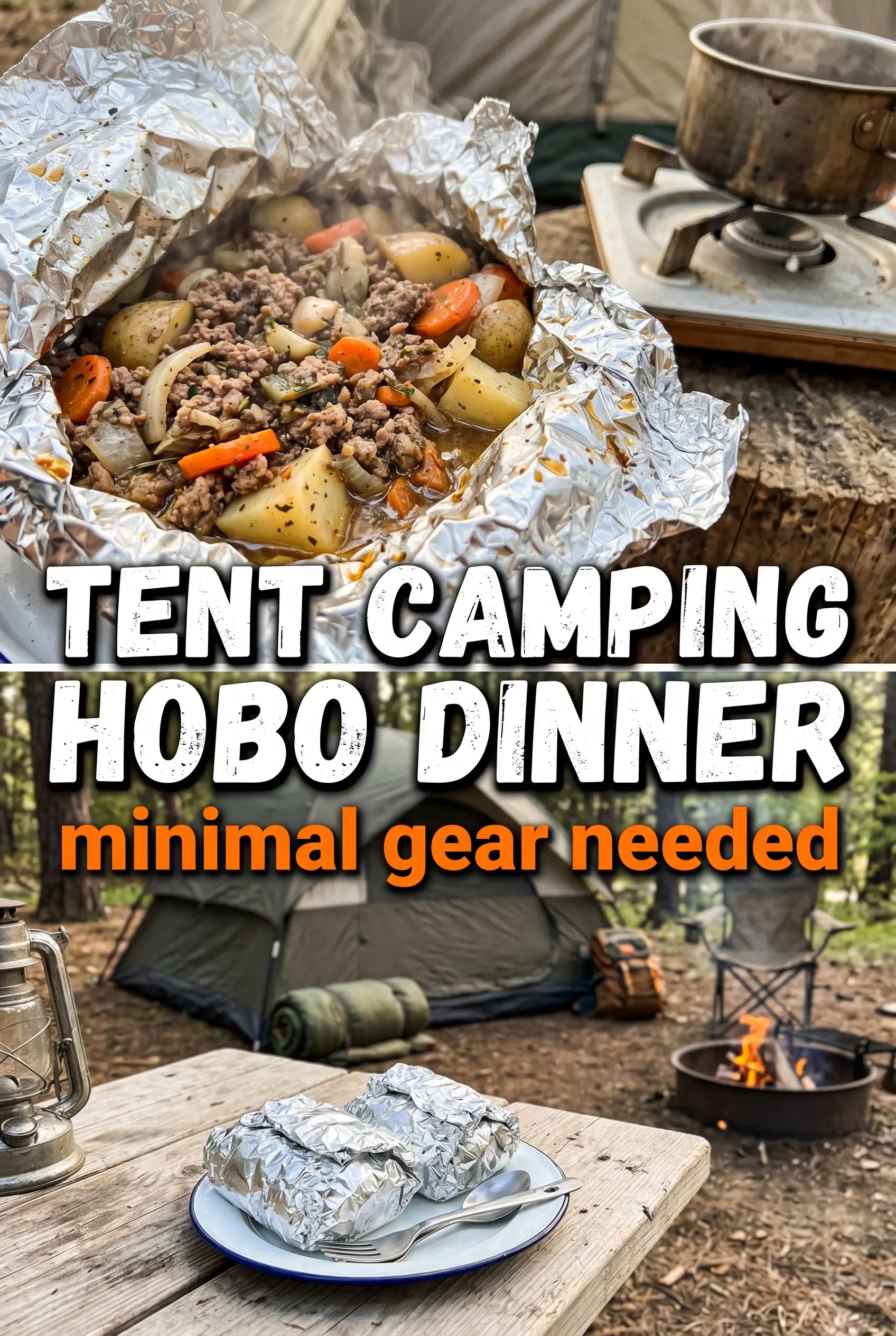
Hobo Dinner Foil Packets
Ingredients
Equipment
Method
- Divide the ground beef into 4 portions and shape each into a thin patty so it cooks through evenly.
- Slice the potatoes, carrots, and onion thinly for faster steam-cooking inside the foil packets.
- Layer potatoes, carrots, and onions on each heavy-duty aluminum foil sheet in an even base.
- Place a ground beef patty on top of the vegetables on each foil sheet.
- Season each packet with salt, black pepper, and garlic powder, then top with 1 tablespoon butter per packet.
- Fold foil into sealed packets and crimp edges tightly to prevent steam from escaping.
- Place the packets on a campfire grate over medium heat for 25-30 minutes, flipping halfway through for even cooking.
- Carefully open one packet (watch for steam) and check that the beef is cooked through and the vegetables are tender.
- Let the packets cool for 5 minutes before serving so the juices settle and it’s easier to handle.
- Serve directly from the opened foil packets for the classic campfire meal presentation.