Warm German potato salad lands with a tangy bacon dressing that soaks into the potatoes instead of sitting on top of them. The result is tender slices with crisp edges in a savory-sour glaze, plus smoky bacon and soft onion in every bite. It tastes like the kind of side dish people keep circling back to while the rest of the meal is still on the table.
What makes this version work is timing. The potatoes need to be cooked until just tender, then dressed while they’re still hot enough to absorb the vinegar mixture without falling apart. Bacon drippings do the heavy lifting here, so you get depth without needing a long ingredient list. A little sugar rounds out the vinegar, and Dijon helps the dressing cling instead of pooling at the bottom of the bowl.
Below, I’ll show you how to keep the potatoes intact, when to add the dressing, and why this salad is best served warm. There’s also a few smart swaps if you want to adjust the bacon, mustard, or seasoning without losing what makes it traditional.
The potatoes held their shape, and the warm vinegar dressing soaked in beautifully without turning mushy. I used the caraway and it gave it that classic deli-style taste I was hoping for.
Warm German potato salad with bacon and tangy vinegar dressing is the side dish worth pinning for bratwurst nights and holiday tables.
The Trick to Keeping the Potatoes Intact in Hot Bacon Dressing
The biggest mistake with German potato salad is treating it like a chilled mayo salad. Once the potatoes are cooked through, they’re at their most fragile, and a rough hand turns them into mash before the dressing even hits the bowl. Slice them before boiling so they cook evenly, then drain them well and toss gently while they’re still warm. That warm surface is what helps the vinegar dressing absorb instead of sliding off.
Yukon gold potatoes are the right choice here because they stay creamy without going chalky. Waxy red potatoes also work if that’s what you have, but russets are too soft for this style and tend to break apart under the dressing. The goal is tender slices with enough structure to hold bacon, onions, and all that tangy broth mixture.
What Each Ingredient Is Actually Doing in This Salad
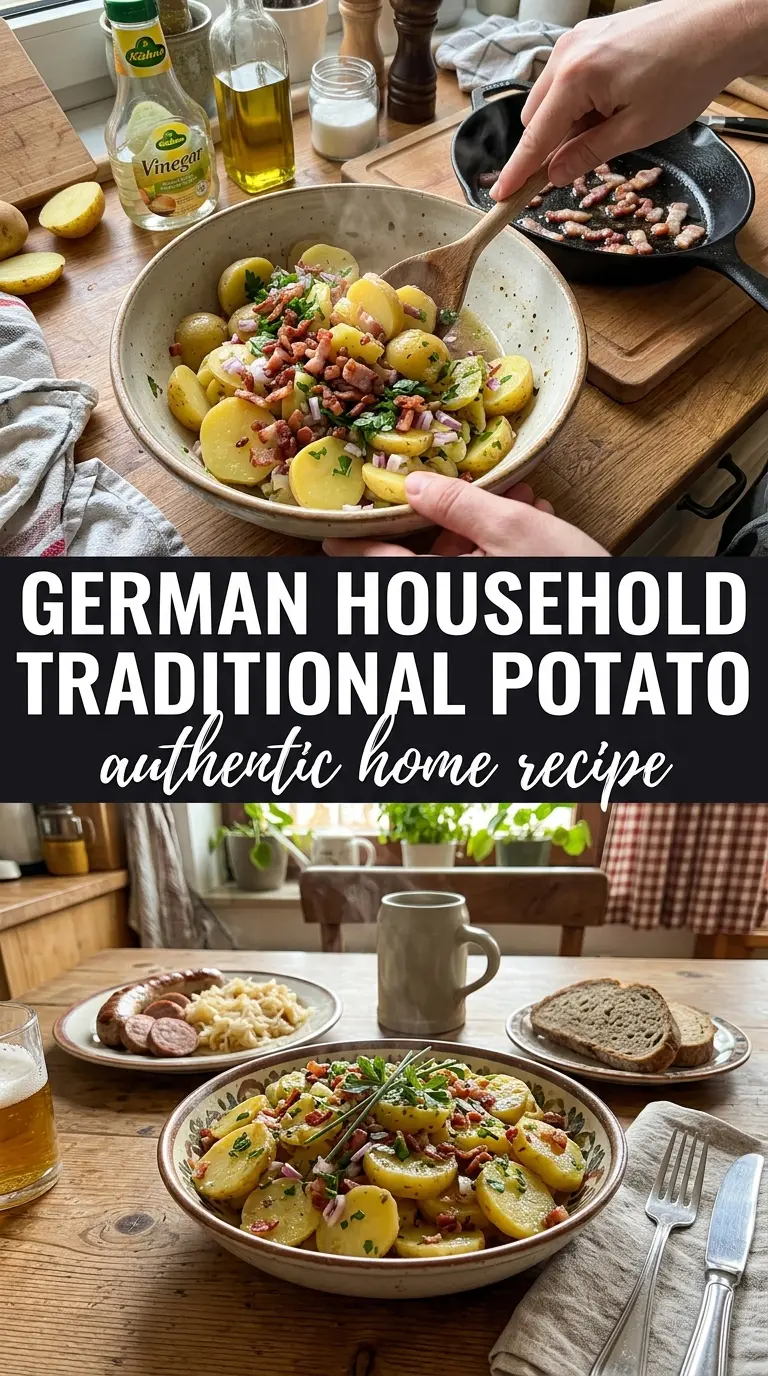
- Yukon gold potatoes — These give you a creamy bite that still holds its shape. Slice them before boiling so the centers cook at the same pace as the edges, and don’t overboil them or they’ll tear when you toss the salad.
- Bacon and drippings — This is the backbone of the dressing. The bacon brings salt and smoke, and the drippings carry that flavor straight into the onions and vinegar base. If you don’t have quite enough drippings, top it up with a teaspoon or two of neutral oil, but don’t skip the rendered fat entirely.
- White wine vinegar — This gives the salad its sharp, clean tang. Apple cider vinegar works in a pinch, but it tastes a little rounder and sweeter. If you use it, reduce the sugar slightly and taste before serving.
- Dijon mustard — Dijon helps emulsify the hot dressing so it clings to the potatoes instead of separating. Yellow mustard will work, but the flavor is harsher and less balanced.
- Caraway seeds — Optional, but they add that unmistakable traditional note. If you want the flavor without the full crunch, lightly crush them before adding.
- Parsley — Add it at the end so it stays fresh and green. Stirring it in too early dulls both the color and the clean finish.
Building the Dressing While the Potatoes Are Still Warm
Cooking the Potatoes Just to Tender
Start the potatoes in salted water and cook them until a knife slides in with little resistance, about 15 minutes depending on thickness. They should be tender all the way through but not splitting at the edges. Drain them well in a colander so extra water doesn’t dilute the dressing, then set them aside while you work on the bacon.
Rendering the Bacon and Softening the Onion
Cook the bacon until crisp, then pull it out and leave about 3 tablespoons of drippings in the pan. Add the onion and cook it until soft and translucent, scraping up the browned bits as it cooks. If the onion starts to brown too quickly, lower the heat; you want sweetness and softness here, not caramelization.
Bringing the Vinegar Dressing Together
Stir in the broth, vinegar, sugar, mustard, and caraway seeds, then bring the mixture just to a simmer. The sugar should disappear and the dressing should smell sharp, smoky, and a little sweet. Don’t boil it hard or the vinegar gets harsh and the liquid reduces too fast before it has a chance to coat the potatoes.
Tossing and Serving at the Right Moment
Crumble the bacon, add it to the potatoes, then pour the hot dressing over everything and toss gently. Use a wide spoon or spatula and turn the potatoes over from the bottom so they stay in slices instead of breaking apart. Finish with parsley, then season with salt and pepper while the salad is still warm, because cold potatoes mute salt and vinegar once they cool.
How to Adjust This Salad Without Losing the Classic Character
Make It Without Caraway
Leave the caraway out completely if you don’t love that rye-like note. The salad still tastes traditional because the bacon, onion, and vinegar dressing carry the flavor. You lose a little old-world complexity, but the dish stays balanced and familiar.
Use Apple Cider Vinegar for a Softer Finish
Apple cider vinegar gives the dressing a mellower edge and a hint of fruitiness. It works well if you want the salad a little less sharp, but the flavor won’t be as clean and classic as white wine vinegar. Taste before serving, since you may need a touch more salt to bring it back into focus.
Make It Dairy-Free and Gluten-Free Without Changes
This recipe is naturally dairy-free and gluten-free as written, which is part of why it shows up so often at cookouts and potlucks. Just double-check your broth and mustard labels if you’re cooking for someone with strict allergies. The rest of the ingredients do the job without any special substitutions.
Turn It Into a Bigger Crowd Side
You can scale this up easily, but use a very wide bowl so the hot dressing can coat the potatoes instead of steaming in a pile. If you double it, cook the onions and dressing in a larger skillet so the vinegar can simmer evenly. The flavor holds up well, and the salad still tastes best warm.
Storage and Reheating
- Refrigerator: Store covered for up to 4 days. The potatoes will soak up more dressing as they sit, so the salad gets a little more flavorful but less glossy.
- Freezer: I don’t recommend freezing this salad. Potatoes turn grainy after thawing, and the dressing loses the fresh sharpness that makes the dish work.
- Reheating: Warm it gently in a skillet over low heat with a splash of broth or water. Microwaving tends to dry the edges and make the potatoes unevenly hot, which can turn them crumbly.
Answers to the Questions Worth Asking
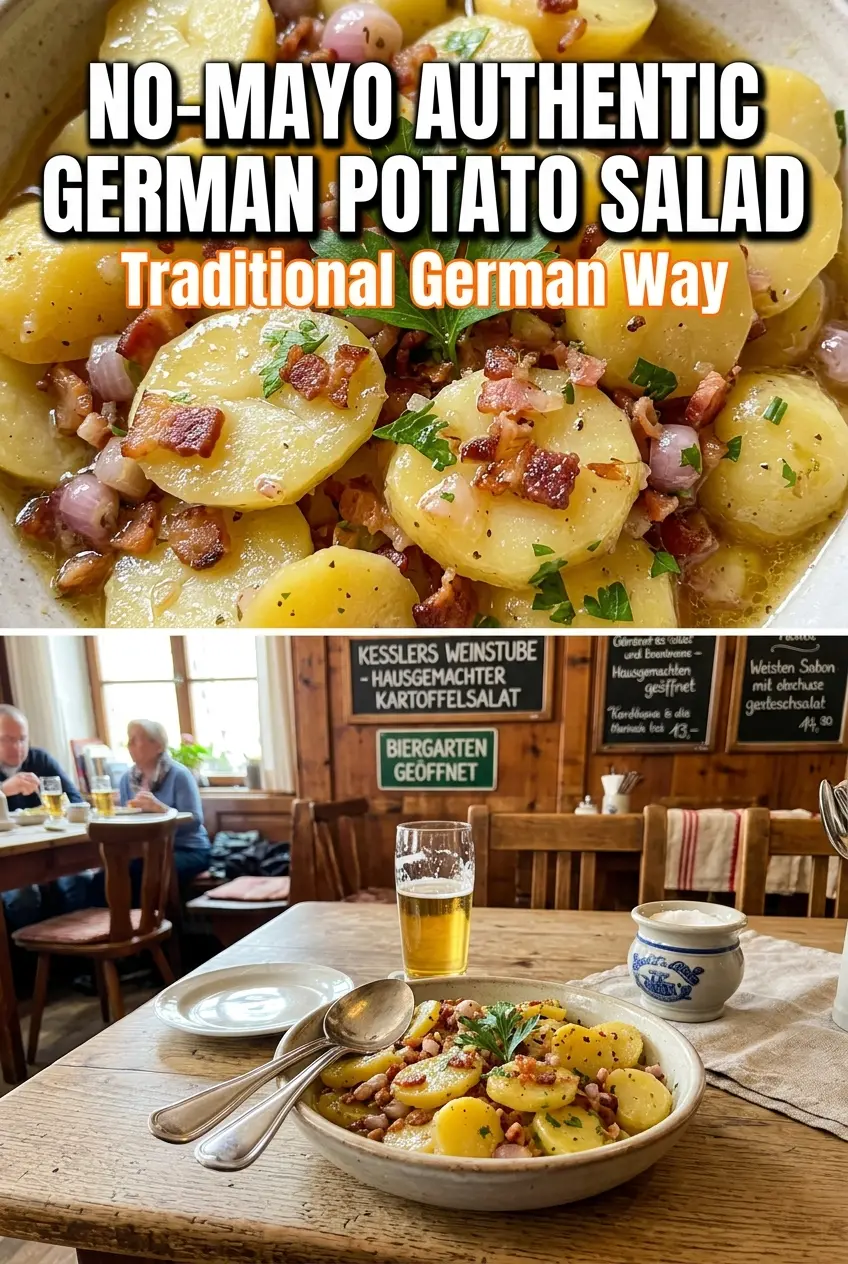
Authentic German Potato Salad
Ingredients
Equipment
Method
- Boil the sliced Yukon gold potatoes in salted water until tender, about 15 minutes. Drain well and let them steam off any excess moisture.
- Cook the bacon in a cast iron skillet until crispy. Reserve 3 tablespoons drippings in the skillet.
- Sauté the diced onion in the reserved bacon drippings until soft. This should take a few minutes over medium heat with occasional stirring.
- Add chicken broth, white wine vinegar, sugar, Dijon mustard, and caraway seeds to the skillet with the onions. Bring to a simmer over medium heat until the sugar dissolves and the mixture looks slightly thickened.
- Crumble the crispy bacon and add it to the potatoes. Toss to distribute the bacon evenly.
- Pour the hot dressing over the potatoes and bacon. Toss gently so the potatoes stay intact and glisten.
- Stir in the chopped fresh parsley and season with salt and pepper. Taste and adjust seasoning before serving.
- Serve the German potato salad warm. It’s best right after tossing while the potatoes are glossy and the dressing is still hot.