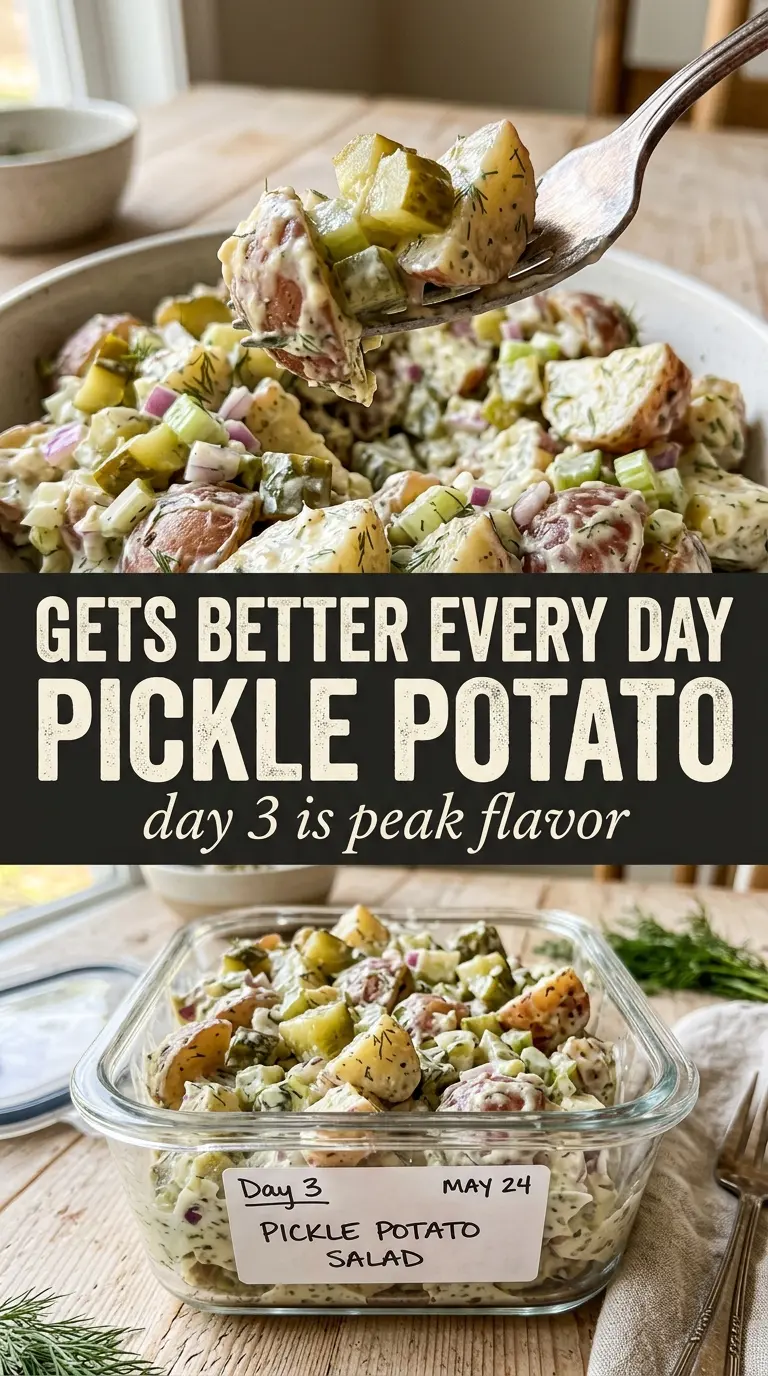
Tangy potato salad hits differently when the dressing carries real pickle juice and the potatoes stay firm enough to hold their shape. This version tastes bright instead of heavy, with chopped dill pickles in every bite and a creamy dressing that clings to the cubes instead of sliding off. It’s the kind of side dish that disappears fast because it wakes up everything else on the plate.
The key is balancing texture and acid. Red potatoes give you a waxy, sturdy base, which matters here because soft, fluffy potatoes turn mushy once they meet mayonnaise and pickle juice. The pickle juice does more than add flavor; it loosens the dressing just enough so it spreads evenly, then the Dijon sharpens it and keeps the whole bowl from tasting flat. Fresh dill at the end makes the pickle flavor taste fresh instead of one-note.
Below, I’ve included the one thing that keeps this salad from getting watery after chilling, plus a few easy swaps if you want to make it a little lighter or a little more punchy.
The pickle juice dressing soaked in after chilling and the potatoes stayed firm instead of getting soggy. I brought it to a cookout and there wasn’t a spoonful left.
Like this tangy dill pickle potato salad? Save it to Pinterest for your next cookout, potluck, or picnic when you want a creamy side with a sharp pickle bite.
The Trick to Keeping Dill Pickle Potato Salad Creamy, Not Watery
Potato salad goes wrong when the potatoes are either too hot or too soft. Hot potatoes drink in dressing unevenly and can make mayonnaise loosen up in a greasy way, while overcooked potatoes break down as soon as you toss them. Red potatoes are the fix here because they stay intact after boiling, and cooling them before mixing gives you a cleaner, thicker salad.
The other trap is adding too much pickle juice at once. You want enough to sharpen the dressing, not enough to drown the bowl. The dressing should look loose when you mix it, then thicken as it chills and the potatoes absorb some of the flavor. If the salad tastes a little bold right after mixing, that’s a good sign; it mellows into the right balance after the rest in the fridge.
What the Pickle Juice, Mayo, and Dill Are Each Doing Here
The ingredient list is short, which means each part has a job to do. The salad works because none of the flavors are fighting for attention.
- Red potatoes — These hold their shape better than russets, so the cubes stay defined after chilling and tossing. If you only have Yukon Golds, they work well too; just stop boiling as soon as they’re tender so they don’t collapse.
- Dill pickles and pickle juice — The pickles bring the crunch and the juice brings the tang. Use a pickle brand you already like to eat straight from the jar, because that flavor is the backbone of the whole salad.
- Mayonnaise — Mayo gives the dressing its creamy body, but it’s the pickle juice that keeps it from tasting heavy. If you want a lighter version, swap in half Greek yogurt, but expect a sharper, less silky result.
- Dijon mustard — Dijon adds bite and helps the dressing taste structured instead of flat. Yellow mustard works in a pinch, but it’s softer and a little sweeter.
- Fresh dill — This is what makes the pickle flavor taste fresh and herbaceous instead of just salty. Dried dill can stand in, but use about one-third as much and let it sit longer in the dressing so it has time to bloom.
Building the Bowl So Every Bite Tastes Like Pickle
Boil the Potatoes Until Just Tender
Start the potatoes in cold salted water and bring them up to a boil so the cubes cook evenly from the outside in. Pull them the moment a knife slides in with little resistance; if they’re falling apart in the pot, they’re already too far gone for salad. Drain them well and spread them out for a few minutes so surface moisture evaporates instead of thinning the dressing.
Mix the Crunch Before the Dressing Goes In
Stir the cooled potatoes with the chopped pickles, celery, and onion before adding the dressing. That keeps the ingredients distributed evenly, so you don’t end up with one bowl of plain potatoes and another with all the pickles hiding at the bottom. Finely diced onion matters here because big chunks can overpower the salad after it chills.
Whisk the Dressing Until It Tastes a Little Sharp
Combine the mayonnaise, pickle juice, Dijon, salt, and pepper until smooth. The dressing should taste slightly stronger than you want the finished salad to taste, because the potatoes will mellow it as they sit. If it tastes flat now, it’ll taste flat later, so this is the time to correct it.
Chill Long Enough for the Flavor to Settle
Fold the dressing into the potatoes gently so the cubes stay intact, then add the dill last. Refrigerate for at least 2 hours before serving so the pickle flavor can move through the potatoes and the dressing can thicken slightly. Serve it cold or just barely cool; warm potato salad tastes muddy and the mayo loses its clean finish.
How to Adjust This Potato Salad Without Losing the Tang
Make It Lighter With Half Yogurt
Swap half the mayonnaise for plain Greek yogurt if you want a tangier, less rich salad. The dressing will be a little looser and the finish less plush, but the pickle juice and Dijon keep it from turning sharp in a bad way. This works best if you chill it long enough for the yogurt to settle into the potatoes.
Make It Dairy-Free Without Changing the Flavor Profile
Use a dairy-free mayonnaise and keep the rest of the dressing the same. Since this salad doesn’t rely on cheese or sour cream, the swap is clean and the texture stays close to the original. Check that your mayo is well-seasoned; some egg-free versions need an extra pinch of salt to taste balanced.
Make It More Pickle-Forward
Add a few spoonfuls of extra chopped pickles and another tablespoon of pickle juice if you want a louder bite. The tradeoff is a looser dressing, so add the extra juice a little at a time. This version tastes best when the pickles are chopped small enough that they spread through every forkful.
Storage and Reheating
- Refrigerator: Keeps for 3 to 4 days in a covered container. The potatoes soften a little as it sits, but the flavor gets better on day two.
- Freezer: I don’t recommend freezing this salad. Mayo-based dressings break and the potatoes turn grainy after thawing.
- Reheating: Don’t reheat it; serve it cold. If it has been in the fridge overnight and tastes muted, stir in a spoonful of pickle juice and a pinch of salt right before serving to wake it back up.
Answers to the Questions Worth Asking

Dill Pickle Potato Salad
Ingredients
Equipment
Method
- Bring a pot of water to a boil in a Dutch oven, then add the red potatoes, cubed and cook until tender, about 10 to 15 minutes. Visual cue: a fork slides in with little resistance.
- Drain the potatoes and spread them on a sheet pan to cool. Visual cue: the surface looks dry and the cubes are no longer steaming.
- Add the cooled potatoes to a mixing bowl with the dill pickles, chopped, celery, diced, and red onion, finely diced. Visual cue: pickle and onion bits are evenly distributed among the potatoes.
- In a bowl, whisk together mayonnaise, dill pickle juice, Dijon mustard, salt, and pepper until smooth and creamy. Visual cue: the mixture looks uniform with no mustard streaks.
- Pour the dressing over the potato mixture and toss well until every piece is coated. Visual cue: the potatoes look glossy and evenly tinted.
- Fold in the fresh dill, chopped and toss gently to combine. Visual cue: you see green flecks throughout the salad.
- Refrigerate the potato salad for 2 hours before serving. Visual cue: it thickens slightly and tastes fully blended after chilling.