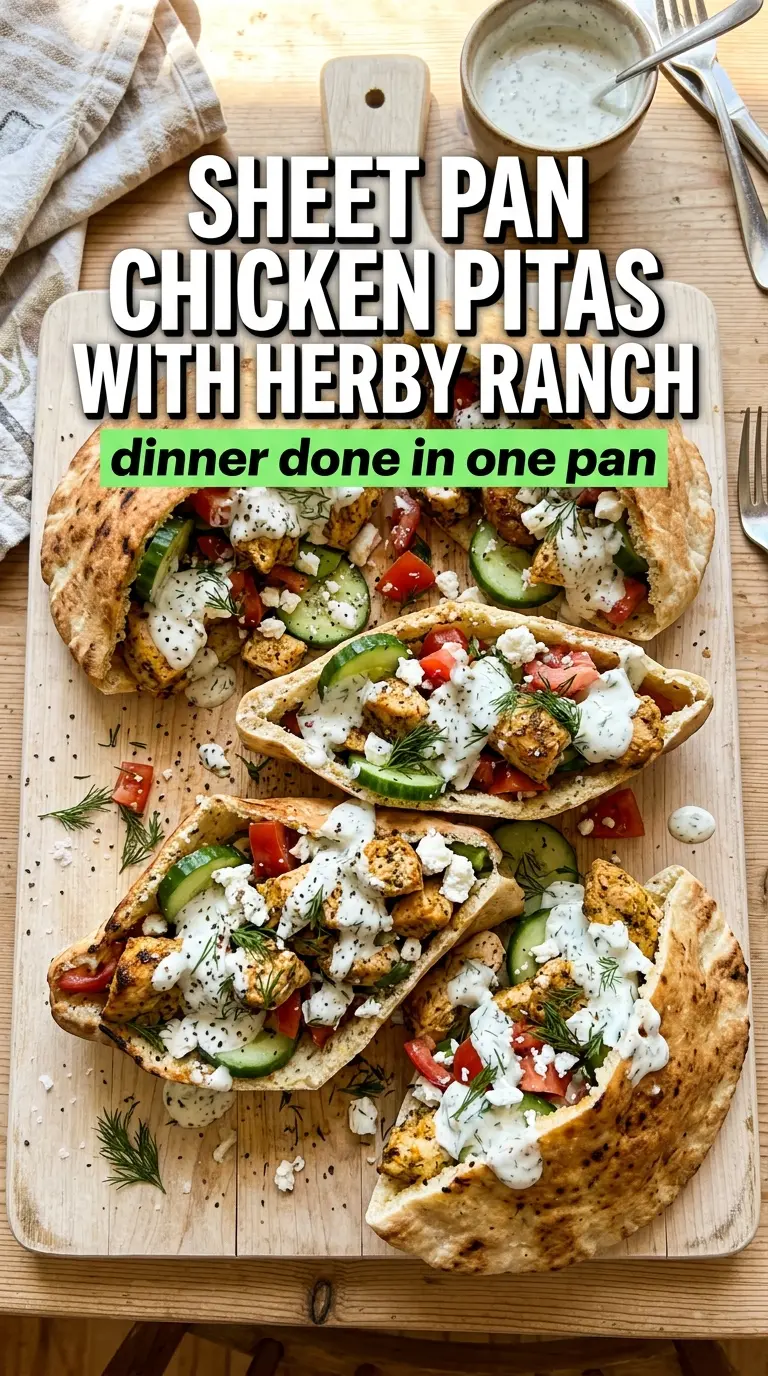
Juicy roasted chicken tucked into warm pitas with crisp lettuce, tomatoes, cucumber, and a cool herby ranch is the kind of dinner that disappears fast. The chicken gets enough heat in the oven to pick up golden edges without drying out, and the ranch does more than dress the pita — it ties the whole thing together with fresh dill, chives, parsley, and garlic. It eats like a sandwich, but with all the speed and ease of a sheet pan meal.
The key is using chicken thighs instead of breasts. Thighs stay tender through a hot roast, and they slice cleanly after a short rest. The ranch is worth making from scratch here, too, because the herbs need a creamy base that can carry them. A thin bottled dressing just won’t give you the same bright, cool contrast against the warm chicken.
Below, I’ve included the little details that keep the chicken juicy, the pitas soft, and the ranch bold enough to hold its own. If you’ve ever ended up with soggy pita or dry chicken, the process here fixes both.
The chicken stayed juicy and the herby ranch was thick enough to coat everything without making the pitas soggy. I made it on a Tuesday and my husband asked for it again two nights later.
Save these sheet pan chicken pitas for a fast dinner with juicy roasted chicken and bright herby ranch.
The Part That Keeps the Pitas from Going Soft
The mistake with pita sandwiches is building them like a sub and letting the fillings sit too long before serving. Warm pita has a little structure, but once it meets juicy chicken, tomatoes, and dressing, it starts softening fast. That’s not a problem if you treat the pita like the last thing you assemble, not the first.
The chicken also needs a short rest before slicing. Cut it too early and the juices run straight onto the pan instead of staying in the meat. Letting it sit for five minutes gives you cleaner slices and keeps the pita filling meaty instead of wet.
Roasting at 425°F matters here. You want enough heat to brown the chicken edges in the time it takes the center to cook through. Lower heat just dries the meat before the surface ever gets some color.
What Each Ingredient Is Actually Doing in This Dish
- Chicken thighs — These stay tender under high heat and give you more forgiveness than breasts. If you swap in chicken breast, slice it into cutlets or smaller strips so it cooks fast enough to stay juicy.
- Olive oil — This helps the spices cling and encourages browning on the sheet pan. You don’t need anything expensive here, just a good everyday oil.
- Garlic powder and paprika — Garlic powder seasons the chicken evenly, while paprika adds color and a gentle warmth that makes the meat look as good as it tastes. Smoked paprika works if you want a deeper, slightly smoky finish.
- Pita breads — Warm pita is softer and more flexible, which matters when you stuff it generously. If your pitas are thick or stale, wrap them in foil for the last couple minutes in the oven so they steam back to life.
- Mayonnaise and sour cream — This combo gives the ranch body and tang. Mayo alone can taste flat; sour cream loosens it just enough and makes the dressing feel fresh instead of heavy.
- Fresh dill, chives, and parsley — These are what make the ranch taste alive. Dried herbs won’t give the same sharp, green finish, so use fresh if you can, even if you need to trim the amounts a little.
- Buttermilk or milk — Buttermilk gives the best ranch flavor because it brings gentle tang. Milk works in a pinch, but add it slowly so the dressing stays thick enough to drizzle, not pour.
Roasting the Chicken, Building the Pita, and Finishing Without a Mess
Seasoning the Chicken Evenly
Coat the chicken thighs with olive oil, garlic powder, paprika, salt, and pepper until every piece looks lightly lacquered. If the seasoning clumps in one spot, the chicken will brown unevenly and taste patchy, so toss it with your hands or tongs until it’s distributed all over. Spread the pieces on the pan with space around them. Crowding traps steam, and steam is the enemy of those browned edges.
Roasting Until Golden and Juicy
Slide the pan into a fully preheated 425°F oven and roast for 22 to 25 minutes. You’re looking for golden spots on the outside and juices that run clear when a piece is sliced at the thickest point. If the chicken is pale and rubbery, it needs more heat; if it’s dark and dry at the edges, the pan was too crowded or the oven ran hot. Let it rest for five minutes before slicing so the juices stay in the meat.
Mixing the Herby Ranch
Stir the mayonnaise, sour cream, herbs, garlic, and buttermilk together until the dressing looks smooth and speckled with green. The garlic should be sharp but not harsh, and the dressing should cling to a spoon without being stiff. If it turns loose, it’s usually because too much milk went in at once. Add the liquid gradually and chill it until serving so the herbs stay bright.
Assembling While Everything Is Hot and Crisp
Warm the pitas during the last couple minutes of chicken cooking so they’re pliable when you fill them. Slice the chicken, then layer in lettuce, tomatoes, cucumber, and red onion before adding the ranch. Dress the pita right before serving or the vegetables will start to soften and the bread will lose its spring. A generous drizzle is the point here — the ranch should run through the filling, not just sit on top.
How to Adapt These Pitas for Different Nights and Different Tastes
Dairy-Free Ranch Swap
Use a dairy-free mayo and unsweetened dairy-free yogurt in place of the sour cream, then thin it with a splash of unsweetened plant milk. You’ll lose a little of the classic ranch tang, but the herbs and garlic still carry the dressing well enough for a fresh, creamy finish.
Gluten-Free Serving Option
Serve the chicken and vegetables in gluten-free pita or over a bed of greens if your gluten-free bread tends to tear. The filling itself is naturally gluten-free, so the only thing that changes is the vehicle.
Make It a Chicken Pita Bowl
Skip the pita and pile everything into bowls over shredded lettuce or chopped romaine. This keeps the meal crisp longer and is the best route if you’re feeding people who want lower-carb dinners without giving up the herby ranch.
Make-Ahead Lunch Boxes
Pack the chicken, vegetables, and ranch separately, then warm the pita right before eating. This keeps the bread from turning damp and gives you the closest thing to a just-made pita at lunchtime.
Storage and Reheating
- Refrigerator: Store the chicken, vegetables, and ranch separately for up to 3 days. The chicken stays tender, but the vegetables will soften a bit once cut.
- Freezer: The cooked chicken freezes well for up to 2 months. Freeze it sliced or whole, then thaw in the fridge before reheating; don’t freeze the assembled pitas or the bread will turn soggy.
- Reheating: Warm the chicken in a skillet over medium-low heat or in a 325°F oven until just heated through. High heat dries the thighs out fast, so go gently and add the pita only at the end to soften it briefly.
Answers to the Questions Worth Asking

Sheet Pan Chicken Pitas with Herby Ranch
Ingredients
Equipment
Method
- Preheat the oven to 425°F and line a sheet pan with foil.
- Toss chicken thighs with olive oil, garlic powder, paprika, salt, and pepper, then roast for 22–25 minutes until cooked and golden.
- Remove chicken and rest for 5 minutes, then slice into strips.
- Blend mayonnaise, sour cream, fresh dill, fresh chives, fresh parsley, minced garlic, buttermilk or milk, and salt and pepper to taste in a bowl.
- Refrigerate herby ranch until ready to use.
- Warm the pitas in the oven for the last 2 minutes of chicken cooking.
- Load each pita with roasted chicken slices, shredded lettuce, cherry tomatoes, cucumber, and red onion.
- Drizzle generously with herby ranch and serve immediately, with herbs visible on top.