Pork chops in creamy white wine sauce hit that sweet spot between simple and special: a good hard sear on the outside, juicy meat inside, and a silky pan sauce that tastes like it took far more effort than it did. The wine cuts through the richness of the cream, the Dijon gives the sauce a quiet backbone, and the shallots melt into the pan so nothing feels heavy or muddy. It’s the kind of dinner that looks polished in a skillet and still lands on the table fast enough for a regular weeknight.
The key is building the sauce in the same pan you used for the chops. Those browned bits on the bottom are pure flavor, and the white wine loosens them into the sauce instead of leaving them stuck to the skillet. I also like bone-in chops here because they stay juicier through the sear and the short simmer at the end. Thin chops can work, but they cook faster and give you less room to pull off that deep golden crust.
Below, I’m walking through the exact point where the sauce turns from thin and sharp to glossy and balanced, plus the one detail that keeps the cream from tasting flat. If you’ve ever had pork chops turn dry or a pan sauce break, this version is built to avoid both.
The sauce reduced exactly the way you described and clung to the pork chops without getting greasy. I used thyme because that’s what I had, and the whole skillet tasted like something from a nice bistro.
Creamy white wine pork chops with a silky shallot sauce are worth keeping close for fast dinners that still feel elegant.
Why the Sauce Stays Silky Instead of Turning Grainy
The most common mistake with a cream sauce like this is rushing the heat. If the cream goes in while the pan is roaring, the sauce can tighten up, separate, or taste flat because the wine never had time to reduce. Here, the reduction comes first. That trims the sharp edge off the wine and leaves behind the flavor you actually want.
Another place people lose the sauce is when they skip the final butter swirl or add the pork back too early. Butter gives the sauce a softer finish and a little sheen. The chops only need a short return to the pan, just long enough to warm through and pick up some sauce without overcooking.
- Bone-in pork chops hold onto moisture better than thin boneless chops and give you more leeway during the sear.
- Dry white wine should taste crisp, not sweet. Sauvignon Blanc or Pinot Grigio works well here because the acidity keeps the cream from feeling heavy.
- Dijon mustard doesn’t make the sauce taste mustardy. It sharpens the cream and helps the pan sauce feel finished.
- Fresh tarragon brings that classic French-style note, but thyme is the best substitute if tarragon isn’t in your kitchen.
What Each Ingredient Is Actually Doing in This Dish
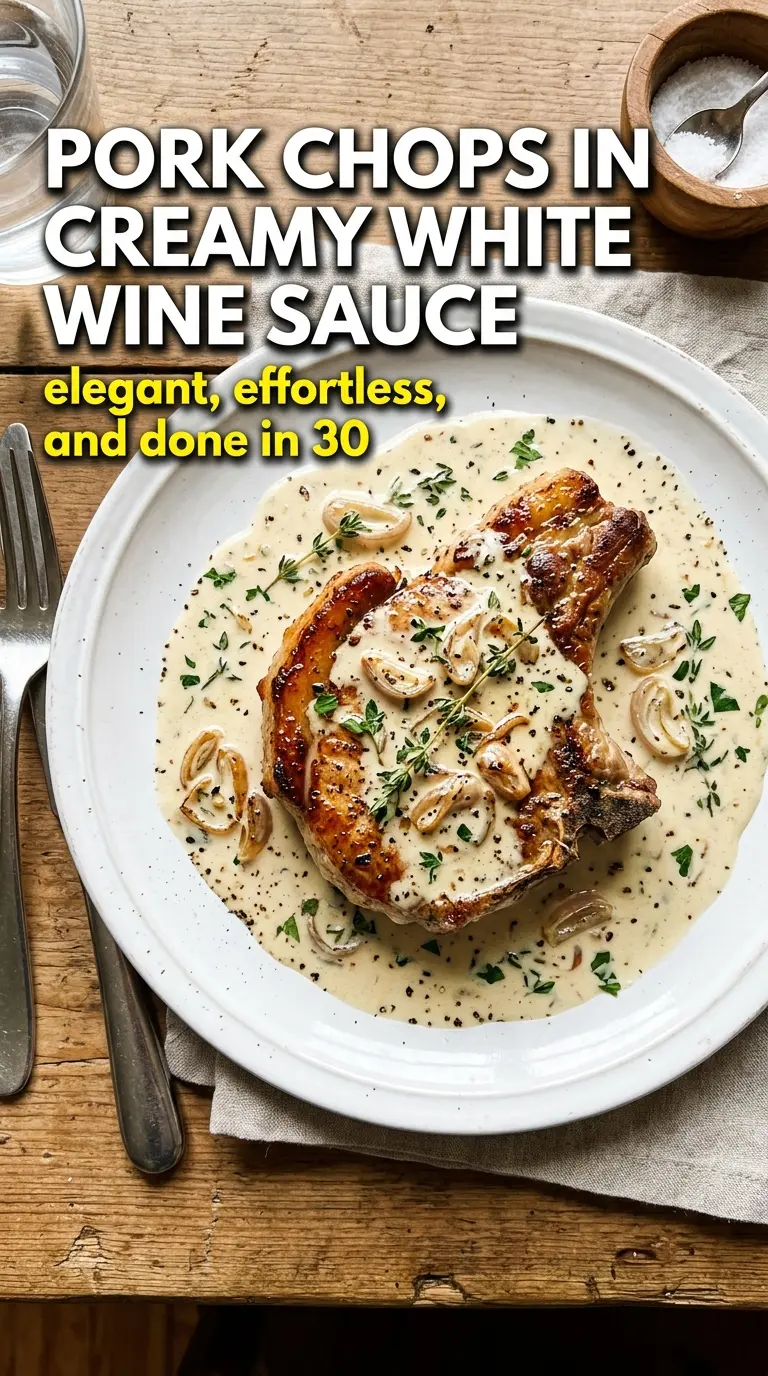
Salt and pepper do more than season the meat; they help the pork take on a better crust in the pan. Season it right before it hits the skillet so the surface stays dry enough to sear instead of steaming.
Shallots are worth using here because they melt into the sauce with a sweeter, softer onion note than regular onion. Garlic works in a supporting role, but it needs only a few seconds or it can turn bitter once the wine goes in.
Heavy cream is the body of the sauce, and this is not the place to swap in milk. Half-and-half can work in a pinch, but it won’t coat the spoon as well and it’s easier to break if you boil it hard. The butter at the end helps round everything out and gives the sauce a more polished finish.
Getting the Sear, Reduction, and Finish in the Right Order
Build the crust first
Season the pork chops well, then sear them in hot oil over medium-high heat until you get a deep golden crust, about 4 to 5 minutes per side. If the pan isn’t hot enough, the chops will sit there and release juice instead of browning. Don’t crowd the skillet; if the pieces are packed in too tightly, you lose the heat that creates the crust in the first place.
Cook the shallots in the leftover drippings
Once the chops come out, use the same pan for the shallots and garlic. The bottom of the skillet should still have browned bits clinging to it, and the shallots will pick that up as they soften. Garlic only needs about 30 seconds, just until fragrant. If it darkens, the sauce will taste harsh.
Reduce the wine before adding cream
Pour in the white wine and let it simmer until it’s reduced by about half. You want the sharp alcohol smell to cook off and the liquid to look a little more syrupy. This is the point where the sauce starts tasting like something, not just like cream with wine dumped into it. If you rush this step, the sauce can taste thin and raw even after it simmers with the cream.
Finish gently and return the pork
Stir in the cream, Dijon, and tarragon, then let the sauce simmer until it lightly coats the back of a spoon. Swirl in the butter off the hottest part of the burner so the sauce stays smooth and glossy. Return the pork chops just long enough to warm through. If they sit in the sauce too long, the edges can overcook and the crust loses its texture.
Three Ways to Adapt These Creamy White Wine Pork Chops
Use thyme instead of tarragon for a more familiar herbal finish
Thyme gives the sauce a gentler, woodsy note that works well if tarragon tastes too licorice-like for your table. The dish stays French-leaning, but the flavor reads a little more classic and less specific.
Make it dairy-free with full-fat coconut cream
Coconut cream can stand in for heavy cream if you need a dairy-free version, but the sauce will carry a faint coconut note and won’t taste as classic. Use an unsweetened version and keep the Dijon in place so the sauce still has balance.
Swap in boneless chops when that’s what you have
Boneless chops cook faster and dry out sooner, so pull them a little earlier and watch the skillet closely. You’ll still get the same sauce, but the meat won’t have quite the same juicy buffer that bone-in chops provide.
How to keep leftovers from drying out
Store the pork and sauce together so the meat stays coated and doesn’t toughen in the fridge. Reheat gently on low heat with a splash of water or cream if the sauce has thickened too much; high heat is what turns the pork firm and makes the sauce split.
Answers to the Questions Worth Asking

Pork Chops in Creamy White Wine Sauce
Ingredients
Equipment
Method
- Season the pork chops with salt and pepper, then sear in olive oil over medium-high heat for 4–5 minutes per side until golden; set aside on a plate.
- In the same skillet, reduce heat slightly and ensure any fond is left in the pan for flavor (leave browned bits intact).
- Cook the shallots for 2 minutes, until softened, then add the garlic and cook for 30 seconds.
- Pour in the dry white wine and simmer for 2–3 minutes, scraping up browned bits, until reduced by half.
- Stir in the heavy cream, Dijon mustard, and fresh tarragon (or thyme), then simmer for 4–5 minutes until the sauce coats the back of a spoon.
- Swirl in the butter, return the pork chops to the skillet, and simmer for 3 minutes to heat through.
- Garnish with fresh tarragon and serve immediately, spooning sauce over the pork chops.