Rigatoni coated in a sweet corn and bacon cream sauce is the kind of dinner that disappears fast because every bite has a little of everything: tender chicken, crisp bacon, sweet kernels, and a sauce that clings instead of pooling at the bottom of the bowl. The pasta holds onto the cream sauce especially well, so you get that rich, velvety finish without the dish turning heavy or flat.
What makes this version work is the order of the pan work. The bacon renders first, which gives you enough fat to brown the chicken and build the base flavor right in the same skillet. Then the corn goes into the hot pan long enough to pick up a little color, which deepens its sweetness and keeps the whole dish from tasting one-note. A splash of broth keeps the cream from getting too thick before the Parmesan goes in.
Below, I’ve included the small details that matter most here: how to keep the sauce smooth, when to pull the chicken so it stays juicy, and the easiest swaps if you need to use what’s already in the kitchen.
The sauce thickened up perfectly and the corn stayed sweet instead of getting lost. I used penne, and the bacon stayed crisp even after tossing everything together. My husband went back for seconds before I even sat down.
Save this creamy chicken and corn pasta with bacon for a weeknight dinner with a silky sauce, sweet corn, and crisp bacon in every bite.
The Trick to Keeping the Cream Sauce Smooth After the Parmesan Goes In
The most common mistake with a pasta like this is rushing the sauce once the dairy hits the pan. If the heat is too high, the cream can look thin one minute and turn grainy the next when the cheese goes in. Low simmer is the right lane here. You want tiny bubbles around the edge of the skillet, not a hard boil.
Parmesan needs heat, but it doesn’t want aggression. Stir it in after the cream and broth have reduced a little, when the sauce already has some body. That way the cheese melts into the liquid instead of tightening up into little clumps. If your sauce gets too thick before the pasta goes in, a splash of broth or hot pasta water loosens it back up without watering down the flavor.
What Each Ingredient Is Actually Doing in This Dish
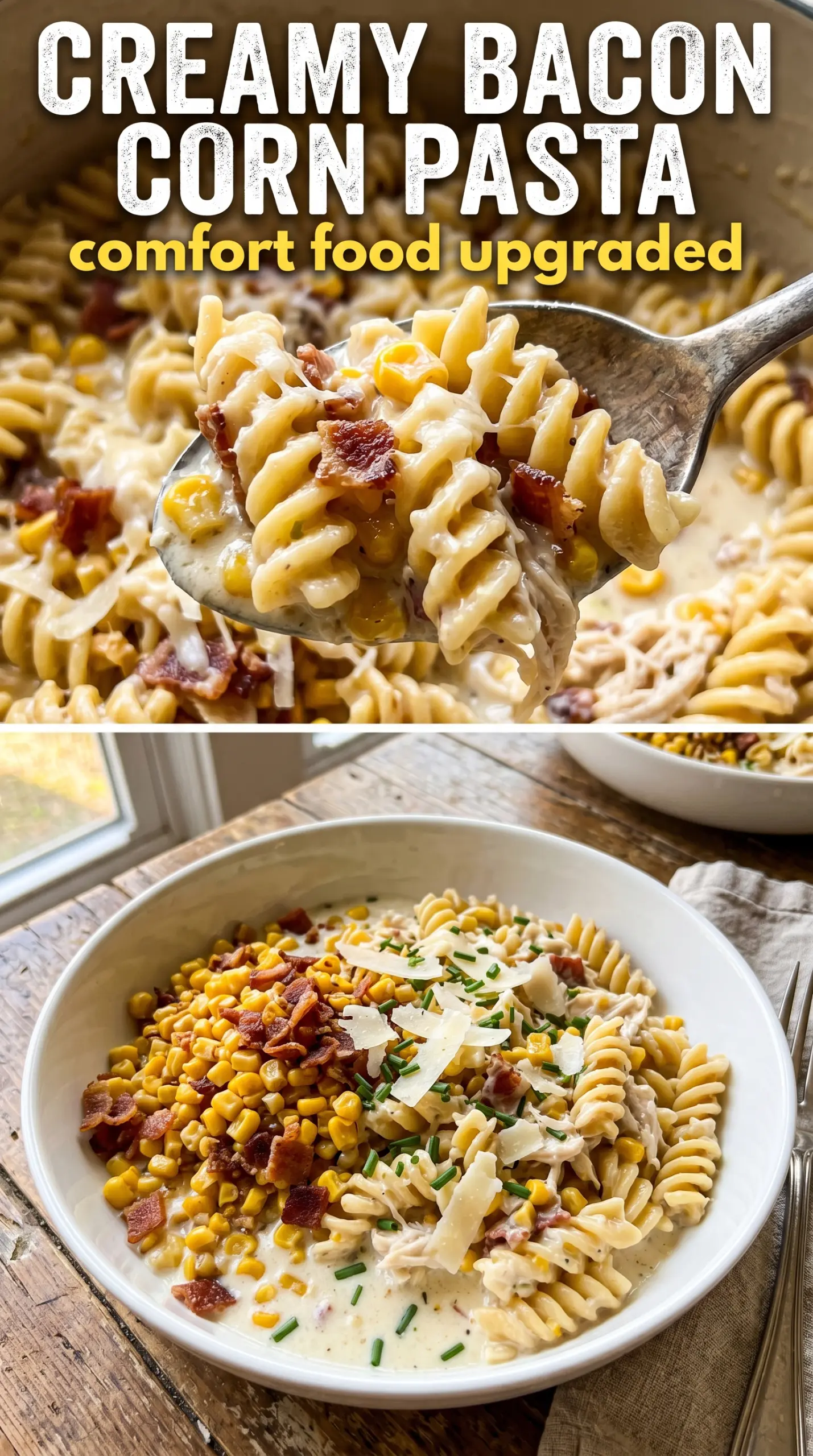
- Chicken breasts — Bite-sized pieces cook quickly and stay tender if you pull them as soon as they reach 165°F. Thighs also work if you want a little more richness, and they’re more forgiving if you get distracted for a minute.
- Bacon — This is more than garnish. The rendered fat seasons the pan, and the crisp bits give the finished pasta a salty crunch that breaks up the cream sauce. Turkey bacon won’t give the same depth, but it can work if that’s what you have.
- Corn — Fresh corn gives the sweetest result, but frozen kernels are a smart substitute and don’t need to be thawed first. The quick char in the skillet matters because it adds a little smokiness and keeps the corn from tasting flat.
- Heavy cream — This is what gives the sauce its body. Half-and-half can work in a pinch, but the sauce will be thinner and needs a little more reduction time.
- Parmesan — Grate it fresh if you can. Pre-grated cheese often contains anti-caking agents that can make the sauce a little grainy instead of silky.
- Rigatoni or penne — A short pasta with ridges holds the sauce best. Long noodles can work, but they don’t trap the bacon and corn the same way.
Building the Skillet in the Right Order
Crisping the Bacon First
Start the bacon in a cold skillet and bring it up over medium-high heat so the fat renders before the outside burns. You’re looking for crisp pieces and enough grease left in the pan to cook the chicken. If the pan looks dry, add just a teaspoon or two more fat, but don’t flood it. That first layer of flavor is what makes the sauce taste like it came from the pan instead of from a jar.
Browning the Chicken Without Drying It Out
Season the chicken and lay it in a single layer so it can sear instead of steam. Give it time to pick up color before you stir it, then cook only until the pieces are opaque and cooked through. If you keep chasing perfect browning after the chicken is already done, it’ll lose the juiciness that makes the finished pasta feel generous.
Cooking the Corn Into the Base
Onion goes in first so it softens and turns sweet. Garlic follows for just a minute, then the corn goes in while the skillet is still hot. Let some of the kernels get spots of color. If you add the cream before the corn has a chance to toast, you lose that pop of sweetness that keeps the dish lively.
Finishing the Sauce and Tossing Everything Together
Pour in the cream and broth, then let the sauce simmer until it lightly coats the back of a spoon. Add the pasta, chicken, and most of the bacon, then stir until every piece is glazed. Parmesan goes in at the end so it melts smoothly. If the pasta looks dry after a minute or two, add a small splash of broth and toss again.
Three Ways to Make This Pasta Fit What You’ve Got
Gluten-Free With the Same Creamy Finish
Use a sturdy gluten-free short pasta and cook it just to al dente, because it softens a little more once it hits the sauce. The sauce itself is naturally gluten-free as written, so this swap is mainly about choosing a pasta that can hold up without breaking apart.
Dairy-Free Without Losing the Cozy Texture
Swap the cream for full-fat coconut milk or an unsweetened oat-based cooking cream, and skip the Parmesan or use a dairy-free parmesan-style substitute. Coconut milk gives the richest texture but adds a faint coconut note, while oat cream stays closer to the original flavor.
A Veggie Version That Still Feels Substantial
Skip the chicken and add extra corn, sautéed mushrooms, or zucchini. Mushrooms bring the most savory depth, while zucchini keeps things lighter but needs a quick cook so it doesn’t water down the sauce.
How to Make It Ahead for Busy Nights
Cook the bacon, chicken, and sauce base ahead of time, then store the pasta separately so it doesn’t soak up all the cream. When you reheat, add the pasta at the end with a splash of broth to bring the sauce back to life.
Storage and Reheating
- Refrigerator: Store in an airtight container for up to 4 days. The pasta will absorb some sauce, so it thickens as it sits.
- Freezer: It freezes, but the cream sauce can separate a little after thawing. If you want the best texture, freeze the chicken and sauce without the pasta, then cook fresh pasta later.
- Reheating: Warm it gently on the stovetop over low heat with a splash of broth or cream. High heat is what turns a smooth sauce grainy and dries out the chicken.
The Things That Trip People Up With This Dish
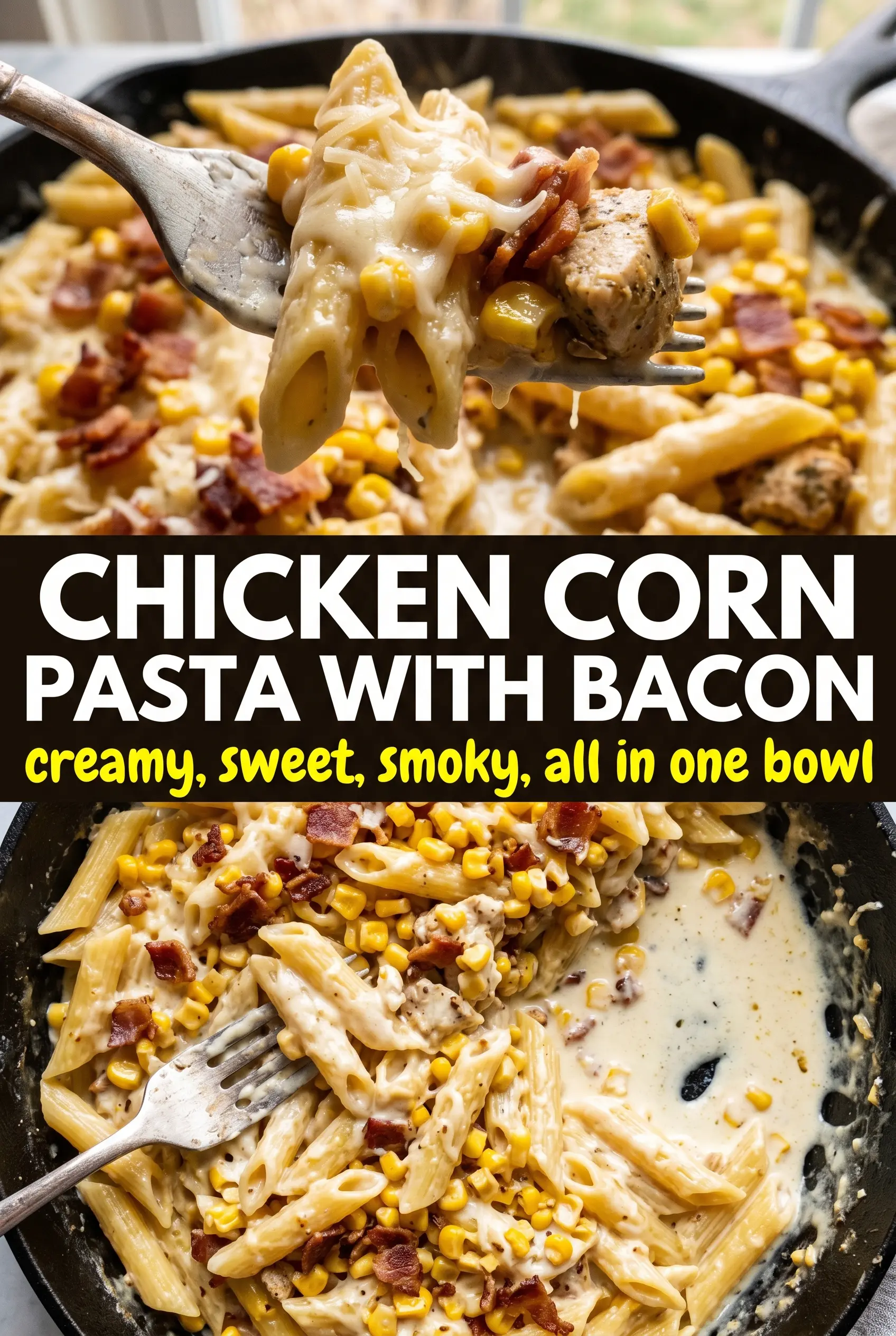
Creamy Chicken and Corn Pasta with Bacon
Ingredients
Equipment
Method
- Cook diced bacon in a large skillet over medium-high heat until crispy, about 6 to 8 minutes; remove with a slotted spoon and set aside, leaving about 1 tablespoon fat in the pan.
- Season the chicken with salt and pepper; cook in the bacon fat over medium-high heat until golden and cooked through to 165°F, about 5 to 6 minutes, then remove to a plate.
- In the same skillet, cook the onion over medium heat for about 3 minutes until softened.
- Add the garlic and cook for 1 minute until fragrant, then add the corn and cook for 3 more minutes until slightly charred, stirring to coat.
- Pour in the heavy cream and chicken broth, then simmer for 4 to 5 minutes until slightly thickened and glossy.
- Add the cooked drained pasta, chicken, and most of the bacon to the skillet; toss until coated in the cream sauce.
- Stir in the Parmesan until melted and the sauce clings to the pasta, 1 to 2 minutes, then garnish with remaining bacon, fresh basil, and extra Parmesan.