Golden, bubbling spicy salmon sushi bake has the kind of spoonable comfort that disappears fast once it hits the table. The rice turns slightly sticky and seasoned, the salmon topping bakes into a creamy, savory layer, and the sriracha mayo finish gives each bite the same sweet-heat pull people love in sushi rolls without the rolling work.
What makes this version work is the balance. The sushi rice gets seasoned while it’s still warm so the vinegar mixture absorbs instead of sitting on top, and the salmon filling uses softened cream cheese plus Japanese mayo to stay rich without turning dry in the oven. If you’ve ever baked seafood casseroles that came out chalky or split, the fix here is simple: keep the topping mixed just until smooth and stop baking when it’s hot and bubbling, not when it has dried out.
Below, I’ll walk you through the layering that keeps the rice from getting mushy, the topping texture that makes each scoop taste like a baked sushi roll, and a few easy swaps if you need to work with what’s already in your kitchen.
The rice stayed seasoned and fluffy, and the salmon layer came out creamy without being soupy. I served it with extra nori sheets and my husband went back for seconds before I even sat down.
Love the creamy spicy salmon topping and crispy-edged sushi rice? Save this sushi bake for the nights when you want baked sushi flavor without rolling a single piece.
The Rice Layer Has to Be Seasoned While It’s Still Warm
The biggest mistake with sushi bake is treating the rice like a plain casserole base. Sushi rice needs that vinegar, sugar, and salt mixture while it’s warm so it absorbs seasoning evenly and keeps its slight gloss instead of tasting flat. If the rice is cold when you mix it, the seasoning sits around the grains and the whole bottom layer tastes uneven.
The other thing that matters is how firmly you press it into the pan. You want an even layer, not a dense brick. A light press helps it hold together when you scoop, but packing it hard turns the bottom into something chewy in the wrong way and makes the center heat less evenly.
What the Salmon, Cream Cheese, and Kewpie Are Each Doing
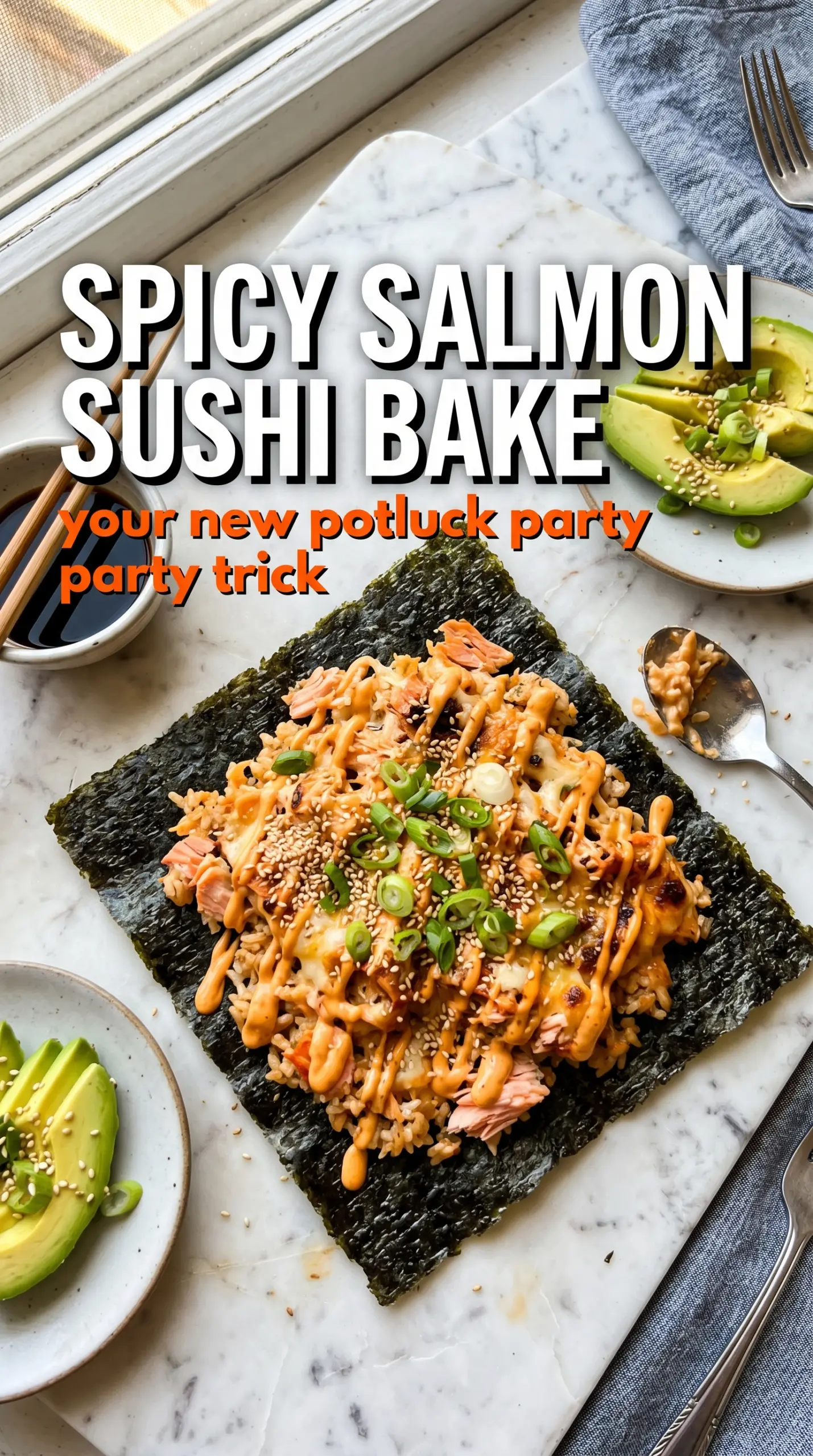
Salmon: Cooked, flaked salmon gives this bake its meaty structure. You can roast, poach, steam, or use leftover salmon as long as it’s not heavily seasoned with something that fights the sushi flavors. Fresh-cooked salmon gives the cleanest taste, but leftover plain salmon works well too.
Cream cheese: This is what turns the topping from loose salmon salad into a spreadable layer that bakes up creamy. It needs to be softened first, or you’ll end up with cold lumps that never fully melt into the salmon. Full-fat cream cheese gives the best texture; reduced-fat versions can work, but they’re looser and less rich.
Japanese mayonnaise: Kewpie has a deeper, rounder flavor than standard mayo and helps the topping stay silky. If you only have regular mayonnaise, use it, but add a tiny pinch of sugar if the mixture tastes sharp or one-note. The point is creaminess with enough body to hold the sriracha.
Furikake: This adds the salty, savory finish that makes each bite taste complete. It’s worth using here because it brings sesame, seaweed, and seasoning in one shake. If you skip it, the dish still works, but it loses that sushi-bake identity fast.
Nori sheets: These aren’t garnish. They’re the scoop. The baked rice and salmon are meant to be picked up in strips of nori, which is what keeps the whole dish from eating like a plain seafood casserole.
Building the Layers So the Top Gets Bubbling, Not Dry
Season the Rice First
Mix the warm rice with rice vinegar, sugar, and salt until every grain looks lightly glossy. Spread it into a greased 9×13 dish and level it out with the back of a spoon or spatula. Sprinkle one layer of furikake over the rice before the salmon goes on; that little seasoning barrier helps the bottom layer taste finished even under the creamy topping.
Mix the Salmon Filling Until It Looks Spreadable
Combine the flaked salmon, softened cream cheese, Japanese mayo, sriracha, and soy sauce until the mixture is even and creamy. Stop once it holds together easily — overmixing makes the salmon paste-like. If the cream cheese is still cold, set the bowl aside for a minute and let the residual warmth from the salmon soften it before stirring again.
Bake Until the Edges Bubble
Spread the salmon mixture over the rice in an even layer, then finish with the remaining furikake. Bake at 400°F until the top is hot and the edges are bubbling and just starting to brown. That’s the cue to stop. If you wait until the whole surface looks deeply browned, the salmon dries out and the cream cheese can get oily instead of creamy.
Finish With Heat and Freshness
Drizzle with extra sriracha mayo and scatter sliced green onions over the top right before serving. The cold, sharp onion balances the rich filling, and the extra drizzle makes the whole pan look as good as it tastes. Serve immediately with nori sheets, because the rice texture is best while the top is still hot and the edges have that just-baked chew.
Three Smart Ways to Adapt This Sushi Bake
Make it dairy-free without losing the creamy topping
Use a dairy-free cream cheese with a firm texture and keep the mayo portion the same. The topping will be a little less rich, but it still bakes into a spreadable layer as long as the substitute isn’t whipped and watery. Choose one that’s neutral in flavor so the salmon and furikake stay in front.
Swap the salmon for canned tuna or crab
Drained canned tuna works when you want a pantry version, and imitation crab gives a sweeter, lighter result. The texture changes — tuna is firmer and crab is softer — but both still work with the cream cheese-mayo base. Keep the mixture on the thick side so it doesn’t turn watery in the oven.
Use cauliflower rice for a lower-carb version
Cauliflower rice can work, but it needs to be cooked off and dried out first or the whole dish turns soggy. Season it lightly with the same vinegar-sugar-salt mixture, then bake the base for a few minutes before adding the salmon topping. You’ll lose the sticky sushi-rice chew, but you keep the same creamy, spicy flavor.
Storage and Reheating
- Refrigerator: Store leftovers in an airtight container for up to 3 days. The rice firms up a bit in the fridge, and the topping loses some of its fresh creaminess, but the flavor stays good.
- Freezer: Freezing isn’t ideal here because the cream cheese topping can separate and the rice texture gets dry. If you must freeze it, wrap tightly and thaw in the refrigerator before reheating, then expect a softer, less clean texture.
- Reheating: Reheat covered in a 325°F oven until warmed through, or use short microwave bursts with a damp paper towel over the top. The common mistake is blasting it on high heat, which makes the salmon dry and the rice hard around the edges before the center heats.
Questions I Get Asked About This Recipe
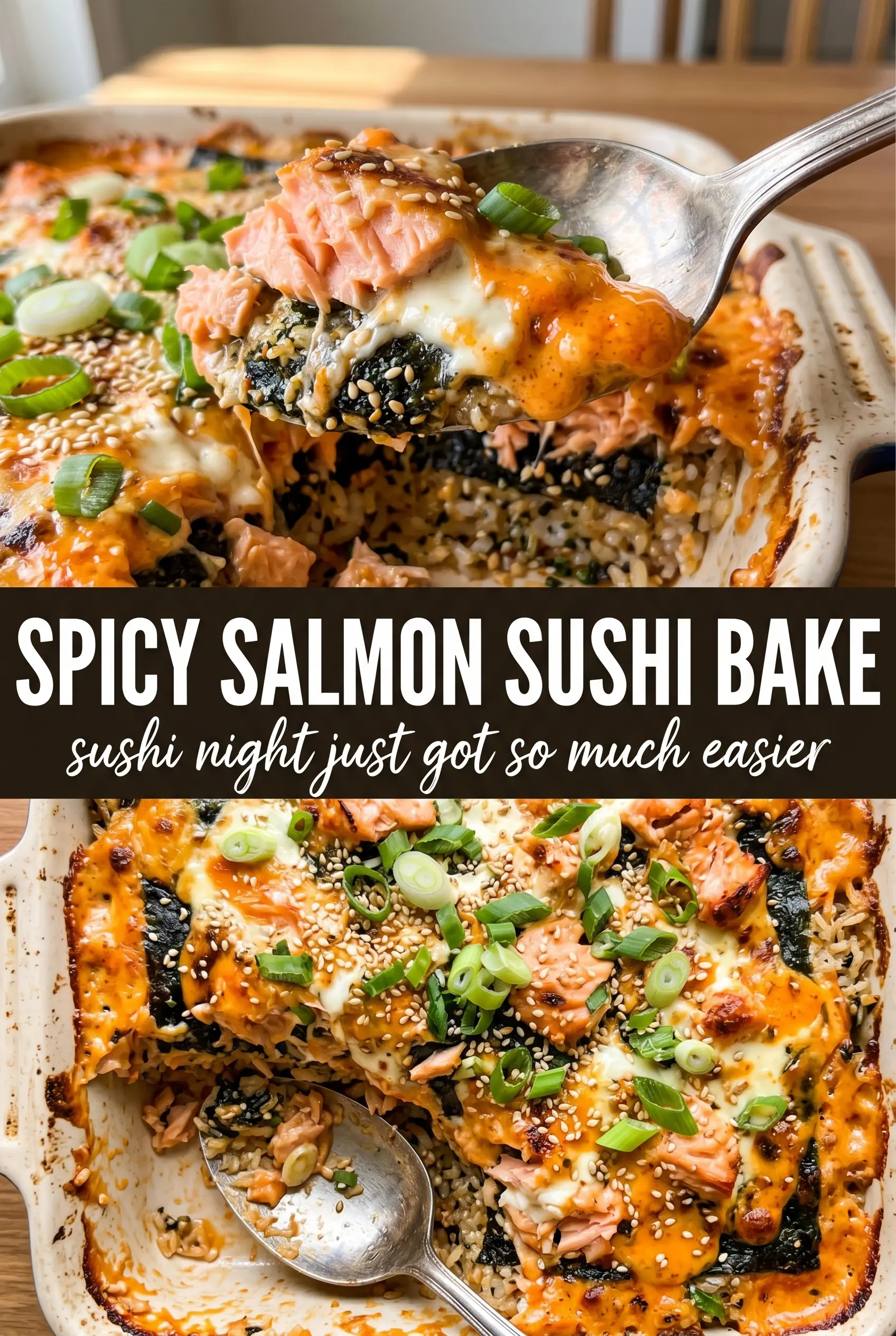
Spicy Salmon Sushi Bake
Ingredients
Equipment
Method
- Season the cooked sushi rice with rice vinegar, sugar, and salt, then spread it evenly in a greased 9x13 baking dish.
- Sprinkle 1 tablespoon furikake over the rice layer, then press lightly so it adheres.
- Mix the flaked salmon with softened cream cheese, Japanese mayonnaise, sriracha, and soy sauce until evenly combined, then spread over the rice in an even layer.
- Sprinkle the remaining furikake over the top for a textured finish.
- Bake at 400°F for 15–20 minutes until the top is golden and bubbling at the edges.
- Drizzle with extra sriracha mayo, then top with sliced green onions and serve immediately with nori sheets for scooping.