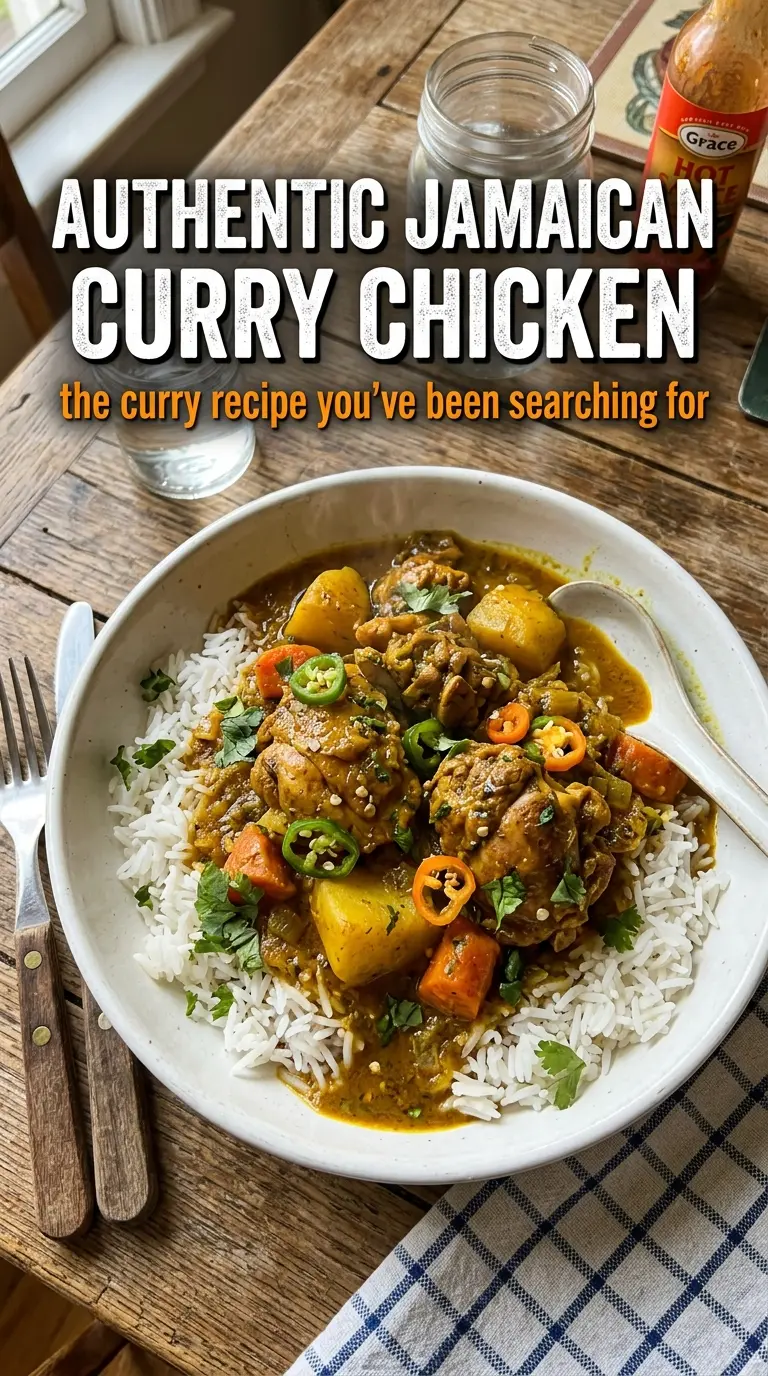
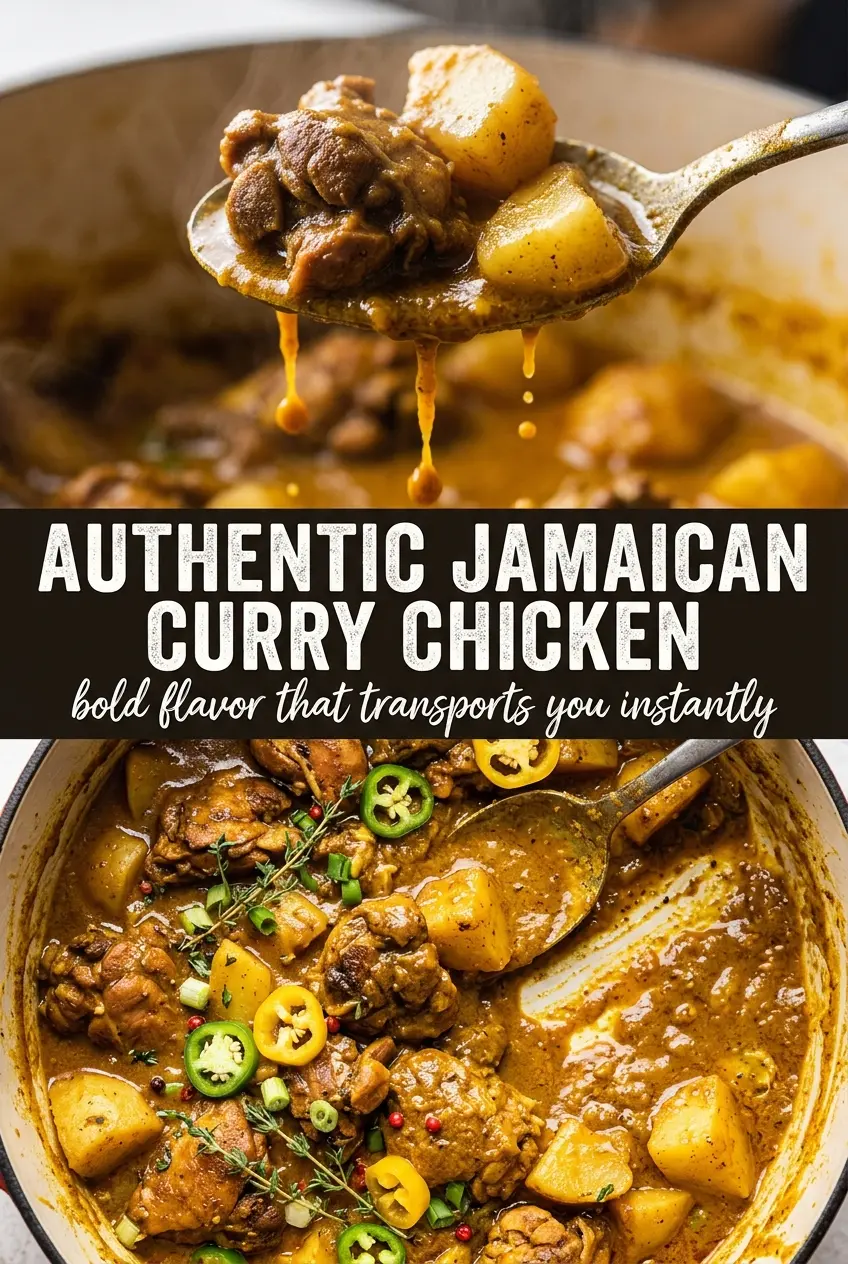
Deep golden-brown chicken simmered in a fragrant Jamaican curry sauce is the kind of meal that earns repeat requests fast. The chicken turns tender without going stringy, the potatoes soak up the curry until they taste like part of the sauce, and the whole pot finishes with that unmistakable island heat from thyme, garlic, and Scotch bonnet. Served over rice and peas, it lands with the kind of comfort that feels built in layers, not rushed.
What makes this version work is the order. The chicken gets seasoned and marinated first so the curry powder has time to sink in before it ever hits the pan. Then a portion of the curry powder is toasted in the oil before the liquid goes in, which wakes up the spice and keeps the sauce from tasting flat or dusty. Browning the chicken in batches is worth the extra few minutes, too. That dark crust gives the final pot a deeper color and a richer base than you get from simmering raw pieces straight in broth.
Below you’ll find the exact points where this curry develops its flavor, plus the one detail that keeps the pepper from taking over the whole pot. If you’ve ever had Jamaican curry chicken that tasted thin or one-note, the difference is in the build, not just the ingredients.
The curry thickened up beautifully and the potatoes held their shape instead of falling apart. I used the whole Scotch bonnet exactly like you said, then pulled it out at the end, and the heat was perfect with the rice and peas.
Save this Jamaican Curry Chicken for the nights when you want deep curry flavor, tender chicken, and potatoes that turn the sauce silky.
The Trick to Jamaican Curry Chicken Is Toasting the Curry Before the Broth
A lot of curry chicken tastes thin because every ingredient goes into liquid too fast. Jamaican curry powder needs a minute in hot oil before the broth goes in. That short toast changes the whole dish: the spices bloom, the color deepens, and the finished sauce tastes round instead of raw. If you skip that step, the curry can still be good, but it won’t have the layered, almost smoky depth that makes this version stand out.
Browning the chicken first matters for the same reason. The browned bits left in the pot dissolve into the sauce as it simmers, so don’t clean the pot between steps. That fond is part of the final flavor. The Scotch bonnet also works best whole. It perfumes the curry without turning the whole pot into a fire alarm. If you want more heat, split it open; if you want gentler spice, leave it intact.
What Each Ingredient Is Actually Doing in This Dish
- Jamaican curry powder — This is the backbone of the dish, and it isn’t the same as a generic yellow curry blend. Jamaican blends usually have a more assertive turmeric-forward color and a warmer spice profile. If you can only find one brand, choose a Jamaican-style curry powder rather than substituting a milder grocery-store curry powder.
- Bone-in chicken thighs and drumsticks — Bone-in pieces hold up better during the simmer and give the sauce more body. Boneless chicken cooks faster, but it can go soft before the potatoes are done. If you need to swap, use bone-in thighs at minimum; they’re the most forgiving cut here.
- Scotch bonnet pepper — This adds the signature heat and aroma. Keeping it whole lets it flavor the curry without blasting the whole pot. If you can’t find Scotch bonnet, a habanero is the closest swap, though the flavor is a little different and less fruity.
- Potatoes — They help thicken the sauce as they cook and absorb the curry so every bite tastes seasoned. Peel them so the starch loosens into the broth instead of staying locked in the skin. Cube them medium, not tiny, or they’ll break down before the chicken is done.
- Fresh thyme — Dried thyme will work in a pinch, but fresh sprigs give the curry a brighter, cleaner herbal note. They perfume the pot without making it taste woody. If you use dried, cut the amount way back and add it with the broth.
Building the Pot So the Curry Gets Dark, Thick, and Tender
Seasoning and Marinating the Chicken
Coat the chicken with the curry powder, all-purpose seasoning, garlic powder, onion powder, salt, and pepper, then let it sit for at least an hour. That rest is where the first layer of flavor settles in. If you rush it, the seasoning stays on the surface and the curry tastes less integrated. The chicken should look deeply stained and a little pasty from the spice mixture before it goes in the pan.
Browning in Batches
Heat the oil until it shimmers, then brown the chicken in batches so each piece gets actual contact with the pot. If you crowd the pan, the chicken steams and the surface stays pale. You’re looking for deep color, not cooked-through meat at this stage. Pull the chicken when the outside is richly golden and there are browned bits stuck to the bottom of the pot.
Toasting the Curry and Starting the Sauce
Stir the remaining curry powder into the hot oil for about a minute, then add the onion and cook until it softens and starts to go translucent. This is where the sauce picks up its color and its base flavor. Add the garlic, whole Scotch bonnet, and thyme next so the garlic doesn’t burn. Burnt garlic turns bitter fast, and once that happens, the whole pot tastes harsh.
Simmering Until the Chicken Falls Apart
Return the chicken to the pot, add the broth and potatoes, and bring everything to a boil before dropping it to a steady simmer. Cover the pot and let it cook until the chicken is tender enough to pull from the bone and the sauce has thickened around the potatoes. If the sauce looks too thin near the end, uncover the pot for the last few minutes so it reduces. Pull out the Scotch bonnet before serving, then taste and adjust the salt while the sauce is still hot.
How to Adapt This Jamaican Curry Chicken Without Losing the Point
Use boneless chicken thighs for a faster weeknight version
Boneless thighs cut down the simmer time and still stay juicy, but you’ll lose some of the body that bone-in pieces give the sauce. Brown them well and check them earlier, since they can go from tender to dry faster than drumsticks. The flavor stays close, just a little less rich.
Make it dairy-free and naturally gluten-free
This recipe already works without dairy, and it can be gluten-free if your all-purpose seasoning and broth are certified gluten-free. The texture doesn’t change, which is one reason this curry is such an easy fit for mixed-diet tables. Just check the seasoning blend, because that is where hidden gluten usually sneaks in.
Swap the potatoes for sweet potatoes
Sweet potatoes will thicken the sauce too, but they bring a softer texture and a gentle sweetness that shifts the balance of the curry. Cut them into larger chunks so they don’t dissolve before the chicken is done. The result is less traditional, but still works if you want a slightly sweeter pot.
Turn down the heat without losing the Scotch bonnet aroma
Leave the pepper whole and remove it sooner if you want a gentler curry. That gives you the perfume and flavor without a strong burn. If you skip the pepper entirely, the dish still works, but it won’t taste as distinctly Jamaican.
Storage and Reheating
- Refrigerator: Store leftovers in an airtight container for up to 4 days. The sauce thickens as it sits, and the flavor gets deeper by the next day.
- Freezer: This freezes well for up to 2 months. Cool it completely first, then freeze in portioned containers so the potatoes don’t get crushed during thawing.
- Reheating: Reheat gently on the stovetop over medium-low heat with a splash of broth or water if the sauce has tightened up. A hard boil can make the chicken stringy and break down the potatoes too much.
Questions I Get Asked About This Recipe
Authentic Jamaican Curry Chicken
Ingredients
Equipment
Method
- Season the chicken with 2 tbsp Jamaican curry powder, all-purpose seasoning, garlic powder, onion powder, salt, and black pepper. Marinate for at least 1 hour so the spices cling and flavor the meat.
- Heat the vegetable oil in a heavy pot (Dutch oven) over high heat and brown the chicken in batches on all sides until deeply golden. Remove and set aside to keep the sauce from steaming the meat.
- In the same pot, toast the remaining 1 tbsp Jamaican curry powder in the oil for 1 minute. Stir to prevent scorching and to bloom the curry aroma.
- Add the sliced onion and cook for 4 minutes. Cook until softened so the sauce turns fragrant and glossy.
- Add the minced garlic, whole Scotch bonnet, and fresh thyme sprigs, then return the browned chicken to the pot. Keep the heat at a steady simmering pace so the aromatics distribute without burning.
- Add chicken broth and potato cubes, bring to a boil, then reduce heat and cover. The visual cue is an active simmer rather than a hard boil.
- Simmer covered for 35–40 minutes until chicken is falling off the bone and the sauce has thickened. Watch for potato chunks to be tender and the curry to coat the chicken.
- Remove the whole Scotch bonnet, adjust seasoning, and serve with cooked rice and peas. Plate so curry sauce pools slightly on the rice and potato pieces are visible.