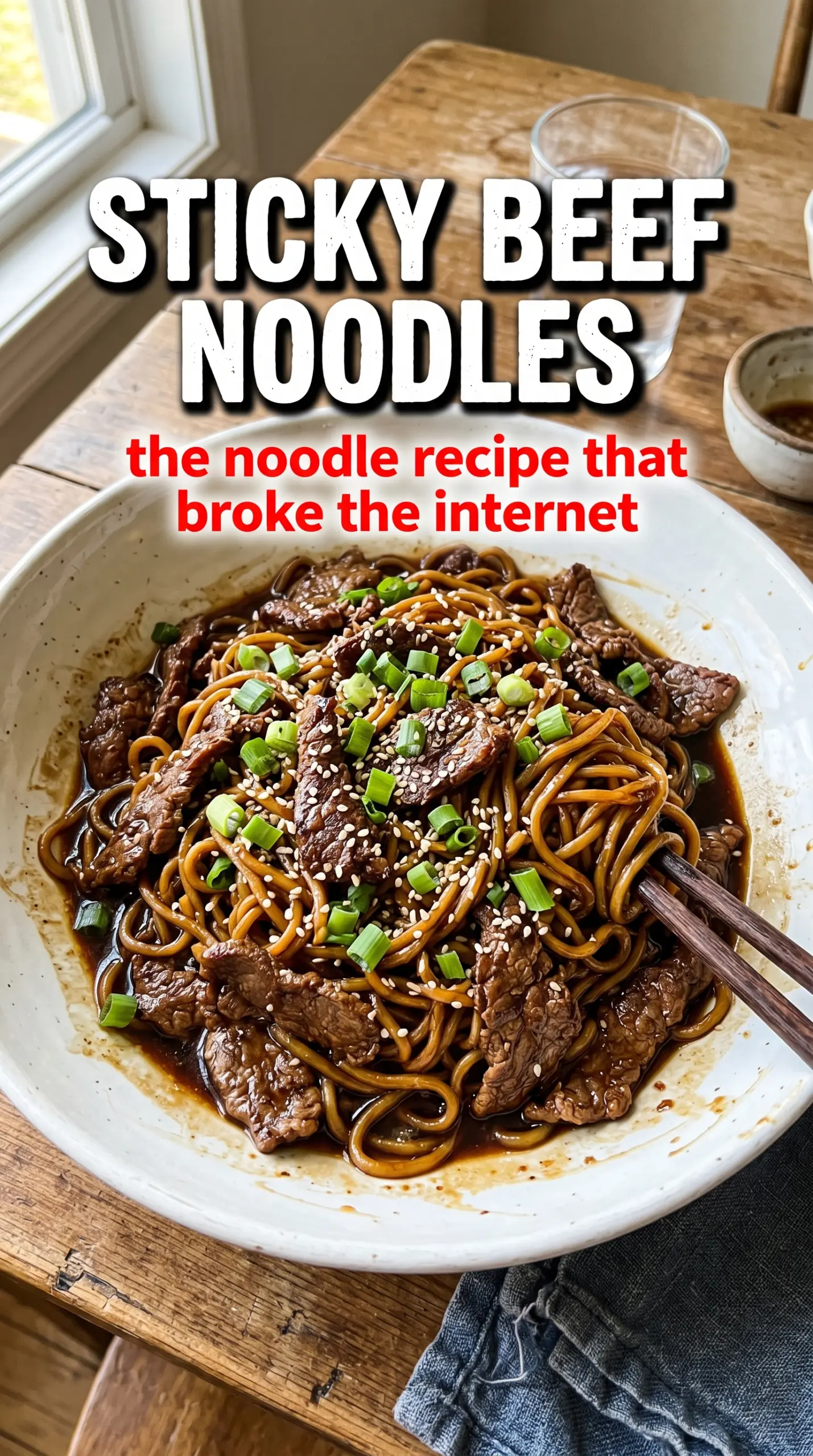
Glossy sticky beef noodles hit that sweet spot between fast and worth repeating. The noodles are coated in a deep soy-ginger sauce that clings instead of pooling, and the ground beef gets just enough caramelization to taste savory and rich without turning heavy. It’s the kind of skillet dinner that disappears fast because every bite has a little chew, a little sweetness, and that salty finish that keeps you going back for one more forkful.
The trick is building the sauce before it ever touches the pan. Brown sugar, soy sauce, oyster sauce, sesame oil, rice vinegar, and sriracha work together to give you shine, body, and balance, but they only stay sticky if the beef is browned hard and the noodles go in while the pan is still hot. Ramen noodles are a good fit here because they absorb the sauce without falling apart, especially if you drain them well and toss them in right away.
Below, I’ve included the small details that keep the noodles from going soggy and the sauce from thinning out. If you’ve ever had stir-fry noodles that tasted flat or watery, this version fixes both problems.
The sauce clung to the ramen instead of sitting in the bottom of the pan, and the beef stayed browned and savory. I added extra green onions on top and my husband asked if we could keep this in the weekly rotation.
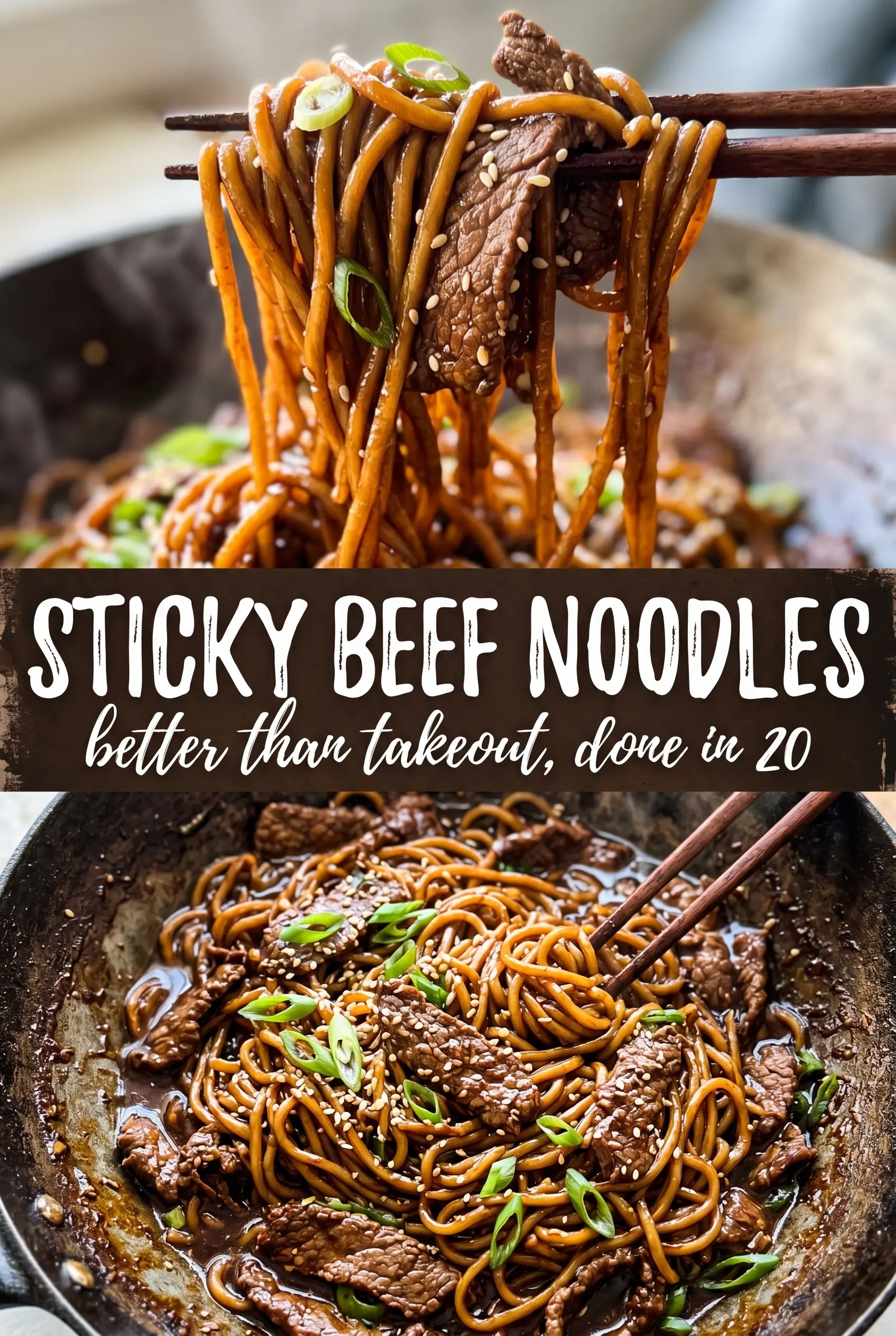
Sticky beef noodles with glossy ramen and a soy-garlic sauce that actually coats every strand.
The Reason Sticky Beef Noodles Stay Glossy Instead of Watery
The difference between noodles that look lacquered and noodles that look wet comes down to heat and timing. The beef needs enough heat to brown before the sauce goes in, because that browned fond gives the sauce depth and helps it cling. If the pan is crowded or the heat is too low, the beef steams and gives off too much liquid, which thins the sauce before it can tighten up.
The other mistake happens after the noodles go in. Once the sauce is added, the noodles need a short blast of high heat so the starch and sauce bind together. If you let the pan cool down, the sauce sits at the bottom instead of coating the noodles. This dish works because it moves fast and stays hot.
What Each Ingredient Is Actually Doing in This Dish
- Ground beef — Use a beef with enough fat to brown well, but drain off excess grease after cooking so the sauce doesn’t turn oily. Lean beef works too, though you’ll lose a little of the rich, savory edge that makes this taste like takeout.
- Ramen noodles — These are ideal because they cook quickly and pick up sauce fast. Discard the seasoning packets; they’d fight the soy-ginger balance and make the finished dish too salty.
- Garlic and ginger — Fresh is worth it here. The aromatics bloom in the beef fat and give the whole skillet that sharp, fragrant base you can taste in the final bite.
- Soy sauce, oyster sauce, and brown sugar — This is the core of the sticky sauce. Soy brings salt and color, oyster sauce adds body and a savory roundness, and brown sugar gives the glaze its cling and shine.
- Sesame oil, rice vinegar, and sriracha — Sesame oil adds depth, rice vinegar keeps the sauce from tasting one-note, and sriracha gives a little heat without taking over. If you don’t want much spice, cut the sriracha in half rather than dropping it completely.
- Green onions and sesame seeds — These finish the dish with freshness and a little texture. Skip them if you have to, but they do more than look nice; they keep the noodles from feeling heavy.
How to Cook the Beef and Sauce So the Noodles Grab Every Drop
Brown the Beef Hard
Get the skillet hot before the beef goes in. Break it up and leave it alone for a minute or two so it can actually brown instead of just turn gray. If the pan fills with liquid, keep cooking until that moisture cooks off; otherwise the sauce will never get the chance to cling.
Cook the Garlic and Ginger Briefly
Add the garlic and ginger after the beef is browned and the excess fat is drained. One minute is enough, just until they smell sharp and fragrant. If they sit in the pan too long, the garlic can burn and turn the whole skillet bitter.
Pour in the Sauce and Let It Tighten
Whisk the sauce until the brown sugar dissolves, then pour it over the beef and stir right away. The mixture should look loose at first, then start to bubble and thicken as the sugar and oyster sauce reduce. If it still looks thin after a minute or two, keep the heat up; that gloss comes from reduction, not from patience off the burner.
Toss the Noodles While the Pan Is Hot
Add the drained noodles and toss until every strand is coated. The noodles should look glossy and evenly brown, with the sauce mostly absorbed instead of sitting underneath them. If the pan seems dry before they’re fully coated, splash in a spoonful of water to loosen things just enough, then keep tossing.
Three Smart Ways to Adjust Sticky Beef Noodles
Make It Gluten-Free
Use gluten-free tamari in place of soy sauce and swap the ramen for gluten-free rice noodles. Rice noodles don’t absorb sauce quite the same way, so toss them gently and serve right away before they soften too much.
Make It Spicier Without Throwing Off the Balance
Add more sriracha or a pinch of red pepper flakes to the sauce. The sugar in the glaze can handle extra heat, but go a little at a time so the dish stays savory and sticky instead of hot for the sake of being hot.
Use Ground Turkey or Chicken
Lean poultry works if you want a lighter version, but it needs the same high-heat browning or it turns bland fast. Add a little extra sesame oil or a tablespoon of neutral oil because poultry doesn’t render the same rich fat that beef does.
Stretch It for More Vegetables
Toss in thin-sliced cabbage, shredded carrots, snap peas, or bell pepper after the beef is browned. Keep the vegetables crisp-tender so the skillet still feels like noodles with beef, not a watery stir-fry with pasta mixed in.
Storage and Reheating
- Refrigerator: Store in an airtight container for up to 4 days. The noodles will absorb more sauce as they sit, so the texture gets a little less glossy but still holds up well.
- Freezer: It freezes, but the noodles soften after thawing, so I don’t treat it as a first-choice freezer meal. If you do freeze it, cool it completely and pack it in a tight container for up to 2 months.
- Reheating: Reheat in a skillet over medium heat with a splash of water to loosen the sauce. The biggest mistake is blasting it in the microwave until the noodles dry out and the beef toughens.
Answers to the Questions Worth Asking
Sticky Beef Noodles
Ingredients
Equipment
Method
- Cook the ramen noodles according to the package directions, then drain and set aside after discarding the seasoning packets.
- Keep the noodles warm while you make the sauce and cook the beef so they toss easily.
- Whisk together the soy sauce, oyster sauce, brown sugar, sesame oil, rice vinegar, and sriracha until the sugar dissolves and the mixture looks glossy.
- Brown the ground beef in a large skillet over high heat, breaking it into crumbles until browned, then drain excess fat.
- Add the minced garlic and grated ginger and cook for 1 minute, stirring until fragrant and lightly toasted at the edges.
- Pour the sticky sauce over the beef and stir until the beef is coated and the sauce starts to thicken and cling.
- Add the cooked noodles and toss everything together over high heat for 2 minutes, until the noodles look glossy and are evenly coated with sauce.
- Serve immediately topped with sesame seeds and sliced green onions.