Thick cucumber rounds, ripe tomatoes, and fresh mozzarella make this salad crisp, cool, and clean-tasting, but the real payoff is how the balsamic glaze clings to every layer instead of sliding off a wet plate. It eats like a proper side dish, not a pile of random ingredients. The cucumbers bring crunch, the tomatoes bring juiciness, and the mozzarella softens the whole thing without turning it heavy.
The part that makes this version work is the balance of moisture. English cucumbers stay firm and don’t flood the platter the way some slicing cucumbers can, while the tomatoes are arranged in a way that keeps their juices from pooling too fast. A little olive oil helps the basil perfume the whole salad, and the balsamic glaze gives you concentrated sweetness without having to reduce vinegar on the stove.
Below, you’ll find the best cucumber size to use, why basil placement matters more than it seems, and how to keep the salad looking sharp right up until serving.
The cucumbers stayed crisp, the mozzarella held its shape, and the balsamic glaze made the whole salad taste like something from a nice restaurant. I served it right away and there wasn’t a soggy bite in the bowl.
Love the crisp cucumber layers and glossy balsamic finish? Save this Cucumber Caprese Salad for the next time you need a fresh side with almost no prep.
The Trick to Keeping This Salad Crisp Instead of Watery
The mistake with caprese-style salads is treating every ingredient like it can sit around waiting for service. Cucumbers and tomatoes both give off moisture, and once that liquid mixes with the olive oil and balsamic glaze, the platter starts looking tired fast. This is one of those salads that should be assembled close to the moment you eat it, when the vegetables still taste bright and the mozzarella still feels creamy and fresh.
The other thing that matters is slice size. Thin cucumber slices turn floppy, and oversized tomato pieces throw off the balance of the dish. You want enough thickness to keep structure, but not so much that the salad eats like separate slabs instead of one bite. The overlapping pattern helps, too, because it keeps the ingredients anchored and makes the glaze land across the top instead of disappearing into the plate.
What Each Ingredient Is Doing in This Dish
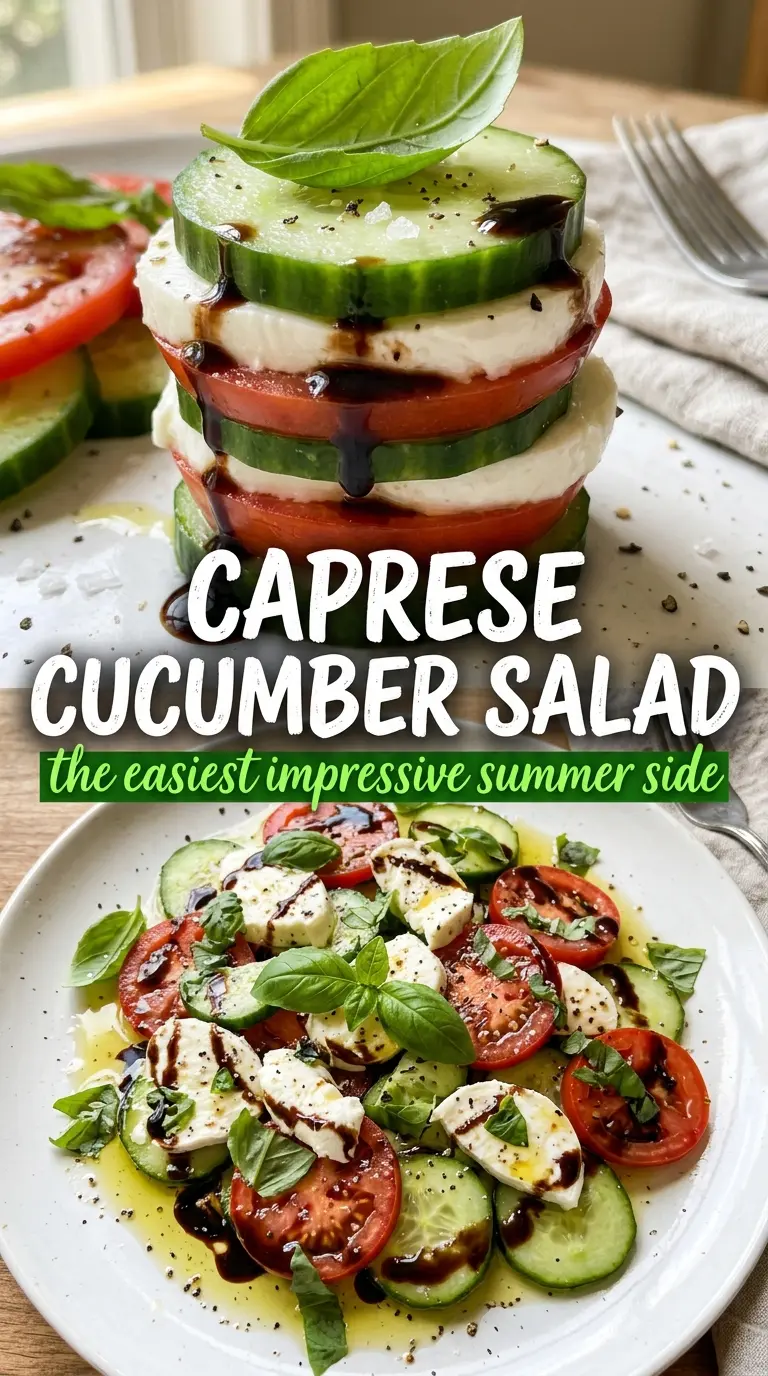
- English cucumbers — These are the backbone of the salad because they stay crisp, have fewer seeds, and don’t need peeling. If you only have regular cucumbers, peel them if the skin tastes bitter and scoop out some seeds so the salad doesn’t get soggy.
- Cherry tomatoes or sliced medium tomatoes — Cherry tomatoes hold their shape well and are less likely to flood the plate. If using larger tomatoes, slice them just before assembling so the cut sides stay juicy instead of drying out.
- Fresh mozzarella — This gives the salad its soft, milky contrast. Use the best mozzarella you can find here, because the cheese isn’t hidden behind dressing or heat. Pearl mozzarella works well if you want easier layering.
- Fresh basil — Basil is not a garnish in this salad; it ties the cucumbers, tomatoes, and mozzarella together. Tear larger leaves if they’re floppy, but leave smaller ones whole so they stay aromatic.
- Extra-virgin olive oil — A good one matters because it’s one of the main flavors, not just a coating. It should taste grassy and clean, since it softens the basil and helps the balsamic glaze spread across the vegetables.
- Balsamic glaze — This gives you sweetness and tang in a thick drizzle that stays visible on the platter. If you only have balsamic vinegar, simmer it first until it coats a spoon, then cool it before using so it doesn’t run everywhere.
- Flaky sea salt and cracked black pepper — The salt wakes everything up and the pepper gives the salad a little edge. Add them at the end so the cucumbers don’t start shedding water while they sit.
Building the Platter So Every Bite Stays Balanced
Start with the cucumber base
Arrange the cucumber rounds first in a loose overlapping pattern on a large plate or platter. That base gives the salad structure and keeps the rest of the ingredients from sliding around. If the cucumbers are cut too thin, they’ll bend under the weight of the tomatoes and cheese, so aim for firm rounds that still give a clean bite.
Tuck in the tomatoes and mozzarella
Place the tomato pieces between the cucumber rounds, then nestle the mozzarella throughout the platter. This keeps the colors distributed instead of clumped in one section, and it helps every serving scoop up a little of everything. If using pearl mozzarella, dry it lightly on paper towels first so the plate doesn’t collect extra liquid.
Finish with basil, oil, and glaze
Scatter the basil over the top, then drizzle the olive oil evenly across the salad. Follow with the balsamic glaze in a loose pattern, not a heavy pour, so the presentation stays sharp and the glaze doesn’t drown the vegetables. Add the salt and pepper at the very end and serve right away while the cucumbers still have their snap.
How to Adapt This for Different Tables and Dietary Needs
Make it dairy-free without losing the fresh bite
Leave out the mozzarella and add avocado slices or extra tomatoes for another soft element. You’ll lose the creamy dairy note, but the salad still works because the cucumbers, basil, olive oil, and balsamic glaze carry the main structure.
Use heirloom tomatoes for a more dramatic platter
Heirlooms bring bigger flavor and a softer, juicier texture, which makes the salad feel more substantial. Just cut them right before serving because they release liquid fast and can overwhelm the cucumbers if they sit too long.
Turn it into a fuller side salad
Add a handful of arugula under the cucumber layer for a peppery base, or scatter toasted pine nuts over the top for crunch. That turns the salad into something that can stand next to grilled chicken or fish without changing the core caprese flavor.
What to do if you need to hold it for a short while
You can slice the cucumbers, tomatoes, and mozzarella a few hours ahead and keep them chilled separately. Assemble right before serving so the tomatoes don’t leak onto the plate and the basil stays bright instead of turning dark.
Storage and Reheating
- Refrigerator: Best eaten immediately. Leftovers keep for about 1 day, but the cucumbers soften and the platter gets wetter.
- Freezer: Don’t freeze this salad. The cucumbers, tomatoes, and mozzarella all lose their texture and turn watery after thawing.
- Reheating: Not applicable. If you have leftovers, eat them cold and drain off any excess liquid before serving again.
The Questions Worth Asking Before You Assemble It
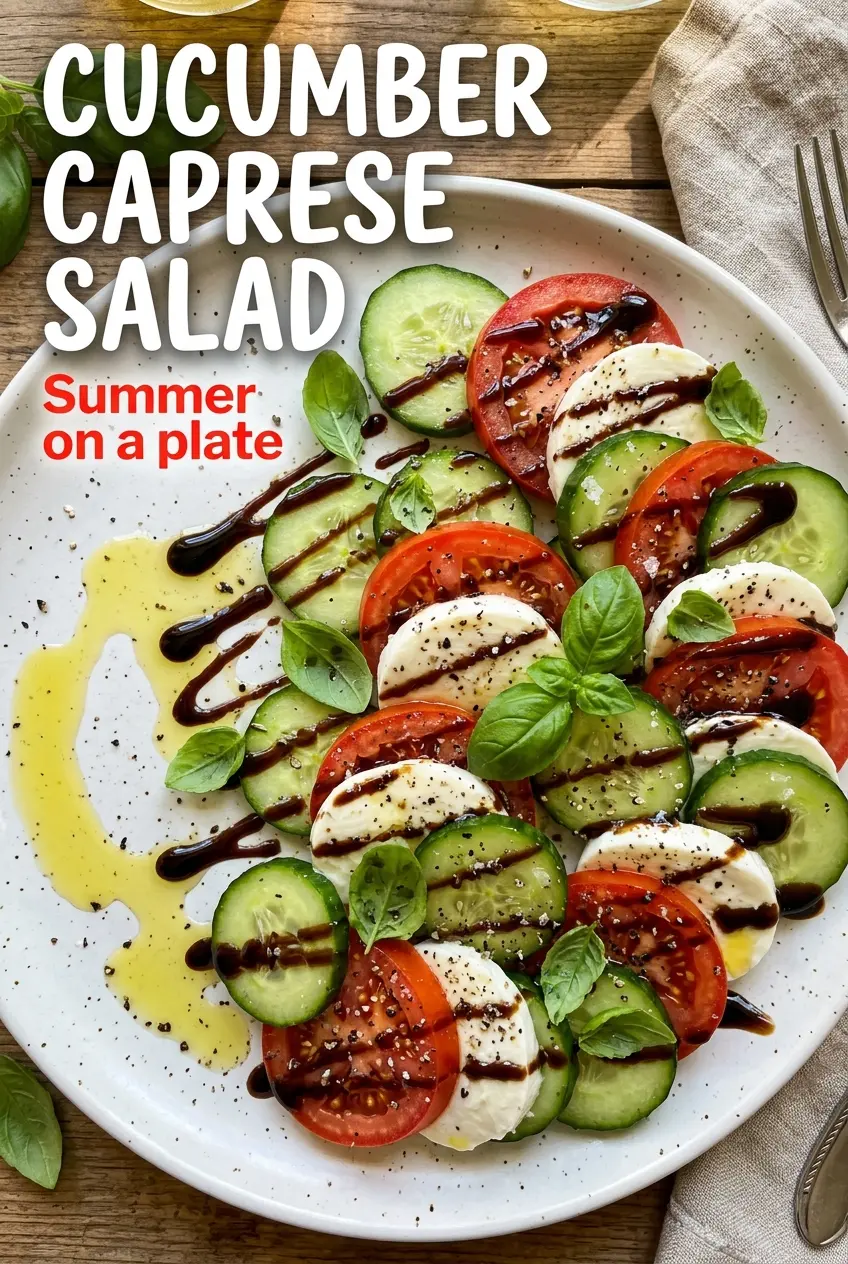
Cucumber Caprese Salad
Ingredients
Method
- Arrange the cucumber rounds on a large serving platter or plate in an overlapping pattern.
- Tuck the tomato slices or halves between the cucumber rounds so the layers alternate visibly.
- Place the mozzarella slices or pearls throughout the arrangement, distributing them across the entire platter.
- Scatter the fresh basil leaves generously over the entire salad.
- Drizzle the extra-virgin olive oil evenly over everything so it pools into the cucumber and tomato layers.
- Drizzle the balsamic glaze in an artistic pattern over the top.
- Finish with flaky sea salt and cracked black pepper to taste, then serve immediately.