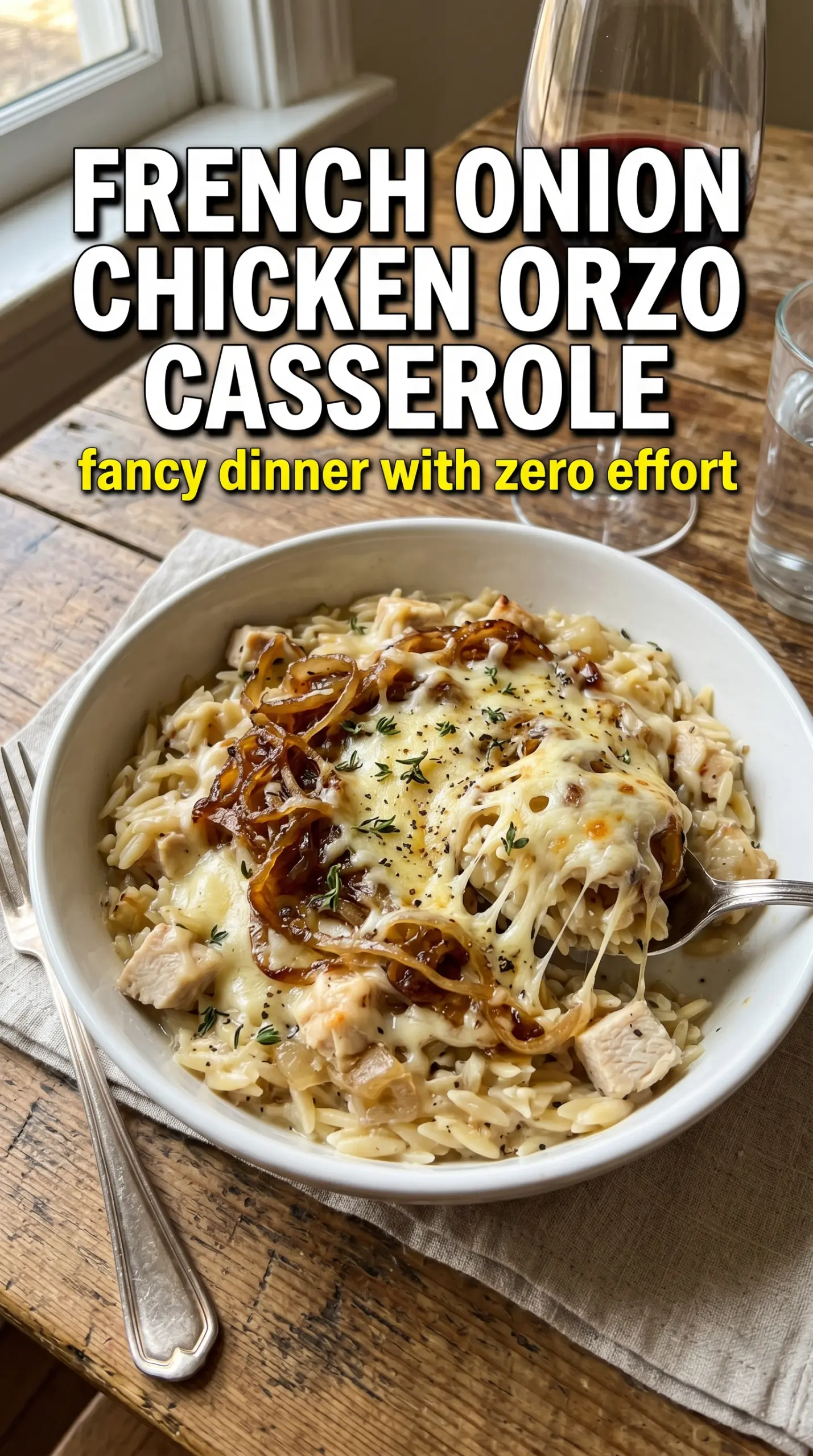
Caramelized onions, tender chicken, and orzo baked under a bubbling Gruyère crust hit that sweet spot between cozy and a little bit elegant. The onions turn deep and jammy, the broth cooks right into the pasta, and the cheese on top brings the whole pan together with that classic French onion finish that never gets old.
What makes this version work is the slow onion cook at the start. If you rush that part, you get pale onions with sharp edges instead of the sweet, deep base that gives the whole casserole its name. The other key is baking the orzo uncovered in just enough broth so it absorbs flavor without turning soupy.
Below, I’ve included the timing cues that matter most, plus a few swaps for when you want to adapt the dish without losing the comfort-food character that makes it worth making in the first place.
The onions cooked down into this rich, sweet base and the orzo soaked up every bit of the broth. The top turned beautifully golden and my kids scraped the pan clean.
French Onion Chicken Orzo Casserole with golden Gruyère and jammy caramelized onions is the kind of one-pan dinner worth saving.
The Onion Stage That Keeps This Casserole From Tasting Flat
The onions do the heavy lifting here, and they need time. If they only soften, the finished dish tastes like chicken and pasta with cheese on top. When you cook them slowly until they’re deep amber and almost spreadable, they bring the sweet backbone that makes this casserole taste layered instead of heavy.
The other mistake is turning the heat up to hurry the process. That pushes the onions toward browning at the edges before they’ve melted down in the middle, and you lose the jammy texture that should coat the orzo. Stir them often enough to keep the bottom from scorching, but not so much that they steam.
What Each Ingredient Is Actually Doing in This Dish
- Chicken breasts — Cutting them into bite-sized pieces helps them sear fast and finish tender in the oven. Thighs work too if you want a richer result, and they’re a little more forgiving if your oven runs hot.
- Yellow onions — These are the point of the dish. Their natural sweetness comes forward as they caramelize, and there isn’t a shortcut that gives the same depth. Red onions will taste sharper and sweeter in a different way, so I wouldn’t use them here.
- Beef broth plus chicken broth — The beef broth gives the casserole that French onion depth, while the chicken broth keeps the flavor from turning too dark or heavy. If you only have one or the other, use what you have, but the beef broth is the piece that makes it taste like French onion rather than plain cheesy chicken orzo.
- Orzo — This pasta cooks right in the skillet and absorbs the broth as it bakes, which is why the texture stays creamy without needing a separate sauce. Regular rice won’t behave the same way, and larger pasta shapes won’t cook evenly in the same liquid ratio.
- Gruyère — This is the cheese that gives the top its nutty, stretchy finish. Swiss cheese can stand in, but it won’t melt with the same depth. Pre-shredded cheese works in a pinch, though freshly shredded Gruyère melts more smoothly.
- Worcestershire sauce and thyme — Worcestershire adds a savory edge that deepens the broth, and thyme keeps the whole pan anchored in classic French onion territory. Don’t skip both at once or the casserole flattens out.
Building the Casserole in the Right Order
Slow-Cooking the Onions
Melt the butter with the olive oil over medium-low heat, then add the onions with a pinch of salt. They should soften first, then gradually turn translucent, then gold, and finally a deep brown color that smells sweet and concentrated. If they start sticking hard or darkening too fast, lower the heat; burnt bits will make the whole dish taste bitter.
Searing the Chicken Without Drying It Out
Push the onions to the side of the skillet and add the chicken pieces in a single layer. You want surface color here, not full doneness, so two to three minutes per side is enough. If the pan looks crowded, the chicken will steam and release liquid, which cools the skillet and slows everything down.
Letting the Orzo Cook in the Broth
Once the garlic, orzo, broths, Worcestershire, and thyme go in, stir well and bring the pan to a simmer. The liquid should move gently around the edges, not boil hard. That steady simmer lets the orzo cook evenly while the chicken finishes in the oven, and it keeps the bottom from sticking before the pasta has absorbed enough liquid.
Baking Until the Top Turns Bubbling and Bronze
Top the skillet with Gruyère and bake uncovered until the cheese is melted, browned in spots, and the orzo is tender. The center should look creamy, not soupy, when you pull it out. Let it rest for five minutes before serving so the sauce tightens slightly and doesn’t run all over the plate.
How to Adapt This for What You Have on Hand
Make It Gluten-Free With a Pasta Swap
Use a gluten-free orzo-style pasta that’s designed to hold up in baked dishes. The key is checking it a little early, because some gluten-free pastas soften faster and can cross from tender to mushy quickly once they sit under the cheese.
Make It More Vegetarian-Friendly
Skip the chicken and use mushrooms for body, then swap both broths for a rich vegetable broth. You’ll lose some of the savory meatiness, but the caramelized onions and Gruyère still carry the dish nicely if you brown the mushrooms well first.
Use Chicken Thighs for a Juicier Result
Boneless skinless thighs add a little more richness and stay tender even if they sit in the oven a minute longer than planned. They’re the better choice if you like a softer, darker flavor under the cheese topping.
Storage and Reheating
- Refrigerator: Store leftovers in an airtight container for up to 4 days. The orzo will continue to absorb liquid, so the casserole thickens as it chills.
- Freezer: It freezes, but the pasta softens a bit after thawing. Freeze in portions, then thaw overnight in the fridge before reheating for the best texture.
- Reheating: Warm covered in a 325°F oven with a splash of broth stirred in if it looks dry. The common mistake is blasting it in the microwave until the cheese turns oily and the chicken tightens up.
Answers to the Questions Worth Asking
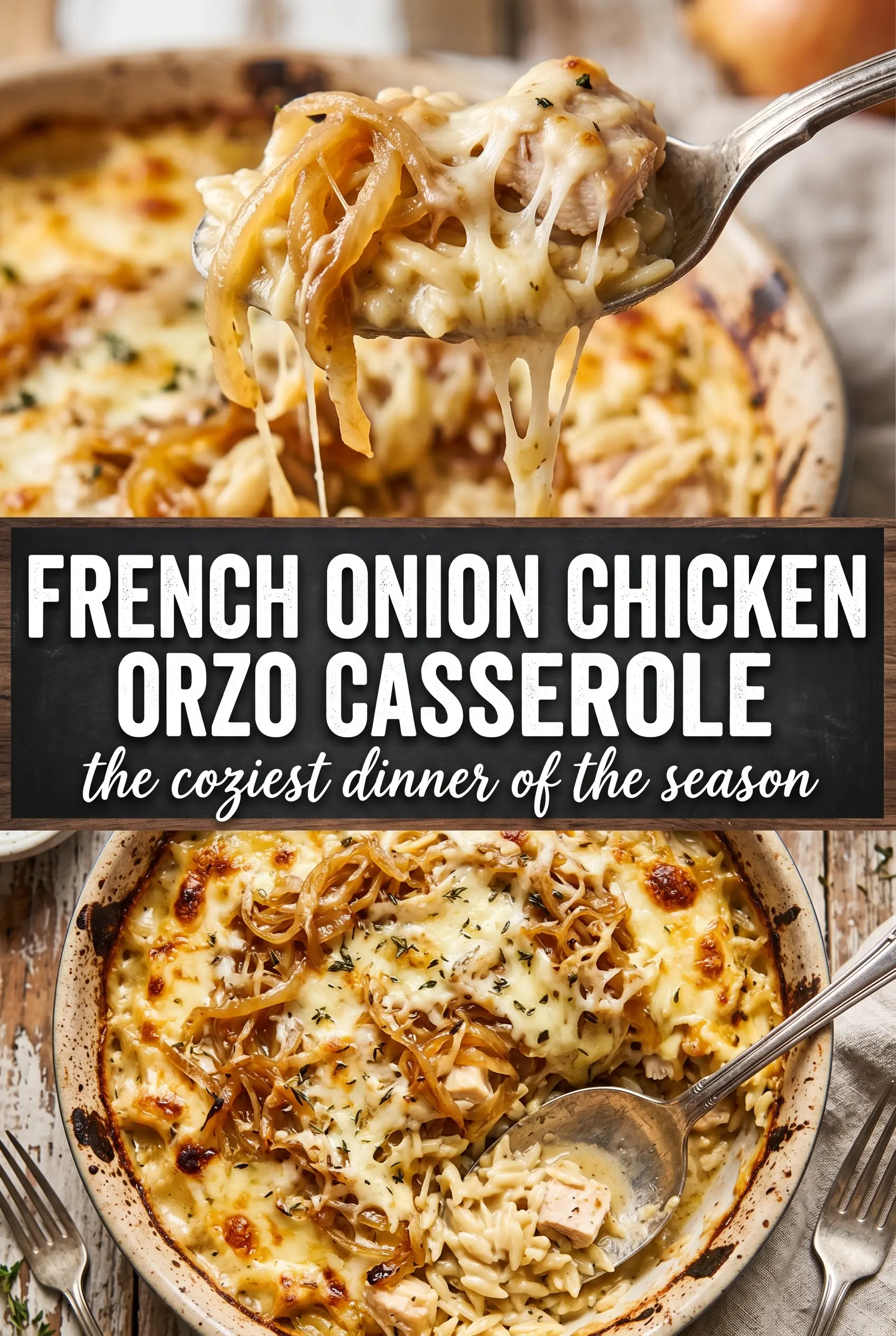
French Onion Chicken Orzo Casserole
Ingredients
Equipment
Method
- Melt butter with olive oil in a large oven-safe skillet over medium-low heat, then add sliced onions with a pinch of salt.
- Cook for 25–30 minutes, stirring occasionally, until the onions are deeply caramelized.
- Preheat the oven to 375°F.
- Push onions to the side, add chicken pieces, and sear for 2–3 minutes per side until golden.
- Add garlic, dry orzo pasta, both broths, Worcestershire sauce, and fresh thyme leaves, then stir to combine and bring everything to a simmer.
- Top evenly with shredded Gruyère cheese.
- Transfer the skillet to the oven and bake uncovered for 20–25 minutes until orzo is cooked and the cheese is golden and bubbly.
- Let rest for 5 minutes before serving.