Caramelized on the outside and silky at the center, a properly cooked Boston butt pork roast gives you the kind of pulled pork that falls apart in big juicy strands instead of turning dry and stringy. The bark gets dark and sticky from the rub, the meat stays rich thanks to the fat cap and slow heat, and the pan juices bring everything back together at the end. It’s the sort of roast that turns a long oven run into a very good dinner.
The part that matters most is patience. A pork butt isn’t done when it looks browned; it’s done when the collagen has melted and the meat gives up without a fight. That’s why the oven stays low, the pan is covered tightly, and the roast rests before you shred it. The vinegar underneath keeps the environment a little steamy and helps the drippings stay useful, not scorched.
Below, I’ll walk through the rub, the roasting method, and the exact temperature range that gives you pull-apart pork instead of chewy slices. I’ve also included a few ways to use it up, store it, and fix the common mistakes that trip people up with a roast this big.
The bark got dark and seasoned all the way through, and the pork shredded into juicy pieces right at 200 degrees. I served it on buns the first night and used the rest for tacos the next day.
Save this Boston butt pork roast for the pull-apart texture and smoky bark you’ll want again for sandwiches, tacos, and leftover dinners.
The Part Most Pork Roasts Get Wrong: Stopping Too Soon
A pork butt can look done long before it is actually tender. If you pull it when the center just hits a safe temperature, you’ll get meat that slices decently but fights back when you try to shred it. The sweet spot for pulled pork is higher than most people expect because the connective tissue needs time to dissolve into that soft, almost buttery texture.
The other mistake is roasting it uncovered the whole time. That dries the surface before the inside has a chance to catch up. Covering the pan tightly keeps the roast in a controlled environment, so the meat braises in its own steam and the vinegar drippings underneath stay useful instead of evaporating away.
- Time matters less than tenderness. An 8-hour estimate is a guide, but the fork test and internal temperature tell you when it’s ready.
- The bone is your clue. If it twists cleanly or starts to separate from the meat, you’re close.
- Resting matters. A 30-minute rest lets the juices settle so they don’t spill out when you shred.
What Each Ingredient Is Actually Doing in This Pork Butt Roast
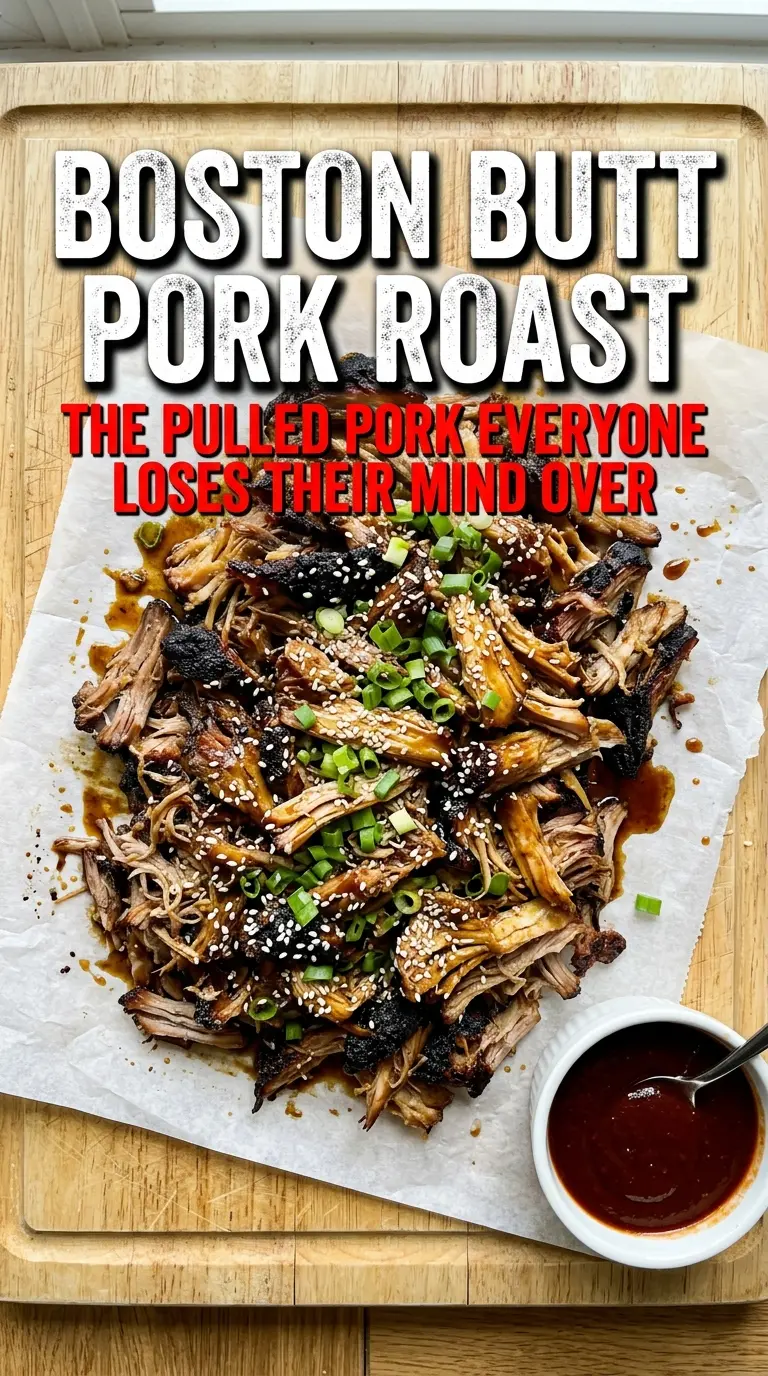
Pork butt: This cut is built for long cooking because it has enough fat and connective tissue to become tender instead of tough. Bone-in gives you a little more insurance against dryness and a better feel for doneness. Boneless works too, but it usually cooks a little faster and can lose shape more easily when you shred it.
Brown sugar and smoked paprika: Brown sugar helps the rub turn into that dark crust on the outside, while smoked paprika gives the roast a deeper barbecue-style note even in the oven. If you cut the sugar too much, the bark will be less sticky and less pronounced. If you don’t have smoked paprika, regular paprika works, but the roast will taste flatter.
Garlic, onion, cumin, cayenne, salt, and black pepper: This is the backbone of the rub. The garlic and onion build savory depth, cumin adds a warm earthiness, and cayenne gives the roast a little heat without taking over. You can pull the cayenne back if you want a milder pork roast, but don’t skip the salt or the bark will taste one-dimensional.
Apple cider vinegar: The vinegar sits in the pan underneath the roast and does two jobs: it keeps the roasting environment from drying out too fast, and it gives the drippings a sharp edge that balances the rich pork. You’re not braising the meat in it, so don’t drown the pan. Half a cup is enough.
BBQ sauce: Serve it on the side or toss a little into the shredded pork at the end, depending on how saucy you like your sandwiches. A good sauce should round out the pork, not hide the roast flavor you worked for.
The Low, Slow Roast That Turns a Boston Butt Into Pulled Pork
Building the rub
Mix the brown sugar, paprika, garlic powder, onion powder, cumin, cayenne, salt, and pepper until the color looks uniform and rusty red. Coat the pork on every side, pressing the rub into the surface so it clings instead of falling off in the pan. If you have time, refrigerate it overnight. That rest lets the salt start seasoning the meat all the way through and gives the bark a head start.
Setting up the roasting pan
Put the pork fat-side up in a roasting pan and pour the apple cider vinegar around the bottom, not over the top. The fat cap bastes the meat as it cooks, and keeping the vinegar around the edges helps protect the bottom of the pan from scorching. Seal the pan tightly with foil so steam stays trapped inside. If the seal is loose, the roast dries out before the center reaches shreddable tenderness.
Roasting until it gives way
Cook the pork at 275°F for 7 to 8 hours, checking the temperature near the thickest part of the roast. You’re looking for 195°F to 205°F and, more importantly, meat that pulls apart easily with a fork. If it still feels springy, keep roasting. Pork butt doesn’t reward rushing; the last stretch is where the connective tissue finally collapses into tenderness.
Resting and shredding
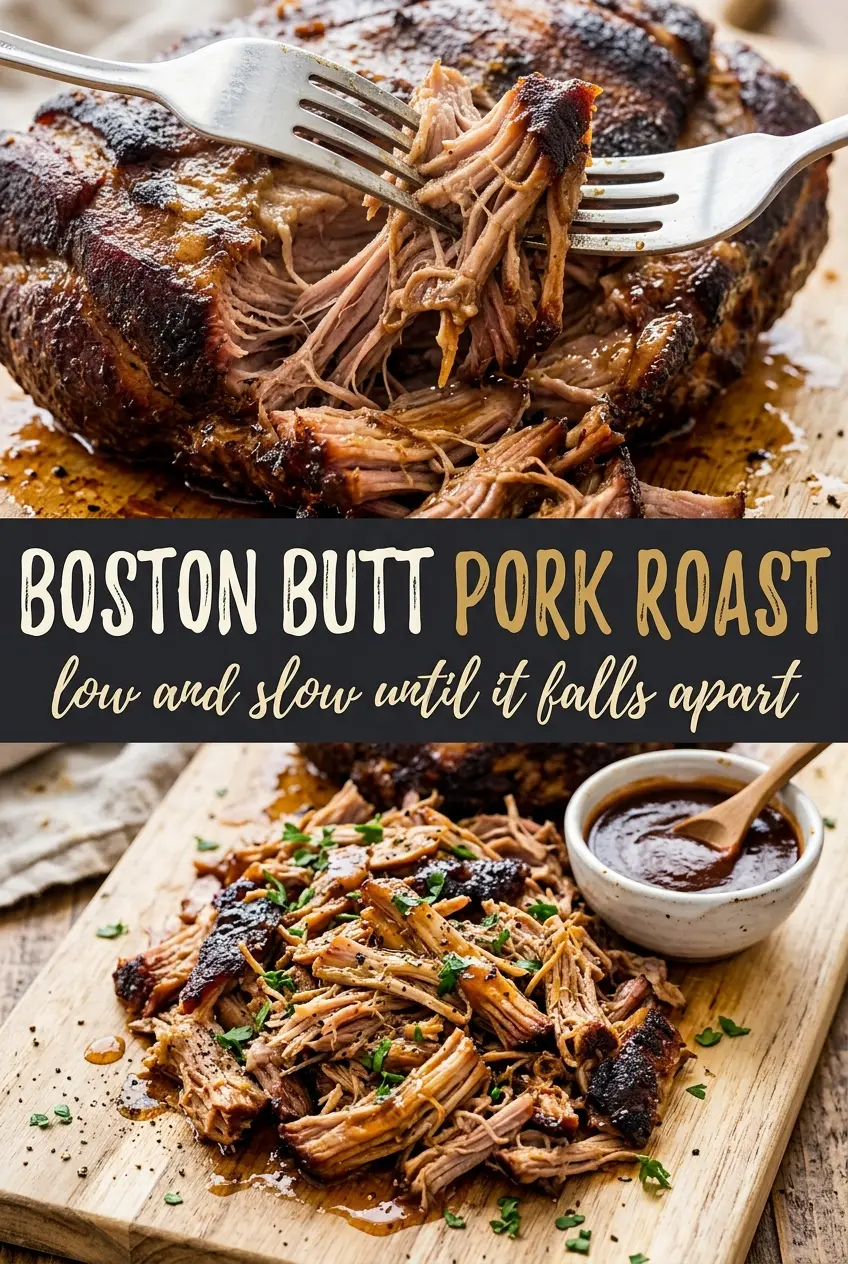
Let the roast rest uncovered for 30 minutes before you shred it. That short pause keeps the juices from flooding out the moment you cut in. Shred with two forks, discarding any obvious heavy fat pockets, then toss the meat with the pan juices so every strand gets coated. If it seems a little dry after shredding, that usually means it needed more of the rendered juices, not more barbecue sauce.
How to Adapt This Boston Butt Pork Roast for Different Dinners
Dairy-Free and Naturally Gluten-Free
The roast itself already fits both of those diets as written. The only place to watch is the barbecue sauce, since some brands include gluten or dairy-based thickeners. Serve it with a sauce you trust, or skip the sauce entirely and lean on the pan juices for a cleaner, pork-forward finish.
Spice It Up Without Overpowering the Pork
Add another 1/2 teaspoon of cayenne or a pinch of chipotle powder if you want more heat and smoke. Keep the rest of the rub the same so the seasoning still reads as pork roast, not a chili blend. Too much heat can flatten the sweetness from the brown sugar, so build it gradually.
Make It Ahead for Sandwiches or Meal Prep
Shred the pork, mix in a little of the pan juice, and chill it in shallow containers so it cools quickly. Reheat portions with a splash of extra liquid so the meat loosens back up instead of drying into clumps. This is one of those dishes that gets easier to use as the week goes on.
Storage and Reheating
- Refrigerator: Store pulled pork in an airtight container for up to 4 days. The meat stays juicy if you pack it with a little pan juice.
- Freezer: It freezes well for up to 3 months. Portion it in freezer bags with some juices so it reheats without drying out.
- Reheating: Warm it covered in a 300°F oven with a splash of broth or pan juices, or reheat gently on the stove over low heat. High heat is the mistake that turns tender pork stringy and dry.
Answers to the Questions Worth Asking
Boston Butt Pork Roast
Ingredients
Equipment
Method
- Mix the brown sugar, smoked paprika, garlic powder, onion powder, cumin, cayenne, salt, and black pepper into a dry rub, then coat the pork butt thoroughly on all sides.
- Cover the pork and refrigerate overnight if possible, so the rub adheres and deepens in flavor.
- Preheat the oven to 275°F.
- Place the pork fat-side up in a roasting pan and pour the apple cider vinegar around the bottom of the pan.
- Cover tightly with foil and roast for 7–8 hours, until the internal temperature reaches 195–205°F and the meat shreds easily.
- Rest the pork uncovered for 30 minutes, allowing juices to settle.
- Shred with two forks, discarding excess fat.
- Toss the shredded pork with the pan juices and serve with BBQ sauce on brioche buns.