Bacon-wrapped pork tenderloin lands on the table with a crisp, caramelized shell and a juicy center that slices cleanly instead of shredding under the knife. The brown sugar glaze gives the bacon a glossy finish and a sweet-salty edge that keeps each bite from tasting flat, while the tenderloin stays lean and tender enough to cook fast without drying out.
The trick here is balance: the pork needs enough seasoning before the glaze goes on, and the glaze has to be applied in two stages so it flavors the meat without burning before the bacon is done. Dijon brings a little bite, soy sauce deepens the saltiness, and smoked paprika helps the whole thing taste more roasted than sugary. You get a better crust when the bacon overlaps slightly and the tenderloins aren’t crowded in the pan.
Below, I’ve laid out the exact timing that keeps the bacon crisp and the pork pink, plus a few ways to adjust the glaze if you want it a little sweeter, smokier, or more savory.
The bacon crisped up evenly and the glaze went sticky instead of burning. I sliced it after resting and the pork stayed juicy all the way through.
Bacon-Brown Sugar Pork Tenderloin makes crispy, sticky, sliceable pork worth pinning for a dinner that looks special without extra fuss.
The Bacon That Stays Crisp Instead of Sliding Off
Bacon-wrapped pork tenderloin fails in one of two ways: the bacon goes pale and soft, or it crisps before the pork finishes and the glaze turns bitter. The fix is to start with a hot oven and a thin, even coating of glaze, not a thick layer that pools in the pan. Pork tenderloin cooks fast, so the bacon has just enough time to render and brown while the sugar turns sticky instead of scorched.
Wrapping the bacon with slight overlap helps it shrink into a tight crust as it cooks. If the strips are stretched too much, they shrink and leave gaps. If they’re packed on too thick, the bacon steams and the glaze slides off before it can caramelize.
The other thing that matters is resting. Pull the pork at 145°F, then give it five minutes before slicing. That short rest keeps the juices inside the meat instead of running out onto the cutting board.
What Each Ingredient Is Actually Doing in This Dish
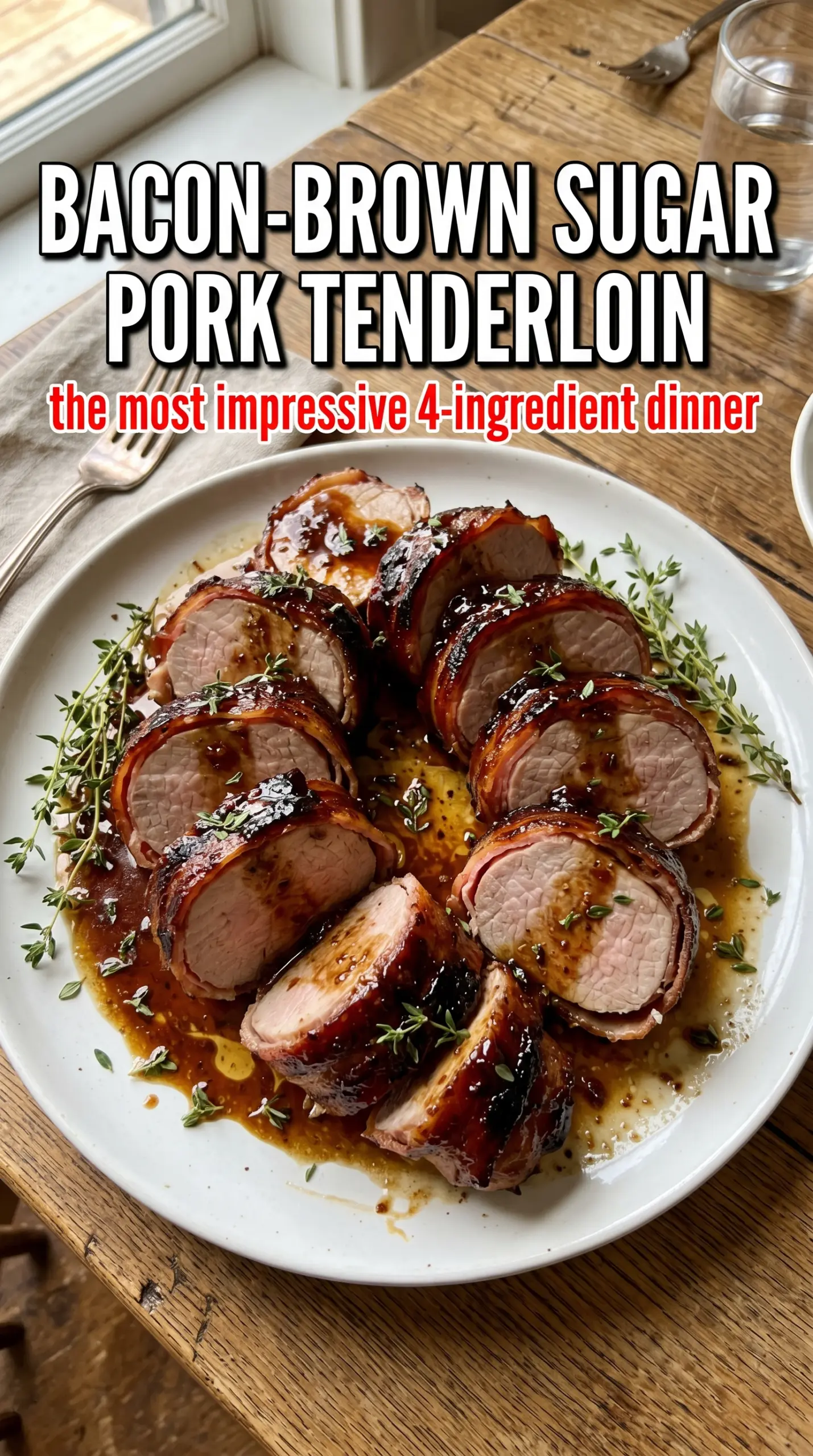
- Pork tenderloins — These cook quickly and stay tender when pulled at the right temperature. Don’t swap in pork loin without adjusting time; it’s thicker and needs longer in the oven, which changes how the bacon behaves.
- Bacon — Use standard-cut bacon, not thick-cut. Thick slices take longer to render, which means the pork can overcook before the bacon gets properly crisp.
- Brown sugar — This is what gives the glaze its sticky shell and caramel color. Light or dark brown sugar both work; dark brown sugar adds a deeper molasses note.
- Dijon mustard — Dijon sharpens the sweetness and helps the glaze cling to the pork. Yellow mustard won’t give the same depth, though it will still bring acidity if that’s all you have.
- Soy sauce — This adds salt and a little savory depth that keeps the glaze from tasting one-note. Use tamari if you need a gluten-free option.
- Smoked paprika and garlic powder — These round out the glaze without making it taste like barbecue sauce. Fresh garlic won’t work the same way here because it can burn before the bacon finishes.
How to Build the Crust in the Oven Without Burning the Glaze
Season the Pork First
Pat the tenderloins dry, then season them with salt and pepper before anything else touches the meat. Dry surfaces brown better, and that first layer of seasoning keeps the pork from tasting bland under the bacon. If the meat is wet, the glaze slips around instead of sticking.
Brush, Then Wrap
Mix the glaze until the brown sugar is fully broken up, then brush about half of it over the tenderloins before wrapping. That gives the pork a head start on flavor and creates a tacky surface that helps the bacon stay put. Wrap the bacon snugly and overlap each strip a little so there aren’t gaps where the meat can dry out.
Roast Until the Bacon Tightens and Browns
Set the wrapped tenderloins in a roasting pan and brush the remaining glaze over the bacon. Roast at 400°F until the bacon looks browned and the thickest part of the pork hits 145°F, which usually takes 25 to 30 minutes. If the glaze starts to darken too fast, the oven is running hot or the pan is too close to the top element, so move the pan down a rack and let the pork finish more gently.
Rest Before Slicing
Let the pork sit for 5 minutes before pulling the toothpicks and slicing. That pause matters because the juices settle and the glaze firms up slightly, which keeps the slices neat. Cut too soon and the pork sheds moisture onto the cutting board instead of staying in the meat.
Three Smart Ways to Adjust the Glaze and Finish
Make It a Little More Savory
Cut the brown sugar back to 2 tablespoons and add an extra teaspoon of soy sauce. The glaze will still caramelize, but the finish leans more salty and less sweet, which is useful if you’re serving it with mashed potatoes or roasted vegetables.
Gluten-Free Without Changing the Texture
Use tamari instead of soy sauce. The glaze behaves the same in the oven, so you keep the sticky finish and the balanced saltiness without changing the method.
Add a Little More Smoke
Increase the smoked paprika to 1 teaspoon and add a small pinch of black pepper. That deeper spice note plays well with the bacon and gives the finished pork a more wood-fired taste without needing a grill.
Storage and Reheating
- Refrigerator: Store leftovers in an airtight container for up to 3 days. The bacon softens a little, but the pork stays juicy if you don’t overcook it the first time.
- Freezer: Freeze sliced portions tightly wrapped for up to 2 months. The texture is best after thawing in the fridge overnight, though the bacon won’t return to its original crispness.
- Reheating: Warm slices in a 300°F oven, covered loosely with foil, until heated through. The common mistake is blasting it in the microwave, which tightens the pork and turns the bacon rubbery.
Answers to the Questions Worth Asking
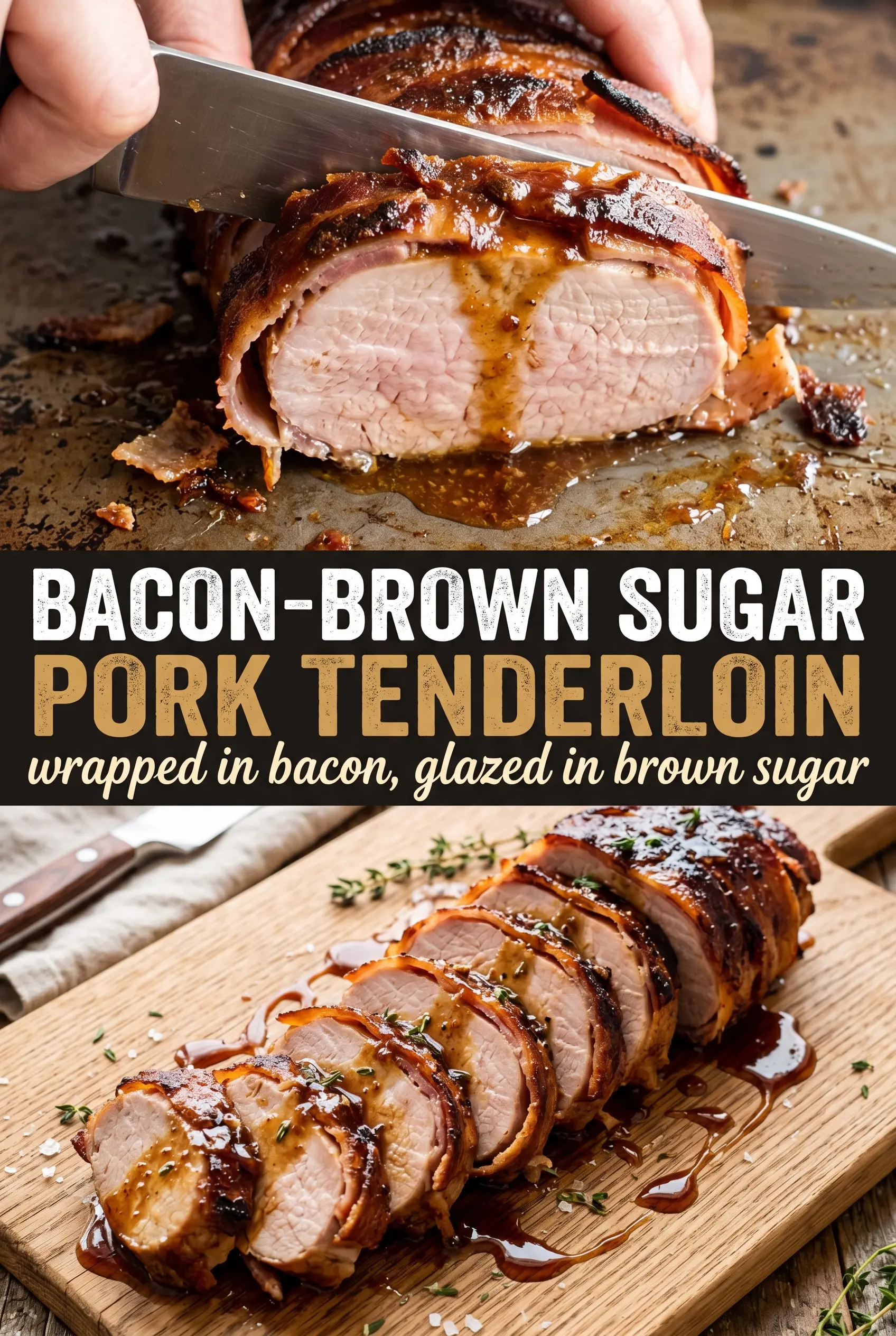
Bacon-Brown Sugar Pork Tenderloin
Ingredients
Equipment
Method
- Preheat the oven to 400°F and set a roasting pan inside to warm while you prep the pork.
- Season the pork tenderloins with salt and pepper, then place them in the roasting pan.
- Mix the brown sugar glaze ingredients together until smooth, then brush half over the pork.
- Wrap each tenderloin tightly in bacon strips, overlapping slightly, and secure the ends with toothpicks.
- Brush the remaining glaze over the bacon so the surface looks evenly coated.
- Roast for 25–30 minutes at 400°F until the bacon is crispy and the internal temperature reaches 145°F.
- Rest the tenderloin for 5 minutes so the juices settle, then remove the toothpicks and slice to serve.