Pull-apart slow cooker pork roast earns its keep because it delivers the kind of tender, juicy meat that shreds with almost no effort and turns its own cooking liquid into a savory sauce. The onions melt into the background, the garlic softens into the broth, and the rosemary and thyme give the roast a clean, woodsy finish that keeps every bite from tasting flat.
The part that separates a good pork roast from a forgettable one is the sear. Browning the outside first gives the final juices more depth, and using pork shoulder or butt gives you enough fat and connective tissue to cook low and slow without drying out. The slow cooker does the heavy lifting, but the seasoning, searing, and liquid balance are what make the meat taste like it had a plan.
Below, I’ll walk through the one step people skip too often, the ingredient swaps that still keep this roast tender, and the storage details that make leftovers worth looking forward to.
The pork shredded beautifully after 8 hours on low, and the juices were seasoned enough that I didn’t even need gravy. My husband went back for seconds and asked if we could do pulled pork sandwiches with the leftovers the next day.
Save this slow cooker pork roast for the kind of dinner that turns one roast into tender, gravy-rich leftovers.
The Sear That Gives This Roast Its Real Depth
Slow cooker pork can turn bland if everything goes straight into the pot raw. The outside never gets a chance to brown, so the finished juices taste thin instead of rich. A quick sear in a hot skillet changes that immediately. It builds a dark crust that holds onto the seasoning and leaves browned bits in the pan, which is where the best flavor starts.
The other thing that matters is using the right cut. Pork shoulder or pork butt has enough fat and connective tissue to stay succulent through a long cook. Lean cuts like pork loin don’t have the same margin for error and can dry out before they ever get tender enough to shred.
What Each Ingredient Is Actually Doing in This Pork Roast
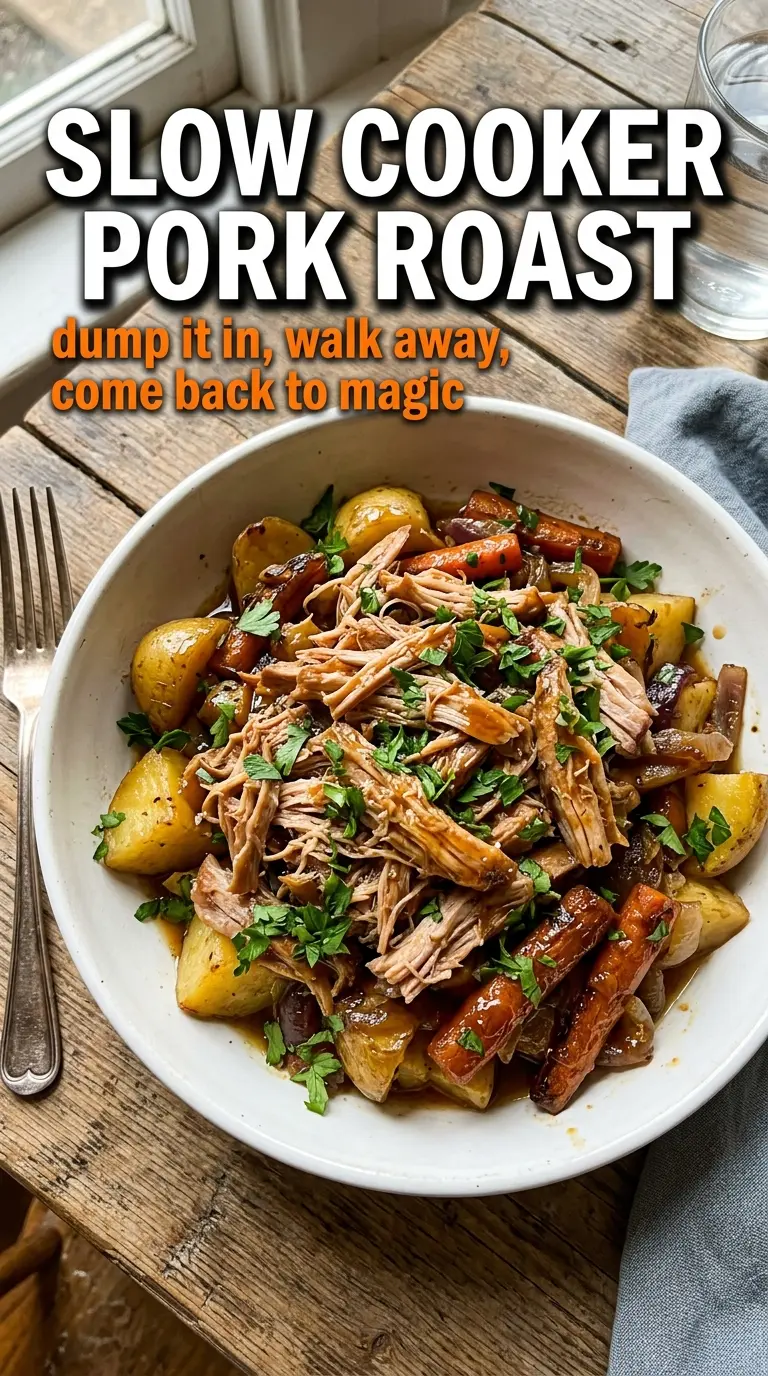
The seasoning blend does more than coat the outside. Salt draws flavor into the meat, pepper gives edge, garlic powder adds background savoriness, and smoked paprika brings a little warmth without making the roast taste smoky like barbecue. If you only have sweet paprika, it works, but the smoked version adds a deeper finish that suits the long cooking time.
Pork shoulder is the cut that carries this recipe. It softens slowly and shreds into strands instead of turning stringy. The onion and garlic go under the roast so they melt into the juices instead of scorching, and the broth mixed with Worcestershire and soy sauce gives the cooker enough liquid for steam and enough seasoning to create a sauce worth spooning over mashed potatoes or rice. Fresh rosemary and thyme matter here because dried herbs can taste dusty after eight hours; if you need to use dried, cut the amount to about one-third and stir them into the broth.
How to Build Tender Pork Without Dry Edges or Watery Juices
Season the Meat Like You Mean It
Coat the pork on every side with salt, pepper, garlic powder, and paprika before it goes anywhere near heat. The seasoning needs direct contact with the meat, not just the liquid, or the flavor stays in the sauce instead of the roast. If the pork looks heavily seasoned, that’s the right amount; some of that crust softens during cooking, and the rest perfumes the juices.
Brown the Outside Before It Hits the Cooker
Heat the olive oil until it shimmers, then sear the pork for about 2 to 3 minutes per side. You want a deep brown crust, not pale beige patches, and you don’t need to cook the center through at this stage. If the skillet is crowded or the heat is too low, the pork steams instead of browns, so work in batches if your roast is especially large.
Let the Aromatics Sit Under the Roast
Sliced onion and minced garlic go on the bottom of the slow cooker first. That layer keeps the pork lifted slightly so it doesn’t sit in a tight puddle, and it gives the juices a sweet, mellow base as the onion softens. Pour the broth mixture around the sides rather than directly over the crust if you want to preserve some of that browned surface.
Cook Until It Pulls Apart Without Resistance
Low and slow is the safest route here. After 8 hours on low, the pork should shred easily with two forks and feel almost silky when you pull at it. If it still fights back, give it more time; tough pork usually means the connective tissue hasn’t fully broken down yet, not that it needs more heat. Once shredded, toss the meat back into the juices so every strand gets coated.
Three Ways to Adapt This Roast Without Losing the Tender Texture
Make It Gluten-Free
Swap in a gluten-free Worcestershire sauce and use a certified gluten-free broth. Soy sauce often contains wheat, so use tamari instead. The result is just as savory, with the same deep pan juices and no change in cooking time.
Skip the Sear When You’re Short on Time
You can place the seasoned pork straight into the slow cooker, and it will still come out tender. What you lose is depth in the finished juices and that dark, roasted flavor on the exterior. If you skip the sear, lean a little harder on the onion, garlic, and herbs so the sauce doesn’t taste one-note.
Turn It Into Pulled Pork Sandwich Filling
After shredding, let the pork sit in the juices for 10 to 15 minutes so it absorbs more flavor, then serve it on toasted buns. If the liquid looks thin, simmer it on the stove for a few minutes before spooning it over the meat. That gives you a saucier filling without making the sandwiches soggy.
Storage and Reheating
- Refrigerator: Store the pork and juices for up to 4 days. The flavor gets deeper overnight, and the meat stays moist when kept in its cooking liquid.
- Freezer: It freezes well for up to 3 months. Pack the shredded pork with some of the juices in airtight containers or freezer bags so it doesn’t dry out when thawed.
- Reheating: Warm it gently on the stove or in the microwave with a splash of the juices. High heat is the mistake that turns shredded pork dry and tight, so reheat just until hot.
Answers to the Questions Worth Asking

Slow Cooker Pork Roast
Ingredients
Equipment
Method
- Season pork roast generously on all sides with salt, pepper, garlic powder, and smoked paprika.
- Let the seasoned pork sit while you prep the slow cooker aromatics.
- Heat olive oil in a skillet over medium-high heat, then sear pork on all sides until browned, about 2–3 minutes per side.
- Place sliced onion and garlic in the bottom of the slow cooker, then set the browned pork on top.
- Combine chicken broth, Worcestershire sauce, and soy sauce, then pour around the pork and add rosemary and thyme.
- Cook on Low 8–10 hours (or High 4–5 hours) until pork shreds easily, with the juices bubbling gently around the meat.
- Shred the pork with two forks, then toss it with the juices until coated and pull-apart tender.
- Serve over mashed potatoes or rice, spooning extra pan juices over the top.